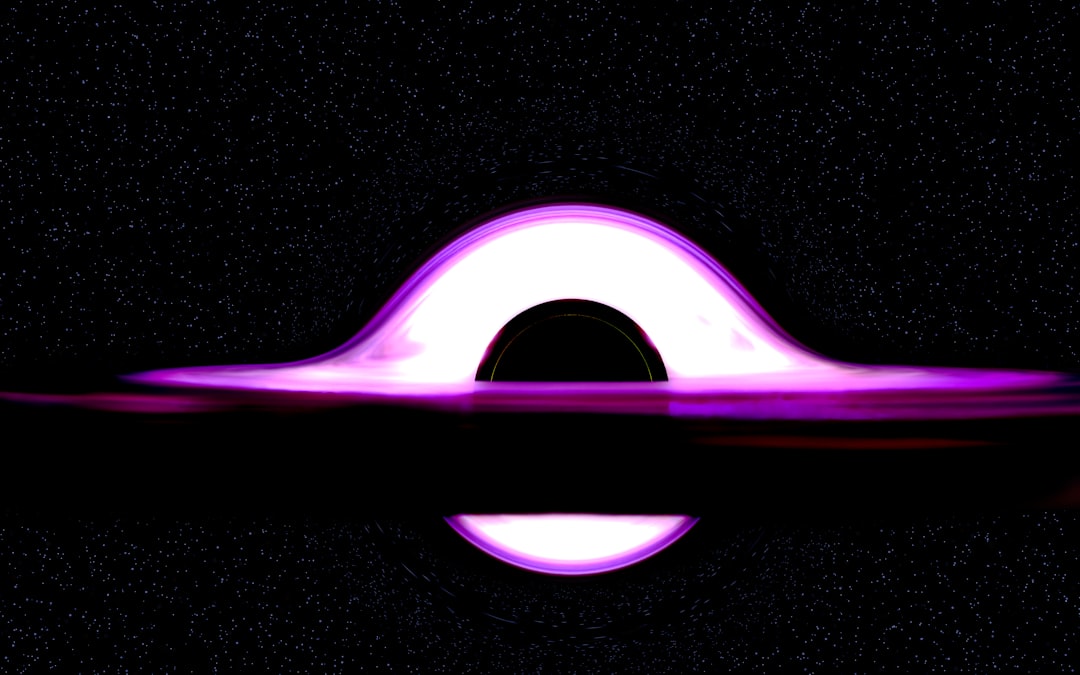
In the first fractions of a second following the Big Bang, the universe bore no resemblance to the cosmos we observe today. Instead of the vast expanses dotted with galaxies and stars, the infant universe consisted of an extraordinarily dense, roiling ocean of fundamental particles—quarks and gluons—existing at temperatures and pressures that challenge our deepest understanding of physics. Within this primordial maelstrom, according to groundbreaking new research from Vrije Universiteit Brussel and MIT, microscopic black holes may have detonated with cataclysmic violence, sending shockwaves rippling through spacetime itself. These explosive events, the researchers propose, may have fundamentally shaped the evolution of our universe and resolved one of cosmology's most perplexing mysteries: why matter exists at all.
The research paper, currently available as a pre-print on arXiv, presents a radical reimagining of the early universe's dynamics. Rather than the relatively peaceful dissipation of energy previously assumed, the death throes of primordial black holes (PBHs) may have created relativistic fireballs that transformed the quantum landscape of reality itself. This discovery could finally explain the cosmic asymmetry between matter and antimatter—a fundamental puzzle that has haunted physicists for generations.
The Enigmatic Nature of Primordial Black Holes
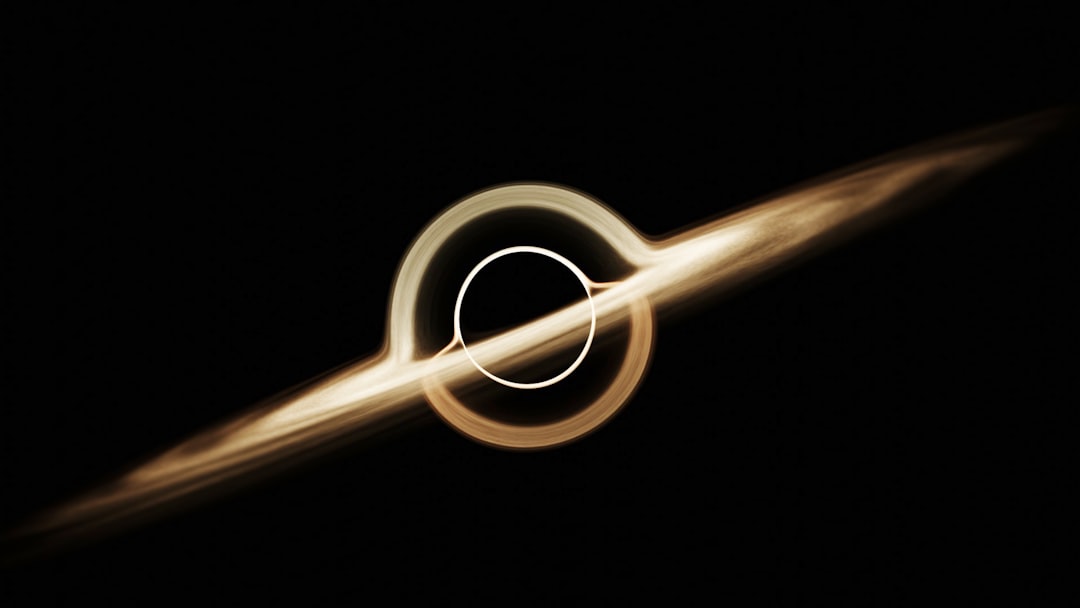
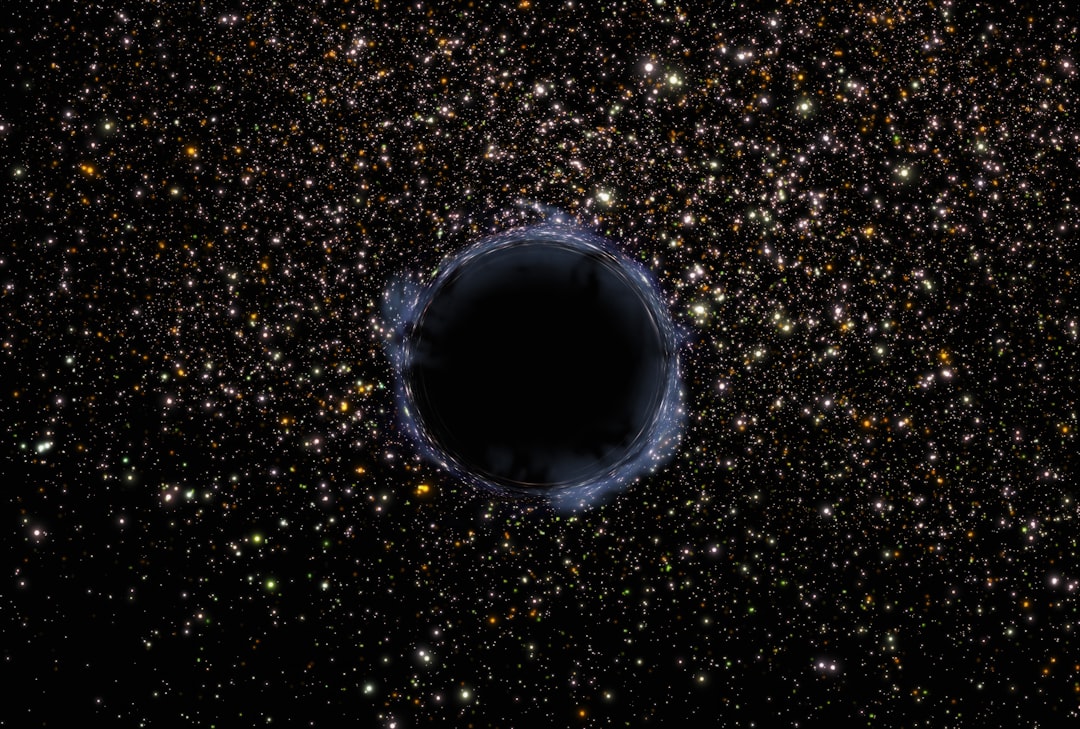
Primordial black holes represent one of the most fascinating theoretical constructs in modern cosmology. Unlike their stellar-mass cousins that form from collapsing stars, PBHs would have emerged directly from the extreme density fluctuations present in the universe's first moments—mere fractions of a second after the Big Bang. During this epoch, the cosmos was so incredibly dense that regions only slightly more compressed than their surroundings could undergo gravitational collapse, creating black holes ranging from subatomic scales to masses exceeding millions of suns.
These hypothetical objects have become a subject of intense scientific scrutiny for multiple reasons. Some researchers propose that PBHs could account for a portion of dark matter, the mysterious substance that comprises approximately 85% of the universe's total mass. Others suggest they might serve as seeds for the supermassive black holes found at the centers of galaxies. According to data from NASA's Planck satellite, the density fluctuations in the early universe were indeed sufficient to allow PBH formation under the right conditions.
The current study focuses specifically on low-mass primordial black holes—objects that, while massive by everyday standards, are remarkably small in the cosmic scheme. These microscopic black holes possess a peculiar and dramatic fate, one governed by a phenomenon discovered by the legendary physicist Stephen Hawking.
Hawking Radiation and the Violent Death of Microscopic Black Holes
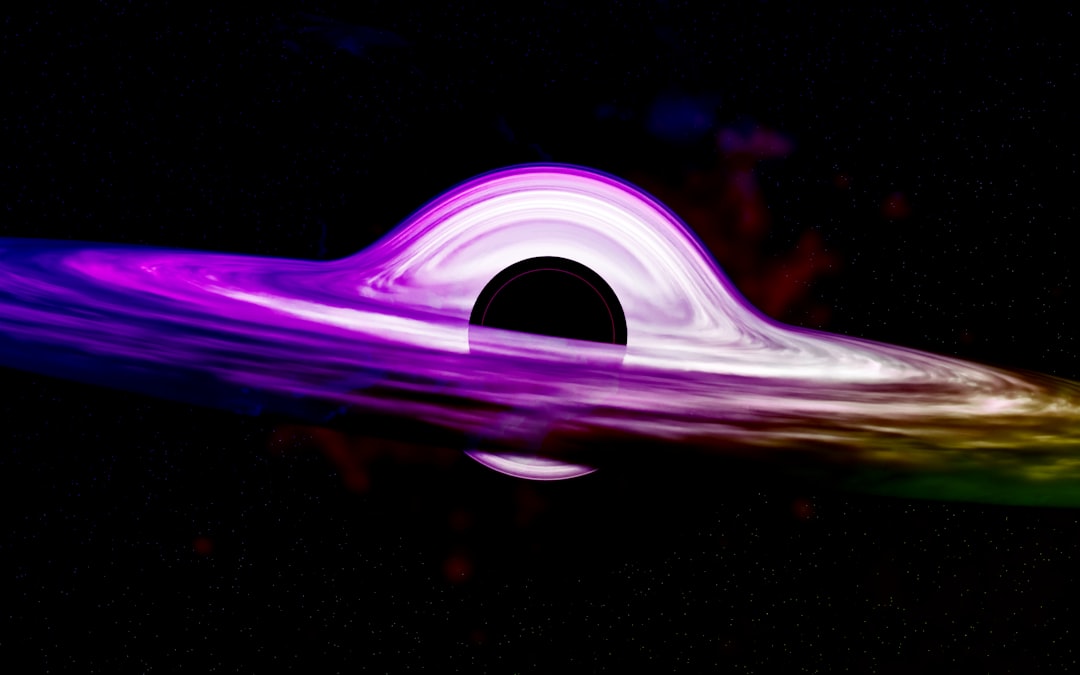
While black holes are commonly perceived as cosmic vacuum cleaners that devour everything in their vicinity, quantum mechanics reveals a more nuanced reality. Hawking radiation, a quantum mechanical effect named after its discoverer, causes black holes to slowly leak energy into the surrounding space. This process occurs through the creation of particle-antiparticle pairs at the event horizon, with one particle escaping while its partner falls into the black hole.
The mathematics of Hawking radiation reveals a counterintuitive relationship: smaller black holes radiate more intensely than larger ones. As a black hole loses mass through this radiation, it becomes hotter and evaporates faster, creating a runaway process. For primordial black holes with masses below approximately 500 trillion grams—roughly the mass of a large asteroid compressed into a space smaller than an atom—this evaporation process would have reached completion by the present day.
"The final moments of a primordial black hole's existence represent one of the most extreme physical events imaginable—a microscopic object releasing energy equivalent to millions of nuclear weapons in a fraction of a second," explains Dr. Michael Vanvlasselaer, lead author of the study.
Previous theoretical models suggested that dying PBHs would simply diffuse their remaining energy gradually into the surrounding plasma, creating localized "hot spots" in the quark-gluon soup of the early universe. However, the new research reveals that this picture dramatically underestimated the violence of these events.
Hydrodynamic Shockwaves in the Primordial Plasma
The research team employed sophisticated hydrodynamic modeling to simulate the behavior of the ultra-dense plasma surrounding evaporating primordial black holes. Their calculations revealed that the energy release from a dying PBH was so concentrated and intense that it created extreme pressure gradients in the surrounding medium—conditions that inevitably produce shockwaves.
These weren't ordinary shockwaves. The energy densities involved were so enormous that the expanding blast wave traveled at relativistic speeds—a significant fraction of the speed of light. The team identified four distinct phases in the evolution of these cosmic explosions:
Phase One: Steady Evaporation
During the initial phase, while the PBH retains substantial mass, it evaporates relatively slowly, creating an expanding bubble of heated plasma around itself. This phase could last for varying durations depending on the initial mass of the black hole, with the surrounding environment gradually heating as Hawking radiation streams outward.
Phase Two: Explosive Detonation
As the black hole shrinks to a critical threshold, it enters a catastrophic final stage where its remaining mass-energy converts to radiation nearly instantaneously. This creates an ultra-relativistic blast wave that can be modeled using the Blandford-McKee framework—a theoretical regime describing the most extreme shockwaves in astrophysics. The temperatures and pressures in this phase exceed those found in any other known cosmic phenomenon except the Big Bang itself.
Phase Three: Plasma Accumulation
As the shockwave expands outward at relativistic speeds, it sweeps up the surrounding quark-gluon plasma like a cosmic snowplow. Eventually, the accumulated mass slows the shockwave to sub-relativistic speeds, and its behavior transitions to follow the Sedov-Taylor regime—the same physics that governs supernova remnants and nuclear explosions.
Phase Four: Energy Dissipation
In the final phase, the shockwave's energy gradually dissipates into the surrounding plasma through various physical processes, including turbulence, particle collisions, and radiation. The once-violent explosion fades into the cosmic background, leaving only its thermodynamic and particle-physics consequences.
Solving the Matter-Antimatter Asymmetry Problem
The implications of these explosive events extend far beyond mere cosmic pyrotechnics. The research team proposes that PBH explosions may solve one of the most profound mysteries in physics: baryogenesis, or the origin of matter in the universe.
According to the Standard Model of particle physics and our understanding of the Big Bang, the universe should have created equal quantities of matter and antimatter. When matter and antimatter meet, they annihilate each other in a burst of pure energy. If the universe began with equal amounts of both, they should have completely destroyed each other, leaving behind only radiation. Yet obviously, matter survived—we and everything we observe are made of it. The question of why has puzzled physicists since the discovery of antimatter.
Research from CERN's particle physics experiments has revealed that certain physical processes can create slight asymmetries between matter and antimatter, but these known mechanisms are insufficient to explain the universe's observed composition. The answer, most physicists believe, lies in some violent departure from thermal equilibrium in the early universe—a dramatic event that temporarily altered the fundamental rules governing particle creation and destruction.
Electroweak Symmetry Breaking and the Creation of Matter
The new research identifies a specific mechanism by which PBH explosions could have generated the matter-antimatter asymmetry. In the early universe, when temperatures exceeded approximately 162 GeV (giga-electron volts—a unit cosmologists use to measure temperature in high-energy physics), a fundamental property called electroweak symmetry was preserved. In this state, the electromagnetic and weak nuclear forces were unified into a single force.
As the universe expanded and cooled below this critical temperature, electroweak symmetry broke, and these forces separated into the distinct interactions we observe today. The researchers propose that shockwaves from exploding primordial black holes could have temporarily heated the plasma back above this threshold temperature, creating moving "bubbles" of restored electroweak symmetry within the cooling universe.
These bubbles would represent exactly the kind of out-of-equilibrium conditions required for baryogenesis. As the bubble boundaries expanded and cooled, the changing conditions could have favored the production of matter over antimatter through processes known as CP violation—subtle differences in how certain particles and their antiparticles behave under specific conditions.
"What we're proposing is that the entire visible universe—every atom in every star, planet, and living being—may owe its existence to the violent deaths of microscopic black holes in the first seconds after the Big Bang," notes the research team in their paper.
Observational Consequences and Future Research
While this theory is elegant and compelling, science demands empirical verification. The challenge lies in the fact that these events occurred in the universe's first moments, long before any structures we can directly observe existed. However, the researchers suggest several potential observational signatures that future experiments might detect.
The shockwaves from PBH explosions would have left imprints on the cosmic microwave background radiation—the afterglow of the Big Bang that pervades the universe. High-precision measurements from missions like ESA's Planck satellite and future experiments might reveal subtle temperature fluctuations or polarization patterns consistent with this scenario.
Additionally, the process of PBH evaporation would have produced specific ratios of different particle types and potentially generated gravitational waves with characteristic frequency signatures. As our gravitational wave detectors become more sensitive, they may be able to detect these primordial signals encoded in the fabric of spacetime itself.
The research team is already pursuing these implications in companion papers, exploring both the detailed particle physics of baryogenesis in PBH shockwaves and the potential observational signatures that could confirm or refute their theory.
A New Understanding of Cosmic Origins
This research represents a paradigm shift in our understanding of the early universe. Rather than a relatively smooth and gradual evolution from the Big Bang to the formation of the first atoms, the cosmos may have been shaped by countless microscopic explosions, each one a miniature cataclysm that fundamentally altered the quantum state of the surrounding space.
The implications extend beyond solving the matter-antimatter puzzle. These PBH explosions could have influenced the formation of large-scale cosmic structures, affected the production of light elements during Big Bang nucleosynthesis, and left distinctive signatures in multiple cosmological observables. Understanding these processes could provide crucial insights into physics at energy scales far beyond what we can achieve in particle accelerators.
As Carl Sagan famously said, "We are made of star-stuff"—the atoms in our bodies were forged in stellar furnaces and scattered by supernovae. This new research suggests we might need to update that poetic statement. Perhaps we are made of black hole shockwave stuff, our very existence a consequence of the most violent events in cosmic history occurring at the smallest imaginable scales. While it may not roll off the tongue quite as elegantly, it represents an equally profound connection between humanity and the deepest mysteries of the cosmos.
The journey to understand our cosmic origins continues, with each new discovery revealing layers of complexity and wonder that previous generations could never have imagined. As our theoretical models become more sophisticated and our observational capabilities more powerful, we edge closer to answering the fundamental question that has driven human curiosity since we first looked up at the stars: where did we come from, and why are we here?