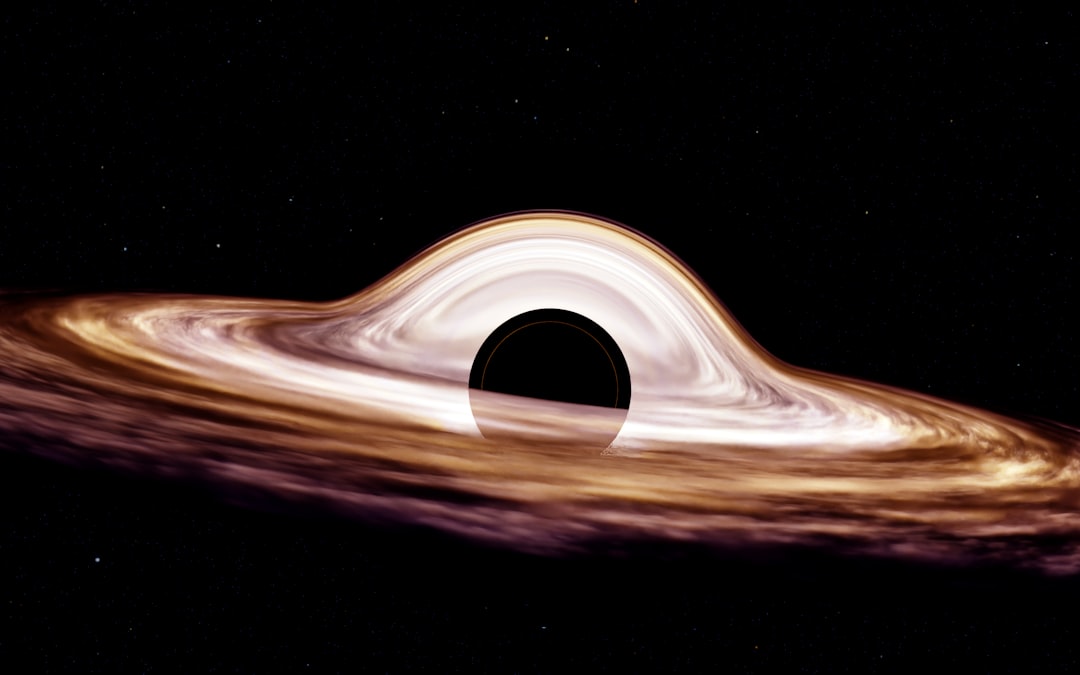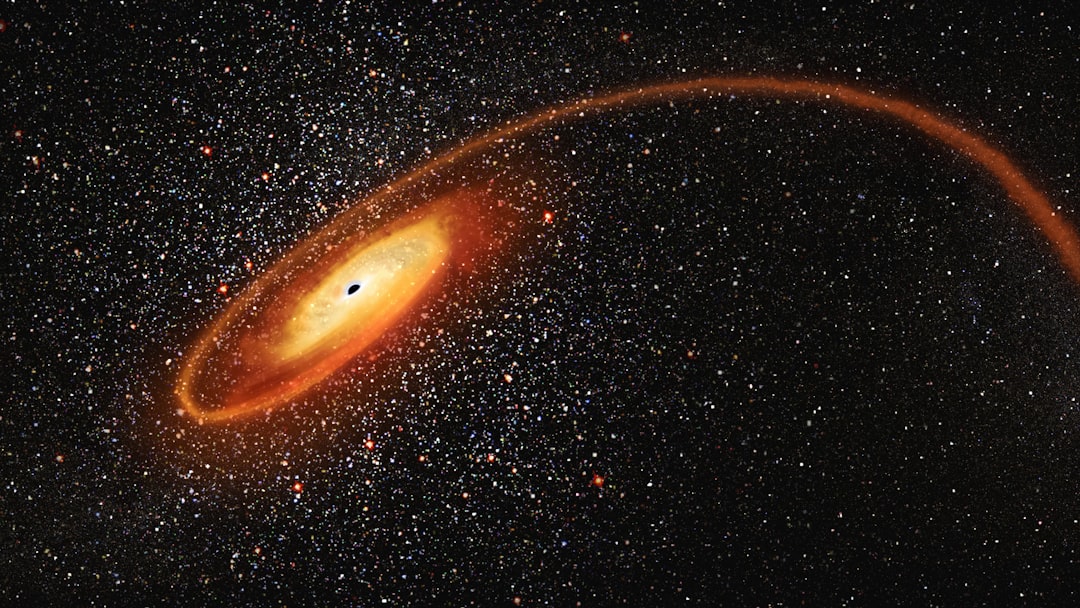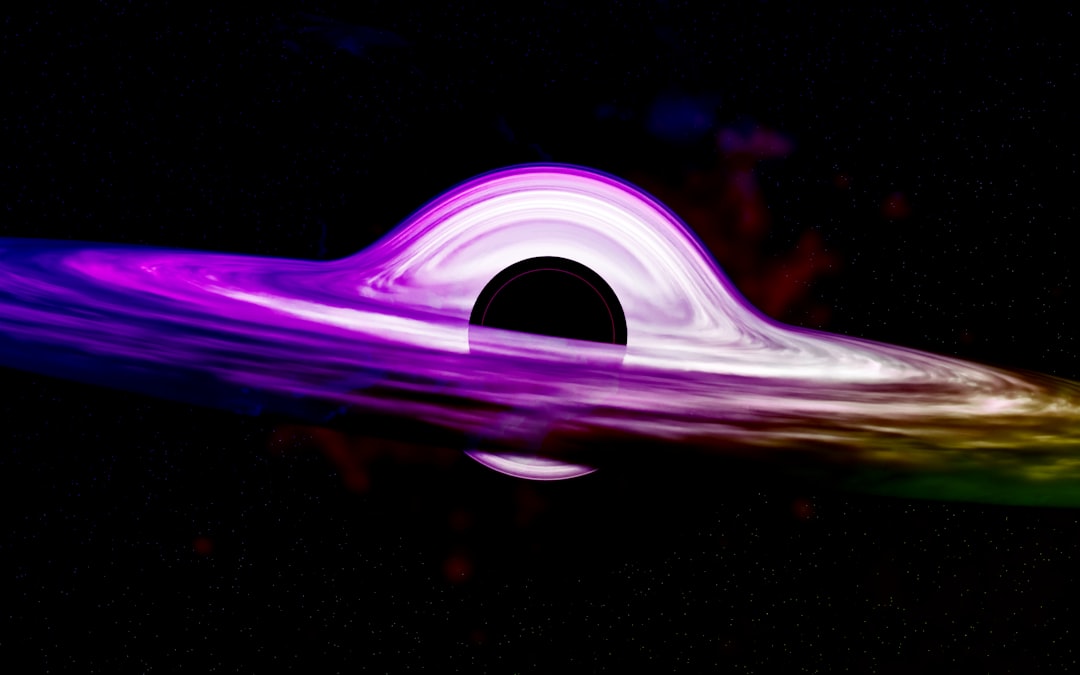
In the cosmic dance between galaxies and the gravitational monsters at their hearts, scientists have uncovered a surprising twist: the biggest black holes in the universe don't play by the same rules as their smaller cousins. A groundbreaking study examining ultra-massive black holes—behemoths weighing more than 10 billion times our Sun's mass—reveals that one of astronomy's most trusted measurement tools breaks down at the extreme end of the cosmic scale. This discovery forces astronomers to rethink how they measure and understand the most massive objects in the universe.
The relationship between galaxies and their central supermassive black holes represents one of the most profound connections in astrophysics. Nearly every galaxy harbors one of these gravitational titans at its core, and their fates appear inextricably linked. Whether the black hole seeds the galaxy's formation or emerges from the galaxy's evolution remains an active area of research, but what's certain is that understanding one helps us comprehend the other. This symbiotic relationship has given astronomers powerful tools to probe the invisible—but now, those tools are showing their limits.
Recent research published on arXiv by Stefano de Nicola and colleagues has identified eight new ultra-massive black holes whose properties challenge conventional measurement techniques. Their findings suggest that as black holes grow beyond a certain threshold, the standard methods astronomers have relied upon for decades begin to fail, requiring entirely new approaches to measure these cosmic giants.
The Traditional Approach: Understanding the M-Sigma Relationship
For over two decades, astronomers have employed an elegant technique known as the M-sigma relation to weigh dormant supermassive black holes. This method exploits a fundamental principle: the more massive a black hole, the faster stars orbit around it in the galaxy's central region. By measuring how fast these stars move, scientists can infer the black hole's mass without directly observing it—a crucial capability since most supermassive black holes spend the majority of their existence in a quiet, inactive state.
The technique works through careful spectroscopic analysis. When astronomers observe the core of a galaxy, they're seeing light from thousands of stars simultaneously. Each star contributes its own spectral signature, but because these stars are orbiting the galactic center at different velocities, their light experiences the Doppler effect. Stars moving toward us have their light shifted toward bluer wavelengths, while those moving away appear redder. The result is a statistical spread in the combined spectrum—designated by the Greek letter sigma—that directly correlates with the orbital velocities and, by extension, the central black hole's mass.
This relationship has proven remarkably reliable for black holes ranging from millions to several billion solar masses. The Chandra X-ray Observatory and other telescopes have used variations of this technique to map black holes across the universe. Even iconic objects like Sagittarius A*, our galaxy's 4-million-solar-mass black hole famously imaged by the Event Horizon Telescope, and M87*, the 6-billion-solar-mass giant that produced the first-ever black hole photograph, fall comfortably within the M-sigma relation's predictive range.
When Giants Break the Rules: Ultra-Massive Black Holes
But what happens when black holes grow truly gargantuan? The new study focused on ultra-massive black holes (UMBHs)—objects exceeding 10 billion solar masses—residing at the centers of the brightest cluster galaxies. These galaxies themselves are extraordinary: massive elliptical galaxies that dominate galaxy clusters, often containing trillions of stars and representing some of the largest bound structures in the universe.
The research team examined 16 of these cosmic leviathans, employing a sophisticated technique called the triaxial Schwarzschild model. Unlike the relatively straightforward M-sigma approach, this method involves creating detailed computer simulations of stellar orbits within the galactic core. The model treats the galaxy's central region as a three-dimensional ellipsoid—hence "triaxial"—and simulates countless possible stellar orbits to reproduce the observed brightness distribution of the galaxy's core.
"The triaxial Schwarzschild modeling represents the gold standard for measuring black hole masses when sufficient observational data is available. It provides a comprehensive picture of the gravitational dynamics at play in galactic centers," explains the research team in their analysis.
Successfully applying this technique requires exceptional observational data—high-resolution spectra and detailed brightness measurements across the galaxy's core. Of the 16 galaxies studied, the team obtained sufficiently detailed data for eight, allowing them to generate precise black hole mass measurements. What they found was striking: when plotted against the traditional M-sigma relation, these ultra-massive black holes consistently fell above the expected correlation line.
The Implications of Measurement Breakdown
This deviation isn't merely a statistical curiosity—it has profound implications for our understanding of cosmic structure formation. If the M-sigma relation systematically underestimates the masses of the universe's largest black holes, then our census of these objects has been incomplete. Previous surveys may have identified ultra-massive black holes but assigned them masses of, say, 8 billion solar masses when they actually weigh 15 billion or more.
The breakdown likely stems from the unique environments surrounding ultra-massive black holes. Research from institutions like the European Southern Observatory suggests that the most massive black holes reside in galaxies with complex formation histories, often involving multiple galaxy mergers. These violent events can alter the relationship between the black hole and its stellar environment in ways that violate the assumptions underlying the M-sigma relation.
Several physical mechanisms might explain this deviation:
- Enhanced stellar consumption: Ultra-massive black holes may have consumed a disproportionate fraction of nearby stars over cosmic time, fundamentally altering the stellar distribution in ways that affect velocity measurements
- Multiple merger history: The largest black holes likely formed through successive mergers, each potentially leaving imprints on the surrounding stellar dynamics that complicate simple mass-velocity relationships
- Dark matter concentration: The most massive galaxies may harbor unusual dark matter distributions that contribute to stellar velocities in ways not accounted for in standard M-sigma calibrations
- Orbital anisotropy: Stars in these extreme environments may exhibit preferential orbital orientations rather than the randomized orbits assumed by simpler models
A New Measurement Tool: The Core Deficit Region
Recognizing that the triaxial Schwarzschild model, while accurate, requires observational data that's difficult to obtain for most galaxies, the research team identified an alternative measurement approach: analyzing the central light-deficient region in galaxy cores. This technique exploits a consequence of black hole growth that becomes particularly pronounced for ultra-massive objects.
As supermassive black holes grow, they gravitationally interact with nearby stars, sometimes flinging them into the outer galaxy or consuming them entirely. This process, called core scouring, creates a region near the galactic center where stellar density—and therefore brightness—drops noticeably. The larger and more massive the black hole, the more extensive this "core deficit" becomes. By measuring the size of this dimmed region, astronomers can estimate the black hole's mass without requiring the detailed spectroscopic data needed for M-sigma measurements.
This relationship between core deficit size and black hole mass proves particularly robust for ultra-massive black holes, offering a practical alternative when detailed orbital dynamics are unavailable. Studies using data from the James Webb Space Telescope and other advanced observatories can now map these core structures with unprecedented precision, opening new avenues for surveying the universe's most massive black holes.
Broader Context: Black Hole-Galaxy Co-Evolution
These findings contribute to the ongoing effort to understand black hole-galaxy co-evolution, one of modern astrophysics' central questions. The tight correlations between black hole properties and their host galaxies—including not just the M-sigma relation but also relationships between black hole mass and total galaxy mass, or black hole mass and galaxy bulge luminosity—suggest a deep physical connection.
Leading theories propose that supermassive black holes regulate galaxy growth through powerful feedback mechanisms. When actively feeding, these black holes generate intense radiation and launch relativistic jets that can heat or expel gas from the galaxy, suppressing star formation. This AGN feedback, studied extensively by missions like the ESA's XMM-Newton observatory, may explain why the most massive galaxies appear "red and dead"—full of old stars with little ongoing star formation.
The discovery that ultra-massive black holes deviate from standard scaling relations suggests that the feedback processes operating in the most massive systems may differ from those in smaller galaxies. Perhaps these giants grew through mechanisms that bypassed normal feedback regulation, or perhaps they represent a late-stage evolutionary phase where the black hole has fundamentally altered its galactic environment.
Future Directions and Observational Prospects
This research opens several exciting avenues for future investigation. The next generation of observatories, including the Extremely Large Telescope currently under construction in Chile and NASA's upcoming space telescopes, will provide the resolution and sensitivity needed to apply triaxial Schwarzschild modeling to many more galaxies. This will allow astronomers to determine whether the ultra-massive black hole deviation from M-sigma is a smooth transition or a sharp threshold effect.
Additionally, gravitational wave astronomy promises to revolutionize our understanding of black hole mergers. When two galaxies collide and their central black holes eventually merge, they emit gravitational waves potentially detectable by future space-based observatories like LISA (Laser Interferometer Space Antenna). Observing ultra-massive black hole mergers would provide independent mass measurements and reveal how these giants form.
The study also highlights the importance of multi-wavelength observations. Combining optical spectroscopy with X-ray observations of any residual black hole activity, radio observations of large-scale jets, and infrared measurements of the surrounding stellar population creates a comprehensive picture that no single technique can provide alone.
Conclusion: Rewriting the Cosmic Scales
The discovery that ultra-massive black holes don't conform to the M-sigma relation represents more than a technical correction to astronomical measurements—it reflects the universe's tendency to surprise us at its extremes. Just as quantum mechanics revealed that physics operates differently at atomic scales, and relativity showed that space and time behave strangely near massive objects, this research demonstrates that the rules governing typical supermassive black holes break down for the universe's true giants.
As astronomers refine their techniques and gather data on more of these cosmic behemoths, we'll gain deeper insights into how structure forms in the universe, how galaxies evolve, and what limits—if any—exist on black hole growth. The eight newly characterized ultra-massive black holes in this study represent just the beginning of a new chapter in understanding the universe's most extreme gravitational environments.
For researchers studying cosmological structure formation, galactic evolution, and the fundamental physics of gravity, these findings underscore a crucial lesson: the universe's most massive objects may be writing their own rules, and astronomers must develop new tools to read them.