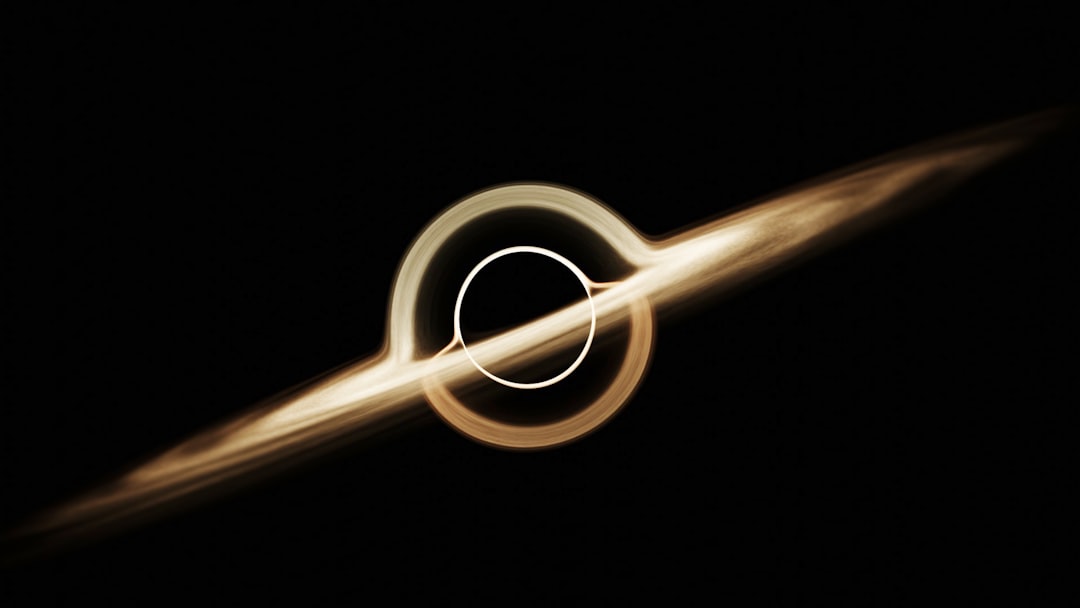
The James Webb Space Telescope (JWST) has revolutionized our understanding of the early universe, but perhaps no discovery has been more perplexing than the detection of supermassive black holes that appear impossibly large for their cosmic age. These gravitational giants, lurking at the centers of galaxies formed just a few hundred million years after the Big Bang, challenge our fundamental models of how black holes grow and evolve. Now, groundbreaking research led by Dr. Muhammad Latif from the United Arab Emirates University offers a compelling solution to this cosmic puzzle—one that involves the dramatic collapse of primordial matter in the universe's infancy.
Published in The Astrophysical Journal Letters, this new study titled "How Overmassive Black Holes Formed at Cosmic Dawn" proposes that these enigmatic objects are direct-collapse black holes (DCBHs)—massive seeds that formed without going through the typical stellar evolution process. This revelation not only explains JWST's surprising observations but also reinforces decades-old theoretical predictions about how the first generation of supermassive black holes came into existence in our universe.
The Mass Ratio Mystery: When Black Holes Dwarf Their Galaxies
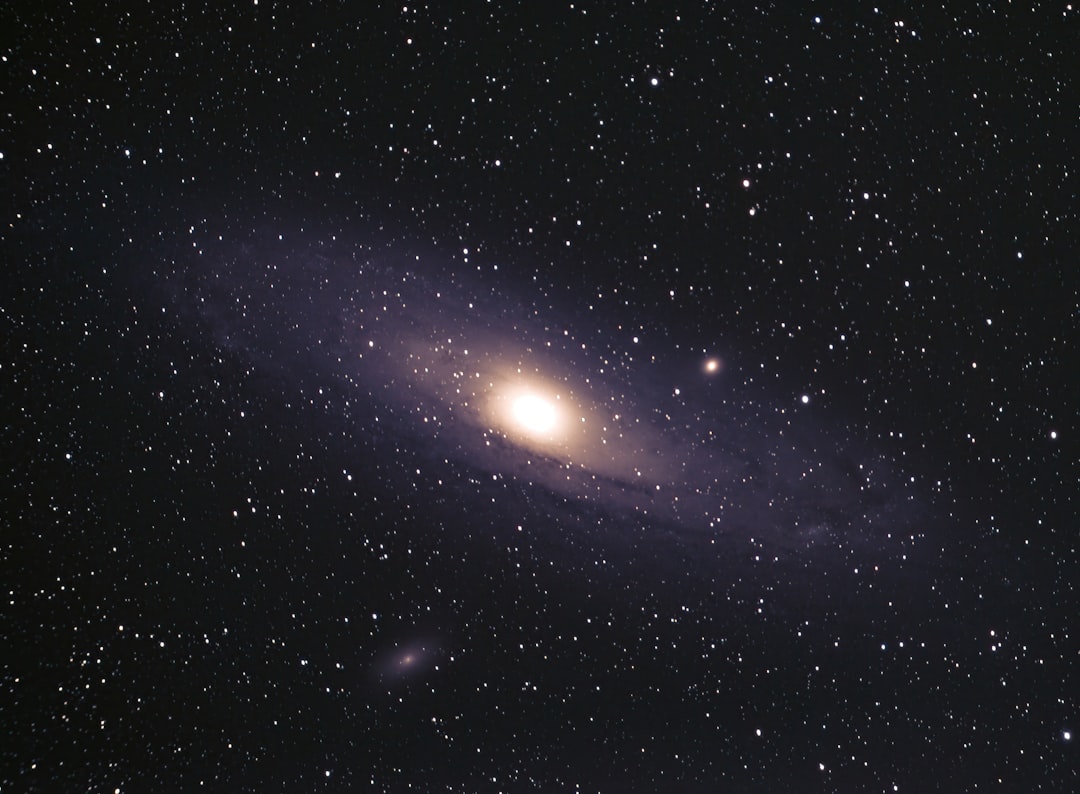
In the nearby, modern universe, astronomers have observed a remarkably consistent relationship between supermassive black holes and their host galaxies. According to observations from facilities like the Chandra X-ray Observatory, these cosmic behemoths typically comprise just 0.1% to 0.5% of their galaxy's total stellar mass. This ratio holds especially true for elliptical and bulge-dominated galaxies, suggesting a synchronized co-evolution between black holes and their galactic homes over billions of years.
However, when JWST peered into the high-redshift universe—looking back to when the cosmos was merely one to two billion years old—it discovered something extraordinary. The black holes in these ancient galaxies frequently accounted for 10% to 30% of their host galaxies' total mass. Even more startling, some extreme examples known as "Little Red Dots" contained black holes whose masses actually exceeded the entire stellar mass of their host galaxies. These systems, now classified as overmassive black hole galaxies (OBGs), have forced astrophysicists to reconsider long-held assumptions about cosmic evolution.
One particularly striking example is UHZ1, observed through combined data from the Chandra X-ray Observatory and JWST's infrared instruments. This ancient galaxy hosts a black hole so massive relative to its stellar population that it defies conventional formation scenarios, demanding new theoretical frameworks to explain its existence.
Direct Collapse: A Shortcut to Supermassive Black Holes
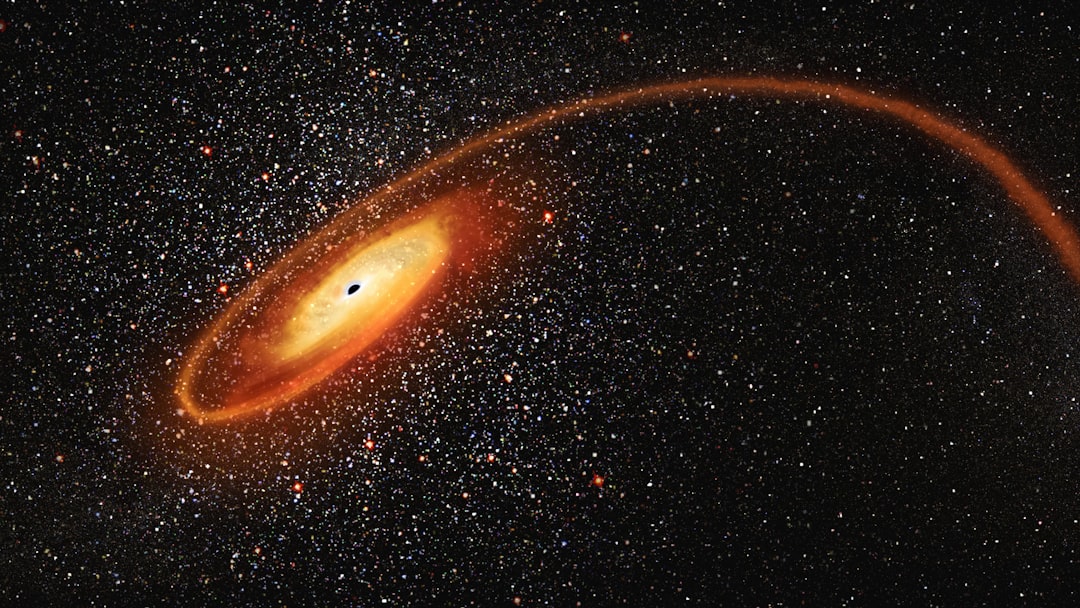
The solution proposed by Latif and his colleagues centers on a phenomenon that could only occur in the pristine conditions of the early universe: direct-collapse black holes. Unlike the black holes we observe forming today—which result from the death and collapse of massive stars—DCBHs formed through the immediate gravitational collapse of enormous clouds of primordial gas, bypassing stellar evolution entirely.
These theoretical objects would have formed within primordial dark matter halos, the first gravitational structures to emerge from the universe's initial density fluctuations. Dark matter halos serve as the invisible scaffolding upon which visible matter accumulates, and in the early universe, these pristine environments provided the perfect conditions for direct collapse. Without metals or dust to fragment the gas clouds and trigger normal star formation, massive gas reservoirs could collapse directly into black hole seeds with masses potentially reaching tens of thousands of solar masses.
"Our simulations demonstrate that overmassive black hole galaxies are simply the natural result of direct-collapse black hole formation in primordial halos during the universe's first billion years," explains the research team in their paper.
Cosmological Simulations Reveal the Growth Story
To test their hypothesis, the research team employed sophisticated cosmological simulations that tracked the co-evolution of DCBHs and their host galaxies over several hundred million years of cosmic history. These simulations achieved unprecedented resolution, capturing star formation processes in the earliest minihalos—the smallest dark matter structures capable of hosting galaxies—and following the complex interplay between black hole growth, stellar evolution, and galactic development.
One crucial finding from these simulations challenges previous assumptions about black hole growth rates. Many alternative explanations for overmassive black holes required super-Eddington accretion—a process where black holes consume matter faster than the theoretical limit set by radiation pressure. However, Latif's team discovered that their DCBH scenario requires no such extreme feeding rates. Instead, their simulations show these black holes growing at approximately half the Eddington rate, well within physically reasonable bounds.
The Role of Stellar Feedback in Shaping Mass Ratios
A critical insight from the simulations concerns the suppression of star formation in these early galaxies. The research reveals a two-pronged mechanism that prevented stellar mass from keeping pace with black hole growth:
- Black Hole Feedback: As the DCBH accreted matter and grew, it generated powerful winds and radiation that heated the surrounding gas, preventing it from cooling and collapsing to form new stars
- Population III Supernovae: The first generation of stars, known as Population III stars, were extremely massive—often exceeding 100 solar masses—and short-lived, exploding as extraordinarily energetic supernovae that ejected metals and further disrupted star formation
- Combined Suppression: These two feedback mechanisms worked in concert, creating an extended period during which the black hole could grow while stellar mass accumulation remained stunted
- Delayed Star Formation: Only after the violent early phase did normal star formation resume, by which time the mass ratio had already been established
This elegant explanation accounts for the lopsided mass ratios observed in OBGs without requiring exotic physics or extreme conditions. The simulations tracked these processes at resolutions fine enough to capture individual star-forming regions within primordial minihalos, providing unprecedented detail about the early universe's structure formation.
Validating the Model Against Observations
The ultimate test of any theoretical model lies in its ability to reproduce actual observations. The research team compared their simulation results against two well-studied OBGs discovered by JWST: GHZ9 and UHZ1, both located at redshifts around z = 10 (corresponding to when the universe was approximately 500 million years old).
The match proved remarkably successful. The simulated spectra—the distribution of light across different wavelengths—from their DCBH models aligned excellently with the observed spectra from these ancient galaxies. This agreement extends beyond simple mass ratios to include the detailed physical properties of these systems, including their luminosities, colors, and spectral features. Such comprehensive agreement provides strong evidence that the DCBH scenario accurately captures the physics governing these enigmatic objects.
Furthermore, the number density of OBGs detected by JWST—how many exist per unit volume of space—matches theoretical predictions for DCBH formation rates made years before JWST launched. This consistency between prediction and observation, across multiple independent lines of evidence, substantially strengthens the case for direct collapse as the primary formation mechanism for the first supermassive black holes.
Implications for Black Hole Seed Formation
This research carries profound implications for our understanding of black hole seed formation in the early universe. For decades, astrophysicists have debated how supermassive black holes—some containing billions of solar masses—could have formed so quickly after the Big Bang. The challenge stems from the fact that black holes formed from stellar collapse would begin with masses of only tens of solar masses, requiring extremely rapid growth to reach supermassive scales within the universe's first billion years.
The DCBH scenario elegantly resolves this timing problem by providing much more massive seeds—potentially 10,000 to 100,000 solar masses—right from the start. With such a head start, reaching supermassive scales becomes much more feasible within the available time. The European Space Agency's contributions to JWST have been instrumental in gathering the observational data that makes testing such theories possible.
"Given that the numbers of OBGs found so far are consistent with previous estimates of DCBH number densities, our simulations suggest that OBGs may be a natural phase of evolution in most DCBH hosting galaxies and reinforce the case for massive seeds for the first SMBHs in the Universe," the authors conclude in their paper.
The Path Forward: Future Observations and Predictions
This breakthrough opens exciting avenues for future research. As JWST continues its mission and accumulates more data from the early universe, astronomers can test specific predictions of the DCBH model. For instance, the model predicts that OBGs should be more common at higher redshifts (earlier times) and should exhibit specific patterns in their stellar populations and chemical compositions resulting from Population III supernova enrichment.
Additionally, upcoming facilities like the Extremely Large Telescope will provide even more detailed observations of these ancient systems, potentially revealing the signatures of direct collapse in their stellar populations and black hole properties. The model also makes predictions about the X-ray emission from these objects, which can be tested with current and future X-ray observatories.
Perhaps most intriguingly, this research suggests that many—possibly most—of the supermassive black holes we observe in the modern universe may trace their origins back to direct-collapse events in primordial dark matter halos. This would mean that the massive black holes powering quasars and active galactic nuclei throughout cosmic history, including the four-million-solar-mass black hole at the center of our own Milky Way, may have begun as DCBHs in the universe's infancy.
Broader Context in Modern Astrophysics
The discovery and explanation of overmassive black holes represent just one example of how JWST is transforming our understanding of the early universe. The telescope's unprecedented infrared sensitivity allows it to peer through cosmic dust and detect the faint light from the universe's first galaxies, revealing a cosmos far more complex and dynamic than previously imagined. Each new observation challenges existing models and drives theoretical innovation, exemplifying the dynamic interplay between observation and theory that propels astrophysics forward.
As we continue to explore the high-redshift universe with increasingly sophisticated instruments and simulations, we move closer to answering fundamental questions about cosmic origins: How did the first structures form? What role did dark matter play in shaping the visible universe? And how did the massive black holes that dominate galaxy centers today come into existence? The DCBH model for overmassive black holes provides compelling answers to these questions, grounded in detailed simulations and validated against cutting-edge observations from humanity's most powerful space telescope.