The relentless hunt for worlds beyond our solar system has entered a transformative new era, where artificial intelligence is revolutionizing how astronomers sift through cosmic data. In a groundbreaking achievement, researchers have deployed a sophisticated machine learning system to analyze archival observations from NASA's Transiting Exoplanet Survey Satellite (TESS), uncovering 118 previously unknown planets and identifying over 2,000 high-quality planetary candidates. This remarkable discovery, detailed in research published in the Monthly Notices of the Royal Astronomical Society, demonstrates how AI-powered tools are becoming indispensable partners in humanity's quest to map the galaxy's planetary systems.
The sheer volume of astronomical data now being generated has created both unprecedented opportunities and significant challenges. Modern space telescopes and automated surveys produce information at rates that far exceed human capacity for analysis. The Vera Rubin Observatory, for instance, generates an astounding 20 terabytes of data every single night through its Legacy Survey of Time and Space—equivalent to downloading roughly 5,000 high-definition movies daily. This data deluge necessitates equally powerful analytical tools, and machine learning has emerged as the solution that can keep pace with our most ambitious observational programs.
Leading this charge in exoplanet research is a newly developed system called RAVEN (RAnking and Validation of ExoplaNets), specifically engineered to extract planetary discoveries from TESS observations. The research team, led by Dr. Marina Lafarga Magro, a Postdoctoral Researcher at the University of Warwick, applied RAVEN to analyze transit data from more than 2 million stars—a task that would have required countless human-hours using traditional methods.
The Challenge of False Positives in Planetary Detection
One of the most persistent obstacles in confirming exoplanet candidates is the prevalence of false positive signals that masquerade as genuine planetary transits. When TESS monitors stars for the telltale dimming that occurs when a planet passes in front of its host star, numerous astrophysical phenomena can produce similar signatures. Eclipsing binary star systems, where two stars orbit each other and periodically block each other's light, frequently mimic planetary transits. Additionally, stellar variability—natural fluctuations in a star's brightness—can create confusing signals, as can instrumental artifacts from the telescope itself.
Perhaps most deceptive are hierarchical stellar systems where background or nearby stars produce transit-like signals that contaminate observations of the target star. Traditional analysis pipelines struggle to distinguish these imposters from genuine planetary systems, leading to extensive follow-up observations that often prove fruitless. The research team notes in their paper, titled "Automatic search for transiting planets in TESS-SPOC FFIs with RAVEN: over 100 newly validated planets and over 2000 vetted candidates," that addressing this challenge requires sophisticated pattern recognition capabilities.
"Despite the large number of confirmed exoplanets, there is an even higher number of candidates yet to be confirmed. One of the main challenges in the confirmation of candidate transiting planets is the numerous false positives common in these kinds of searches."
This is where RAVEN's machine learning architecture proves transformative. By training on a carefully curated dataset containing hundreds of thousands of realistically simulated planets alongside astrophysical events that can mimic planetary signals, RAVEN developed the ability to recognize subtle patterns that distinguish genuine exoplanets from false alarms.
Focusing on Ultra-Close Planetary Systems
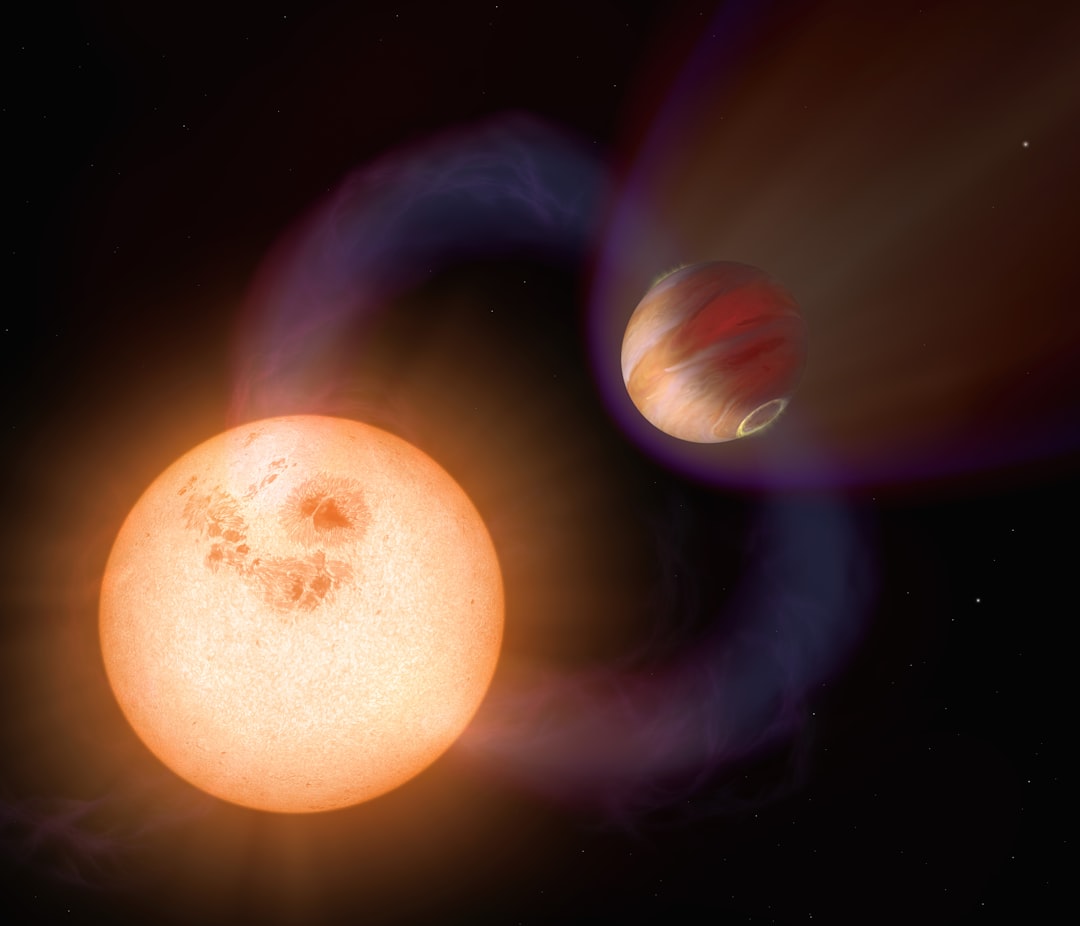
The research team strategically targeted planets orbiting extremely close to their host stars, focusing on worlds with orbital periods between 0.5 and 16 days. This population includes some of the most extreme planetary environments known to science, including Ultra-Short Period (USP) planets that complete their orbits in less than one Earth day. These scorched worlds race around their stars at blistering speeds, experiencing surface temperatures that would vaporize rock and metal.
USP planets present fascinating scientific puzzles. Planetary formation theories strongly suggest these worlds could not have formed in their current locations—the extreme temperatures and tidal forces so close to a star would have prevented the accumulation of planetary material during the system's youth. Instead, scientists believe these planets formed farther out in cooler regions of their stellar systems before migrating inward through gravitational interactions with other planets or the protoplanetary disk. Understanding this migration process is crucial for developing comprehensive models of planetary system evolution.
These close-in planets also serve as natural laboratories for studying atmospheric loss. The intense stellar radiation strips away their atmospheres in a process called photoevaporation, potentially leaving behind bare rocky cores. Observing planets at various stages of this stripping process helps astronomers understand how planetary atmospheres evolve and which worlds can retain their gaseous envelopes over billions of years. From a practical standpoint, these planets are also easier to detect due to their frequent transits and the relatively large dimming they cause as they pass in front of their stars.
RAVEN's Revolutionary Approach and Impressive Results
What distinguishes RAVEN from other exoplanet detection tools is its comprehensive, end-to-end approach to planetary discovery and validation. Dr. Andreas Hadjigeorghiou, who led the pipeline's development at the University of Warwick, explains the system's unique capabilities:
"The challenge lies in identifying if the dimming is indeed caused by a planet in orbit around the star or by something else, like eclipsing binary stars, which is what RAVEN tries to answer. Its strength stems from our carefully created dataset of hundreds of thousands of realistically simulated planets and other astrophysical events that can masquerade as planets. We trained machine learning models to identify patterns in the data that can tell us the type of event we have detected, something that AI models excel at."
Unlike contemporary tools that focus on specific aspects of the detection workflow, RAVEN handles the entire process autonomously—from initial signal detection through machine learning-based vetting to final statistical validation. This integrated approach reduces the potential for errors that can occur when transferring data between different analysis stages and ensures consistent evaluation criteria across the entire candidate sample.
The results speak to RAVEN's effectiveness. The system validated 118 new planets and identified over 2,000 high-quality planet candidates, with nearly 1,000 of these being entirely new discoveries not flagged by previous analyses. Dr. Lafarga Magro emphasized the significance of this achievement:
"This represents one of the best characterised samples of close-in planets and will help us identify the most promising systems for future study."
Mapping the Neptunian Desert and Planetary Demographics
Among RAVEN's most scientifically valuable contributions is its ability to characterize specific exoplanet populations that remain poorly understood. The system successfully validated members of several intriguing groups, including multi-planet systems on close orbits and planets residing in the enigmatic Neptunian Desert. This desert represents one of the most puzzling features in exoplanet demographics—a conspicuous scarcity of Neptune-sized worlds orbiting their stars with periods of approximately 2 to 4 days.
The Neptunian Desert's existence suggests powerful evolutionary processes at work. Scientists propose several mechanisms that might create this void, including photoevaporation (where intense stellar radiation strips away planetary atmospheres), tidal disruption (where gravitational forces tear planets apart), or the possibility that planets simply don't migrate into or form within this specific orbital region. Understanding which process dominates has profound implications for planetary formation and evolution theories.
RAVEN's comprehensive analysis allowed the research team to quantify the desert's emptiness with unprecedented precision. Dr. Kaiming Cui, a Postdoctoral Researcher at Warwick University and first author of a companion study titled "Demographics of close-in TESS exoplanets orbiting FGK main-sequence stars," highlighted this achievement:
"For the first time, we can put a precise number on just how empty this 'desert' is. These measurements show that TESS can now match, and in some cases surpass, Kepler for studying planetary populations."
The data reveals that only 0.08% of Sun-like stars host a planet within the Neptunian Desert—a remarkably low occurrence rate that confirms this region's unusual nature. By contrast, the research found that approximately 8% to 10% of solar-type stars host close-in planets overall, a figure that aligns with previous results from NASA's Kepler mission but with significantly reduced uncertainty thanks to RAVEN's robust statistical methods.
Advanced Statistical Analysis and Population Studies
Beyond individual planet discoveries, RAVEN enables sophisticated population-level analysis that reveals nature's underlying patterns. Dr. David Armstrong, an Associate Professor at Warwick University and senior co-author of the research, emphasizes that RAVEN transcends being merely another automated detection tool. The system possesses the statistical rigor to "map the prevalence of distinct types of planets around Sun-like stars," providing insights into how common different planetary architectures are throughout the galaxy.
The research team created detailed radius-period distributions showing how planetary sizes correlate with orbital distances. These distributions revealed not just the Neptunian Desert but also features called the Neptunian Ridge and Neptunian Savannah—regions with different planetary occurrence rates that together paint a complex picture of how Neptune-sized worlds distribute themselves around their host stars. Understanding these patterns helps astronomers test theories about planetary migration, atmospheric evolution, and the long-term stability of planetary systems.
Implications for Understanding Planetary System Evolution
While headlines often celebrate individual exoplanet discoveries—particularly those in potentially habitable zones—the true scientific value lies in understanding the broader exoplanet population. Each new world adds a data point to our cosmic census, but only by studying thousands of planets can astronomers discern the statistical patterns that reveal how planetary systems form, evolve, and diversify.
Even planets with no prospect of hosting life provide crucial insights. The scorched, close-in worlds identified by RAVEN help scientists understand planetary migration mechanisms, the processes that strip away atmospheres, and the factors that determine whether a planet retains a gaseous envelope or becomes a bare rock. These insights directly inform our understanding of how Earth-like worlds develop and maintain the conditions necessary for life over geological timescales.
The research demonstrates how machine learning tools like RAVEN are becoming essential for extracting maximum scientific value from space mission data. As future observatories like the ESA's PLATO mission and NASA's upcoming missions generate even larger datasets, AI-powered analysis will transition from helpful to absolutely necessary. The techniques pioneered with RAVEN will likely be adapted and expanded to analyze data from these next-generation facilities.
The Future of AI-Assisted Exoplanet Science
RAVEN's success illustrates a broader transformation occurring across astronomy. Machine learning algorithms are becoming collaborators in the scientific process, capable of recognizing patterns too subtle or complex for human perception while processing datasets too vast for manual analysis. This partnership between human insight and artificial intelligence represents the future of astronomical research.
The 2,000+ candidates identified by RAVEN now await follow-up observations to confirm their planetary nature and characterize their properties in detail. Ground-based telescopes and space observatories will measure the masses of these worlds through radial velocity observations, while spectroscopic studies may reveal atmospheric compositions for the most favorable targets. Each confirmed planet adds to our understanding of the galaxy's planetary diversity.
Looking ahead, the techniques developed for RAVEN could be applied to other astronomical challenges beyond exoplanet detection. Similar machine learning approaches might identify gravitational wave events, classify galaxies, detect transient phenomena, or analyze the vast datasets expected from next-generation radio telescopes. The methodology of training AI systems on carefully simulated data to recognize real cosmic phenomena has applications across the astronomical spectrum.
As Dr. Lafarga Magro and her colleagues continue refining RAVEN and analyzing its discoveries, they're not just finding new worlds—they're developing the tools and techniques that will define astronomical research for decades to come. In an era where our telescopes can observe billions of stars and our instruments generate data faster than any human team could analyze, AI systems like RAVEN ensure that no discovery goes unnoticed in the cosmic haystack. The 118 newly validated planets represent just the beginning of what promises to be a golden age of exoplanet discovery, powered by the synergy of human curiosity and artificial intelligence.