A groundbreaking astronomical survey has provided the most comprehensive evidence yet for a fundamental relationship between planetary mass and rotational velocity, confirming theoretical predictions that have intrigued scientists for decades. Using cutting-edge spectroscopic technology at the W.M. Keck Observatory on Maunakea, Hawai'i, researchers have analyzed the spin rates of 32 distant gas giants and brown dwarfs, revealing that less massive gas giant planets rotate significantly faster than their heavier counterparts when accounting for size and age differences.
This extensive research, led by scientists from Northwestern University's Center for Interdisciplinary Exploration and Research in Astrophysics (CIERA) and published in The Astronomical Journal, represents the largest systematic study of exoplanetary rotation ever conducted. The findings not only validate long-standing theoretical models but also provide crucial insights into the formation mechanisms of distant planetary systems and offer new perspectives on the evolutionary history of our own Solar System.
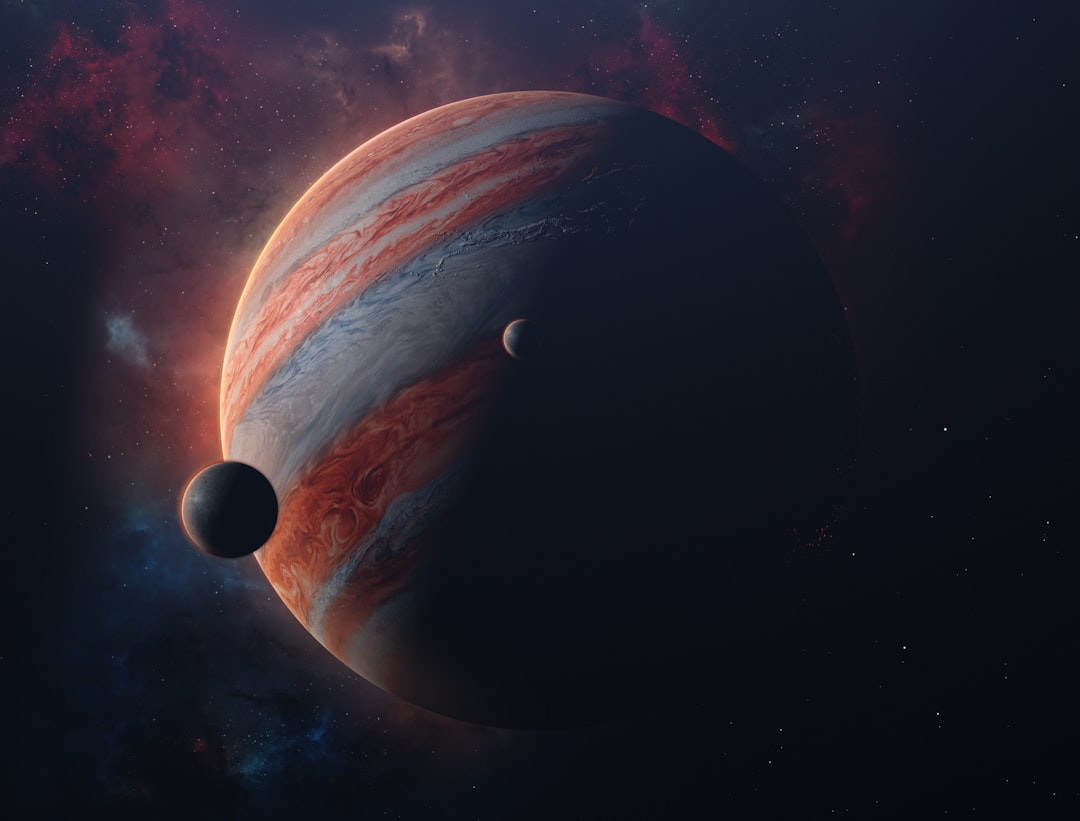
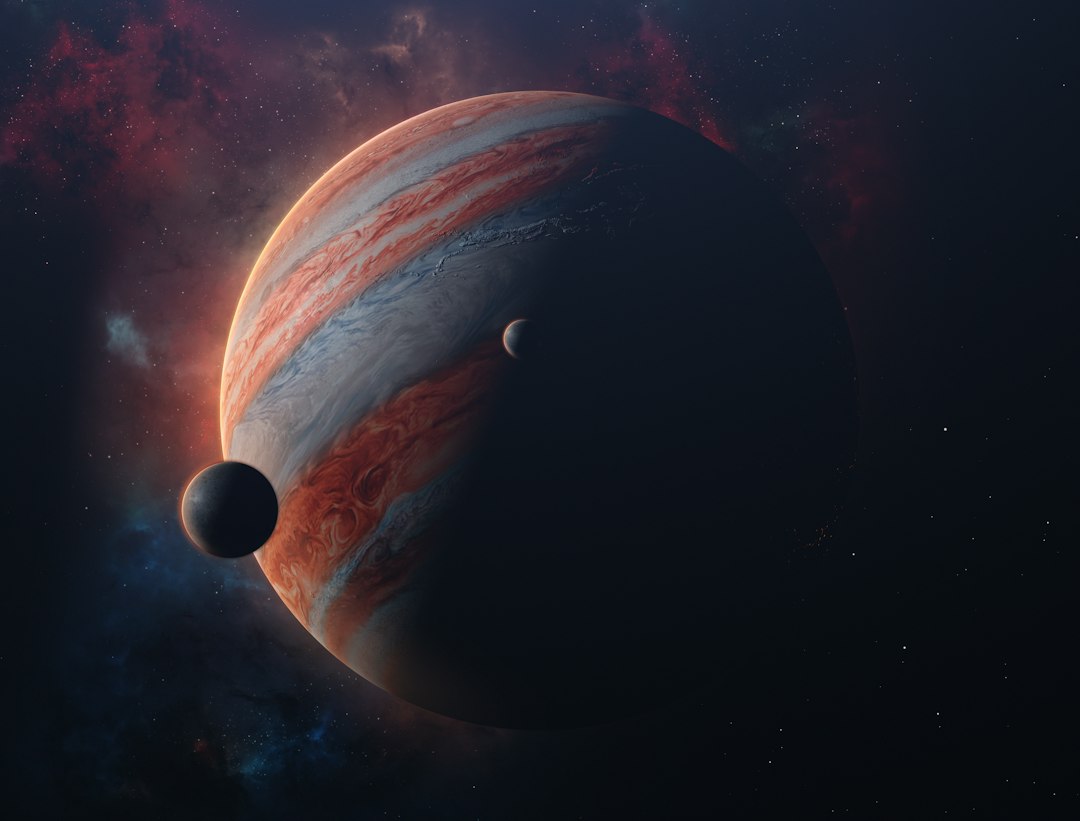
Within our cosmic neighborhood, the relationship between mass and rotation has long been evident. Jupiter and Saturn, the Solar System's gas giant behemoths, complete full rotations in approximately ten hours—remarkably rapid considering their immense sizes. Together, these two planets account for the vast majority of the Solar System's total rotational angular momentum, a pattern that astronomers have suspected might extend to planetary systems throughout the galaxy.
Revolutionary Observational Techniques Unlock Planetary Secrets
The research team employed the sophisticated Keck Planet Imager and Characterizer (KPIC) instrument to obtain high-resolution spectroscopic data from their sample of 32 objects, including six giant planets exceeding Jupiter's mass and 25 brown dwarf companions. This innovative technology allowed scientists to isolate and analyze light from these rotating worlds with unprecedented precision, detecting subtle spectral broadening caused by planetary rotation.
To create the most comprehensive dataset possible, the researchers supplemented their new observations with historical measurements, compiling a curated sample of 43 stellar and substellar companions plus giant planets, alongside 54 free-floating brown dwarfs and planetary-mass objects. This extensive catalog provided the statistical power necessary to identify clear trends in the mass-rotation relationship across a wide range of celestial objects.
The collaborative effort brought together expertise from multiple prestigious institutions, including UC San Diego's Center for Astrophysics and Space Sciences, Caltech's Division of Geological & Planetary Sciences, the Steward Observatory, and NASA's Jet Propulsion Laboratory, among others. This interdisciplinary approach proved essential for tackling the complex physics underlying planetary rotation.
Decoding Rotation: A Window Into Planetary Formation
Many of the planets examined in this survey orbit their host stars at distances ranging from tens to hundreds of Astronomical Units (AU)—far beyond the orbital distances of planets in our Solar System. These extreme separations have sparked ongoing debates among astronomers regarding formation mechanisms: did these worlds gradually coalesce within a circumstellar disk, or did they form through rapid gravitational collapse similar to stellar formation processes?
The KPIC instrument's ability to detect rotational broadening of atmospheric spectral features provides a powerful diagnostic tool for addressing these questions. As a planet rotates, light from the approaching limb becomes slightly blueshifted while light from the receding limb redshifts, creating a characteristic broadening pattern in spectral lines. By carefully analyzing these features, scientists can determine precise rotation rates.
"Spin is a fossil record of how a planet formed," explained lead author Dino Chih-Chun Hsu, a researcher at CIERA. "By measuring how quickly these worlds rotate, we can start to piece together the physical processes that shaped them tens to hundreds of millions of years ago. With KPIC, we can detect these tiny signals that reveal a planet's rotation around other nearby stars."
The Magnetic Brake: Understanding Spin Evolution
The research revealed a complex relationship between planetary mass, stellar mass ratios, and rotational velocity. This intricate interplay is dramatically illustrated by two objects in the HR 8799 system: a gas giant approximately seven times Jupiter's mass that spins six times faster than a brown dwarf companion weighing 24 Jupiter masses within the same system.
This seemingly counterintuitive observation can be explained by magnetospheric interactions during the objects' formative years. During planetary infancy, the magnetic field generated by a young world interacts with its surrounding circumplanetary disk—the rotating disk of gas and dust from which moons and rings eventually form. This interaction acts as a cosmic brake, transferring angular momentum from the planet to the disk and slowing the planet's rotation.
The more massive brown dwarf companion possessed a significantly stronger magnetic field, resulting in more efficient angular momentum transfer and consequently slower rotation. This magnetic braking mechanism represents a crucial piece of the planetary formation puzzle, helping scientists understand how the initial conditions of planetary birth influence the final characteristics of mature worlds.
Implications for Solar System Evolution
Understanding the mass-rotation relationship extends far beyond characterizing distant exoplanets—it provides essential context for comprehending the formation and evolution of our own Solar System. The distribution of angular momentum among planets fundamentally influences the architecture and stability of planetary systems over billions of years.
Research from institutions like the NASA Solar System Exploration program has shown that even Earth's rotation rate and magnetic field characteristics ultimately trace back to how angular momentum was partitioned during the Solar System's formation 4.6 billion years ago. The new findings suggest that similar physical processes governed the formation of planetary systems throughout the galaxy.
"The way that angular momentum is distributed among planets influences the overall architecture of a planetary system," Hsu noted. "Even Earth's rotation and magnetic field ultimately connect to how that spin budget was divided when the solar system formed."
Pioneering Technology Opens New Research Frontiers
The KPIC instrument represents a technological breakthrough in exoplanet characterization, being the first instrument of its kind capable of directly measuring planetary rotation rates for distant worlds. This capability opens entirely new avenues for studying exoplanetary properties that were previously almost impossible to detect from Earth-based observatories.
The instrument achieves its remarkable sensitivity through advanced adaptive optics and high-resolution spectroscopy, technologies that correct for atmospheric turbulence and enable precise measurements of subtle spectral features. These same techniques are being refined for next-generation instruments that will push the boundaries of exoplanet science even further.
Future Directions and Enhanced Capabilities
Building on the success of KPIC, the research team has ambitious plans to expand their investigations. Future studies will focus on measuring the rotation rates of free-floating planets (FFPs)—also known as "rogue planets"—which drift through interstellar space untethered to any host star. These enigmatic objects may have been ejected from their birth systems or formed independently in isolation, and their rotation rates could provide crucial clues about their origins.
The team also intends to characterize the atmospheric compositions of rotating exoplanets in greater detail, searching for connections between rotation rates, atmospheric chemistry, and formation history. This work will be significantly enhanced by the upcoming HISPEC (High-resolution Infrared Spectrograph for Exoplanet Characterization), scheduled to become operational at the Keck Observatory in 2027.
According to Jason Wang, an Assistant Professor at Northwestern University and study co-author, HISPEC will offer substantial improvements over current capabilities:
"We took the lessons learned from KPIC, and put them into HISPEC, which will have better sensitivity, higher spectral resolution, and wider wavelength coverage. With HISPEC we will be able to drastically increase the number of planets that we can measure spins of, and in particular, we can study planets closer to our own Jupiter in nature to see if our own Jupiter is typical."
Key Findings and Scientific Significance
- Mass-Rotation Correlation: Gas giant planets demonstrate faster rotation rates than more massive brown dwarfs when mass, size, and age are properly accounted for, confirming theoretical predictions about angular momentum distribution during formation
- Magnetic Braking Effects: The interaction between young planets' magnetic fields and their circumplanetary disks plays a crucial role in determining final rotation rates, with stronger magnetic fields causing more significant rotational slowdown
- System Architecture Insights: The relationship between stellar mass, planetary mass, and rotation velocity provides important constraints on planetary system formation mechanisms and helps distinguish between competing formation theories
- Solar System Context: The findings offer new perspectives on how angular momentum was distributed during our Solar System's formation, potentially explaining characteristics of Earth's rotation and magnetic field
- Technological Advancement: The KPIC instrument has proven capable of detecting previously unmeasurable planetary properties, opening new research directions in exoplanet characterization
Broader Impact on Exoplanet Science
This research exemplifies the rapid advancement of exoplanet characterization techniques that have transformed astronomy over the past two decades. Since the first confirmed detection of an exoplanet orbiting a Sun-like star in 1995, scientists have progressed from simply detecting these distant worlds to measuring their masses, sizes, atmospheric compositions, and now rotation rates with increasing precision.
The NASA Exoplanet Archive currently catalogs over 5,500 confirmed exoplanets, with thousands more candidates awaiting verification. Each new measurement technique adds another dimension to our understanding of these alien worlds, gradually building a comprehensive picture of planetary diversity throughout the galaxy.
The mass-rotation relationship revealed by this study provides a powerful diagnostic tool for understanding planetary formation pathways. By comparing observed rotation rates with theoretical predictions from different formation models, astronomers can test and refine their understanding of how gas giants and brown dwarfs emerge from the chaotic environments of protoplanetary disks.
Connecting Theory and Observation
Theoretical models of planet formation, developed through decades of research by institutions including the European Southern Observatory's planet formation research groups, have long predicted that angular momentum transport and magnetic field interactions should influence planetary rotation rates. However, observational confirmation of these predictions remained elusive until recent technological advances made precise rotation measurements possible.
The agreement between theoretical expectations and observational results strengthens confidence in current formation models while highlighting areas where further refinement is needed. For instance, the precise relationship between magnetic field strength and rotational braking efficiency requires additional study to fully understand the physics of magnetospheric interactions in young planetary systems.
Looking Toward the Future
As Hsu emphasized, this research represents just the beginning of exploring what planetary spin can reveal about the universe: "We're just beginning to explore what planetary spin can tell us. With future instruments and larger telescopes, we'll be able to measure spins for even more worlds and connect rotation, chemistry, and formation history across entire planetary systems."
The next generation of extremely large telescopes, including the Thirty Meter Telescope (TMT) planned for Maunakea and the European Extremely Large Telescope (E-ELT) under construction in Chile, will provide unprecedented light-gathering power and angular resolution. When equipped with advanced spectrographs like HISPEC, these facilities will enable rotation measurements for planets orbiting at Earth-like distances from their stars, potentially including rocky worlds in habitable zones.
Furthermore, space-based observatories continue to revolutionize exoplanet science. While the James Webb Space Telescope focuses primarily on atmospheric characterization and direct imaging, future missions may incorporate capabilities specifically designed to measure planetary rotation through advanced spectroscopic techniques.
The integration of rotation measurements with other observational data—including atmospheric composition, orbital parameters, and host star characteristics—will enable increasingly sophisticated analyses of planetary system formation and evolution. This holistic approach promises to reveal the full story of how planetary systems emerge from the primordial chaos of collapsing molecular clouds and evolve into the diverse architectures we observe today.
By confirming the predicted relationship between planetary mass and rotation through the largest survey of its kind, this research marks a significant milestone in our quest to understand the fundamental processes that shape worlds throughout the cosmos. As observational capabilities continue to advance, the fossil record preserved in planetary spin will yield ever more detailed insights into the cosmic processes that created not only distant exoplanets but also the familiar worlds of our own Solar System.