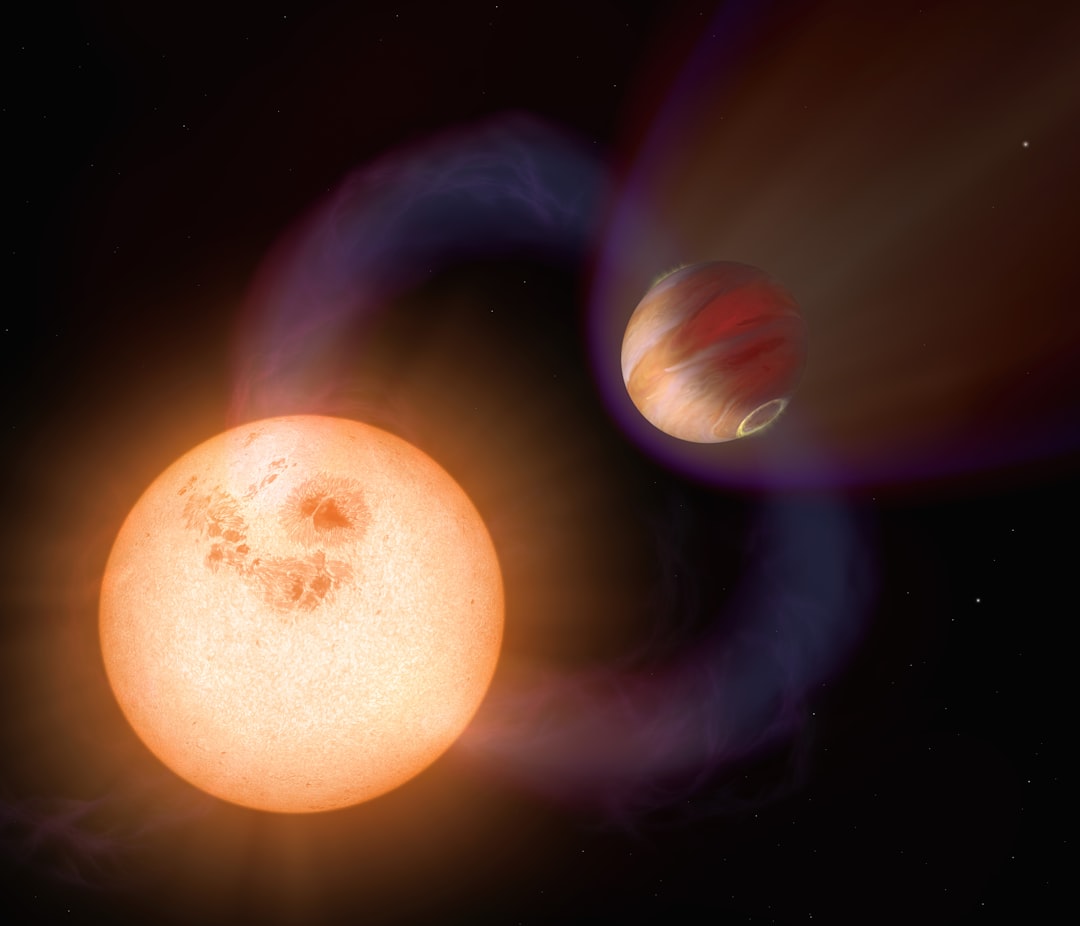
Imagine working on humanity's first settlement on an exoplanet, racing against the fading light of sunset to complete critical habitat repairs. Just as darkness begins to fall, the landscape suddenly brightens again—not from your first sun, but from its stellar companion rising on the opposite horizon. While this scenario remains firmly in the realm of science fiction, a groundbreaking new study has brought us significantly closer to understanding these exotic circumbinary planetary systems and their potential to harbor life beyond Earth.
An international collaboration of researchers from the United States and Australia has identified 27 new planet candidates orbiting binary star systems using an innovative detection method that could revolutionize how astronomers search for these elusive worlds. Published in the Monthly Notices of the Royal Astronomical Society, this research introduces a novel approach to finding circumbinary planets (CBPs)—worlds that orbit not one, but two gravitationally bound stars—potentially more than doubling the current catalog of confirmed CBPs.
The discovery represents a significant milestone in exoplanetary science, demonstrating that innovative analytical techniques can overcome longstanding observational challenges that have limited our ability to detect planets in binary star systems. Using data from NASA's Transiting Exoplanet Survey Satellite (TESS), the research team has opened a new window into understanding planetary formation in complex stellar environments.
The Challenge of Detecting Worlds with Two Suns
Binary star systems are remarkably common throughout our galaxy, with estimates suggesting that nearly half of all Sun-like stars exist in gravitationally bound pairs or multiple-star systems. Despite their prevalence, detecting planets orbiting these stellar duos has proven extraordinarily difficult using conventional methods. The traditional transit detection technique—which has discovered thousands of exoplanets—relies on measuring the subtle dimming of starlight as a planet passes in front of its host star from our perspective.
However, for circumbinary planets, this method faces a unique geometric challenge: the planet must transit across both stars simultaneously to produce a detectable signal, an alignment that occurs far less frequently than single-star transits. This geometric constraint has severely limited astronomers' ability to discover CBPs, with only 18 confirmed circumbinary planets identified prior to this study despite decades of intensive searching.
The difficulty is compounded by the dynamic nature of binary star systems themselves. The two stars orbit their common center of mass in complex patterns, creating variable stellar eclipses that can mask or mimic planetary transit signals. This stellar "noise" makes it challenging to distinguish genuine planetary transits from the natural variability of the binary system itself.
Revolutionary Detection Method: Apsidal Precession
To overcome these observational hurdles, the research team developed an innovative approach based on apsidal precession—a subtle gravitational effect that causes the orientation of an orbit to gradually rotate over time. When a massive planet orbits a binary star system, its gravitational influence causes the stars' orbital ellipse to slowly twist and precess, much like a spinning top wobbles as it rotates.
This precession creates measurable changes in the timing and characteristics of the stellar eclipses that occur when one star passes in front of the other. By carefully analyzing these eclipse timing variations in data from TESS, the researchers could identify the gravitational fingerprints of unseen planetary companions without requiring the planets to transit directly across the stars.
"Identifying transits in binary systems clearly is challenging, but we'd like to know more about the range of planets that can form around two gravitationally bound stars. So, we developed a survey to search for planets using stellar eclipses that is not limited to the orientation of the planet's orbit," explained Margo Thornton, PhD candidate at the University of New South Wales in Sydney and lead author of the study.
The apsidal precession method offers several key advantages over traditional transit searches. Most importantly, it does not require the planet's orbital plane to be perfectly aligned with our line of sight—a geometric constraint that eliminates the vast majority of potential circumbinary planets from detection using conventional methods. This makes the technique sensitive to a much broader population of CBPs, including those in orbital configurations that would be invisible to transit surveys.
Comprehensive Survey Results and Methodology
The research team conducted a systematic analysis of 1,590 eclipsing binary star systems observed by TESS that showed evidence of apsidal precession. This large-scale survey represents one of the most comprehensive searches for circumbinary planets ever undertaken, leveraging TESS's unique capability to monitor vast swaths of the sky continuously for extended periods.
From this sample, the researchers identified 27 promising candidate circumbinary planets exhibiting the telltale gravitational signatures of planetary companions. While the physical properties of these candidates—including their masses, sizes, and orbital characteristics—remain to be fully determined, their detection represents a significant expansion of the known population of worlds orbiting binary stars.
Key Findings from the TESS Data Analysis
- 27 New Planet Candidates: The survey identified nearly twice as many potential circumbinary planets as are currently confirmed, suggesting that CBPs may be more common than previously believed
- Diverse Binary Systems: The candidate planets were found around binary stars with varying orbital periods, stellar masses, and separations, indicating that planetary formation can occur in a wide range of binary configurations
- Method Validation: The successful application of apsidal precession analysis demonstrates the viability of this technique for future large-scale planet searches
- Follow-up Opportunities: The candidates provide excellent targets for confirmation using complementary techniques such as radial velocity measurements
The Path to Confirmation: Next Steps in Research
While the identification of 27 planet candidates represents a major achievement, confirming their planetary nature requires additional observations using complementary detection methods. The research team has highlighted the radial velocity technique as particularly promising for follow-up studies. This method measures the subtle back-and-forth motion of stars caused by the gravitational tug of orbiting planets, providing direct measurements of planetary masses.
Confirming these candidates will likely require observations from ground-based telescopes equipped with high-precision spectrographs, such as those at the European Southern Observatory. These follow-up studies could take several years to complete, as detecting the radial velocity signals from planets in binary systems requires extensive monitoring to disentangle planetary signals from the complex stellar motions.
The confirmation process will also help determine whether any of these worlds might be potentially habitable. Scientists are particularly interested in understanding whether circumbinary planets could maintain stable climates suitable for life despite the complex illumination patterns and gravitational dynamics created by their twin suns.
TESS: Continuing Kepler's Legacy of Discovery
Launched in April 2018, the Transiting Exoplanet Survey Satellite was specifically designed to build upon the remarkable legacy of NASA's Kepler Space Telescope and its extended K2 mission. While Kepler focused intensively on a single patch of sky and confirmed more than 3,300 exoplanets over its 9.5-year operational lifetime, TESS takes a complementary approach by conducting an all-sky survey.
TESS's broader survey strategy allows it to monitor hundreds of thousands of stars across the entire sky, searching for planetary transits around nearby, bright stars that are ideal targets for detailed follow-up characterization. To date, TESS has confirmed 855 exoplanets and identified more than 7,900 additional candidates awaiting confirmation—a testament to the mission's extraordinary productivity.
The satellite's ability to observe stars continuously for extended periods makes it particularly well-suited for detecting the subtle eclipse timing variations that reveal circumbinary planets through apsidal precession. As TESS continues its extended mission, astronomers expect it to identify many more candidate CBPs using both traditional transit methods and innovative techniques like those employed in this study.
Implications for Planetary Formation and Habitability
The discovery of numerous circumbinary planet candidates has profound implications for our understanding of how planetary systems form and evolve. Binary star systems present unique challenges for planet formation, as the gravitational perturbations from two stars can disrupt the protoplanetary disk from which planets coalesce. The fact that planets appear to form readily in these environments suggests that planetary formation is a remarkably robust process that can succeed under a wide variety of conditions.
From an astrobiological perspective, circumbinary planets represent intriguing potential habitats for life. While the complex orbital dynamics and variable stellar illumination might seem inhospitable, recent research suggests that planets in the so-called "circumbinary habitable zone"—where liquid water could exist on a planet's surface—might maintain surprisingly stable climates over geological timescales.
The iconic twin-sunset scene from Star Wars, while fictional, may represent a genuine cosmic possibility. As we discover more circumbinary planets and characterize their properties in greater detail, we move closer to understanding whether worlds like the fictional Tatooine could actually support life—and perhaps even civilizations—beneath the light of two suns.
Future Prospects for Circumbinary Planet Research
The success of this study opens exciting new avenues for discovering and characterizing circumbinary planets in the coming years. As astronomical surveys become more sophisticated and detection methods more refined, scientists expect to identify hundreds or even thousands of additional CBPs, transforming our understanding of these exotic worlds from rare curiosities to a recognized class of planetary systems.
Future missions, including the European Space Agency's PLATO mission scheduled for launch in 2026, will continue TESS's legacy of exoplanet discovery with enhanced capabilities for detecting small, Earth-sized planets. These next-generation observatories, combined with advanced analytical techniques like apsidal precession analysis, will enable astronomers to build a comprehensive census of circumbinary planetary systems throughout our galactic neighborhood.
The 27 newly identified planet candidates represent not just potential additions to the exoplanet catalog, but stepping stones toward answering fundamental questions about planetary formation, orbital dynamics, and the prevalence of habitable environments in the universe. As confirmation efforts proceed and new discoveries accumulate, each circumbinary planet brings us closer to understanding our place in a cosmos far richer and more diverse than previous generations could have imagined.
How many more worlds orbiting binary stars await discovery in the vast archives of astronomical data? As technology advances and innovative detection methods emerge, the answer promises to reshape our understanding of planetary systems and the potential for life beyond Earth. The journey to find and characterize these remarkable worlds continues, driven by human curiosity and the fundamental desire to explore the cosmos in all its magnificent complexity.