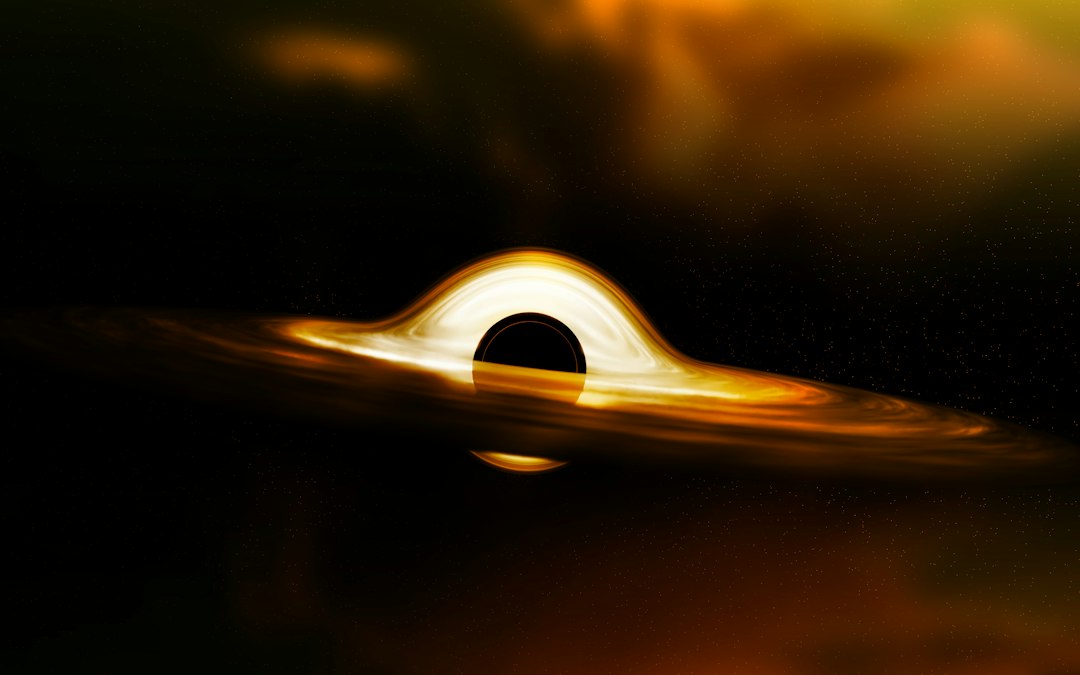
Astrophysicists Cross Another Dark Matter Candidate Off Their List: Stupendously Large Black Holes
If cosmologists ever identify what dark matter actually is, it may be because of a painstaking, decades-long process of elimination. Dark matter — the invisible substance thought to account for roughly 27% of the total mass-energy content of the Universe — remains one of the most profound unsolved mysteries in modern physics. We know it exists through its gravitational influence on galaxies, galaxy clusters, and the large-scale structure of the cosmos, yet every direct attempt to detect it has so far come up empty-handed.
Among the many proposed candidates are WIMPs (Weakly Interacting Massive Particles) and axions, both hypothetical subatomic particles that interact with normal matter only through gravity and, possibly, the weak nuclear force. But one of the most physically compelling candidates are primordial black holes (PBHs) — exotic objects theorized to have formed not from the collapse of dying stars, but from the extreme density fluctuations of the early Universe itself. Unlike particle-based candidates, PBHs are massive, macroscopic objects, meaning their gravitational signatures should, in principle, be detectable in ways that elusive particles are not.
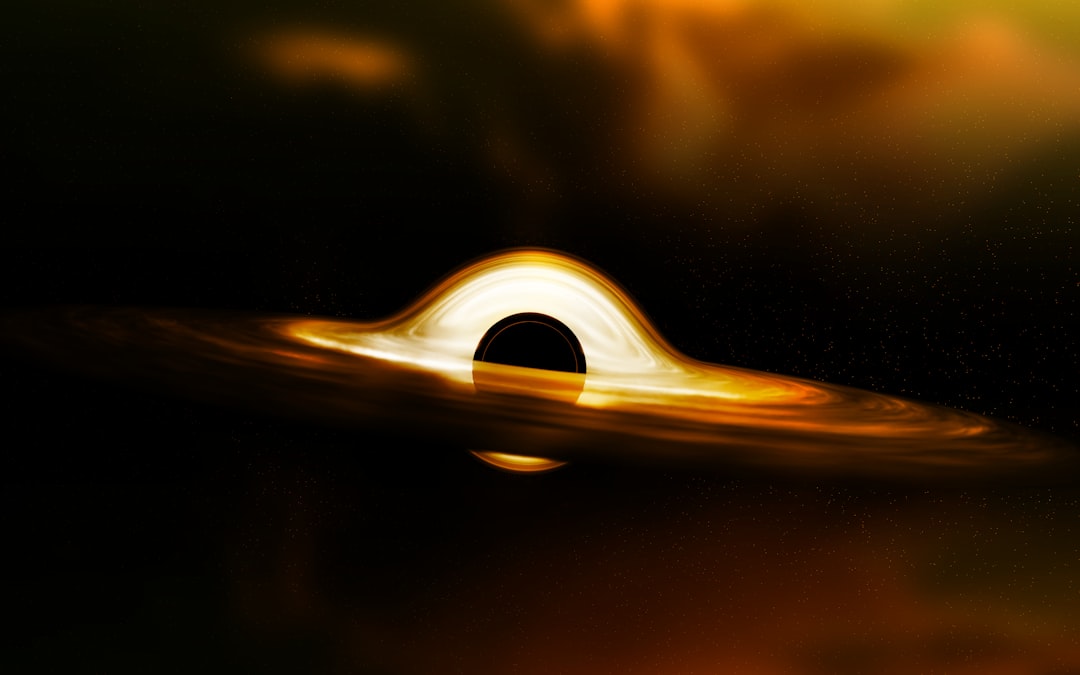
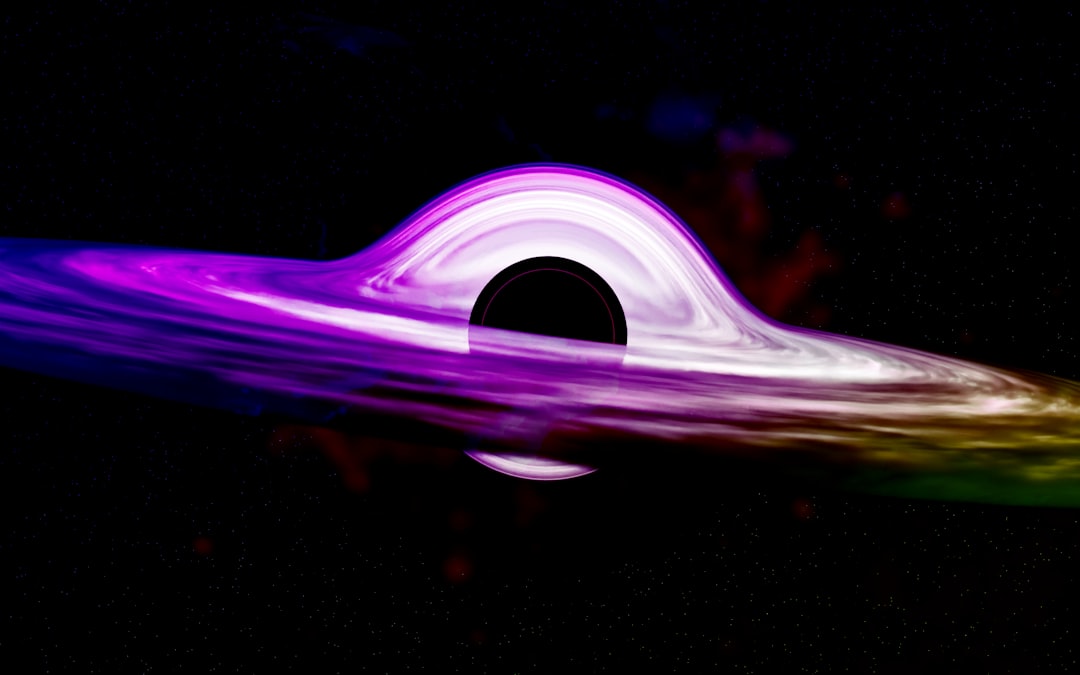
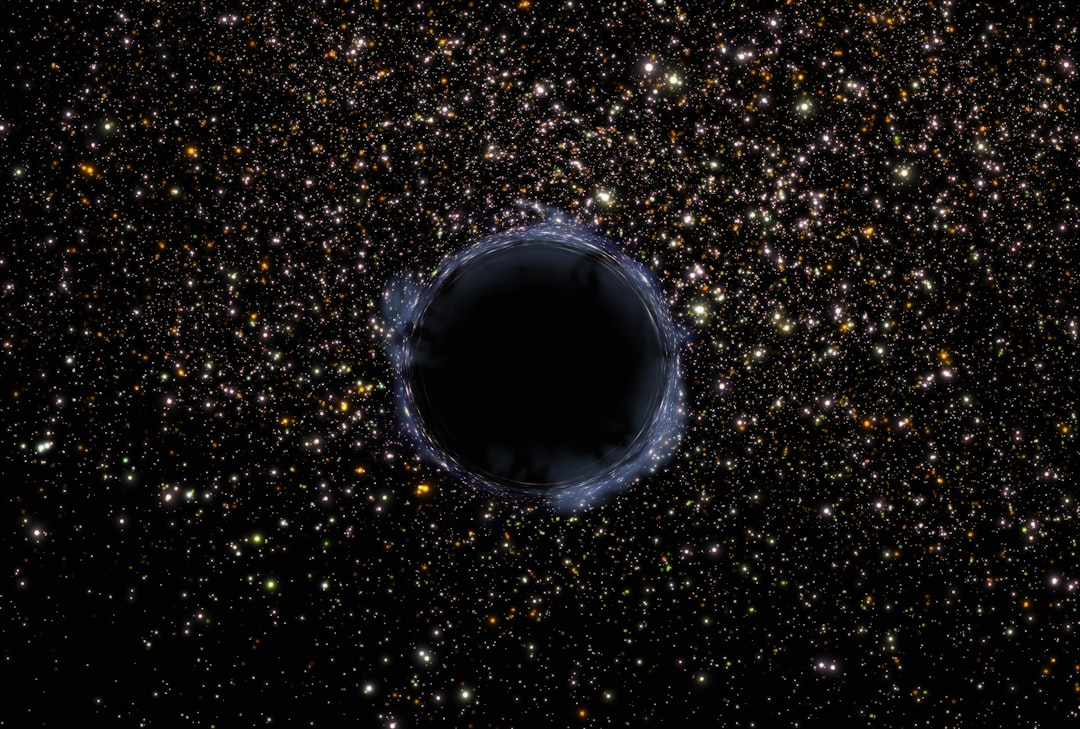
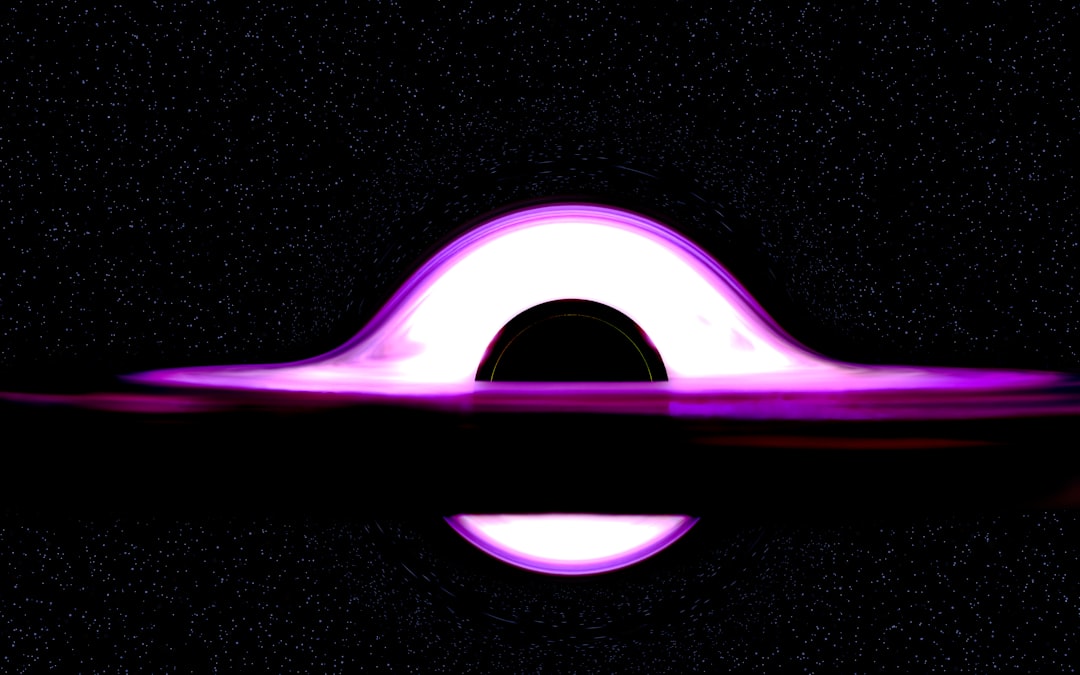
Now, a new study published in Physical Review Letters has dealt a significant blow to one particularly exotic subset of PBHs. Researchers have demonstrated that Stupendously Large Black Holes (SLABs) — a hypothetical class of primordial black holes with almost incomprehensibly enormous masses — cannot constitute a significant component of the Universe's dark matter. The paper, titled "Closing the Mass Window for Stupendously Large Black Holes," was led by Christopher Gerlach, a theoretical physicist at Johannes Gutenberg University (JGU) in Mainz, Germany, and its prestigious PRISMA+ Cluster of Excellence.
What Are Stupendously Large Black Holes?
To appreciate the scale of SLABs, some context is necessary. The supermassive black holes that anchor the centres of most large galaxies — including Sagittarius A* at the heart of our own Milky Way — are themselves staggeringly massive, ranging from millions to billions of solar masses. Yet even these cosmic titans are dwarfed by the theoretical SLAB.
SLABs are defined as primordial black holes with masses exceeding 1011 solar masses — that is, more than 100 billion times the mass of our Sun — with theoretical upper limits reaching 10 billion billion solar masses (1019 M☉). To put that in perspective, the entire observable Universe contains an estimated 1024 stars. SLABs, if they existed in abundance, would represent gravitational structures of almost unimaginable scale.
Unlike stellar-mass black holes, SLABs would not have formed through the conventional astrophysical pathway — the gravitational collapse of a massive star at the end of its life. Instead, they are theorized to have coalesced from overdensities of matter in the first fractions of a second after the Big Bang, during an era when the Universe was extraordinarily hot, dense, and turbulent. This primordial origin means they would predate the formation of stars, galaxies, and even galaxy clusters, making them uniquely ancient cosmic artifacts.
"A possible solution to the puzzle of dark matter was that it might have collected shortly after the Big Bang in giant black holes with masses ranging from 100 million to 10 billion billion times that of the Sun." — Christopher Gerlach, Lead Author, Johannes Gutenberg University
Reading the Cosmic Microwave Background
The primary tool used to test the SLAB hypothesis is the Cosmic Microwave Background (CMB) — the faint relic radiation left over from the Big Bang itself. When the Universe was approximately 380,000 years old, it had cooled sufficiently for protons and electrons to combine into neutral hydrogen atoms, in an epoch known as recombination. At this moment, photons that had previously been trapped in a dense plasma were suddenly free to travel unimpeded through space. Those photons have been traveling ever since, and we detect them today as the CMB — the oldest light in the observable Universe.
For the most part, the CMB appears remarkably smooth and uniform, or isotropic. However, it is not perfectly uniform. Exquisitely sensitive instruments have revealed tiny temperature fluctuations — anisotropies on the order of one part in 100,000 — that encode a vast wealth of information about the early Universe. These fluctuations correspond to the seeds of the large-scale structure we see today: the first galaxies, galaxy clusters, and cosmic filaments that constitute the web of the cosmos.
The ESA's Planck spacecraft, which operated from 2009 to 2013, produced the most precise maps of the CMB ever made. Although the mission concluded over a decade ago, its data continues to generate new scientific discoveries, thanks to ever-increasing computational power, improved data analysis techniques, and the ability to cross-correlate Planck's measurements with new datasets — including Baryon Acoustic Oscillation (BAO) surveys — that did not exist when the satellite was operational.
"That we are still generating new insights into the Universe's evolution and structure 13 years after it was shut down only emphasizes how important the Planck satellite was and is to physicists." — Christopher Gerlach, Johannes Gutenberg University
The Telltale Imprint SLABs Would Leave
The key to the new study lies in a specific type of signature that SLABs would inevitably leave on the CMB. If SLABs had existed in large numbers in the early Universe, their enormous gravitational influence would have generated isocurvature perturbations — fluctuations in the density of matter that differ from the standard adiabatic perturbations predicted by cosmological inflation.
In practical terms, these perturbations would cause the CMB to appear grainy in a very particular, characteristic way. This graininess would be distinct and measurable — a unique fingerprint that no other known physical process would produce. The researchers modelled this effect in detail, then compared their predictions against the actual Planck CMB data.
"If these SLABs had existed in large numbers and contained significant amounts of dark matter, they would have left a characteristic imprint on the CMB through their unique perturbations, or, in a word, making it grainy." — Nicholas Leister, Co-author, Johannes Gutenberg University
The verdict was unambiguous. The CMB simply does not display the level of graininess that a population of SLABs massive enough to account for dark matter would have produced. As the authors state in their paper:
"We show that primordial black holes (PBHs) in the Stupendously Large Black Hole mass range (M ≳ 1011 M☉) produce isocurvature perturbations exceeding current Planck Cosmic Microwave Background (CMB) limits, thereby excluding them as a significant dark matter component."
Broader Implications: JWST's Early Galaxies and Gravitational Wave Backgrounds
The ruling out of SLABs as a dark matter candidate has ripple effects across several other active debates in astrophysics, most notably concerning the James Webb Space Telescope (JWST) and its remarkable early discoveries.
Since its first science observations in 2022, the James Webb Space Telescope has identified a surprising number of massive, well-formed galaxies at extraordinarily high redshifts — meaning we observe them as they existed within the first few hundred million years after the Big Bang. These galaxies appear far too massive and structurally mature to be explained comfortably by standard models of galaxy formation, which predict that large galaxies should take considerably longer to assemble.
This puzzle prompted a flurry of proposed explanations. One prominent hypothesis, advanced in a 2022 study titled "Accelerating Early Massive Galaxy Formation with Primordial Black Holes," suggested that PBHs — including potentially very massive ones — could have acted as seeds that dramatically accelerated the collapse of matter into early galaxies, explaining the JWST observations. Under this scenario, PBHs would have contributed a fraction of the total dark matter content while simultaneously providing the gravitational scaffolding for rapid early galaxy growth.
The new SLAB findings cast serious doubt on this explanation. If SLABs did not exist in appreciable numbers — as the CMB data strongly suggests — they cannot have been responsible for the anomalously early, massive galaxies observed by JWST. Astronomers must continue searching for other explanations, which may include revised models of star formation efficiency, exotic forms of feedback, or entirely new physics.
The implications extend further still. A gravitational wave background — a low-frequency hum of spacetime ripples permeating the entire Universe — has been detected by Pulsar Timing Arrays (PTAs), networks of extremely precise millisecond pulsars that act as a galactic-scale gravitational wave detector. Some researchers had speculated that merging SLABs in the early Universe could contribute to this background signal. The new results make this scenario untenable as well.
"These questions are also unlikely to be answered by SLABs, since our findings show that they didn't exist in large numbers. The early universe still has many puzzles waiting to be solved." — Nicholas Leister, Johannes Gutenberg University
Where Does This Leave the Dark Matter Search?
The elimination of SLABs continues a broader trend of progressively narrowing the parameter space for primordial black holes as dark matter candidates. Previous studies have already largely ruled out stellar-mass and intermediate-mass PBHs as the dominant component of dark matter, through constraints from gravitational microlensing surveys, X-ray and radio observations, and CMB spectral distortions. The new work extends those constraints to the extreme high-mass end of the PBH spectrum.
- Low-mass PBHs (below ~1015 g): Ruled out because they would have evaporated via Hawking radiation by the present day, producing observable gamma-ray signatures that are not detected.
- Asteroid-mass PBHs (~1017–1023 g): Still a viable, though contested, dark matter window, constrained by microlensing and other observations.
- Stellar to supermassive mass PBHs: Largely excluded by gravitational microlensing (e.g., MACHO, EROS surveys) and CMB distortion constraints.
- Stupendously Large Black Holes (M ≳ 1011 M☉): Now firmly excluded by CMB isocurvature perturbation constraints, as demonstrated by this new research.
The cumulative picture is one of a dark matter puzzle that remains stubbornly unsolved, with the leading candidates — WIMPs, axions, sterile neutrinos, and various classes of primordial black holes — each facing significant observational challenges. Some cosmologists now entertain the possibility that dark matter is not a single substance at all, but rather a composite of multiple different particles, objects, or phenomena, each contributing a fraction of the total dark matter budget. Others are exploring more radical alternatives, such as modifications to the laws of gravity itself.
For the latest updates on the ongoing dark matter search, readers can follow research from institutions such as CERN's dark matter research program and NASA's Dark Matter and Dark Energy Science Program. The HubbleSite's dark matter resources also provide accessible scientific background on the subject.
Conclusion: The Value of Elimination
Science progresses not only through discovery but through the rigorous elimination of possibilities. The ruling out of SLABs as a dark matter candidate is, in its own way, a profound result. It tells us something definitive about the early Universe: that it did not produce the extreme density fluctuations that would have been required to birth black holes of such monstrous scale in sufficient numbers to account for the missing mass of the cosmos.
The Planck satellite, now silent for over a decade, continues to anchor some of the most important constraints in modern cosmology. Its legacy — a precisely mapped picture of the infant Universe — remains an indispensable scientific resource, one that researchers are still mining for answers to questions that were not even fully formulated when the spacecraft was first launched.
"The early universe still has many puzzles waiting to be solved." — Nicholas Leister, Johannes Gutenberg University
Dark matter remains at large. But with each candidate ruled out, the boundaries of possibility tighten, and the ultimate answer — whatever it may prove to be — draws incrementally closer. The universe keeps its secrets well, but it cannot keep them forever.