Echoing Light Reveals That Dark Matter May Concentrate Around Supermassive Black Holes
We know dark matter is out there. It remains one of the most profound mysteries in modern physics — a placeholder term for something we can detect only by its gravitational fingerprint, yet cannot see, touch, or directly measure. This ghostly, invisible mass is the leading explanation for why galaxies rotate so quickly without flying apart, and why the large-scale structure of the cosmos looks the way it does. Now, a new study suggests that dark matter doesn't just lurk in the outskirts of galaxies — it may also concentrate in dense spikes around the supermassive black holes at their cores.
The Long Road to Dark Matter: From Zwicky to Rubin
The concept of dark matter has a surprisingly long and often overlooked history. In the 1930s, Swiss astrophysicist Fritz Zwicky coined the term dunkle Materie — dark matter — based on his observations of the Coma Cluster, a massive assemblage of thousands of galaxies roughly 320 million light-years away. Zwicky measured how rapidly the galaxies within the cluster were moving and then calculated the total mass of the cluster based on its visible stars and dust. His conclusion was startling: the visible matter was nowhere near massive enough to gravitationally bind the cluster together. By all rights, those galaxies should have been flung outward into the void long ago.
Zwicky proposed that some form of unseen mass — dark matter — must account for the discrepancy. His idea was largely dismissed or ignored for decades, considered a curiosity rather than a paradigm-shifting revelation.
The tides turned in the 1970s when Vera Rubin and Kent Ford conducted meticulous observations of individual spiral galaxies, measuring the rotational velocities of stars at varying distances from galactic centers. According to Newtonian mechanics and what astronomers already understood about gravity, stars at the outer edges of a galaxy should orbit more slowly than those near the mass-concentrated center — just as the outer planets of our solar system move more slowly than the inner ones. This expected behavior is described by what physicists call a Keplerian decline.
But the data told a completely different story. Rubin and Ford found that stars at the outer edges of spiral galaxies were orbiting at roughly the same speed as those near the center — what astronomers now call a flat rotation curve. This meant that either our understanding of gravity was fundamentally wrong, or there was an enormous amount of invisible mass distributed throughout and beyond the visible disk of each galaxy, providing the gravitational "glue" to keep everything in place.
"There is no doubt that some form of unseen matter pervades the Universe. The spiral rotation curves tell us so, and there is no way around it." — Vera Rubin, pioneering astronomer and dark matter researcher
This became known as the galaxy rotation problem, and Rubin's and Ford's work was transformative. Their evidence for dark matter was compelling, reproducible, and ultimately persuasive. The scientific community gradually accepted that the Universe contained vast quantities of a new type of non-baryonic matter — matter that does not interact with the electromagnetic force and therefore emits, absorbs, or reflects no light whatsoever. It interacts with ordinary matter only through gravity.
For a deeper exploration of dark matter's history and detection efforts, see NASA's overview of dark matter and dark energy.
What We Know — and Don't Know — About Dark Matter
Despite decades of research, dark matter's precise nature remains one of the most tantalizing unsolved problems in physics. We know a great deal about what it does, but almost nothing about what it fundamentally is. The leading theoretical candidates include:
- WIMPs (Weakly Interacting Massive Particles): Hypothetical particles that interact via gravity and the weak nuclear force. They were long considered the most promising candidates but have so far evaded detection in dedicated underground experiments.
- Axions: Extremely light hypothetical particles originally proposed to solve a problem in quantum chromodynamics. Several experiments are actively searching for them.
- Sterile neutrinos: A theoretical heavier cousin of the known neutrino that interacts only through gravity.
- Primordial black holes: Black holes formed in the early Universe before any stars existed, which could account for some or all of the dark matter.
What we do know is that dark matter forms vast, invisible dark matter halos that envelop entire galaxies. These halos are not simply passengers — they are the invisible scaffolding upon which galaxies themselves assembled. In the leading cosmological framework, the Lambda-CDM model (Lambda Cold Dark Matter), dark matter halos formed first from quantum fluctuations in the early Universe, and ordinary matter — gas, dust, and eventually stars — fell into these gravitational wells to create the galaxies we observe today. Dark matter is also the structural backbone of the cosmic web, the vast network of filaments and voids that defines the large-scale architecture of the Universe.
You can explore the cosmic web's structure and the role of dark matter further at the European Space Agency's dark matter overview.
A New Frontier: Dark Matter Spikes Around Supermassive Black Holes
Now, a compelling new study published in the journal Physical Review D, titled "Novel method to trace the dark matter density profile around supermassive black holes with AGN reverberation mapping," adds a provocative new chapter to the dark matter story. The lead author is Mayank Sharma, a graduate student in physics at Virginia Tech, working alongside a team of astrophysicists probing the innermost environments of distant galaxies.
The central question the team addressed is this: if dark matter halos permeate entire galaxies, does dark matter also concentrate near a galaxy's most extreme gravitational engine — its supermassive black hole (SMBH)? Theorists have long predicted the existence of dark matter spikes, regions of dramatically enhanced dark matter density that could form around a central massive object as it adiabatically grows over time, drawing dark matter particles inward along with ordinary matter. Until now, however, directly observing such spikes in external galaxies has been considered nearly impossible due to the extreme distances and minuscule spatial scales involved.
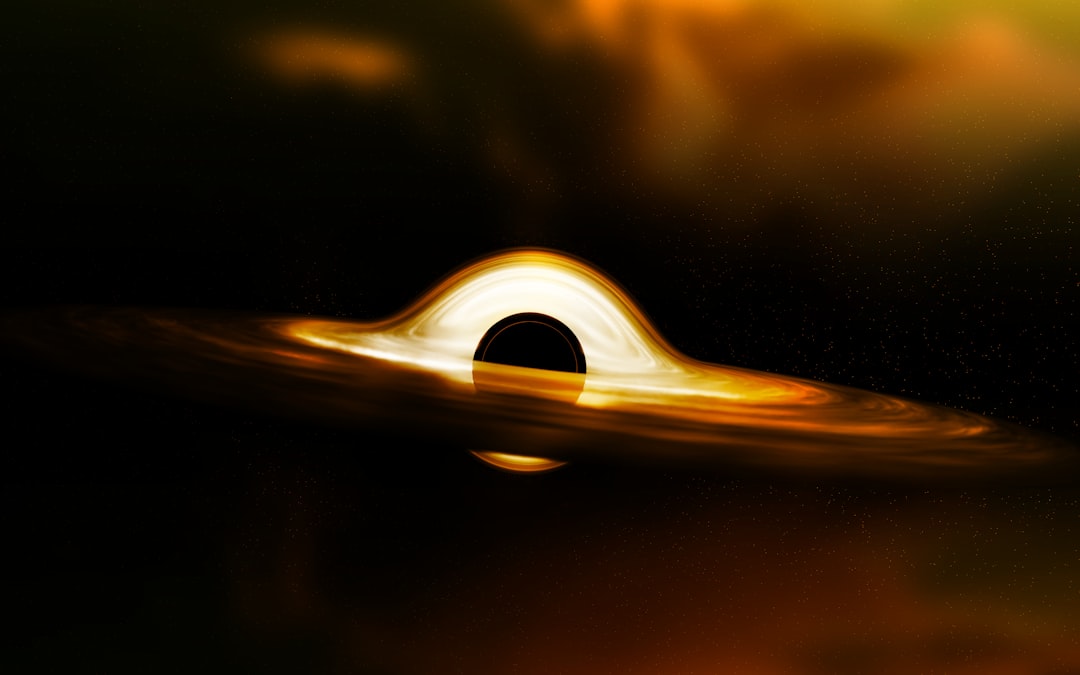
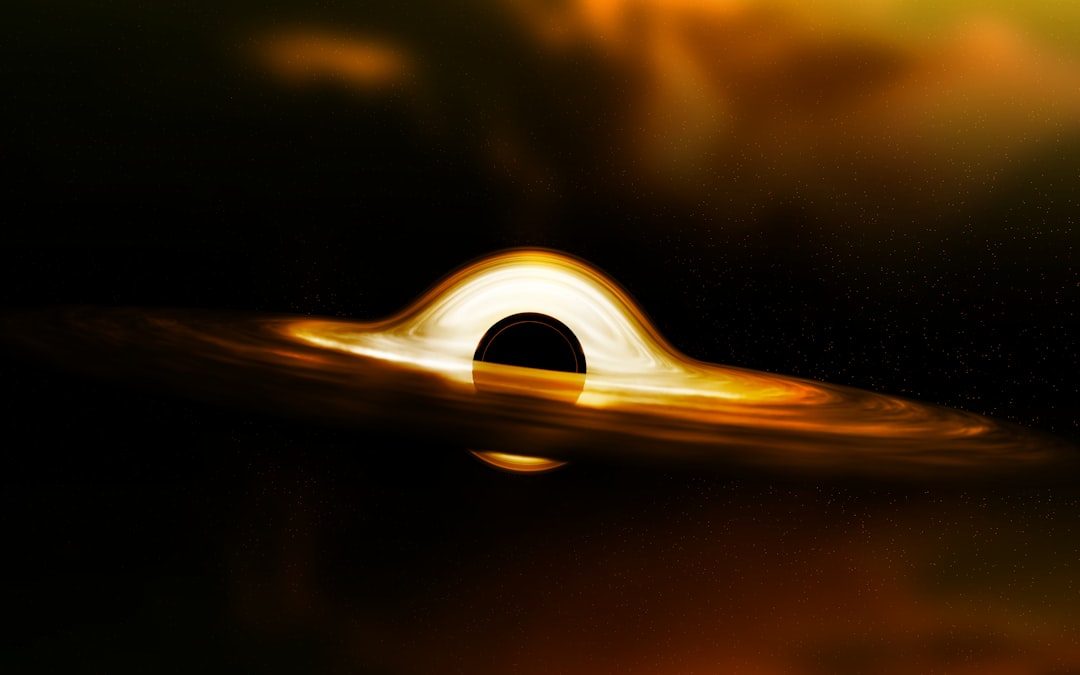
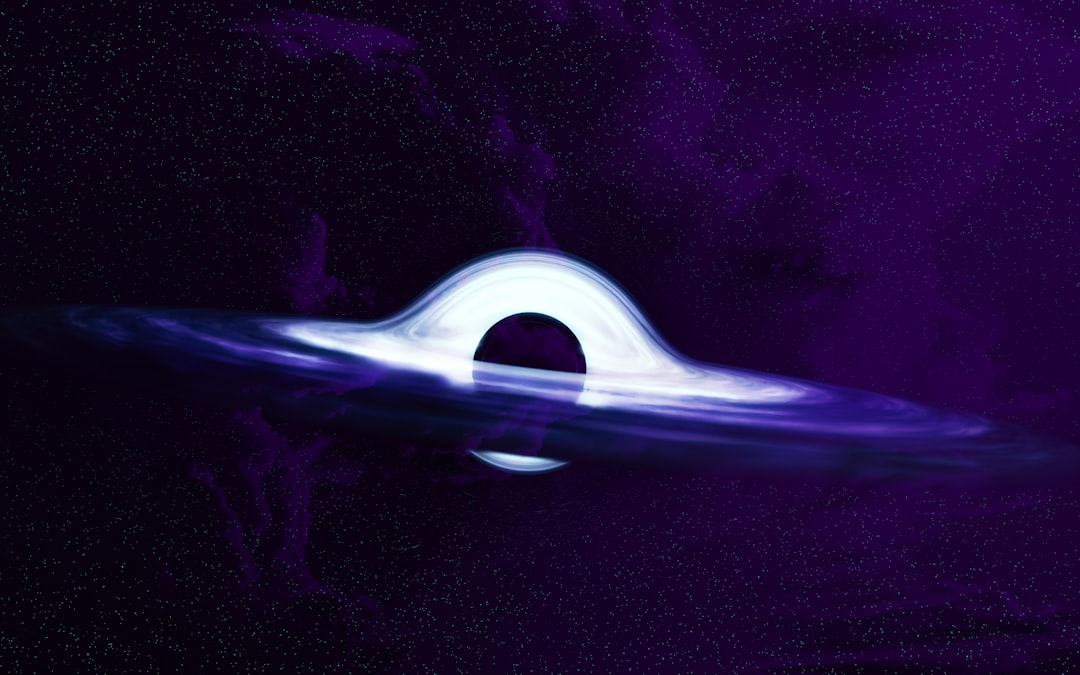
Supermassive black holes are gravitational titans — objects containing millions to billions of solar masses compressed into regions smaller than our solar system — that warp spacetime itself to extraordinary degrees. Gas and dust spiral inward toward them, forming superheated, luminous accretion disks. When actively feeding, these systems are classified as Active Galactic Nuclei (AGN), among the brightest persistent sources of radiation in the observable Universe. The light they emit has traveled for billions of years to reach our telescopes, carrying encoded information about the environments surrounding these ancient behemoths.
Reverberation Mapping: Using Light Echoes as a Cosmic Ruler
The clever observational technique at the heart of this study is called reverberation mapping (RM) — and it exploits the finite speed of light as a cosmic measuring tool. Here's how it works:
Light from an AGN arrives at Earth in two distinct pulses. The first is direct radiation produced by the superheated gas in the accretion disk itself, blasting outward in all directions. The second pulse arrives slightly later: it is the "echo" produced when that original flash of radiation travels outward and collides with the surrounding gas clouds of the broad-line region (BLR) or the wider interstellar medium (ISM). This surrounding material absorbs the energy and re-emits it — much like the way a thunderclap echoes off a distant hillside.
"We propose a new method to determine the dark matter density profile in the vicinity of distant supermassive black holes using reverberation mapping measurements of active galactic nuclei. The mapping of multiple emission lines allows the measurement of the enclosed mass within different radii from the central SMBH, which can be used to infer or constrain the dark matter density profile on subparsec scales." — Sharma et al., Physical Review D
Because light travels at a constant and precisely known speed — approximately 299,792 kilometers per second — the time delay between the two pulses directly encodes the physical distance between the black hole and the re-emitting gas. By measuring this delay across multiple different spectral emission lines, which originate at different distances from the central black hole, astronomers can essentially map the enclosed mass at various radii. If the enclosed mass at a given radius is greater than what the black hole's own mass would predict, that excess must come from something else — a prime candidate being a surrounding dark matter spike.
This technique, while long used to measure black hole masses and map AGN structure, had never before been applied to the problem of dark matter distribution near SMBHs. Sharma and colleagues applied it to a sample of 14 galaxies with existing, high-quality reverberation mapping datasets.
Learn more about reverberation mapping and AGN science at the HubbleSite's coverage of black hole mass measurements.
What the Data Revealed
The results are intriguing, if preliminary. For five of the fourteen galaxies studied, the team found that the enclosed mass measured at increasing distances from the central black hole did indeed grow beyond what the black hole mass alone could explain. This growth is precisely what would be expected if a dark matter spike were present, adding additional mass at larger radii.
"These galaxies are definitely showing a hint that there is extra material that cannot be explained by just the supermassive black hole," lead author Sharma said in a press release accompanying the study.
The statistical significance of this finding falls in the 1–2 sigma range — meaningful enough to be noteworthy, but not yet at the 5-sigma threshold conventionally required to claim a definitive discovery in physics. The team is candid about this limitation:
"We stress, however, that the majority of sources in our sample do not show preference for a model with increasing mass over a constant mass model." — Sharma et al., Physical Review D
In other words, for nine of the fourteen galaxies examined, the data does not clearly favor the presence of a dark matter spike over a simpler model. This underscores both the caution with which the findings should be interpreted and the need for larger samples and improved observational data to reach definitive conclusions.
The researchers describe their results as evidence for what they call a universal dark matter profile, a theoretically predicted density distribution in which dark matter density increases as one approaches the central black hole, forming a cusp or spike. The consistency of this profile across multiple galaxies — even if detected only tentatively — lends it additional theoretical weight.
A New Tool for Exploring the Universe's Dark Side
Perhaps the most significant contribution of this study is methodological. Sharma and colleagues have demonstrated that reverberation mapping — an established, powerful astronomical technique — can be repurposed to probe dark matter on sub-parsec scales (scales smaller than about 3.26 light-years) in the nuclei of distant galaxies. This is territory where essentially no other observational method can currently reach.
"Our work establishes the first link between the observational technique of RM and the theoretical framework of dark matter spikes, both of which aim to study the same spatial scales in extragalactic SMBHs," the authors explain.
This methodological bridge is potentially transformative. Future large-scale AGN surveys — including those enabled by facilities like the Vera C. Rubin Observatory's Legacy Survey of Space and Time (LSST), which will monitor millions of AGN over time and produce an unprecedented wealth of reverberation mapping data — could apply this technique to thousands of galaxies, dramatically improving the statistical power and spatial resolution of such dark matter studies.
Additionally, upcoming space-based observatories and improved spectroscopic surveys will allow astronomers to measure time lags for multiple emission lines with greater precision, enabling more refined mass profiles at a wider range of distances from central black holes.
Broader Implications: What Dark Matter Spikes Would Mean
If dark matter spikes around supermassive black holes are confirmed by future studies, the implications would ripple across multiple areas of astrophysics and fundamental physics:
- Black hole growth and feedback: The distribution of dark matter near a SMBH could influence how it accretes material over cosmic time, potentially providing new constraints on models of black hole and galaxy co-evolution.
- Dark matter particle physics: Dense dark matter spikes are one of the few environments where dark matter annihilation — if dark matter particles are their own antiparticles, as in many WIMP models — could produce detectable signals in gamma rays or other high-energy radiation. Confirmed spikes could inform and sharpen the targets of instruments like the Fermi Gamma-ray Space Telescope.
- Gravitational wave astronomy: Dark matter spikes around SMBHs could affect the gravitational wave signals produced when smaller compact objects spiral into them — a class of events called Extreme Mass Ratio Inspirals (EMRIs) — potentially observable by the future space-based LISA gravitational wave observatory.
- Cosmological models: Importantly, confirming dark matter spikes would not alter the total cosmic inventory of dark matter or challenge the Lambda-CDM framework. It would simply refine our understanding of how dark matter is spatially distributed within galaxies — shifting some of the mass accounted for in the extended halo to a more centrally concentrated component.
In a sense, if dark matter spikes are real, supermassive black holes become a new kind of natural laboratory — extreme environments where dark matter is concentrated to its highest known densities, and where the interplay between dark matter, ordinary matter, and extreme gravity can be studied in ways impossible anywhere else in the Universe.
Conclusion: A Promising Beginning
The study by Sharma and colleagues represents an important and genuinely novel step in the long quest to understand dark matter. While the evidence for dark matter spikes around supermassive black holes remains weak-to-moderate at this stage, the method they have pioneered opens a powerful new observational window onto one of the most inaccessible — and potentially most revealing — environments in astrophysics. As AGN surveys grow larger and reverberation mapping datasets become richer and more precise, this technique may well evolve from a promising hint into a definitive detection.
Vera Rubin spent her career insisting that the Universe contained far more than met the eye. Half a century after her groundbreaking rotation curves, her intellectual heirs are now using the farthest, most luminous objects in the cosmos as tools to continue mapping that invisible, indispensable cosmic scaffolding — piece by painstaking piece.
The full study, "Novel method to trace the dark matter density profile around supermassive black holes with AGN reverberation mapping," is published in