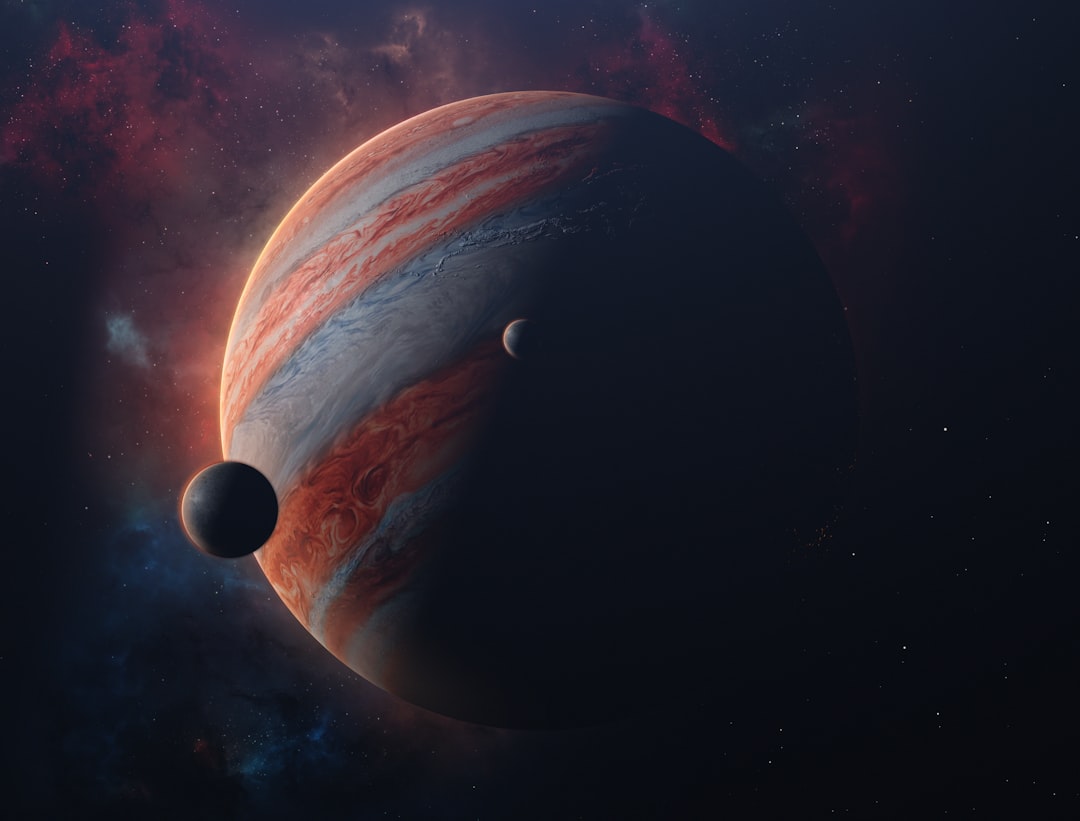
Massive Exoplanets Could Form Around Supermassive Black Holes
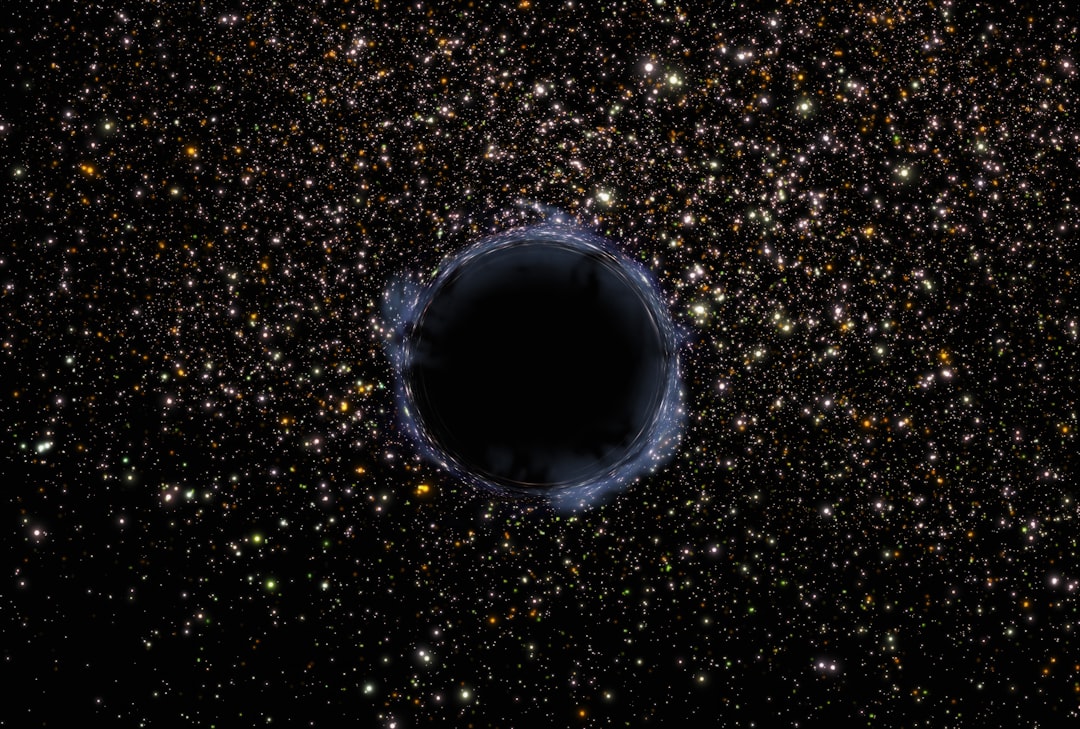
You've read it, heard it in casual conversations, and seen it in TV shows and movies: black holes are massive objects that suck in everything around them. Nothing can escape their inexorable draw, not even light itself. Black holes are portrayed as cosmic destroyers of everything that strays too close, consuming massive stars and reducing entire solar systems to nothingness. Yet this dramatic picture, while compelling, is fundamentally incomplete — and new research is pushing the boundaries of our understanding even further into the extraordinary.
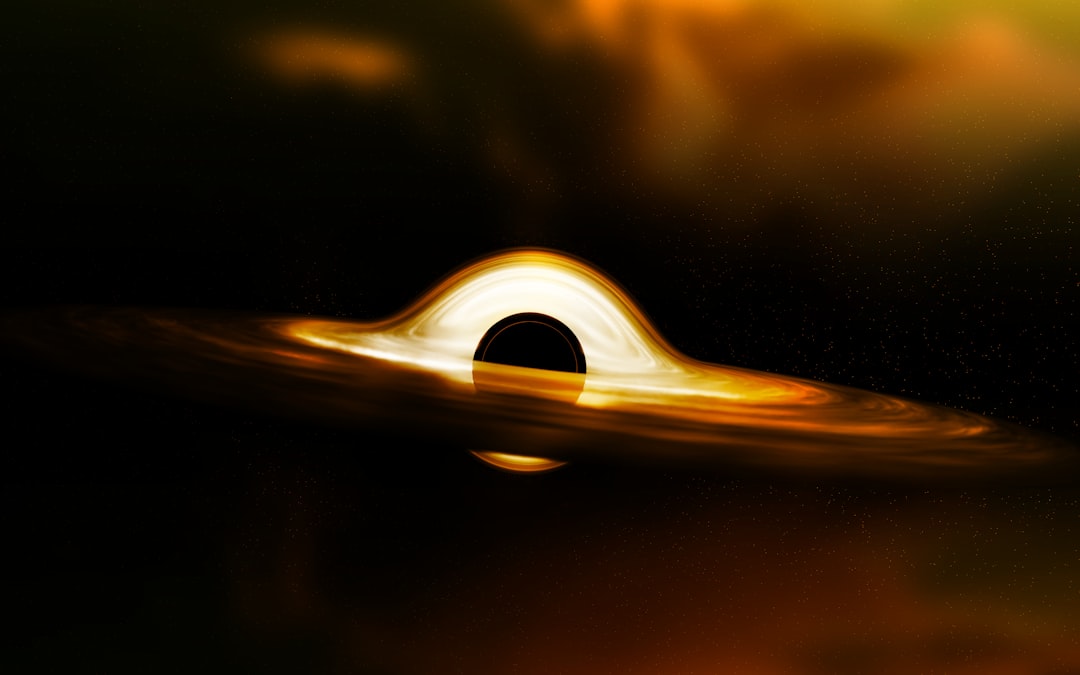
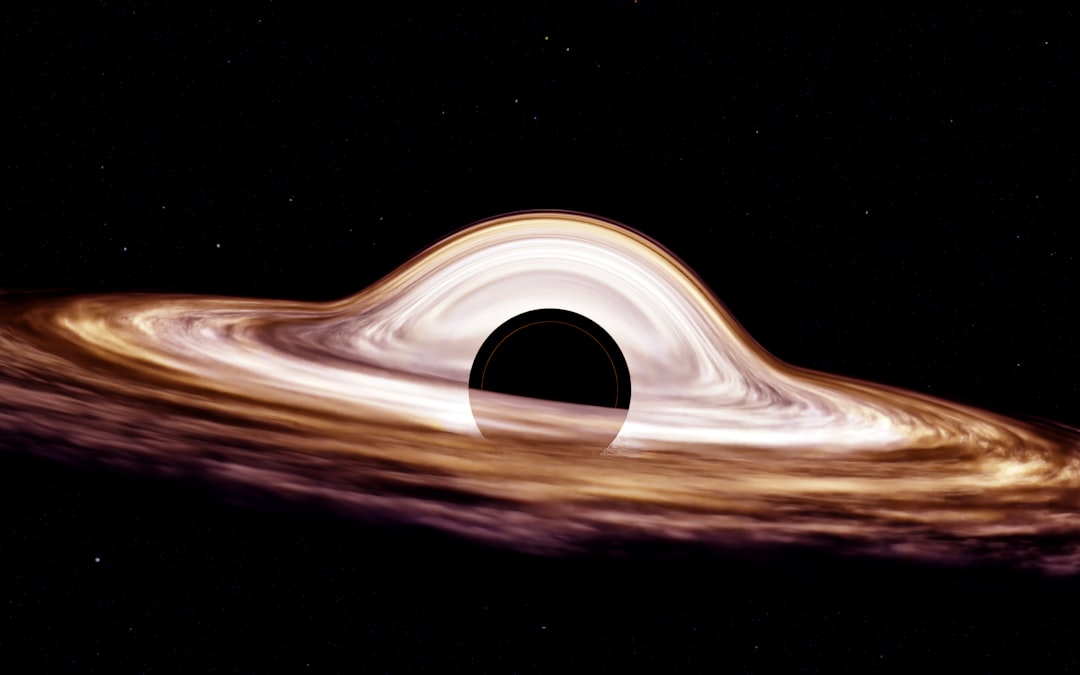
There is, in fact, a great deal happening around supermassive black holes (SMBHs). Competing gravitational, magnetic, and thermal forces mean that while black holes do indeed swallow matter, much of it remains suspended in vast, swirling accretion disks — some stretching tens of thousands of astronomical units across. Far from being barren wastelands of destruction, these disks may be among the most prolific planetary nurseries in the universe.
Groundbreaking new research published in The Astrophysical Journal suggests that under certain conditions, accretion disks around SMBHs can give rise to giant planets — and potentially much more. The paper, titled "Active Galactic Nucleus Tori: Potential Birthplace to Millions of Planets," is led by Wladimir Lyra, an associate professor of astronomy at New Mexico State University, and represents a remarkable convergence of planet formation theory and black hole astrophysics.
The Surprising Environment of Active Galactic Nuclei
At the heart of most large galaxies lies a supermassive black hole, often millions or even billions of times the mass of our Sun. When these behemoths are actively feeding on surrounding gas and dust, they power what astronomers call Active Galactic Nuclei (AGN) — some of the brightest and most energetic phenomena in the known universe. The material spiraling inward forms an accretion disk that heats up to extreme temperatures, producing brilliant emissions across the electromagnetic spectrum, from radio waves to X-rays.
These accretion disks can be almost incomprehensibly vast — extending up to 20,000 astronomical units (AU) or more from the central black hole, depending on how the boundaries of the disk are defined. For context, one astronomical unit is the average distance between Earth and the Sun; the entire solar system, out to the orbit of Pluto, spans only about 80 AU. The outer regions of AGN disks, therefore, exist at enormous distances from the central black hole, where temperatures drop dramatically and conditions begin to resemble something far more familiar to planet scientists.
"The outer regions of AGN disks have temperatures similar to those of circumstellar disks, permitting dust condensation. Therefore, planet formation and growth could be active in these dust tori through similar mechanisms."
This thermal analogy is key. In the well-studied environments of protoplanetary disks around young stars, planet formation begins when dust grains cool sufficiently to stick together and grow. The outer regions of AGN accretion disks, despite orbiting objects billions of times more massive than any star, appear to replicate this fundamental chemistry — a profound insight that bridges two previously unconnected fields of astrophysics.
Streaming Instability: The Engine of Planet Birth
The leading theoretical framework for explaining how planets are born from disks of gas and dust is known as streaming instability, and it plays a central role in this new research. Under normal disk conditions, gas exerts a gentle headwind on solid particles — dust grains and pebbles — causing them to slowly spiral inward toward the host star, where they are ultimately destroyed before they can accumulate into planets. This so-called radial drift barrier has long been considered one of the central challenges in planet formation theory.
Streaming instability offers an elegant solution. When solid material becomes sufficiently concentrated in one region of the disk, the collective drag of those particles on the surrounding gas reverses the usual dynamic — the solids begin dragging the gas along with them, effectively eliminating the destructive headwind. This allows material to clump together rapidly, forming planetesimals: the rocky or icy building blocks of planets. Learn more about this process through NASA's planetary science resources.
In the AGN disk environment, the research team found that this same mechanism operates with remarkable efficiency. The key requirement — that dust grains grow large enough to exert drag on surrounding gas — is readily met through a process called coagulation, where smaller grains collide and stick together over time.
"We find that the dust grain sizes required for streaming instability are easily attained through coagulation; the dust filaments it produces can contain solar masses, collapsing into tens of millions of 'planetesimals' ranging from Earth to super-Jupiter masses."
The scale here is staggering. Where a typical protoplanetary disk around a young star might produce a handful of planets, an AGN disk — by virtue of its sheer size and the enormous quantity of material it contains — could theoretically generate tens of millions of planetesimals spanning a vast range of masses. The researchers emphasize that for this process to proceed without being disrupted by turbulence, the disk must be strongly magnetized, which serves to damp down chaotic gas motions and maintain the stable, stratified conditions necessary for dust to settle and concentrate.
A New Class of Exotic Planetary Objects
The planets predicted to form in AGN disks are unlike anything in our solar system — or indeed, unlike any planet yet discovered orbiting a conventional star. In a typical protoplanetary disk, planets form from a mixture of rock, ice, and gas, and they undergo differentiation: the process by which denser materials (like iron and nickel) sink to form a core, while lighter materials rise to form a mantle and crust. The resulting planets have layered internal structures, much like Earth.
The objects predicted to form in AGN disk environments are fundamentally different. Rather than being built from the diverse chemical palette available in a stellar protoplanetary disk, these worlds would be composed almost entirely of accumulated dust — the raw material of the AGN torus itself. They would not be differentiated in the conventional sense. Instead, Lyra and colleagues describe them as:
"Exotic objects directly formed above the hydrogen-burning limit, yet of pure dust" — effectively "degenerate lava drops" orbiting the AGN.
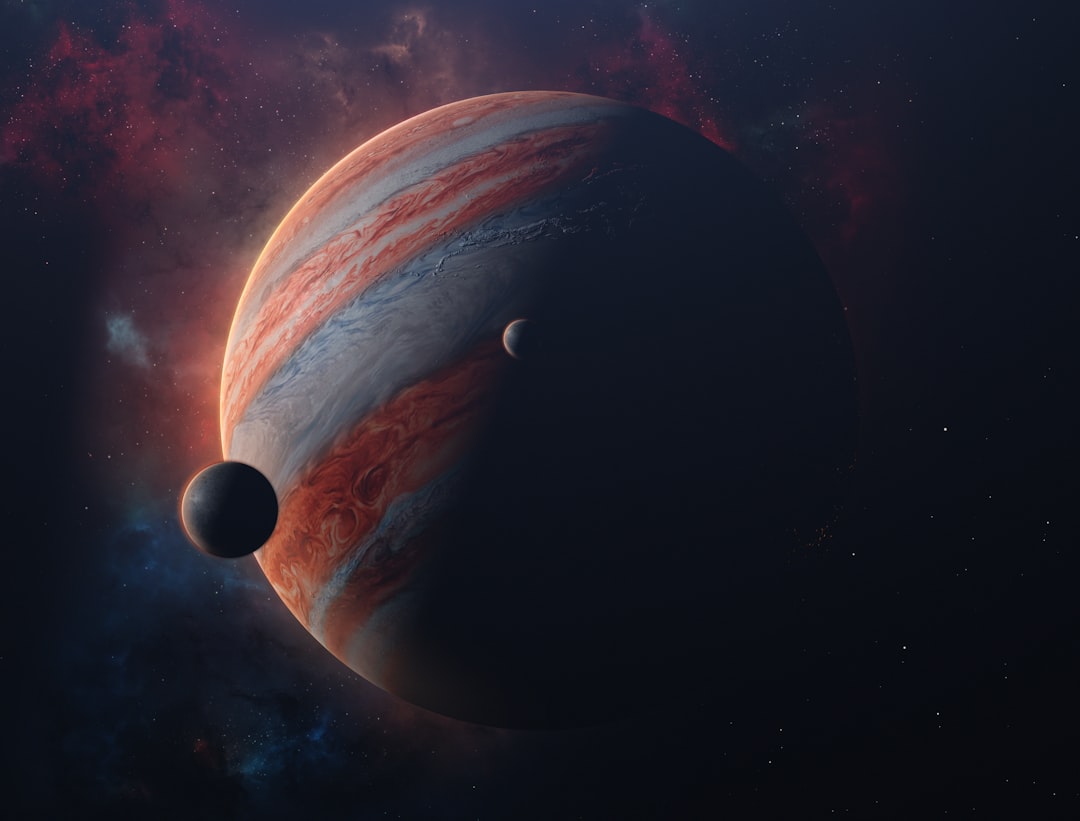
Despite their unusual composition, these objects would not be geologically inert. The researchers predict that their outer layers would be heated by the radioactive decay of short-lived radionuclides — including 26Al (Aluminum-26) and 60Fe (Iron-60) — produced by massive evolved stars embedded within the AGN disk. This internal heat source would be sufficient to melt silicate minerals throughout the object's bulk, resulting in a global magma ocean overlain by an outgassed atmosphere — a scenario that may bear some resemblance to the earliest stages of Earth's own geological history, but taken to an extreme.
These objects would likely possess degenerate cores, a state of matter in which quantum mechanical effects — specifically electron degeneracy pressure — support the object against further gravitational collapse, similar to the interiors of white dwarf stars. Their overall structure, straddling the boundary between super-massive planets and sub-stellar objects, represents an entirely new class of astrophysical body that current planetary science has no framework to fully describe.
From Planets to Stars to Black Holes
Perhaps the most mind-bending implication of this research is the potential evolutionary pathway these objects could follow. In the richly populated environment of an AGN disk — where gas and dust are superabundant — even a planet-mass object could continue accreting material at a prodigious rate. The researchers identify a critical threshold they call the crossover mass, at which the mass of the forming object equals the mass of the remaining disk material available to it, enabling the rapid accumulation of a massive gaseous envelope.
Beyond this point, accretion becomes vigorous, and the object's mass can balloon rapidly. Objects that begin as planetary seeds can, under the right conditions, grow to stellar masses and beyond:
- Jupiter-mass planets — the most common predicted outcome for lower-mass seeds in the outer disk regions.
- Super-Jupiters and sub-stellar objects — massive enough to approach or exceed the hydrogen-burning limit (~75 Jupiter masses), blurring the line between giant planets and brown dwarfs.
- Very massive stars (~100 solar masses or more) — which would be short-lived, burning through their fuel in under one million years before dying in catastrophic core-collapse supernovae, leaving behind stellar-mass black holes.
- Intermediate-mass black holes (IMBHs) — one of the most sought-after missing links in black hole astrophysics, predicted to form via direct collapse for objects exceeding approximately 300 solar masses.
The formation of intermediate-mass black holes is particularly significant. These objects — ranging from hundreds to hundreds of thousands of solar masses — represent a critical gap in the known black hole population. We have well-established evidence for stellar-mass black holes (a few to ~100 solar masses) and supermassive black holes (millions to billions of solar masses), but IMBHs have remained elusive and poorly understood. The European Space Agency highlights IMBHs as one of the key open questions in modern astrophysics. AGN disks, this research suggests, may be one of the primary factories producing them.
"For accreted masses above ~300 M☉, direct collapse into IMBHs becomes a viable outcome, suggesting AGN disks as plausible birthplaces for such remnants."
The Challenge of Observation
Compelling as this theoretical framework is, actually detecting and characterizing these exotic objects presents formidable observational challenges. The AGN environment is among the most extreme and energetically luminous in the universe — the overwhelming brightness of the central engine makes it extraordinarily difficult to resolve individual structures within the disk, let alone identify planet- or stellar-mass objects embedded within it.
Moreover, the dynamics of the AGN disk itself would tend to hide the most massive objects from view. Through a process called mass segregation — driven by gravitational interactions analogous to those governing dense stellar clusters — the most massive objects in the disk would gradually sink inward toward the central SMBH, while lower-mass objects would migrate outward. As the researchers explain:
"IMBH and massive stars may sink inward toward the inner disk" — placing them in precisely the region most obscured by the intense radiation of the AGN itself.
Future observatories — including NASA's James Webb Space Telescope and next-generation radio arrays — may eventually provide the sensitivity and resolution needed to probe AGN disk structure at the scales relevant to this research. Gravitational wave detectors like LIGO and the future space-based LISA mission could potentially detect the mergers of IMBHs produced in AGN disks, providing indirect evidence for this formation channel.
A New Bridge Between Planet Formation and Black Hole Physics
The broader significance of this research lies in its audacious synthesis of two fields that have historically had little reason to speak to each other: planet formation theory and black hole astrophysics. The physical processes that govern how dust grows into pebbles, and pebbles into planetesimals, in a disk around a young Sun-like star appear to operate — with appropriate scaling — in the vastly more extreme environment surrounding a supermassive black hole powering an AGN. The universe, it seems, applies the same fundamental rules across an astonishing range of scales.
"In conclusion, AGN disks are favorable sites for the growth and formation of many astrophysically interesting objects from Jupiter-mass planets to stars, as well as stellar- or intermediate-mass BHs. The outer regions, governed by dust dynamics, turbulence suppression, and efficient accretion mechanisms, appear to be a compelling physical analog to protostellar disks, albeit on vastly larger dynamical and thermal timescales."
This work does not merely predict an exotic curiosity. With potentially tens of millions of Jupiter-mass planets forming in a single AGN disk, and given that AGN have been active throughout much of cosmic history, the total number of such objects across the observable universe could be staggering. Whether any of these planets persist long enough to survive the death of their host AGN, potentially being ejected into intergalactic space as rogue planets of cosmic proportions, is a question that future theoretical and observational work will need to address.
For now, this research stands as a remarkable reminder that the universe's most violent and extreme environments are not merely zones of destruction — they are also, unexpectedly, places of creation. Even in the gravitational shadow of a supermassive black hole, the patient, grinding work of planet formation may proceed, building worlds stranger and more exotic than anything we have yet imagined.
Key Takeaways
- Accretion disks around supermassive black holes in AGN can reach temperatures in their outer regions comparable to those of planet-forming disks around young stars.
- The process of streaming instability — the leading theory of planetesimal formation — can operate in strongly magnetized AGN disks, potentially producing tens of millions of planetesimals.
- Planets forming in AGN disks would be fundamentally different from those in our solar system: composed of pure dust, lacking differentiation, and described as "degenerate lava drops" with magma oceans and outgassed atmospheres.
- These planetary seeds can grow into stars and even intermediate-mass black holes through continued accretion — providing a new potential formation channel for the elusive IMBH population.
- Observing these objects directly remains extremely challenging, but future gravitational wave detectors and next-generation telescopes may offer indirect or direct detection pathways.