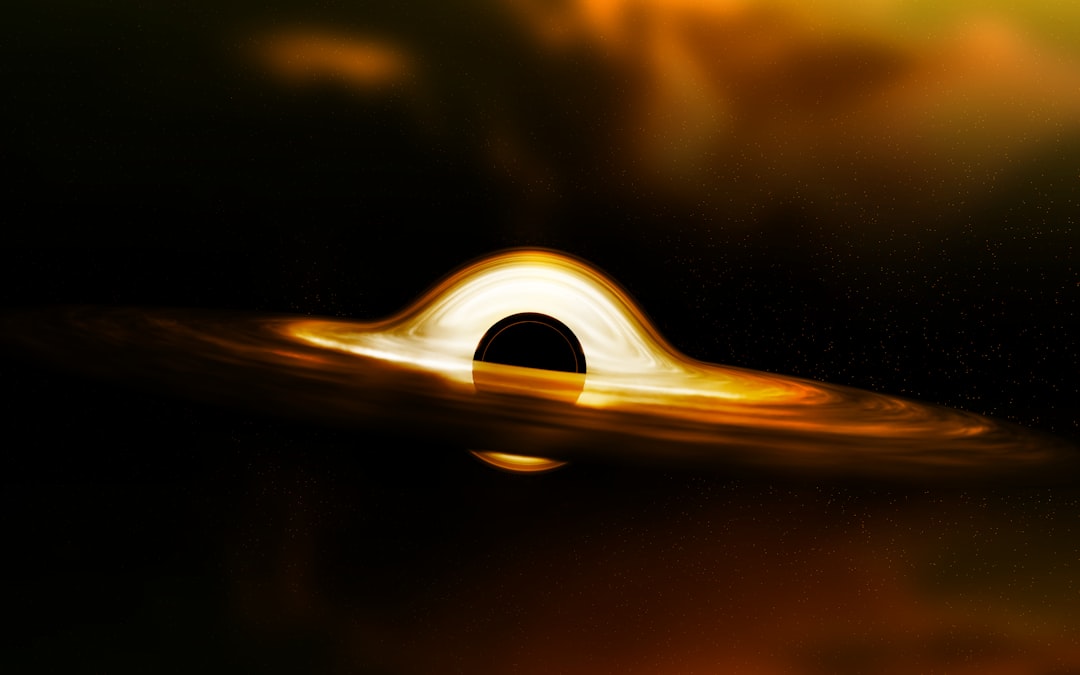
The cosmos continues to unveil its most enigmatic phenomena through fleeting bursts of light that challenge our understanding of stellar death and black hole dynamics. Among the most perplexing of these cosmic lightshows are Luminous Fast Blue Optical Transients (LFBOTs)—rare, brilliant flashes that appear suddenly in the night sky, blazing with intense blue and ultraviolet radiation before fading into obscurity. Recent groundbreaking research analyzing AT 2024wpp, the most luminous LFBOT ever recorded, has finally provided compelling evidence for the origin of these mysterious events: they represent catastrophic tidal disruption events where massive black holes completely shred their stellar companions in violent cosmic encounters.
This revolutionary discovery, detailed in research submitted to The Astrophysical Journal by Natalie LeBaron, a graduate student at UC Berkeley, and her colleagues, represents a major breakthrough in transient astronomy. The study's comprehensive analysis of AT 2024wpp—which outshone the previous record-holder by a factor of ten—has effectively ruled out conventional supernova mechanisms and pointed toward a far more dramatic scenario involving intermediate-mass black holes of approximately 100 solar masses devouring their binary companions in spectacular fashion.
Understanding the Challenge of Transient Cosmic Phenomena
Astronomers have long grappled with the challenge of studying transient astronomical events—phenomena that appear, evolve, and disappear on timescales ranging from milliseconds to months. Unlike stable stars that shine steadily for billions of years, allowing detailed long-term observation, transient events demand rapid detection and immediate follow-up across multiple wavelengths. The electromagnetic spectrum carries messages from the cosmos in all its forms, from low-energy radio waves to high-energy gamma rays, and each wavelength provides crucial clues about the physical processes at work.
Traditional supernovae, for instance, can remain visible for months, outshining entire galaxies and providing ample opportunity for detailed spectroscopic analysis. NASA's Swift Observatory and other facilities have catalogued thousands of these stellar explosions, building a comprehensive understanding of how massive stars end their lives. Gamma-ray bursts (GRBs), the universe's most energetic explosions, flash for mere milliseconds to seconds, yet their afterglows can persist long enough for detailed study. But LFBOTs occupy a peculiar middle ground—bright enough to be detected across cosmic distances, yet evolving too rapidly for traditional observational campaigns.
Since the discovery of the prototypical LFBOT AT 2018cow (affectionately nicknamed "the Cow"), fewer than two dozen of these events have been identified. Their distinctive characteristics—rapid rise times of just a few days, peak luminosities exceeding typical supernovae, dominant blue and ultraviolet emission, and subsequent faint X-ray and radio afterglows—have sparked intense debate within the astrophysical community about their underlying nature.
AT 2024wpp: An Unprecedented Cosmic Beacon
The discovery of AT 2024wpp in 2024 provided an extraordinary opportunity for astronomers to probe the nature of LFBOTs with unprecedented detail. Located approximately 411 megaparsecs (1.3 billion light-years) from Earth, this event radiated more than 1051 ergs of energy in its first 45 days alone—equivalent to the total energy output of our Sun over its entire 10-billion-year lifetime, released in just six weeks. This extreme luminosity made AT 2024wpp visible to telescopes around the world and in space, enabling the most comprehensive multi-wavelength observation campaign ever conducted for an LFBOT.
The research team, coordinated by LeBaron and colleagues, marshaled an impressive array of observational resources. The International Gemini Observatory, the Hubble Space Telescope, Swift, Chandra X-ray Observatory, and the Atacama Large Millimeter/submillimeter Array (ALMA) all trained their instruments on this cosmic beacon. This multi-facility approach allowed scientists to track AT 2024wpp's evolution from its initial blue flash through its gradual fade across ultraviolet, optical, infrared, X-ray, and radio wavelengths over approximately 100 days.
"The sheer amount of radiated energy from these bursts is so large that you can't power them with a core collapse stellar explosion—or any other type of normal stellar explosion. It's definitely not just an exploding star," explains Natalie LeBaron, emphasizing how AT 2024wpp's extreme properties definitively rule out conventional supernova models.
Ruling Out Conventional Explanations
The extraordinary brightness of AT 2024wpp immediately eliminated several proposed explanations for LFBOTs. In typical core-collapse supernovae, much of the visible light comes from the radioactive decay of Nickel-56, an unstable isotope produced during the explosive nucleosynthesis that occurs when a massive star's core collapses. As Nickel-56 decays to Cobalt-56 and then to stable Iron-56, it releases gamma rays that heat the expanding debris, causing it to glow brightly in optical wavelengths.
However, even the most energetic supernova explosions, known as hypernovae, cannot produce the energy output observed in AT 2024wpp. The researchers calculated that this event was approximately 100 times more luminous than a typical supernova and 5-10 times brighter than AT 2018cow. The amount of Nickel-56 required to power such luminosity would exceed the total mass of the progenitor star—a physical impossibility that definitively rules out radioactive decay as the primary energy source.
Other exotic scenarios were also considered and rejected. The formation of a rapidly spinning magnetar—a neutron star with an extraordinarily powerful magnetic field—could theoretically inject enormous amounts of rotational energy into surrounding material as it spins down. However, the observed light curves and spectral features of AT 2024wpp didn't match predictions for magnetar-powered transients. Similarly, while the direct collapse of a massive star into a black hole followed by rapid accretion could produce significant luminosity, this scenario struggled to explain the specific combination of rapid evolution, extreme brightness, and multi-wavelength properties observed.
The Tidal Disruption Solution: A Black Hole Devouring Its Companion
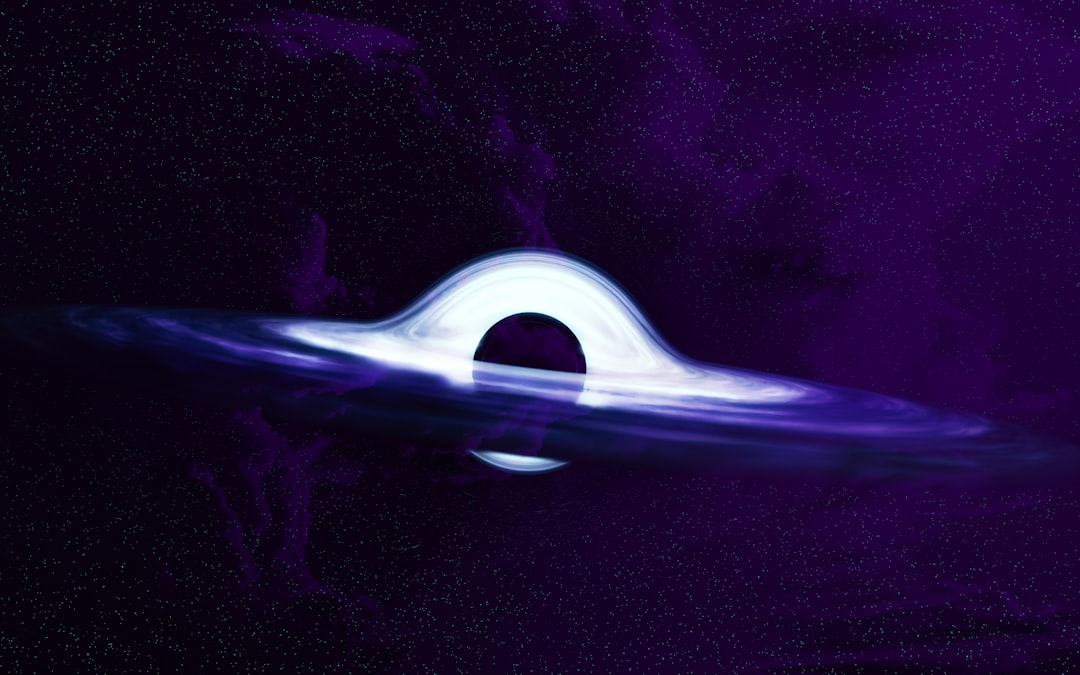
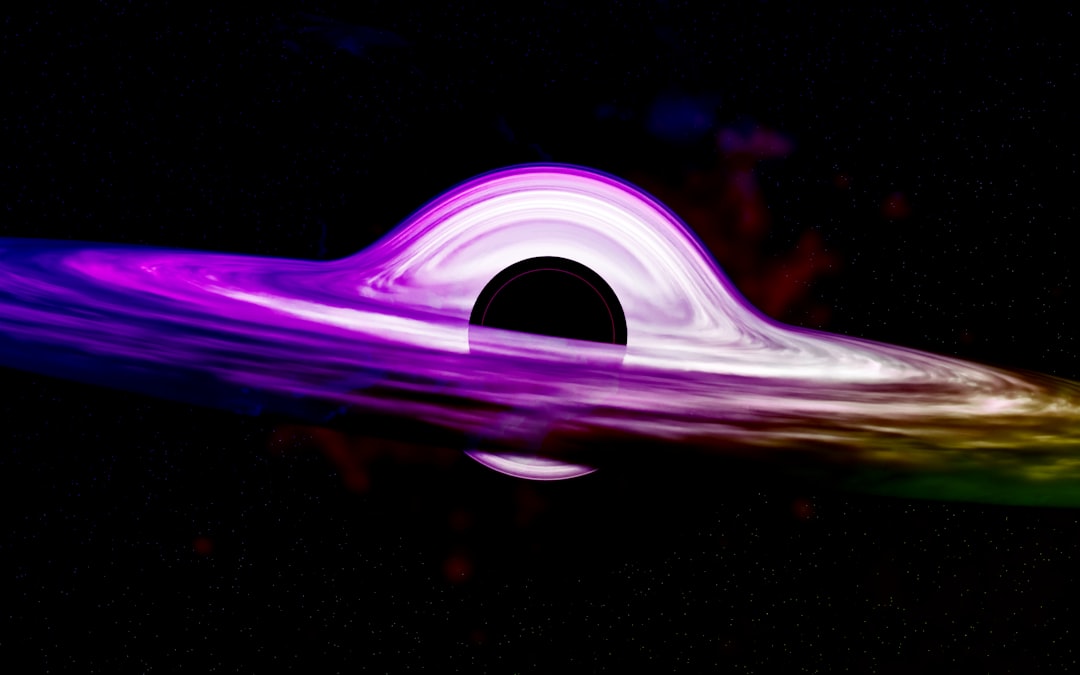
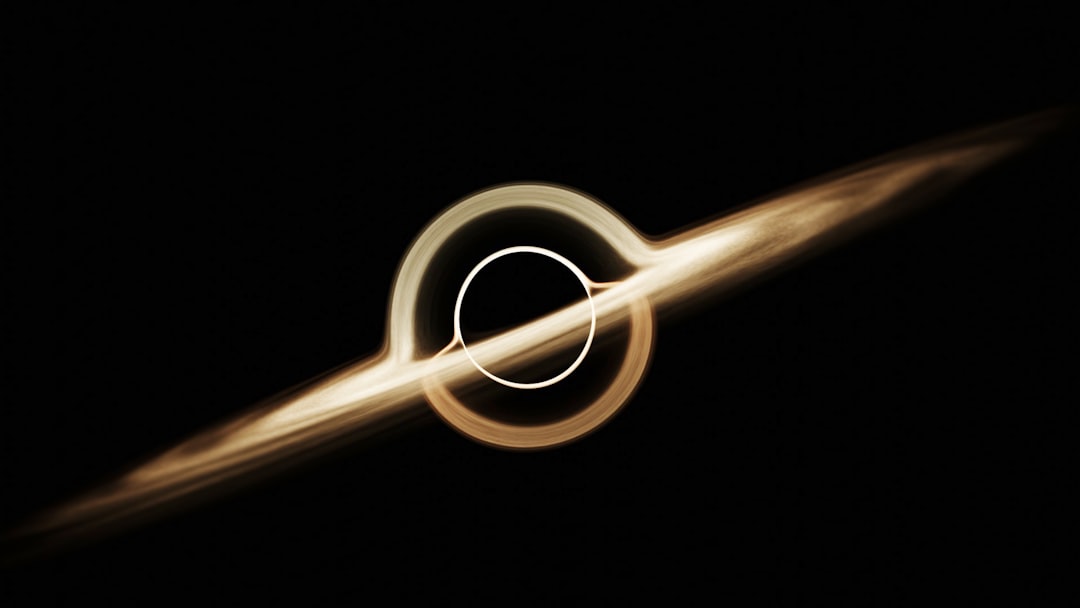
After systematically eliminating alternative explanations, the research team converged on a compelling scenario: AT 2024wpp represents an extreme tidal disruption event (TDE) in which an intermediate-mass black hole of approximately 100 solar masses completely shredded its binary companion star. This explanation elegantly accounts for all the observed properties of this remarkable event and provides a unified framework for understanding LFBOTs more broadly.
In this scenario, the black hole and its companion star existed in a close binary system, gradually spiraling inward over millions of years due to the emission of gravitational waves and other orbital decay mechanisms. During this long approach phase, the black hole steadily siphoned gas from its companion through Roche lobe overflow, a process where material from the star's outer layers crosses the gravitational boundary between the two objects. This accreted material formed a diffuse cloud or disk around the black hole, but remained too distant and too cool to produce significant radiation.
The dramatic transformation occurred when the companion star finally crossed the black hole's tidal disruption radius—the distance at which the black hole's gravitational tidal forces exceed the star's self-gravity. At this critical point, the star was literally pulled apart by differential gravitational forces, a process colorfully termed "spaghettification." The stellar material was stretched into long streams that wrapped around the black hole, with some falling inward to join the accretion disk while other material was ejected at high velocities.
The Multi-Phase Light Show
The observed light from AT 2024wpp resulted from multiple physical processes occurring in rapid succession. When the disrupted stellar material slammed into the pre-existing gas cloud around the black hole, it generated powerful shock waves that heated the gas to millions of degrees. This shock-heated material radiated intensely in ultraviolet and blue wavelengths, producing the characteristic LFBOT flash. The extreme temperatures also generated X-rays, which were indeed detected by the Chandra X-ray Observatory.
Some of the infalling material didn't simply settle into the accretion disk. Instead, powerful magnetic fields channeled gas toward the black hole's poles, where it was accelerated to relativistic speeds and launched as bipolar jets—narrow beams of matter moving at significant fractions of the speed of light. When these jets collided with the surrounding interstellar medium, they produced the radio emission detected by ALMA weeks after the initial optical flash, providing crucial evidence for the jet-launching mechanism.
The companion star was likely a Wolf-Rayet star—a highly evolved massive star that has already shed most of its hydrogen envelope through powerful stellar winds, leaving behind a helium-rich core. This identification explains why the spectroscopic observations showed only weak hydrogen emission lines; the disrupted star had little hydrogen left to contribute to the observed light. Wolf-Rayet stars are known to exist in binary systems with compact objects, making them plausible candidates for such extreme tidal disruption events.
Implications for Black Hole Populations and Binary Evolution
The confirmation that LFBOTs arise from tidal disruptions by intermediate-mass black holes has profound implications for our understanding of black hole demographics in the universe. Intermediate-mass black holes, with masses between 100 and 100,000 solar masses, occupy a mysterious gap between stellar-mass black holes (formed from individual star collapses) and supermassive black holes (found at galaxy centers). Their existence has been predicted by theory but remains difficult to confirm observationally.
AT 2024wpp and similar LFBOTs may provide a new method for detecting and studying this elusive population of black holes. Unlike supermassive black holes, which typically disrupt solar-mass stars in relatively gentle TDEs, intermediate-mass black holes can completely shred much more massive companions, producing the extreme luminosities observed in LFBOTs. The rate at which these events occur—estimated to be several per year across the observable universe—suggests that intermediate-mass black holes in binary systems may be more common than previously thought.
Furthermore, this discovery sheds light on the complex evolutionary pathways of massive binary star systems. The scenario requires that one member of the binary evolved into a black hole (likely through a supernova explosion) while the other continued nuclear burning, eventually becoming a Wolf-Rayet star. The system then had to survive this violent phase and continue evolving until the final tidal disruption occurred. Understanding the frequency of such systems helps astronomers refine models of stellar population synthesis and binary evolution.
Future Prospects: A New Era of Transient Discovery
The study of LFBOTs stands at the threshold of a dramatic expansion. Current surveys detect only a handful of these events per year, limited by the sky coverage and sensitivity of existing facilities. However, two upcoming ultraviolet space missions promise to revolutionize LFBOT science in the coming years.
NASA's UVEX mission (Ultraviolet Explorer), scheduled for launch in 2030, will conduct an all-sky survey in ultraviolet wavelengths, the spectral region where LFBOTs shine most brightly. UVEX's wide field of view and rapid cadence will enable it to discover tens of LFBOTs annually, building a statistical sample large enough to probe the diversity of these events and constrain their physical properties. Similarly, the ULTRASAT mission, a collaboration between the Israel Space Agency and Caltech, will provide complementary ultraviolet observations with even faster response times.
These missions will be supported by ground-based facilities like the upcoming Vera C. Rubin Observatory, which will begin its Legacy Survey of Space and Time (LSST) in the mid-2020s. Rubin's ability to image the entire visible sky every few nights will enable the discovery of transient events within hours of their appearance, triggering rapid follow-up observations across the electromagnetic spectrum. This coordinated approach—combining wide-field discovery with detailed multi-wavelength characterization—represents the future of time-domain astronomy.
Key Questions Remaining
Despite the breakthrough represented by the AT 2024wpp study, many questions about LFBOTs remain unanswered:
- Population diversity: Do all LFBOTs arise from the same mechanism, or do multiple physical processes produce similar observational signatures? Only two or three LFBOTs have comprehensive multi-wavelength datasets, making population-level conclusions premature.
- Black hole mass range: What is the typical mass distribution of black holes producing LFBOTs? AT 2024wpp suggests masses around 100 solar masses, but this may not be representative of the full population.
- Companion star properties: While Wolf-Rayet stars appear to be favored companions, can other types of evolved stars produce similar events? What determines whether a binary system will produce an LFBOT versus a different type of transient?
- Jet physics: How efficiently do these systems launch relativistic jets, and what determines jet properties like velocity, collimation, and energy content? The radio observations provide tantalizing hints but leave many details unclear.
- Environmental factors: Do LFBOTs occur preferentially in certain galactic environments, such as star-forming regions or galaxy centers? Understanding their spatial distribution could reveal important clues about their progenitor systems.
Conclusion: Illuminating the Violent Universe
The identification of LFBOTs as extreme tidal disruption events represents a significant milestone in our understanding of the transient universe. These spectacular cosmic lightshows, once mysterious and inexplicable, now reveal themselves as windows into some of the most violent processes in nature: the complete destruction of massive stars by intermediate-mass black holes in their final, catastrophic orbital dance.
AT 2024wpp, with its unprecedented luminosity and comprehensive observational coverage, has provided the crucial evidence needed to solve this decade-long puzzle. As Natalie LeBaron and her colleagues conclude in their research, future observations will be essential for probing the diversity of this class and establishing meaningful population-level constraints. The coming era of ultraviolet space missions and next-generation ground-based surveys promises to transform LFBOTs from rare curiosities into a powerful tool for studying black hole populations, binary star evolution, and the extreme physics of matter under the most violent conditions in the cosmos.
In the grand tradition of astronomy, these fleeting flashes of blue light—lasting mere days against the backdrop of cosmic eternity—have illuminated fundamental truths about the universe we inhabit. They remind us that nature's most spectacular phenomena often hide in plain sight, waiting for the right combination of observational capability, theoretical insight, and serendipitous discovery to reveal their secrets. As we build ever more sophisticated instruments to capture these cosmic signals, we can only imagine what other mysteries await revelation in the transient sky.