The Rooms We Build To Survive In, And The Ones We Build To Live In
What is a home actually for? Not the roof and the walls, but the thing itself — the space you retreat into when everything outside it is hard. That question sits at the heart of a remarkable new research initiative out of MIT, one that is simultaneously one of the most futuristic and most deeply human scientific endeavors currently underway. It asks, with rigorous methodology and genuine compassion, how we design the spaces that keep people not merely alive, but whole.
The challenge is urgent, and it is closer than it sounds. As space agencies and private companies push seriously toward crewed missions to Mars — journeys that could last anywhere from two to three years round-trip — the question of psychological wellbeing inside a sealed habitat has moved from a philosophical curiosity to a mission-critical engineering problem. Astronauts will be tens of millions of miles from Earth, unable to step outside, unable to call home in real time, and unable to leave. The rooms they inhabit will be, for the duration, their entire world.
Introducing HECIA: Mapping the Architecture of Human Feeling
To address this challenge, a team led by Mich Lin at MIT has built something called the Human Environment Connection and Interaction Atlas, or HECIA — an interactive tool that systematically maps the relationship between the physical design of a habitat and the emotional state of the person living inside it. The tool represents a significant conceptual leap: borrowing a risk mapping methodology that NASA's Human Research Program already uses to track physical health hazards in spaceflight, and applying it, for the first time in a structured, evidence-based way, to emotional and psychological health instead.
"Almost none of our extreme-environment habitats are designed around thriving. They are designed around survival. Lin's team set out to change that — and in doing so, they may have redrawn the boundary between engineering and empathy."
The distinction matters more than it might first appear. Submarines, Antarctic research stations, and spacecraft are all masterpieces of survival engineering. They keep people fed, oxygenated, thermally regulated, and structurally protected. What they have historically neglected is the subtler architecture of the human interior: the feelings of belonging, agency, safety, and connection that determine whether a person can function well, maintain trust with their crewmates, and return from a mission with their psychological health intact.
The Emotional Vocabulary of Extreme Environments
To build HECIA on solid scientific ground, Lin's team turned to an unexpected but inspired source: Atlas of the Heart, Brené Brown's comprehensive catalogue of 87 distinct human emotions and experiences. From that expansive vocabulary, the researchers identified fourteen feelings most relevant to people living in extreme, isolated, and confined environments. These include:
- Anxiety — heightened by uncertainty, noise, and lack of personal control
- Homesickness — linked to environmental unfamiliarity and loss of personal artifacts
- Trust — built or eroded by proximity, shared space, and interpersonal visibility
- Belonging — fostered by communal design and symbolic connection to Earth culture
- Awe and wonder — accessible through views, light, and connection to the external environment
- Boredom and restlessness — addressed through reconfigurability and variety of spatial experience
- Privacy and dignity — protected through personal quarters and acoustic separation
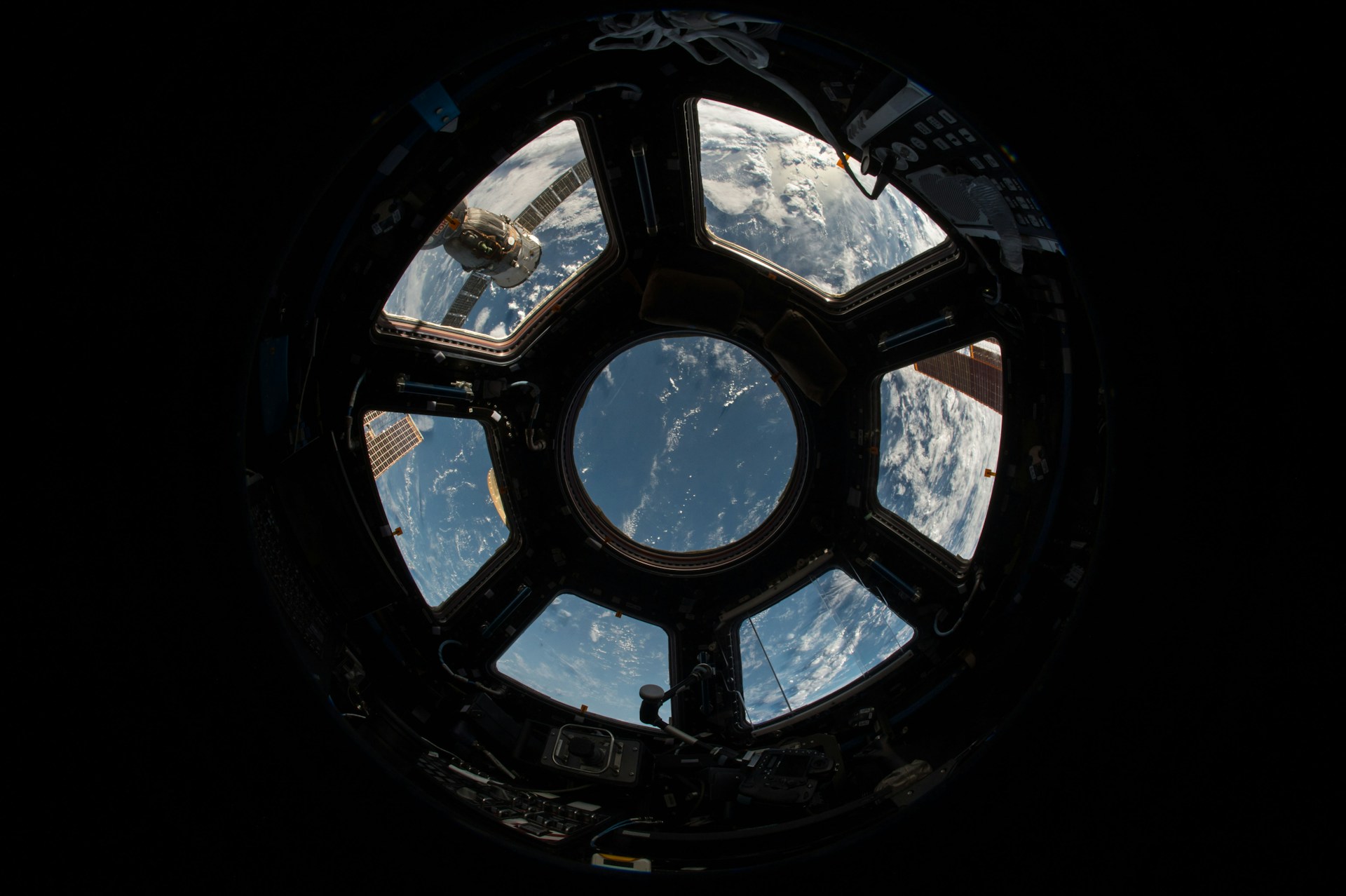
The team then conducted an extensive review of the scientific literature, tracing each emotional state back to measurable, physical design variables. The findings are both rigorous and, in places, startlingly intuitive. Lighting, for instance, has well-documented effects on circadian rhythm regulation and sleep quality — a particular concern aboard the International Space Station, where crews experience roughly 16 sunrises per day and must rely entirely on artificial lighting cues to maintain biological rhythms. Inadequate lighting management has been associated with increased fatigue, mood disturbance, and impaired cognitive performance in microgravity environments.
More surprising, perhaps, is the finding related to stairs and shared entrances. Research in environmental psychology and architectural sociology suggests that semi-public transition spaces — corridors, shared doorways, communal thresholds — create spontaneous social contact that quietly builds friendship and cohesion over time. People who are forced to pass each other talk. People who talk build trust. In a habitat where interpersonal conflict could become a genuine mission risk, this is not a trivial design consideration.
Design Choices That Protect the Mind
Among the most compelling insights embedded in HECIA is the connection between spatial reconfigurability and the mitigation of homesickness. Research on long-duration isolation — including studies conducted at ESA analog environments and during NASA's CHAPEA missions at the Mars Dune Alpha habitat — suggests that the ability to rearrange, personalize, and exert ownership over one's physical environment is a powerful psychological stabilizer. A room that can be made to feel less foreign is a room that more quickly begins to feel like home.
Mars Dune Alpha, the 3D-printed habitat constructed by ICON for NASA's Crew Health and Performance Exploration Analog (CHAPEA) missions, was deliberately designed around what researchers call a "gradient of privacy" — a spatial progression from highly communal areas to deeply personal ones. This is precisely the kind of nuanced design decision that HECIA is built to evaluate and inform. The habitat includes dedicated crew quarters, shared work and recreation spaces, and a medical station, with spatial transitions designed to allow crew members to modulate their social exposure throughout the day.
Aboard the International Space Station, crew members have long reported that their small, personal sleep quarters — little more than padded closets by terrestrial standards — are among the most psychologically important spaces on the entire station. The ability to close a door, to have a surface that holds your own objects, to be acoustically and visually separated from the rest of the crew, is something that experienced astronauts consistently describe as essential to their sense of wellbeing. HECIA makes this anecdotal wisdom structural and mappable.
How the Atlas Works: A Tool That Thinks in Both Directions
What makes HECIA conceptually elegant is its bidirectionality. The tool can be entered from either end of the design process. Begin with a constraint — such as the communication delay between Earth and Mars, which ranges from 3 to 22 minutes one-way and eliminates real-time conversation with loved ones — and the atlas shows you which emotional risks that constraint creates and which design interventions can help offset them. Begin instead with an outcome you want to protect — say, the crew's sense of home — and the tool shows you the specific physical design choices most likely to support it.
This is a meaningful departure from how habitat design has historically been approached, where psychological considerations, if addressed at all, were typically added late in the design process as afterthoughts. HECIA proposes that emotional outcomes should be design inputs from the start, treated with the same structured rigor as thermal regulation or radiation shielding. It places the architecture of human feeling on equal footing with the architecture of survival.
The Broader Implications: From Mars to Earth
Lin is careful to note that HECIA is not a rulebook. A habitat in lunar orbit will never behave like a habitat on the ground, and no diagram can substitute for the irreplaceable knowledge of the specific people who will live inside it. Cultural background, individual personality, prior life experience — all of these shape how a given person responds to a given space in ways that no general atlas can fully capture. The tool is a map, not a mandate.
And yet, the thinking it encodes reaches far beyond deep space. The same framework that asks how to protect a Mars-bound astronaut from the slow erosion of belonging could inform the design of long-term care facilities, psychiatric hospitals, refugee housing, offshore platforms, polar research bases, and any other environment where people are confined, isolated, or under sustained psychological stress. The wall between the room you survive in and the room you can actually live in is not unique to space. It exists in hospitals, in prisons, in shelters, in places all around us.
What HECIA offers — and what makes this research genuinely significant — is not just a tool for astronauts. It is a new language for talking about what spaces do to people, and a methodology for ensuring that the answer, wherever possible, is something more than merely keeping them alive. It is, at its most essential, a scientific argument that the quality of the space around us is inseparable from the quality of the life within us.
For further reading on the science of human spaceflight and habitat design, explore resources from NASA's Human Research Program, the European Space Agency's Human Spaceflight research division, and the NASA Human Research Roadmap.