Slingshot Earth: NASA's Europa Clipper Will Gain Speed and Test Its Instruments During Its Earth Flyby
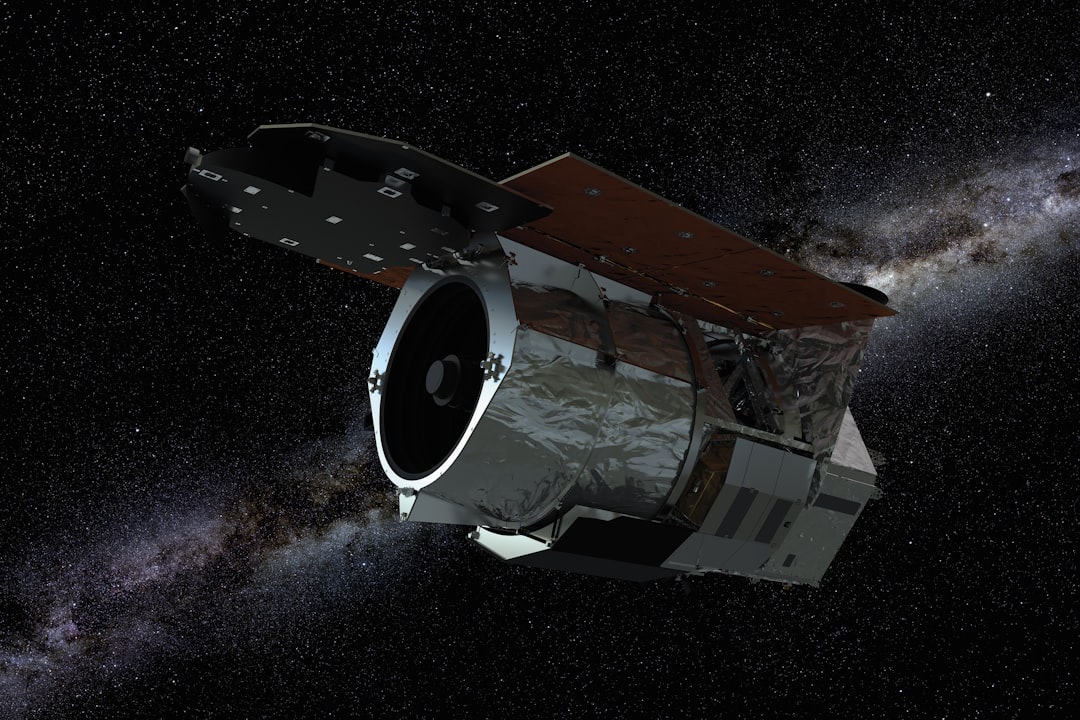
NASA's Europa Clipper — the agency's largest interplanetary spacecraft ever launched — is preparing for one of the most consequential moments of its early journey: a precisely choreographed gravitational dance with our home planet. On December 3rd, the spacecraft will conduct a critical gravity assist maneuver around Earth, gaining a significant boost in velocity before embarking on its long cruise toward the outer Solar System. Far from being a mere formality, this flyby represents both an engineering triumph and a golden scientific opportunity.
The Art and Science of Gravity Assists
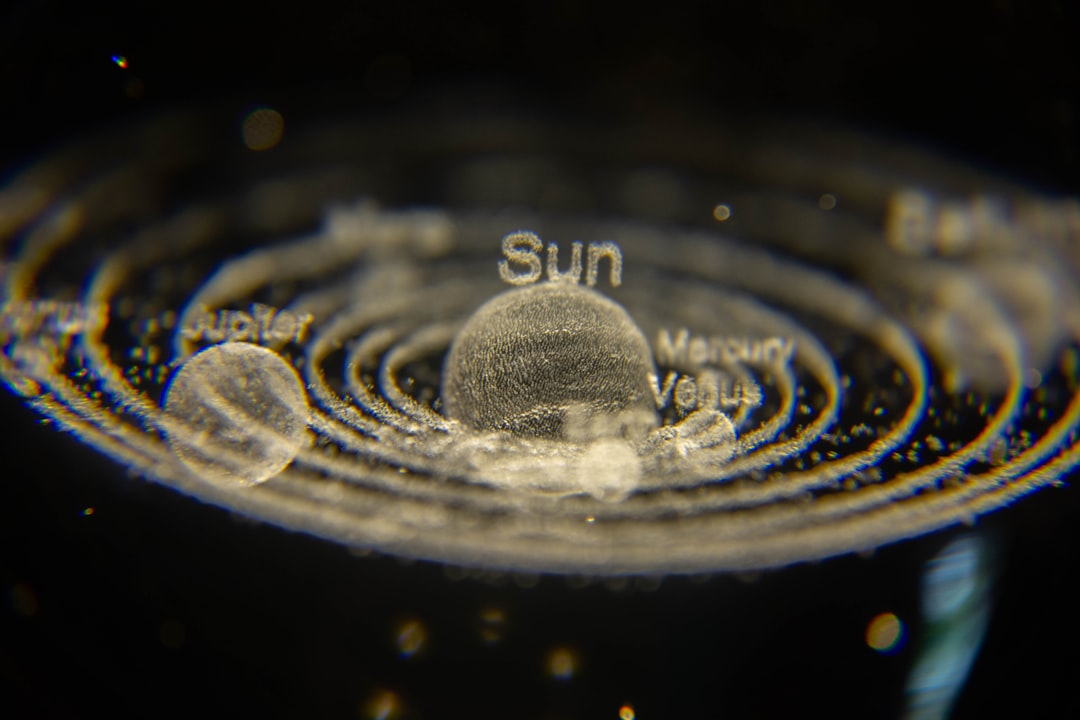
To understand why Europa Clipper must swing past Earth at all, one must appreciate the fundamental physics of interplanetary travel. Launching a spacecraft directly to Jupiter — over 600 million kilometers away at its closest approach — would demand an almost prohibitive amount of propellant. Instead, mission planners exploit the gravitational fields of planets themselves to redirect and accelerate spacecraft, a technique formally known as a gravitational slingshot, or more precisely, a gravity assist maneuver.
The concept, pioneered mathematically in the 1960s and first used operationally during NASA's Pioneer missions, works by allowing a spacecraft to pass through a planet's gravitational field in a carefully calculated trajectory. When a mission requires acceleration toward the outer Solar System, the spacecraft approaches from behind the planet relative to its orbital direction. The planet's gravity tugs on the spacecraft, transferring a small but measurable fraction of the planet's own orbital momentum to the craft — accelerating it without spending a single gram of propellant.
"We're coming down into the gravity well of Earth, following its curve, and shooting out again. The spacecraft is able to get pulled by the gravity of the planet and continue on its way — now with a slightly changed trajectory and moving faster than it was before." — Robert Pappalardo, Europa Clipper Project Scientist, NASA Jet Propulsion Laboratory
The inverse is equally true. When a spacecraft needs to decelerate — as is the case when falling inward toward a world like Mercury — it passes in front of a planet's orbital path, surrendering momentum to the planet's gravitational field rather than gaining it. The BepiColombo mission, a joint venture between ESA and JAXA, relies on no fewer than nine such gravity-braking flybys across Venus and Mercury to shed enough speed to eventually enter Mercury orbit — a remarkable testament to the elegance of orbital mechanics.
Europa Clipper's journey has itself required both flavors of gravitational manipulation. Earlier in its mission, the spacecraft performed a gravity-braking maneuver at Mars in March 2025, deliberately slowing itself so that its trajectory would align perfectly for this upcoming Earth encounter. The sequence of maneuvers has been designed with extraordinary precision, calculated years in advance by orbital dynamicists at NASA's Jet Propulsion Laboratory.
The Mechanics of the December 3rd Flyby
Europa Clipper's closest approach to Earth will bring it to within 3,140 to 3,450 kilometers of our planet's surface — slightly closer than the distance between New York and Los Angeles — at 3:14 p.m. EST on December 3rd, above the skies of West Africa. For observers in Africa and southern Europe, the spacecraft should be bright enough to be spotted through a backyard telescope, offering skywatchers a rare opportunity to glimpse humanity's ambassador to the Jovian system.
The velocity gain from this maneuver is substantial. Even though approximately half of Europa Clipper's total launch mass is composed of propellant, the gravity assists are indispensable. The spacecraft is carefully conserving its chemical propellant reserves for two mission-critical burns: Jupiter Orbit Insertion (JOI), the single largest engine burn of the entire mission, and the many orbital correction maneuvers needed to execute its 49 planned flybys of Europa. Even with this Earth boost, the spacecraft will perform an additional gravity-braking maneuver at Ganymede — Jupiter's largest moon — just hours before JOI, further reducing the propellant demanded by that enormous burn. Europa Clipper is currently scheduled to enter Jupiter orbit in April 2030.
- Closest approach altitude: 3,140–3,450 km above Earth's surface
- Location of closest approach: Above West Africa
- Time of closest approach: 3:14 p.m. EST, December 3rd
- Mars gravity brake: March 2025 (to set up Earth flyby geometry)
- Ganymede gravity brake: Hours before Jupiter Orbit Insertion
- Jupiter Orbit Insertion: April 2030
A Moving Laboratory: Instrument Calibration During the Flyby
The Earth flyby serves a purpose beyond propulsive gain. With all 11 of Europa Clipper's science instruments active during the encounter, the mission's nine dedicated science teams will seize this unique opportunity to calibrate their hardware against a planet whose properties are exquisitely well-characterized. Earth is, in a very real sense, the perfect calibration target: its magnetic field, atmosphere, surface composition, thermal emissions, and ultraviolet characteristics have been measured, modeled, and cross-validated by generations of orbiting satellites and ground-based observatories.
"We're practicing the intricacies of the operation, but we're also practicing how to work together to produce the best science. The things we practice now will set us up for success at Europa." — Erin Leonard, Europa Clipper Project Staff Scientist, NASA JPL
This calibration exercise is not merely a technical procedure — it is a rehearsal for the most scientifically demanding phase of the mission. When Europa Clipper makes its rapid flybys of Europa, each lasting only a matter of hours before Jupiter's immense gravity whisks it away again, there will be no second chances to collect that data. Getting the instruments perfectly tuned beforehand is essential.
The Europa Clipper Magnetometer: Unlocking the Ocean Beneath
Among the 11 instruments, the Europa Clipper Magnetometer (ECM) occupies a place of singular scientific importance. The central question driving the entire mission is whether Europa harbors a global liquid water ocean beneath its frozen crust — an ocean that could, in theory, sustain the chemical gradients and energy sources necessary for life as we understand it. The magnetometer is the instrument best positioned to answer that question definitively.
The science behind this capability is elegant. Europa orbits within Jupiter's immense and complex magnetosphere, which shifts and oscillates as the giant planet rotates every ~10 hours. If Europa possesses a salty, electrically conductive subsurface ocean, that ocean will respond to Jupiter's varying magnetic field by generating its own induced magnetic field — a secondary signature that the ECM can detect and isolate from background noise. By measuring the strength, orientation, and variation of this induced field across dozens of flybys, scientists can determine:
- Whether a global liquid water ocean truly exists beneath the ice
- The approximate depth of the ocean below the ice shell
- The ocean's salinity — a proxy for its chemical composition
- The thickness of the icy shell itself
Complicating this measurement is the extraordinary complexity of the Jovian magnetic environment. Jupiter's magnetic field is roughly 20,000 times stronger than Earth's, and a vast torus of magnetospheric plasma — fed primarily by volcanic activity on the moon Io — co-rotates with Jupiter at its magnetic equator, creating its own electromagnetic effects that must be carefully disentangled from Europa's signal. The magnetometer must solve what scientists describe as a "big, multi-faceted puzzle" of overlapping, time-varying magnetic fields.
Making matters more challenging, the Europa Clipper itself is a source of magnetic contamination. The spacecraft contains more than 300 individual magnetic sources, including magnets in propellant valve assemblies, electrical current loops running through its enormous solar arrays, and onboard electronics. To minimize this self-interference, the ECM is mounted on a dedicated deployable boom — the Magboom — positioning the sensor as far from the spacecraft bus as possible. Even so, the instrument team must maintain a precise, continuously updated model of the spacecraft's own magnetic signature to subtract it from their measurements.
Earth's well-characterized magnetosphere makes the December flyby an invaluable opportunity to validate these corrections.
"The magnetometer measures variations in the magnetic field as we're orbiting Jupiter, but we need to pin these observations to something we know to understand the actual value that it's measuring. The flyby will enable us to calibrate the instrument absolutely, using its observations at Earth to refine other calibrations done before launch and in flight." — Robert Pappalardo, Europa Clipper Project Scientist
Thermal Imaging, Spectroscopy, and Ultraviolet Eyes on Earth
The magnetometer is far from alone in its Earth observations. The E-THEMIS (Europa Thermal Emission Imaging System) will scan Earth at regular eight-hour intervals as the spacecraft approaches, using infrared wavelengths to map thermal variations across the planet's surface. At Europa, this instrument's primary role will be to identify thermal anomalies — localized warm spots where liquid water from the subsurface ocean may be welling up closer to the surface, or even venting through the ice into space as plumes. Earth's well-mapped thermal landscape provides an ideal benchmark for ensuring E-THEMIS is reading temperatures accurately.
The MISE (Mapping Imaging Spectrometer for Europa) will complement E-THEMIS by analyzing the composition of materials at infrared wavelengths. At Europa, MISE will map the distribution of water ice, salts, organic compounds, and other surface materials with extraordinary spatial resolution — potentially identifying the chemical fingerprints of ocean material that has been transported to the surface. During the Earth flyby, it will characterize known terrestrial surface compositions to benchmark its spectral response.
Meanwhile, the Europa-UVS (Europa Ultraviolet Spectrograph) will scan Earth in ultraviolet light, probing atmospheric constituents and surface reflectance properties. In a particularly inventive cross-calibration scheme, the Lunar Reconnaissance Orbiter (LRO), currently operational around the Moon, will simultaneously point one of its own instruments toward Earth during the flyby period. By comparing LRO's well-calibrated measurements of Earth with Europa-UVS's observations, the team can refine the spectrograph's absolute calibration with remarkable precision.
"It's super-exciting when we actually do get to collect data that's really meaningful to the instruments, and get to share it with other people. This is Earth, and everyone understands what that data means. Imagine what it's going to be able to show you about Europa." — Erin Leonard, Europa Clipper Project Staff Scientist
Europa: A World Worth the Journey
It is worth pausing to appreciate just what is at stake scientifically. Europa, roughly the size of Earth's Moon, is widely regarded by astrobiologists as one of the most compelling candidates for extraterrestrial life in our Solar System. NASA's Europa Clipper mission page details how decades of observations — beginning with the Voyager flybys in 1979 and continuing through the Galileo orbiter in the 1990s — have built an increasingly persuasive case for a vast, global liquid water ocean hidden beneath a shell of water ice that may be only a few kilometers to tens of kilometers thick.
Europa's ocean is estimated to contain twice the volume of all of Earth's oceans combined. Crucially, evidence suggests that the ocean floor may be in direct contact with a rocky silicate mantle — analogous to Earth's mid-ocean ridges — where hydrothermal vents could provide both chemical energy and mineral nutrients. On Earth, hydrothermal vent communities thrive in the complete absence of sunlight, sustained entirely by chemosynthesis. The possibility that analogous ecosystems might exist on Europa is scientifically breathtaking.
Europa Clipper's 49 planned flybys over its four-year primary mission at Jupiter will collectively build a comprehensive picture of the moon's ice shell structure, ocean depth and chemistry, surface geology, and radiation environment. Each flyby will last only a few hours, but the cumulative dataset will be transformative. Learn more about the science goals at the official NASA Europa Clipper mission site.
The Road Ahead — and the Ultimate Fate of a Pioneer
Following the December 3rd Earth flyby, Europa Clipper will enter a long, largely quiet cruise phase as it journeys outward through the Solar System. These extended quiet periods, while uneventful from a public engagement standpoint, are scientifically and operationally significant: engineers will monitor all spacecraft systems, refine trajectory models, and continue instrument health checks in preparation for Jupiter arrival in April 2030.
At the end of its primary mission, Europa Clipper's fate will likely be a controlled impact into one of the Jovian moons. NASA's planetary protection policies strictly prohibit crashing the spacecraft into Europa itself, out of concern that terrestrial microorganisms that may have survived launch could contaminate a potentially habitable world — a precaution that reflects the same scientific seriousness that motivates the mission in the first place. Project scientist Pappalardo has proposed directing the spacecraft into Ganymede, where the ESA's JUICE (Jupiter Icy Moons Explorer) spacecraft — also en route to the Jovian system — could observe the impact and use the resulting ejecta plume to analyze Ganymede's surface chemistry. Even in its final moments, Europa Clipper could generate valuable science.
A Moment of Reflection Before the Long Silence
As Europa Clipper sweeps past our planet on December 3rd — close enough for dedicated amateur astronomers to glimpse through their eyepieces — it represents something profound: humanity's most sophisticated attempt yet to answer one of the oldest and deepest questions we can ask. Are we alone? The spacecraft carries not just 11 precision instruments, but the collective curiosity of a species that has stared at the night sky and wondered about what might stare back.
The gravity assist will send it hurtling outward at remarkable speed. But the most important acceleration may be a conceptual one — the growing realization, deepened with each mission to the outer Solar System, that the conditions for life may be far more widespread in the cosmos than we once dared to hope. After 2030, if Europa Clipper's magnetometer detects the unmistakable signature of a salty, global ocean — if E-THEMIS maps warm patches hinting at geologic activity, if MISE detects organic chemistry on the surface — then the question