Not Every Gap in a Protoplanetary Disk Is Carved by a Planet — New Research Reveals a More Complex Picture
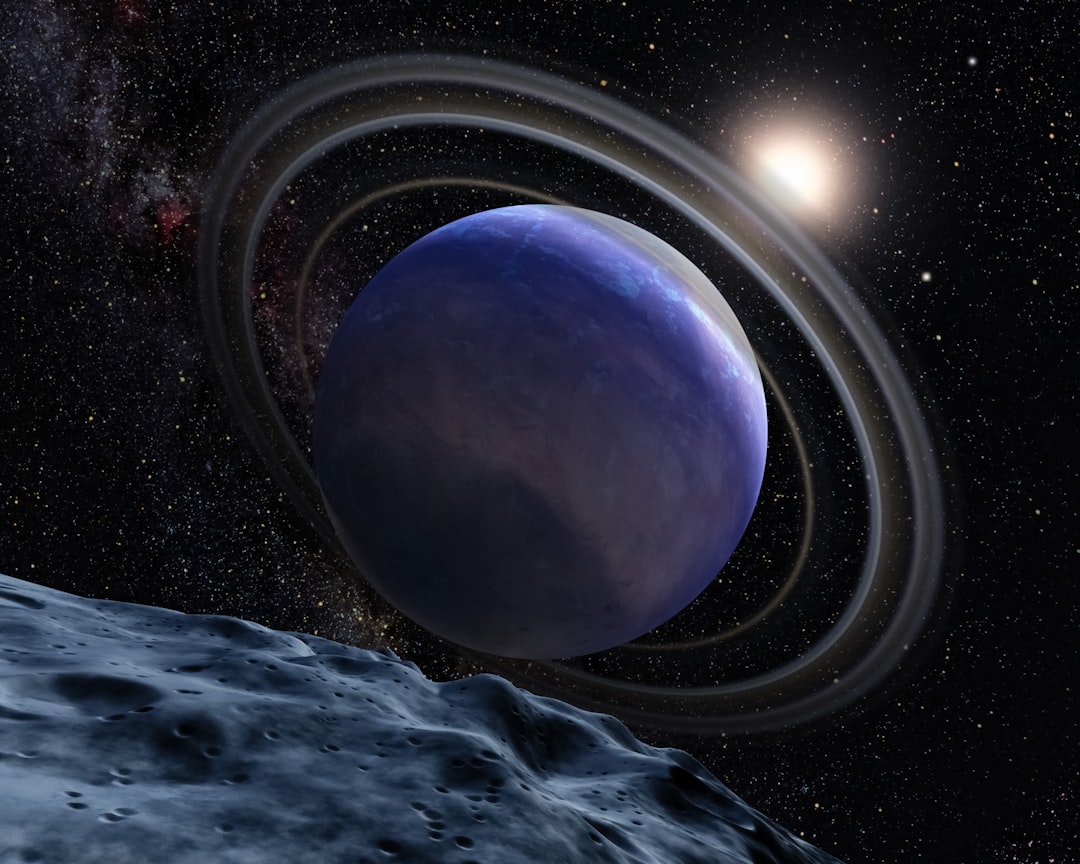
When astronomers peer into the stellar nurseries of the Milky Way, they encounter one of nature's most breathtaking phenomena: young stars swathed in vast, swirling protoplanetary disks — the cosmic cradles from which planets are born. These disks frequently display striking patterns of bright rings and dark gaps, arranged in concentric circles that bear an uncanny resemblance to the grooves on a vinyl record. For years, the dominant explanation has been elegantly simple: planets carve these gaps as they orbit their young host stars, gravitationally sweeping their orbital paths clear of dust and gas. But new research is challenging that tidy narrative, revealing that the story of planet formation is far more nuanced — and more fascinating — than previously appreciated.
A team of Japanese astronomers, led by Masayuki Yamaguchi, a postdoctoral fellow at Kyushu University's Faculty of Science, has published groundbreaking findings in The Astrophysical Journal that demonstrate not all disk structures are sculpted by nascent planets. By studying the complex architecture of a remarkable young stellar system called V1094 Scorpii, the team found compelling evidence for a hybrid origin — where some gaps are indeed created by forming planets, while others arise from an entirely different physical mechanism known as secular gravitational instability (SGI).
"These new stars have bright rings and dark gaps patterned in concentric circles resembling the grooves of a vinyl record. These patterns aren't new; what was a mystery was how these grooves were carved. The most popular explanation is that young planets make these gaps as they orbit the star. However, when a disk has many rings, it becomes harder to explain since it's hard to imagine that multiple planets have already formed." — Masayuki Yamaguchi, Kyushu University
The Cosmic Laboratory: V1094 Scorpii
V1094 Scorpii (V1094 Sco) is a T-Tauri star — the class of young, pre-main-sequence stars less than a few million years old that are still contracting under their own gravity and have yet to ignite sustained hydrogen fusion in their cores. Located approximately 500 light-years from Earth in the direction of the constellation Scorpius, V1094 Sco is part of the Lupus star-forming complex, a rich stellar nursery that has been the subject of intense astronomical scrutiny in recent years. Even among T-Tauri stars, V1094 Sco is extraordinary: it hosts one of the largest and most structured protoplanetary disks known, stretching to roughly 300 astronomical units (AU) — nearly ten times the size of our own Solar System's primordial disk — with multiple ring-gap pairs extending to exceptionally large distances from the star.
V1094 Sco first came to widespread attention in a 2018 study emerging from the Lupus disk survey, an ALMA-based observational campaign targeting protoplanetary disks in the region. That paper identified, for the first time, V1094 Sco's character as "a giant, multi-ringed protoplanetary disk," immediately marking it as a prime candidate for deeper investigation. The sheer scale and structural complexity of this disk has since made it one of the most studied young stellar objects in nearby star-forming regions.
ALMA and the Power of a New Imaging Technique
The Atacama Large Millimeter/submillimeter Array (ALMA), a revolutionary radio telescope array perched on the Chajnantor Plateau in the Chilean Andes at an altitude of 5,000 meters, has become the world's premier instrument for studying protoplanetary disks. Operating at millimeter and submillimeter wavelengths, ALMA is uniquely sensitive to the cold dust grains that constitute the solid material of planet-forming disks — the raw ingredients for future rocky planets, gas giants, and icy worlds. Since its early science operations began in 2011, ALMA has revolutionized our understanding of planet formation, revealing that ring-and-gap substructures in protoplanetary disks are far more common than anyone had anticipated.
In an innovative twist, Yamaguchi and colleagues did not apply for new ALMA observing time to conduct their study. Instead, they mined existing archival ALMA data and applied a cutting-edge open-source image reconstruction algorithm called PRIISM (Python module for Radio Interferometry Imaging with Sparse Modeling). Developed specifically to extract sharper, more detail-rich images from existing radio interferometric datasets, PRIISM represents a significant methodological advance over its predecessor, the widely used CLEAN algorithm. Where CLEAN can blur or smooth over fine structural details — particularly in complex, extended emission — PRIISM employs sparse modeling techniques borrowed from signal processing and information theory to recover finer spatial scales from the same raw data.
PRIISM's power was dramatically demonstrated in a 2025 survey of 78 protoplanetary disks in the Ophiuchus star-forming region, where it unveiled previously undetected substructures in disks as young as a few hundred thousand years old — objects so young that the emergence of disk structures was not expected at all. Applied to V1094 Sco, PRIISM proved equally revelatory, delivering a dramatic improvement in image fidelity that enabled the team to distinguish structural features that were previously blurred together.
What the Data Revealed: A Disk of Two Distinct Personalities
Using both reprocessed ALMA continuum data and observations from the Very Large Telescope's SPHERE instrument (Spectro-Polarimetric High-contrast Exoplanet REsearch), the team produced a detailed structural map of the V1094 Sco disk. Their ALMA continuum image revealed four narrow dust ring-gap pairs extending to radii of approximately 380 AU from the star — about 13 times the distance between the Sun and Neptune. Additionally, the team traced a spatially extended gas disk reaching out to an extraordinary 760 AU, moving in Keplerian rotation, meaning that material at greater distances orbits more slowly, exactly as planetary orbital mechanics predicts for material bound to a central mass.
The key finding emerged when the team compared the morphology of these gaps — their widths, depths, and spacing — against theoretical models. The critical question was whether a single low-mass planet orbiting within each gap could explain the observed pattern. The answer was unambiguous:
"The ensemble of gap widths and depths is inconsistent with a simple one-planet-per-gap interpretation." — Yamaguchi et al., The Astrophysical Journal, 2026
The disk of V1094 Sco, it turned out, tells two very different stories depending on where you look.
The Inner Disk: A Hidden Planet's Signature
At a distance of approximately 100 AU from V1094 Sco, the data point clearly to the gravitational influence of a forming planet. The researchers identified a characteristic double-gap structure in the dust continuum, along with a corresponding feature in the SPHERE scattered-light image — the hallmark signature of a planet's gravitational influence stirring the disk material. Their modeling suggests the culprit is a low-mass companion of approximately 55 ± 35 Earth masses — a world in the mass range between a super-Earth and a Neptune-sized planet, still in the process of accreting material and clearing its orbital neighborhood.
The presence of a scattered-light counterpart to the dust gap is particularly telling. In scattered light, astronomers observe starlight reflected off the small, micron-sized dust grains that populate the disk's surface layers. When a planet carves a gap in the midplane dust, it also creates a shadow or brightness variation detectable in scattered light. The fact that the innermost gap in V1094 Sco shows up in both the millimeter continuum and the near-infrared scattered light is strong, multi-wavelength evidence for a planetary origin.
The Outer Disk: Gravity Working Alone
The situation changes dramatically in the outer disk. At radii between 170 and 230 AU, the team identified a system of outer rings exhibiting two critical characteristics that set them apart from their inner counterparts: they are regularly and evenly spaced, and they have no detectable counterpart in the SPHERE scattered-light observations.
This combination of properties is a theoretical smoking gun for secular gravitational instability (SGI) — a subtle but profound physical process that operates in the cold, low-turbulence outer regions of extended protoplanetary disks. Unlike the dramatic, rapid collapse associated with ordinary gravitational instability, secular gravitational instability operates on much longer timescales. It arises from a feedback loop between the self-gravity of the dust grains and the aerodynamic drag they experience from the surrounding gas. Under the right conditions — specifically, a disk that is sufficiently massive and has very low turbulence — this process causes dust to slowly drift and concentrate into regularly spaced rings, even in the complete absence of any planets.
The key observational signatures of SGI match perfectly with what the team observed in V1094 Sco's outer disk:
- Regular, evenly spaced ring separations — a natural outcome of the characteristic wavelength of the SGI, which depends on disk properties like surface density and dust-to-gas ratio.
- Absence of scattered-light counterparts — because SGI concentrates dust in the midplane without dramatically altering the disk's surface structure, it does not produce the same scattered-light signatures as a planet-carved gap.
- Consistency with low turbulence — SGI requires that turbulent diffusion of dust be weak, implying that the outer disk of V1094 Sco is remarkably calm and quiescent.
The Hybrid Pathway: A New Framework for Planet Formation
Taken together, these findings point to what the authors describe as a "hybrid pathway" for the formation of disk substructures — and, by extension, for planet formation itself. In this framework, the history of the V1094 Sco disk unfolds in distinct chapters:
- In the intermediate regions of the disk, around 100 AU, a low-mass planet has already formed or is actively accreting, and its gravitational influence sculpts the characteristic double-gap structure we observe.
- In the outer regions, beyond 170 AU, the disk is too cold, too extended, and too poorly stirred for planets to have formed yet. Instead, the low turbulence allows secular gravitational instability to organize the dust into regularly spaced rings — potential nurseries for future planets, but not yet birthplaces of worlds.
Crucially, the researchers emphasize that SGI and planet formation are not competing processes — they are complementary ones. As they write in their paper's conclusion:
"In this framework, secular GI does not compete with planet formation; rather, it concentrates solids and establishes disk-wide conditions favorable for subsequent planet growth." — Yamaguchi et al., 2026
In other words, the SGI-driven rings in V1094 Sco's outer disk may represent a precursor stage of planet formation — the universe's way of assembling and concentrating the solid material that will eventually go on to build new worlds. The process observed today may be the same one that laid the groundwork for the outer regions of our own Solar System billions of years ago.
Broader Implications for Planet Formation Science
The implications of this research extend well beyond V1094 Sco. As NASA's exoplanet science program and international partners continue to survey the architecture of planetary systems, understanding the full range of processes that shape protoplanetary disks becomes increasingly critical. If SGI is a common driver of ring structures in the outer regions of large, cold, low-turbulence disks, then many of the ring-gap systems detected by ALMA across dozens of star-forming regions may need to be re-evaluated. Inferring the presence and mass of hidden planets purely from gap morphology — a practice that has become increasingly common — may in some cases yield misleading results.
The work also has implications for understanding the diversity of planetary system architectures. The presence of large, stable dust rings at extreme distances from a star — even in the absence of fully formed planets — suggests that the raw material for planet formation can be organized and preserved at scales far larger than our Solar System for surprisingly long periods of time. This could help explain the discovery of wide-orbit giant planets and planetary systems with unusual outer-disk properties. For a comprehensive look at the current state of disk science, the HubbleSite's planet formation resources provide valuable context.
The role of turbulence — or rather its absence — also emerges as a central theme. The SGI mechanism requires that the outer disk be nearly quiescent, with very low levels of magnetohydrodynamic or hydrodynamic turbulence. This is consistent with recent theoretical work suggesting that large outer regions of protoplanetary disks may be "dead zones" where the ionization levels are too low to sustain the magnetorotational instability (MRI), one of the primary drivers of turbulence in disk physics. The European Southern Observatory's star formation research portal offers additional background on these turbulent — and not-so-turbulent — disk processes.
The Search for the Hidden Planet
While the evidence for a planetary companion at ~100 AU in V1094 Sco is compelling, it remains indirect — inferred from the gap morphology and the scattered-light counterpart rather than from a direct detection. ALMA, as a radio telescope, is not designed to directly image planets; its sensitivity to thermal dust emission and molecular gas tracers makes it an unparalleled probe of disk structure, but planets themselves — particularly young, still-forming ones — require different observational tools.
Future observations with instruments like the Subaru Telescope's SCExAO system in Hawaii, the James Webb Space Telescope (JWST), or next-generation extremely large telescopes may be capable of directly detecting or constraining the properties of this putative planet. Direct imaging of young, thermally bright protoplanets in the act of formation — such as the remarkable detections of PDS 70 b and c — have already demonstrated that such observations are feasible. V1094 Sco now joins a growing list of high-priority targets for follow-up planet-hunting campaigns.
"Because ALMA is a radio telescope, we have not yet directly detected the planet that generates the gap closest to the star. Using other telescopes such as the Subaru Telescope will help us get a clearer picture of this hidden planet. As we analyze more dis