In the frigid darkness of space, where temperatures plunge to nearly absolute zero, an extraordinary chemical drama unfolds—one that may hold the key to understanding how life itself became possible. Cosmic dust particles, long considered mere background debris floating through the cosmos, are now revealed to be essential catalysts in the formation of complex organic molecules that serve as life's fundamental building blocks. This groundbreaking discovery, emerging from collaborative research between Friedrich Schiller University, the University of Virginia, and Heriot-Watt University, fundamentally reshapes our understanding of how the molecular precursors to life originated in the harsh environment of the early Solar System.
The implications of this research extend far beyond our own planetary history. By demonstrating that dust-catalyzed chemistry can efficiently produce prebiotic compounds even in the extreme cold of interstellar space, scientists have identified a universal mechanism that could be operating in protoplanetary disks throughout our galaxy. This revelation comes at a particularly exciting time, as the James Webb Space Telescope continues to detect increasingly complex organic molecules in star-forming regions across the cosmos, suggesting that the chemical pathways to life may be far more common than previously imagined.
The Ancient Chemical Theater of Our Solar System
To comprehend the significance of this discovery, we must journey back approximately 4.6 billion years to the birth of our Solar System. At this primordial epoch, our Sun was a newly ignited star, surrounded by a vast, rotating disk of gas and dust—the protoplanetary disk from which Earth and its sibling planets would eventually coalesce. Within this swirling maelstrom of matter, temperatures varied dramatically: from scorching heat near the young Sun to bone-chilling cold in the outer reaches, where temperatures hovered around -260 degrees Celsius.
The earliest evidence of life on Earth dates back some 3.7 billion years, preserved in ancient rocks as fossilized stromatolites and chemical signatures of biological activity. However, the molecular ingredients necessary for this life—the prebiotic organic compounds that enable the complex chemistry of living systems—must have formed even earlier, during Earth's violent formation period. These compounds include amino acids, the building blocks of proteins; nucleobases, essential components of DNA and RNA; and various other carbon-based molecules that facilitate the intricate chemical reactions characteristic of life.
Ammonium Carbamate: A Molecular Rosetta Stone
At the heart of this new research lies ammonium carbamate, a crystalline salt compound with the chemical formula NH₂COONH₄. While this molecule might seem obscure, it plays a crucial role in understanding prebiotic chemistry. Ammonium carbamate is a key component in the formation of urea, a nitrogen-containing compound that is vital to numerous biological processes in Earthly organisms. Its recent detection in a protoplanetary disk by the James Webb Space Telescope's unprecedented infrared observations marked the first time this compound had been identified beyond our Solar System, providing astronomers with direct observational evidence of complex organic chemistry occurring in planet-forming environments.
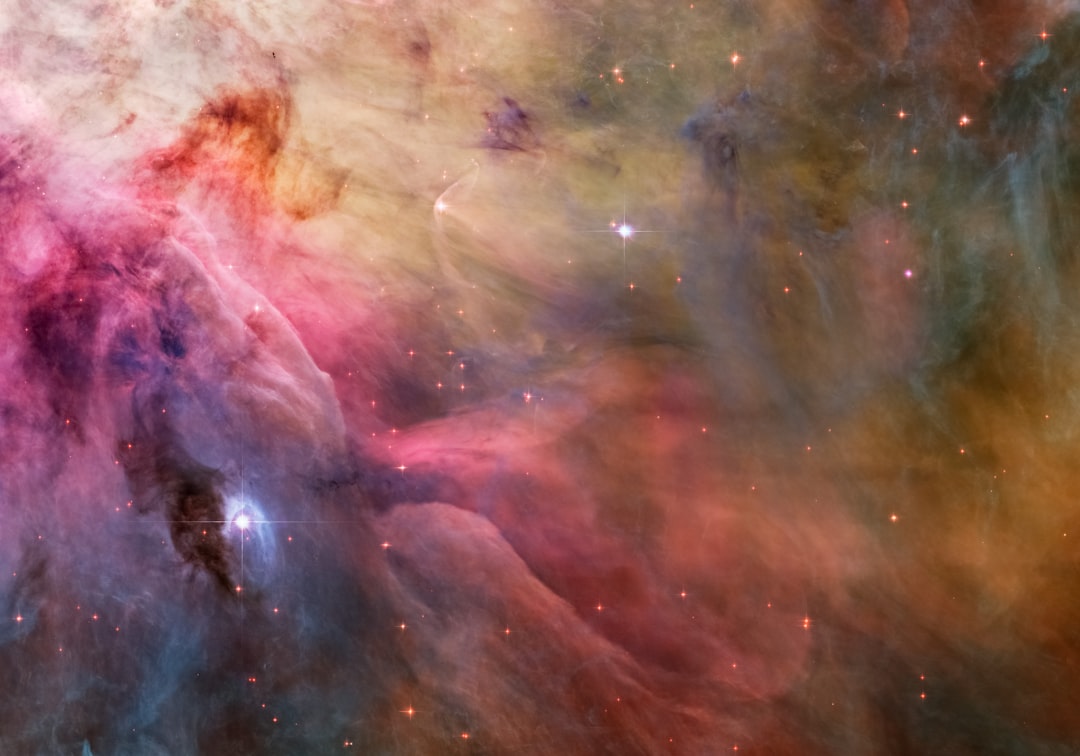
The discovery of ammonium carbamate in the Orion Nebula—one of the most studied star-forming regions in our galaxy, located approximately 1,344 light-years from Earth—raised an immediate question: How does this relatively complex molecule form under the extreme conditions of space? The compound results from the reaction between carbon dioxide (CO₂) and ammonia (NH₃), both of which are abundant in interstellar environments. However, the mechanism by which these simple molecules combine to create more complex structures remained poorly understood, particularly given the extremely low temperatures and pressures characteristic of protoplanetary disks.
Recreating the Cosmic Laboratory on Earth
To unravel this chemical mystery, Dr. Alexey Potapov and his team at Friedrich Schiller University in Jena, Germany, designed an ingenious experimental apparatus capable of simulating the conditions found in the early Solar System. Their laboratory setup, which represents a remarkable feat of experimental astrophysics, allowed them to recreate the extreme cold and low-pressure environment of interstellar clouds and protoplanetary disks with unprecedented accuracy.
The experimental protocol involved supercooling samples of carbon dioxide and ammonia to -260 degrees Celsius (approximately 13 Kelvin), matching the temperatures found in the coldest interstellar molecular clouds. These frigid conditions are so extreme that they're difficult to imagine—at such temperatures, virtually all molecular motion ceases, and most gases freeze into solid ices. The researchers then gradually warmed these samples to -190 degrees Celsius (about 83 Kelvin), simulating the slightly warmer conditions found in protoplanetary disks closer to young stars, where the radiation from the nascent star provides modest heating.
"Dust isn't just a passive background ingredient in space. It provides surfaces where molecules can meet, react and form more complex species. In some regions of space, this dust chemistry is a prerequisite for making life's molecular building blocks. We now know that surface reactions occur efficiently—more quickly—with the dust than without," explained Professor Martin McCoustra of Heriot-Watt University, a co-author of the study.
The Catalytic Power of Cosmic Dust
The crucial breakthrough came when the researchers introduced a third component into their experimental system: cosmic dust analogs. These microscopic particles, typically composed of silicates, carbonaceous materials, and water ice, are ubiquitous throughout the universe. In our own Solar System, dust particles range from nanometers to millimeters in size, and their total mass in the protoplanetary disk that formed our planets was substantial—accounting for roughly 1% of the disk's total mass.
What the team discovered was revolutionary: the presence of dust particles dramatically accelerated the formation of ammonium carbamate. Without dust surfaces, the reaction between carbon dioxide and ammonia proceeded extremely slowly, if at all, at these low temperatures. However, when dust grains were present, the reaction rate increased by orders of magnitude. The dust particles act as catalytic surfaces, providing meeting points where gas-phase molecules can adsorb, concentrate, and interact far more efficiently than they would in the empty vacuum of space.
Understanding Surface Chemistry in Space
The mechanism behind this dust-catalyzed chemistry involves several sophisticated physical processes. When gas molecules encounter a dust grain's surface, they can temporarily stick to it through weak electrostatic forces—a process called physisorption. Once adhered to the surface, molecules become concentrated in a two-dimensional environment, dramatically increasing the probability of chemical reactions. The dust grain surface essentially acts as a molecular matchmaker, bringing reactive species into close proximity and providing a stable platform for chemical bonds to form.
This research represents the first systematic laboratory investigation of ammonium carbamate formation under realistic astrophysical conditions. Previous theoretical models had suggested that such reactions might occur in space, but the efficiency and mechanisms remained speculative. According to research published by the European Southern Observatory, understanding these surface-catalyzed reactions is crucial for explaining the chemical complexity observed in molecular clouds and protoplanetary disks throughout our galaxy.
Implications for Astrobiology and the Search for Life
The broader implications of this research extend into the field of astrobiology—the study of life's origins, evolution, and distribution in the universe. If cosmic dust plays such a fundamental role in facilitating prebiotic chemistry, then the formation of life's molecular building blocks may be a common occurrence wherever protoplanetary disks exist. Given that astronomers have now identified thousands of exoplanetary systems, many with confirmed protoplanetary disks, this suggests that the chemical preconditions for life could be widespread throughout the cosmos.
The key findings from this research include:
- Catalytic Enhancement: Dust grain surfaces increase the efficiency of prebiotic molecule formation by providing concentrated reaction sites, enabling chemistry that would be prohibitively slow in the gas phase alone
- Temperature Dependence: The formation of ammonium carbamate proceeds most efficiently in the temperature range of protoplanetary disks (-190°C), suggesting optimal conditions for prebiotic chemistry in planet-forming regions
- Universal Mechanism: The dust-catalyzed pathway appears to be a general mechanism applicable to various environments throughout the galaxy, not specific to our Solar System
- Chemical Complexity: The research demonstrates how simple molecules (CO₂ and NH₃) can combine to form more complex organic compounds through surface chemistry, providing a pathway toward increasingly sophisticated molecular structures
- Observational Validation: Laboratory results align with JWST observations of ammonium carbamate in actual protoplanetary disks, confirming the relevance of the experimental findings to real astrophysical environments
Bridging Laboratory Science and Cosmic Observations
The timing of this laboratory research is particularly fortuitous, as it coincides with the James Webb Space Telescope's ongoing survey of star-forming regions and protoplanetary disks. JWST's unprecedented infrared sensitivity allows it to detect the spectral signatures of complex organic molecules that were invisible to previous generations of telescopes. The synergy between laboratory astrophysics and observational astronomy creates a powerful feedback loop: observations identify which molecules exist in space, while laboratory experiments reveal how those molecules form under realistic conditions.
This interdisciplinary approach has already yielded remarkable insights. For example, studies of the Orion Nebula using JWST have revealed a rich inventory of organic molecules, including not only ammonium carbamate but also methanol, formaldehyde, and various other carbon-bearing compounds. Each detection provides another piece of the puzzle in understanding how molecular complexity emerges from simpler starting materials in the cosmic environment.
"We've shown that dust can promote the chemistry needed to build more complex organics, even at extremely low temperatures. This could be how nature overcomes the harshness of space to kickstart chemistry that ultimately leads to life," emphasized Professor McCoustra.
Future Directions and Unanswered Questions
While this research represents a significant advance in our understanding of prebiotic chemistry, numerous questions remain unanswered. Scientists are now investigating whether dust-catalyzed reactions can produce even more complex molecules, such as amino acids and nucleobases—the direct building blocks of proteins and genetic material. Additionally, researchers are exploring how the composition of dust grains affects their catalytic properties. Dust particles in different regions of space have varying compositions, from pure silicates to organic-rich carbonaceous materials, and each type may facilitate different chemical pathways.
Future observations with JWST and other advanced instruments, including the Atacama Large Millimeter/submillimeter Array (ALMA), will continue to map the distribution of complex organic molecules in protoplanetary disks around young stars. These observations, combined with increasingly sophisticated laboratory experiments, will help scientists construct a comprehensive picture of how the molecular building blocks of life emerge from the simple gases and dust of the early Solar System.
A New Chapter in Understanding Life's Origins
This research fundamentally alters our perspective on the role of cosmic dust in the universe. Far from being merely the passive "stuff" between the stars, dust particles emerge as active participants in cosmic chemistry, serving as microscopic laboratories where the molecules essential for life can form and evolve. The discovery that dust-catalyzed reactions can efficiently produce prebiotic compounds even in the extreme cold of space suggests that the chemical pathways leading to life may be more robust and universal than previously thought.
As Dr. Potapov noted in discussing the broader significance of this work: "The findings suggest that dust grains play a far more active role in astrochemistry than previously thought. Floating through interstellar clouds and protoplanetary disks, these particles may provide the micro-environments where molecules meet and evolve into more complex forms." This insight connects the microscopic world of molecular chemistry to the grandest questions in science: How did life begin? Are we alone in the universe? And what are the fundamental conditions necessary for life to emerge?
By demonstrating the critical importance of dust in facilitating prebiotic chemistry, this research brings us one step closer to understanding the complete story of life's origins—a narrative that begins not with the first living cells on Earth, but billions of years earlier, in the cold, dusty clouds of the nascent Solar System. As our observational capabilities continue to improve and our laboratory techniques become ever more sophisticated, we can expect further revelations about how the universe manufactures the molecular ingredients for life, potentially illuminating the path from simple chemistry to the extraordinary complexity of living systems.