BepiColombo Achieves Mercury Orbit After an Epic 8-Year Journey
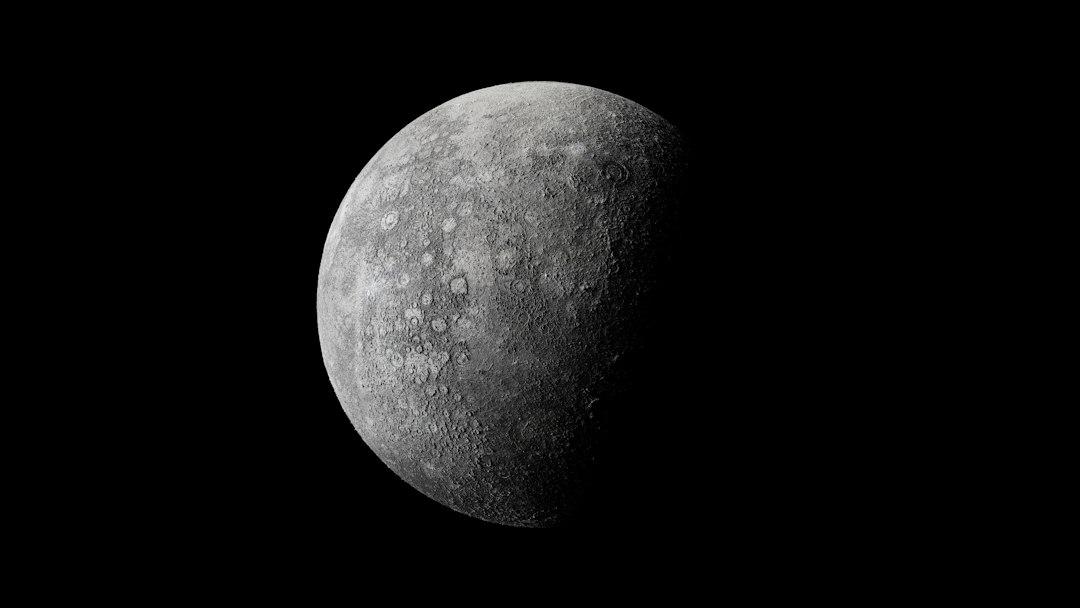
Mercury may be the smallest planet in our solar system and one of the least explored worlds, yet it holds an outsized importance in our quest to understand how the inner solar system formed and evolved. Its status as the closest planet to the Sun makes it a natural laboratory for studying the conditions that shaped rocky planets — including our own Earth — and what those conditions might mean for the broader search for life beyond our world. Now, after a remarkable eight-year odyssey spanning billions of kilometers, a groundbreaking international mission has arrived at this enigmatic world, poised to unlock secrets that have long eluded planetary scientists.
The joint mission between the European Space Agency (ESA) and the Japan Aerospace Exploration Agency (JAXA), known as BepiColombo, has officially become only the second spacecraft mission in history to achieve orbit around Mercury. Mission leaders recently confirmed that BepiColombo successfully completed Mercury Orbit Insertion (MOI) on November 21 at 18:27 UTC (1:27 pm EST / 10:27 am PST). This historic milestone arrives 8 years, 1 month, and 1 day after the spacecraft's launch on October 20, 2018 — a journey that required one Earth flyby, two Venus flybys, and six Mercury flybys to sufficiently reduce the spacecraft's velocity for orbital capture.
"Our almost 600-strong science team will be delighted to see BepiColombo pass this key milestone and begin revealing more about Mercury, from its interior and surface to the space around it." — Dr. Geraint Jones, Lead Project Scientist for ESA's BepiColombo, and former Professor of Planetary Science and Head of the Planetary Science Group at University College London's Mullard Space Science Laboratory.
Why Mercury Matters: A World of Scientific Mysteries
Despite being the innermost planet of the solar system, Mercury remains poorly understood compared to its rocky siblings. Its extraordinarily large iron core — comprising approximately 85% of the planet's radius — challenges existing models of planetary formation. Standard accretion models struggle to explain how a planet so close to the Sun could retain such a disproportionately large metallic core relative to its thin silicate mantle. Competing theories suggest giant impacts, solar wind stripping, or selective accretion of iron-rich material during the solar system's infancy may be responsible, but definitive answers remain elusive.
Mercury also defies expectations with its surprisingly strong intrinsic magnetic field. While Earth's magnetic field is generated by convective motion in its liquid outer core — a process known as the magnetohydrodynamic dynamo — Mercury's magnetic field is roughly 100 times weaker but still far stronger than expected for a small, slowly rotating body. Understanding how this field is generated and how it interacts with the solar wind is one of the central goals of the BepiColombo mission. Additionally, the planet hosts water ice in permanently shadowed polar craters, a seemingly paradoxical finding for a world where surface temperatures can swing between -180°C (-290°F) and 430°C (800°F) within a single Mercurian day.
These mysteries make Mercury a critical data point in the broader story of planetary formation in the inner solar system. By studying Mercury's composition, geology, and space environment in unprecedented detail, scientists hope to refine our models of how rocky planets — including potentially habitable ones around other stars — form and evolve over billions of years.
The Road to Mercury: An Engineering Odyssey
Getting a spacecraft into orbit around Mercury is one of the most formidable challenges in solar system exploration, and the reasons are deeply rooted in orbital mechanics. As any object moves closer to the Sun, the star's immense gravitational pull accelerates it. A spacecraft launched toward Mercury would gain tremendous speed as it falls inward through the solar system, arriving at Mercury far too fast to be captured into orbit through conventional braking burns alone. To slow down sufficiently using onboard propulsion would require a staggering amount of fuel — adding prohibitive mass and cost to the mission.
The elegant solution employed by both BepiColombo and its predecessor is the use of gravity assist maneuvers, also known as gravitational slingshots or planetary flybys. By carefully flying past planets, a spacecraft can transfer momentum to or from those bodies, altering its speed and trajectory without expending any propellant. BepiColombo executed a sophisticated sequence of these maneuvers:
- 1 Earth flyby — to adjust trajectory and begin the inward journey
- 2 Venus flybys — to bleed off velocity and reshape the orbit toward Mercury
- 6 Mercury flybys — to progressively match the spacecraft's orbit to Mercury's, further reducing velocity before final insertion
BepiColombo also uses a sophisticated solar electric propulsion system — essentially ion thrusters — that expels ionized xenon gas to generate continuous, low-thrust acceleration. This system is far more fuel-efficient than conventional chemical rockets, though it produces thrust over long periods rather than in short, powerful bursts. The combination of ion propulsion and gravity assists makes missions to Mercury feasible without requiring impractically large rocket launches.
Notably, BepiColombo required six Mercury flybys to achieve orbit, compared to three for NASA's MESSENGER spacecraft. This reflects differences in mission architecture and trajectory design, as well as the greater combined mass of BepiColombo's dual-orbiter configuration, which requires more deceleration to achieve stable orbit.
Standing on the Shoulders of MESSENGER
BepiColombo's historic arrival at Mercury follows in the footsteps of NASA's MESSENGER spacecraft (MErcury Surface, Space ENvironment, GEochemistry, and Ranging), which became the first mission to orbit Mercury when it achieved orbital insertion in March 2011. What was initially planned as a one-year science mission proved so scientifically productive that it was extended to April 2015 — more than four years of continuous orbital operations. During that time, MESSENGER completed over 4,100 orbits around the innermost planet and captured nearly 300,000 images, providing the first complete photographic map of Mercury's surface.
MESSENGER's legacy is extraordinary. Among its many revelations, the mission confirmed the presence of water ice and complex organic molecules in Mercury's permanently shadowed polar craters, detected evidence of past volcanic activity, and revealed the nature of Mercury's remarkably thin atmosphere — called an exosphere — sustained by solar wind interactions and meteorite impacts. When its fuel was finally exhausted, mission controllers deliberately guided MESSENGER into Mercury's surface on April 30, 2015, bringing a triumphant mission to a planned end. Its final resting place, a crater on Mercury's northern hemisphere, now bears the marks of one of humanity's most ambitious robotic explorers.
BepiColombo builds directly upon MESSENGER's scientific foundation, carrying far more sophisticated instrumentation to answer the questions MESSENGER raised but could not fully resolve.
BepiColombo's Dual-Orbiter Architecture: Double the Science
One of BepiColombo's most distinctive features is its dual-orbiter design, which sets it apart from any previous Mercury mission. The spacecraft currently in orbit consists of two scientific orbiters traveling together:
- Mercury Planetary Orbiter (MPO) — ESA's contribution, designed to study Mercury's surface, geology, interior structure, and chemical composition from a low, near-polar orbit
- Mercury Magnetospheric Orbiter ("Mio") — JAXA's contribution, designed to investigate Mercury's magnetic field, magnetosphere, and its complex interactions with the solar wind from a higher, more elliptical orbit
The two orbiters are currently locked together as a single stack, also known as the Mercury Composite Spacecraft (MCS), along with a transfer module that provided propulsion during the cruise phase. The orbiters are expected to separate in early December 2026, at which point MPO and Mio will independently take up their designated science orbits. This dual approach allows simultaneous measurements of Mercury's surface and space environment — something a single spacecraft cannot achieve — dramatically increasing the mission's scientific return.
Collectively, BepiColombo carries 16 scientific instruments across both orbiters, including spectrometers, magnetometers, cameras, radio science experiments, and particle detectors. These tools will enable researchers to probe Mercury's internal structure using gravity field mapping, study the composition of surface minerals, characterize the exosphere in detail, and monitor how the planet responds to solar storms in real time. For a comprehensive overview of BepiColombo's instrument suite and mission objectives, visit the ESA BepiColombo mission page.
The Road Ahead: Science Operations and Beyond
While the achievement of Mercury Orbit Insertion is a monumental milestone, BepiColombo's scientific journey is only beginning. The MOI places the spacecraft in a preliminary orbit; over the coming months, mission controllers will execute a series of carefully planned thruster firings to progressively reshape the orbit into the final science configurations required by MPO and Mio. This orbital adjustment phase will take place gradually to conserve fuel and ensure precise placement.
Science operations are expected to commence in April 2027, with the primary mission phase running through April 2028. A potential extended mission could continue through December 2029, depending on spacecraft health and remaining propellant. After the extended mission concludes — if one is approved — mission planners will evaluate whether BepiColombo has sufficient resources to continue operating, or whether it will join MESSENGER in a planned impact on Mercury's surface.
The science questions BepiColombo is primed to address include:
- How did Mercury form and why does it have such a disproportionately large iron core?
- What drives Mercury's internal magnetic dynamo, and how does its magnetosphere protect (or fail to protect) the planet from the solar wind?
- What is the geological history of Mercury's surface, including its volcanic and tectonic past?
- What is the precise composition of Mercury's polar ice deposits and exosphere?
- How does Mercury's surface evolve over time due to space weathering from micrometeorite impacts and solar radiation?
The answers to these questions won't just illuminate Mercury's past — they will refine our understanding of planetary formation across the entire solar system and may even shed light on the conditions that make planets habitable. To follow the mission's scientific progress, the JAXA Mio mission page and the ESA BepiColombo Science pages provide regular updates and published results.
A Tribute to a Pioneer: The Name Behind the Mission
BepiColombo's name honors Giuseppe "Bepi" Colombo (1920–1984), an Italian mathematician and engineer at the University of Padua who made pivotal contributions to our understanding of Mercury. Colombo was the first to recognize Mercury's peculiar 3:2 spin-orbit resonance — the fact that the planet completes exactly three rotations on its axis for every two orbits around the Sun — and he played a crucial role in designing the gravity-assist trajectory that allowed NASA's Mariner 10 spacecraft to perform multiple flybys of Mercury in the 1970s. Naming this ambitious mission after him is a fitting tribute to a scientist whose intellectual legacy literally paved the way for exploring the innermost planet.
For a deeper dive into the history of Mercury exploration and what BepiColombo hopes to achieve, NASA's Solar System Exploration: Mercury overview offers an excellent primer, while the Planetary Society's BepiColombo mission page provides accessible updates and expert commentary.
A New Era of Mercury Science Begins
With BepiColombo now safely in Mercury orbit after one of the most complex interplanetary journeys ever undertaken, humanity stands at the threshold of a new era of inner solar system exploration. The combined expertise of hundreds of scientists across Europe, Japan, and beyond — and the remarkable engineering achievement of guiding a spacecraft billions of kilometers to the most hostile corner of the inner solar system — represents the very best of what collaborative space science can accomplish.
The data BepiColombo returns over the coming years promises to fundamentally reshape our understanding of Mercury, rocky planet formation, and perhaps even the conditions necessary for life to emerge elsewhere in the cosmos. As science operations approach and the two orbiters prepare to go their separate ways in Mercury's orbit, one thing is certain: the most exciting chapters of this extraordinary mission are still to come.