Nine Hundred Telescopes and One Chance a Year: The Quest to Read the Atmosphere of Another Earth
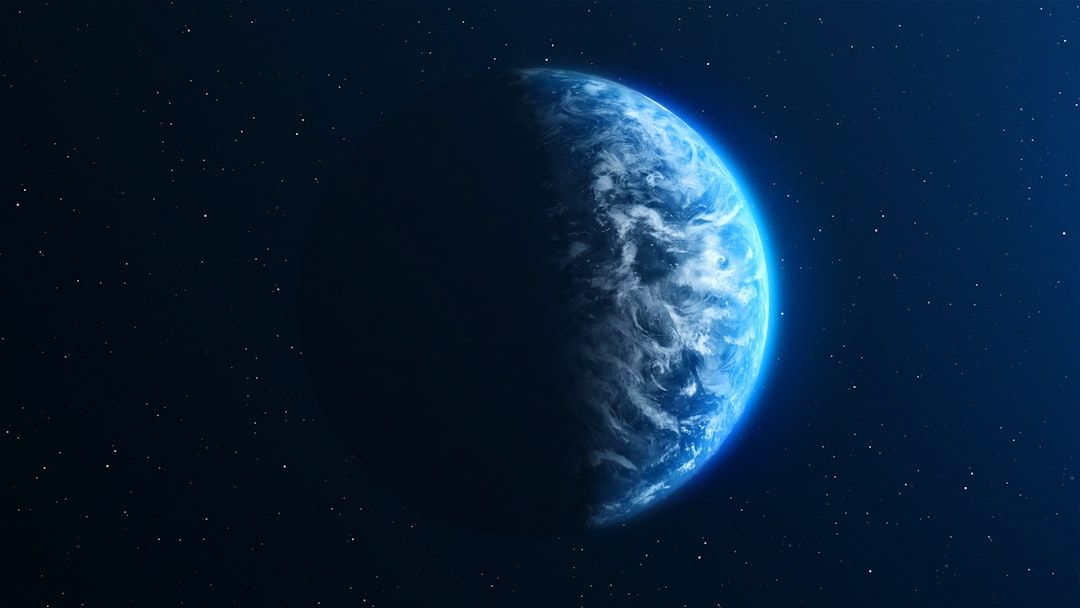
Of all the grand ambitions in modern astronomy, few are more tantalizing — or more technically daunting — than detecting the chemical signature of life on a planet orbiting a distant star. The fundamental challenge is not merely finding such a world; missions like ESA's PLATO and China's Earth 2.0 are being built precisely to do that. The deeper problem is what comes next: actually reading the atmosphere of a true Earth analogue, a rocky world the size of our own, orbiting at the right distance from a Sun-like star, transiting its host star just once every year. That constraint — one opportunity per orbit — changes everything about how you design a telescope.
The Transit Spectroscopy Technique: Light as a Chemical Messenger
When a planet passes directly in front of its host star from our perspective — an event astronomers call a transit — something remarkable happens at the edges of the stellar disk. A thin sliver of starlight grazes through the planet's atmosphere on its way to our telescopes. Molecules in that atmosphere absorb very specific wavelengths of light, each gas leaving its own distinctive notch in the spectrum. This technique, known as transmission spectroscopy, effectively turns the planet's atmosphere into a prism, revealing its chemical inventory to anyone patient and well-equipped enough to read it.
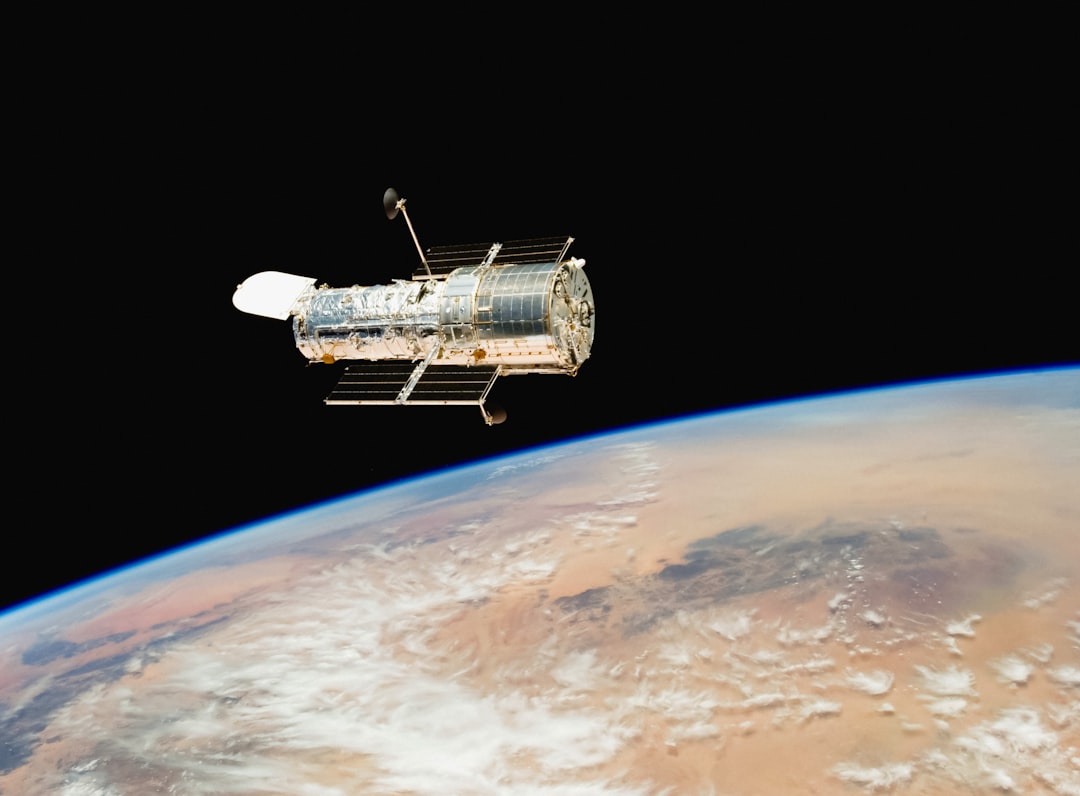
The gases that would make an astronomer's pulse quicken are precisely the ones that life as we know it produces and requires: oxygen (O₂), ozone (O₃), water vapour (H₂O), and carbon dioxide (CO₂). Together, these form what scientists call a biosignature ensemble — a suite of chemicals that, found simultaneously in the right proportions, would be extraordinarily difficult to explain without biology. The Hubble Space Telescope pioneered this technique on hot gas giants, and the James Webb Space Telescope (JWST) has since pushed it to stunning new levels of precision.
"For a genuine Earth-type planet orbiting a star like the Sun, the atmospheric signal amounts to roughly one part per million — a very faint fingerprint on a very bright light."
That number deserves a moment of reflection. One part per million means that the atmosphere of an Earth twin imprints a spectral signal approximately one millionth as bright as the star itself. Detecting it is the equivalent of identifying the scent of a single drop of perfume diffused throughout an Olympic swimming pool. The physics is unforgiving, and it demands an extraordinary instrument response.
The Tyranny of the Annual Transit
Astronomers have a well-tested remedy for faint signals: collect the same measurement over and over again until random noise averages itself away. The improvement scales with the square root of the number of observations — a law of statistics that has served science faithfully for centuries. For hot Jupiters, the scorching gas giants that whip around their stars in just a few days, this approach works beautifully. A planet completing an orbit every four days delivers roughly ninety transits per year, each one an opportunity to stack another spectrum on top of the last.
JWST's landmark detection of carbon dioxide in the atmosphere of WASP-39 b — a Saturn-mass world orbiting a Sun-like star some 700 light-years away, completing each orbit in just four days — demonstrated precisely this power. Published by NASA's JWST team in 2022, it was the first unambiguous detection of CO₂ in an exoplanet atmosphere, and it relied on accumulated signal strength that WASP-39 b's rapid orbit generously provided.
But a true Earth analogue does not cooperate so readily. Orbiting at roughly one astronomical unit from its star, such a planet transits once per year. Each transit event lasts only a handful of hours. Wait a decade and you accumulate perhaps ten usable observations — assuming the star behaves itself, the telescope remains operational, and nothing goes wrong with scheduling. Stacking spectra across years is theoretically possible but practically precarious. The cold mathematical truth is that each individual transit must be good enough on its own. There is no shortcut through repetition.
Aperture: The Blunt Instrument and Its Limits
If you cannot average away the noise through repetition, you must beat it in a single observation by collecting more photons. And collecting more photons means building a bigger telescope. The number of photons gathered scales with the area of your primary mirror — double the diameter, quadruple the light-collecting power. Rough calculations suggest that detecting the biosignature spectrum of an Earth twin around a Sun-like star in a single transit would require a telescope mirror approximately thirty metres in diameter, deployed in space to avoid the blurring and absorbing effects of Earth's own atmosphere.
For context, JWST's primary mirror spans 6.5 metres across — itself a marvel of engineering that required decades of development, folded into a spacecraft for launch, and deployed itself autonomously in deep space with a reliability that left engineers breathless. A 30-metre space telescope would represent an engineering challenge of a categorically different order of magnitude: vastly more complex, vastly more expensive, and carrying commensurate mission risk. There is no obvious path from where we are today to a single monolithic 30-metre space telescope, at least not within any realistic near-term budget or timeline.
Life 2.0: Nine Hundred Telescopes Flying as One
Jian Ge and colleagues at the Shanghai Astronomical Observatory, working with collaborators across China and Spain, have proposed a radical alternative to the monolithic giant. Their concept, named Life 2.0, envisions an array of nine hundred individual one-metre telescopes flying together as a coordinated distributed system. The collective light-gathering area of nine hundred one-metre mirrors equals that of a single 30-metre aperture — but the engineering path to get there is fundamentally different, and arguably far more tractable.
The key principles of the Life 2.0 architecture are elegant in their logic:
- Independent observation: Each telescope observes the transit simultaneously but independently, with its own miniature spectrograph and ultra-low-noise detector system.
- Independent calibration: Each unit is calibrated against its own systematic errors separately, preventing correlated instrumental noise from corrupting the combined result.
- Post-observation combination: The individually calibrated spectra are then co-added, producing a composite signal equivalent to what a 30-metre aperture would deliver.
- Production-line manufacturing: Because all nine hundred units are identical, they can be produced on a manufacturing line rather than custom-built one by one — dramatically reducing cost per unit and overall mission risk.
- Lightweight materials: Each unit employs silicon carbide mirrors and CMOS detectors, proven technologies that are both lightweight and robust, well-suited to the demands of a space environment.
The spectrographs at the heart of each unit are not hypothetical. The team reports that prototype waveguide spectrographs — devices that channel and disperse light through microscopic pathways etched into a chip — have already demonstrated throughput efficiencies of 40 to 66 percent in laboratory testing. This is a meaningful milestone: it places the core optical component firmly in the domain of demonstrated technology rather than theoretical promise.
Why Distributed Arrays Change the Risk Equation
Beyond the sheer collecting area, the distributed architecture offers a risk profile that is qualitatively different from a single large telescope. When JWST launched in December 2021, it carried the collective anxiety of an entire scientific community. A single failed deployment hinge, a single micrometeorite strike to the wrong location, and decades of work and billions of dollars of investment could have been lost. With Life 2.0, the failure of any individual unit — or even dozens of units — degrades performance gracefully rather than catastrophically. The mission continues; it simply operates with slightly less collecting area than planned.
There is also a compelling manufacturing argument. A single vast primary mirror is a bespoke engineering achievement, requiring years of polishing, testing, and integration. Each of JWST's 18 beryllium mirror segments required individual alignment to nanometre precision. Nine hundred identical one-metre mirrors, by contrast, represent a production engineering challenge — one that is amortized across a long production run and benefits from iterative quality improvement. If unit number fifty reveals a flaw in the manufacturing process, units fifty-one through nine hundred can be corrected.
The Challenges the Authors Refuse to Ignore
It would be tempting, when presenting a bold concept, to paper over the difficulties. To the credit of Ge and colleagues, the Life 2.0 paper does no such thing. The authors explicitly name three categories of challenge that must be solved rather than assumed away:
- Detector systematics: Tiny, repeatable instrumental artifacts in each detector can masquerade as genuine spectral features. Managing and characterizing these across nine hundred independent units is a formidable data processing challenge.
- Instrument stability: Achieving the thermal and mechanical stability required for precision spectroscopy — sustaining sub-nanometre-level consistency across hours of observation — in the space environment is non-trivial for any instrument, let alone a fleet of nine hundred.
- Stellar variability: Stars are not perfectly stable light sources. The Sun itself flickers, flares, and rotates star-spots across its face. Disentangling true atmospheric absorption from the noise introduced by the star's own activity is one of the deepest unsolved problems in exoplanet characterization, and it becomes more acute when the target signal is as faint as one part per million.
The authors note that the JWST era — with its unprecedented sensitivity and the analytical techniques developed to exploit it — has begun to provide the tools needed to address precisely these challenges. In that sense, Life 2.0 is not a concept born in ignorance of the field's difficulties but one that positions itself as the logical next step after JWST has taught us how hard this problem really is.
The Broader Context: Finding the Candidates First
Life 2.0 fits into a cascade of planned missions, each contributing a necessary piece of the puzzle. ESA's PLATO mission, scheduled for launch in the late 2020s, is designed to discover Earth-sized planets orbiting Sun-like stars in the habitable zone — precisely the targets that Life 2.0 would then study. China's Earth 2.0 mission has similar objectives, aiming to dramatically expand the census of potentially habitable worlds. NASA's TESS mission continues to identify transit candidates around nearby stars, some of which may prove to be genuine Earth analogues.
The challenge, once those candidates are in hand, is characterization — determining whether any of them actually possess the atmospheric chemistry that life requires and produces. That is the gap Life 2.0 is designed to fill. Without a capable characterization instrument, the candidates found by PLATO and Earth 2.0 will remain tantalizing question marks: worlds we know exist, but whose nature we cannot determine.
The PLATO and Earth 2.0 missions are being built to find the candidate worlds. Somebody has to be ready to look at them properly — and perhaps this proposal is the way to do just that.
A Concept Paper, Not a Mission Plan — But a Serious One
It is important to be clear about where Life 2.0 currently sits in the hierarchy of astronomical proposals. This is a concept presented at a conference, emerging from a peer-reviewed study rather than an approved mission with secured funding and a launch date. The distance between a compelling concept paper and a flying spacecraft is measured in years of engineering study, political negotiation, budget cycles, and international partnership-building.
But concept papers that name their problems honestly and propose technically grounded solutions are the seeds from which real missions grow. The scientific community's track record shows that audacious proposals — JWST itself was once considered impossibly ambitious — can, over time, become engineering realities. The distributed aperture approach has precedent in radio astronomy, where arrays like the Very Large Array have demonstrated that coordinated fleets of smaller instruments can achieve resolving power and sensitivity that dwarf any single dish. Life 2.0 asks whether that philosophy, so successful in the radio domain, can be translated into the infinitely more demanding regime of optical-infrared transmission spectroscopy from space.
The answer is not yet known. But the question is exactly the right one to be asking, and the annual transit window for an Earth twin is ticking by whether we are ready or not.