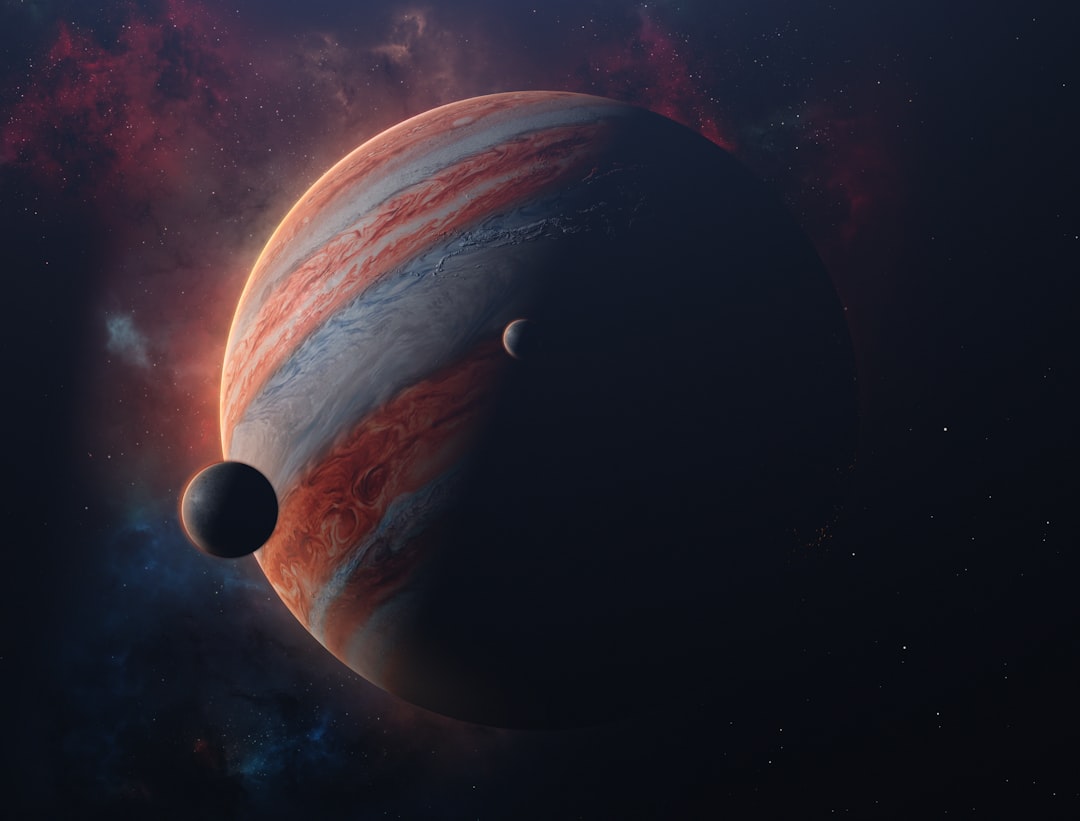
The Planet That Lied About Its Own Spin
Every so often, a piece of research comes along that isn't really about a discovery — it's about a mistake we didn't know we were making. This is one of those, and it happens to concern one of our nearest and most deceptive planetary neighbours. The lesson it carries, however, stretches far beyond our own Solar System, reaching into the heart of how we assess the habitability of worlds orbiting distant stars.
A World That Wears Two Faces
Venus takes a staggering 243 Earth days to complete a single rotation on its axis — one of the most sluggish spins of any object in the Solar System. In fact, a day on Venus is longer than a Venusian year, which clocks in at just 225 Earth days. Yet if you trained your telescope on its cloud tops instead of its surface, you would reach a dramatically different conclusion. The upper atmosphere of Venus races around the planet in approximately four Earth days, a remarkable phenomenon astronomers call atmospheric super-rotation. This makes the cloud layer appear to spin roughly sixty times faster than the planet beneath it actually does. Measure the wrong layer, and your answer is off by nearly two orders of magnitude.
"Look at the wrong layer, measure the wrong thing, and you get an answer that's wrong by nearly two orders of magnitude — and every climate model built on top of it inherits that error."
This extraordinary mismatch between surface rotation and atmospheric motion is not fully understood, even after decades of study. Scientists believe it arises from a complex interplay of solar heating, gravity waves, and momentum transfer within the atmosphere, but the precise mechanisms remain an active area of research. What is clear is that it creates a profoundly misleading signal for any observer relying solely on cloud-top measurements — and that, crucially, is exactly the kind of signal we tend to collect from planets orbiting other stars.
Learn more about Venus from NASA's Solar System Exploration
The Warning Hidden in a New Paper
That deceptive signal is the central concern of a new paper by Stephen Kane, a planetary scientist at the University of California, Riverside. Kane's work is a pointed methodological warning: in the era of large-scale exoplanet surveys, are we systematically mistaking planetary weather for planetary spin? And if so, what does that mean for every habitability assessment built upon those measurements?
Rotation is not a footnote in planetary science — it is foundational architecture. The rate at which a world spins governs an extraordinary range of processes:
- How efficiently stellar energy is redistributed across the planet's surface, preventing extreme hot and cold hemispheres
- How weather systems and jet streams form and sustain themselves through the Coriolis effect
- How oceans and atmospheres interact, driving the circulation patterns that regulate long-term climate
- Whether a planet can sustain a magnetic dynamo in its core, which may shield the surface from harmful stellar radiation
- The overall day-night temperature gradient, which profoundly influences atmospheric chemistry and stability
Feed the wrong rotation rate into a climate model, and every subsequent calculation is contaminated. A model built on a four-day Venusian "day" would produce radically different atmospheric dynamics, habitability scores, and even biosignature predictions than one correctly using the 243-day surface rotation. Scale that error across hundreds of exoplanet assessments, and the cumulative distortion could fundamentally mislead our search for life beyond Earth.
The Exoplanet Measurement Problem
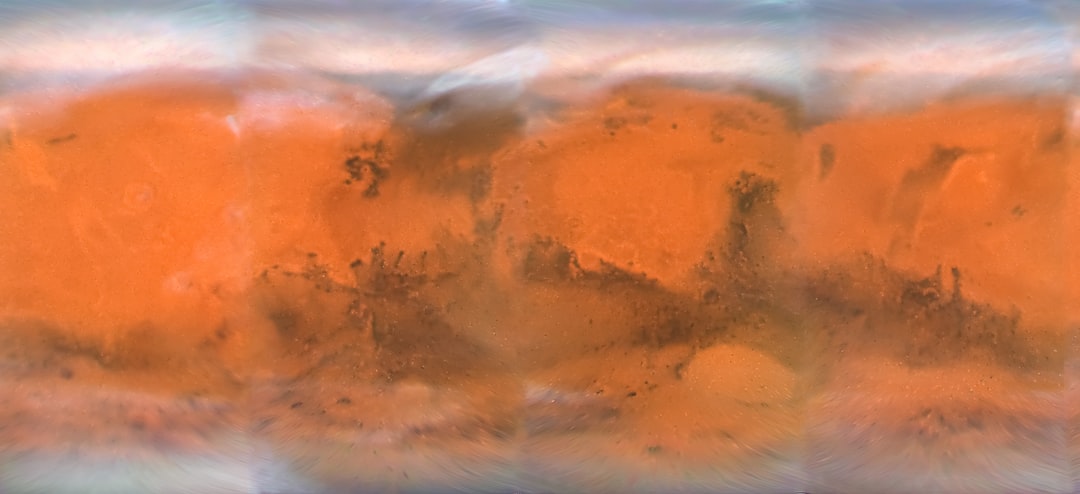
For planets within our own Solar System, the problem is manageable. We can track surface features — craters, mountain ranges, volcanic plains — and directly measure rotation. Mars, for instance, reveals its 24.6-hour day quite readily through surface observations. But for exoplanets, we rarely enjoy that luxury. Most worlds orbiting other stars are detected and characterised almost entirely through their atmospheres — through the light filtered during a transit, or the thermal emission captured in phase curves. In nearly every case, what we are measuring is the behaviour of atmospheric gases and clouds, not the rotation of the solid body beneath.
This creates a trap that Venus has now illustrated with uncomfortable clarity. If a distant Venus-like exoplanet exists, an astronomer measuring its atmospheric Doppler shifts or cloud-top wind speeds might confidently report a four-day rotation period. That planet would then be assessed, modelled, and ranked for habitability based on a number that is wrong by a factor of sixty. It might even be flagged as a promising candidate — fast rotators tend to distribute heat more evenly, potentially supporting more temperate conditions — when the reality underneath is a scorched, slowly baking world.
Explore NASA's Exoplanet Exploration Program
A Proposed Solution: Probing Deeper with Multiple Wavelengths
Kane's paper does not merely diagnose the problem — it offers a practical corrective strategy. By observing the same planet across multiple wavelengths simultaneously, particularly in the infrared, astronomers can probe to different depths within the atmosphere. On Venus, a well-studied pattern emerges: wind speeds are highest at the cloud tops and decrease progressively as you descend toward the surface. The closer you get to the solid planet, the slower the atmospheric motion becomes, until it begins to reflect the true rotation of the world beneath.
By stacking observations at multiple atmospheric depths — each wavelength effectively acting as a different altitude probe — researchers can begin to reconstruct a rotational gradient through the atmosphere. That gradient, extrapolated carefully, offers a far more reliable estimate of true surface rotation than any single-layer measurement could provide. It is a technique refined from decades of Venus atmospheric science, now being proposed as a standard tool for exoplanet characterisation.
This multi-wavelength approach also has the advantage of revealing atmospheric structure itself, providing insights into wind dynamics, chemical layering, and thermal profiles that single-band observations entirely miss. In that sense, correcting for the super-rotation problem does not merely improve rotation estimates — it enriches our entire picture of an exoplanet's atmospheric physics.
The PLATO Mission and a Windfall of Exo-Venuses
The reason Kane's paper carries particular urgency right now comes down to timing and scale. The European Space Agency's PLATO mission — PLAnetary Transits and Oscillations of stars — is scheduled for launch in March 2027. Equipped with 26 ultra-sensitive cameras designed to detect the tiny dimming of starlight as planets cross in front of their host stars, PLATO is engineered to find Earth-sized and near-Earth-sized worlds in or near the habitable zones of Sun-like stars with unprecedented precision.
In a companion paper, Kane and his colleagues — including doctoral student Emma Miles — predict that PLATO will identify several hundred Venus-like worlds. That is not a modest number in this field; it represents a transformative windfall. For the first time in the history of planetary science, researchers will have access to a genuine statistical population of exo-Venuses to study comparatively, rather than a single, maddeningly difficult data point sitting 41 million kilometres away at closest approach.
Learn more about ESA's PLATO mission
That population matters enormously. Statistical patterns invisible in a single example become legible when you have hundreds. Are slow rotators disproportionately represented among Venus-like hellscapes? Do faster-spinning Venus-sized worlds show signs of more moderate climates? Do atmospheric super-rotation signatures cluster in particular types of planetary systems? These are questions that simply cannot be answered with one planet, but become tractable with several hundred.
Venus, Earth, and the Question That Has Nagged for Decades
At the deepest level, this research connects to one of the most haunting questions in planetary science: why did Venus become Venus? Both Earth and Venus are rocky worlds of nearly identical size, formed from similar materials in the same solar neighbourhood. They receive comparable amounts of stellar energy, though Venus sits closer to the Sun. Yet their outcomes could scarcely be more different. Earth hosts liquid oceans, a breathable nitrogen-oxygen atmosphere, and a biosphere of staggering complexity. Venus, by contrast, is a crushing, lead-melting hellscape — surface temperatures hovering around 465°C (869°F), atmospheric pressure ninety times that of Earth's sea level, and skies perpetually choked with sulphuric acid clouds.
Something went catastrophically wrong on Venus. The leading hypothesis is a runaway greenhouse effect: a positive feedback loop in which rising temperatures drove water vapour — itself a powerful greenhouse gas — into the atmosphere, accelerating warming, which drove more water vapour aloft, until the oceans evaporated entirely and the planet's surface was left baking beneath an impenetrable thermal blanket. But the precise triggers for this runaway remain debated. Was it purely Venus's proximity to the Sun? Its volcanic history? Its lack of plate tectonics? Or could its extraordinarily slow rotation have played a decisive role?
Slow rotation means longer days and longer nights, larger day-night temperature differentials, and fundamentally different atmospheric circulation patterns. Some climate modelling suggests that fast-rotating Venus-sized planets might have maintained cloud cover on their dayside sufficient to reflect enough sunlight to stay temperate — a hypothesis known informally as the cloud feedback stabilisation mechanism. A slowly rotating Venus would not enjoy that protection in the same way. If the population of exo-Venuses discovered by PLATO turns out to be dominated by slow rotators, that would be a powerful empirical signal that sluggish spin genuinely belongs in the runaway greenhouse recipe.
Why Earth's Day Matters More Than We Think
Earth's own 24-hour rotation is doing an enormous amount of quiet, invisible climate work. It drives the Coriolis effect that steers weather systems, trade winds, and ocean gyres. It ensures that no patch of the planet bakes for too long or freezes in extended darkness. It powers the circulation of both atmosphere and ocean — the vast conveyor belts of heat that keep equatorial regions from becoming uninhabitable furnaces and polar regions from becoming permanently impenetrable ice sheets. Remove that spin, or slow it dramatically, and Earth's climate system would reorganise into something deeply alien.
As the search for potentially habitable worlds accelerates — fuelled by missions like JWST, PLATO, and future observatories — Kane's research is a timely reminder of how much foundational information can be hidden in a single, seemingly simple number. The rotation rate of a distant world may look like a minor parameter. But get it wrong, and everything built on top of it — climate assessments, habitability rankings, the decision of where to point precious telescope time — is built on a mirage.
The planet that lied about its own spin has, in the end, told us something true: that in astronomy, the most dangerous errors are not the ones we know we are making. They are the ones we don't.
Key Takeaways
- Venus's cloud-top atmosphere rotates ~60 times faster than the planet's solid surface, creating a potentially catastrophic measurement error for exoplanet studies
- This atmospheric super-rotation could cause astronomers to misidentify a planet's true rotation period by nearly two orders of magnitude
- Multi-wavelength infrared observations can probe different atmospheric depths and reconstruct true surface rotation rates
- ESA's PLATO mission, launching in 2027, is predicted to reveal several hundred Venus-like exoplanets — providing the first large statistical population for comparative study
- Determining whether slow rotation is a key driver of runaway greenhouse conditions could transform how we rank exoplanets for habitability
- The research underscores that planetary rotation rate is a foundational parameter, not a minor footnote, in any credible assessment of a world's climate and habitability