Twenty Years of Watching One Galaxy, and It Made Less Sense
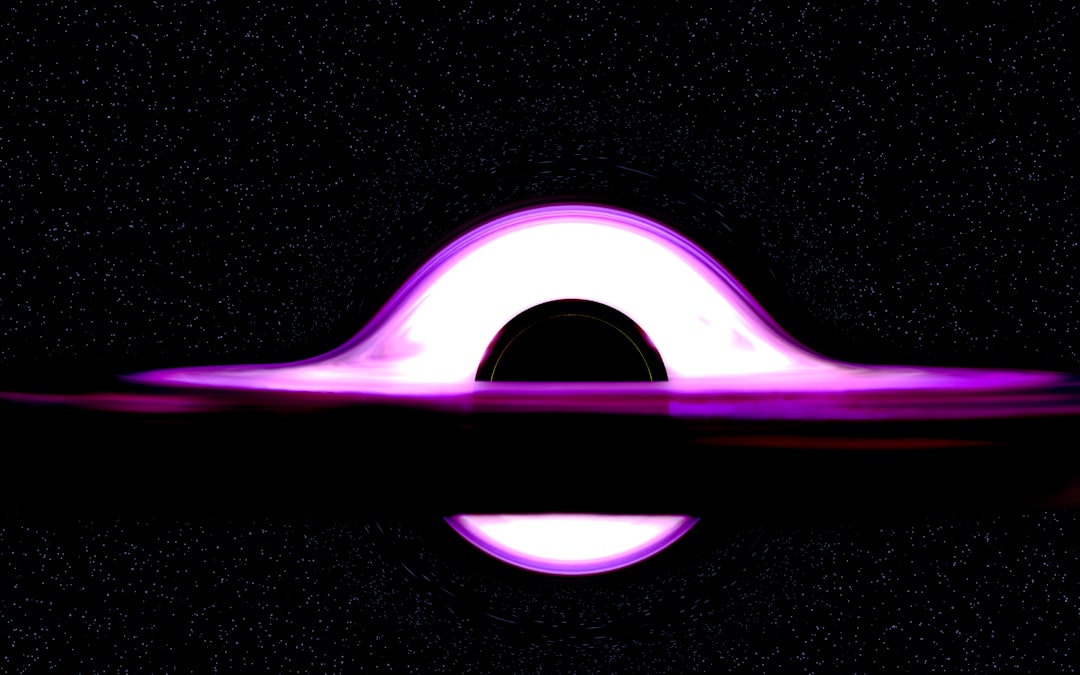
How well would you know someone from four photographs taken a decade apart? That, roughly, is the position astronomers have been in with blazars — some of the most energetic and enigmatic objects in the known universe. A blazar is an active galactic nucleus (AGN) in which a jet of ionised matter, launched from the turbulent region around a supermassive black hole, happens to point almost directly at Earth. From that privileged angle, the galaxy collapses to a single brilliant point of light, outshining everything around it and blazing across the entire electromagnetic spectrum — from radio waves to gamma rays — with a ferocity that dwarfs entire galaxies.
The challenge with blazars isn't finding them. It's watching them long enough, and broadly enough, to understand what is actually happening inside them. They vary constantly, and not in step with themselves. The X-ray emission can be doing one thing while the optical light does something entirely different, sometimes within a single observation window. Studying that variability properly would require instruments covering the whole electromagnetic spectrum continuously — and no such instrument exists. So blazars are monitored in campaigns: a few days at a time, every few months or years, in whichever narrow energy band a given telescope happens to cover. It is a little like trying to understand a symphony by listening to each instrument separately, years apart, and never at the same time.
"Each outburst appears to be driven by something slightly different — a finding that challenges the elegant simplicity of the standard one-zone emission model that has guided blazar physics for decades."
A Record-Breaking Long Look at PKS 2155-304
Alicja Wierzcholska at the Institute of Nuclear Physics in Cracow, working with Michael Zacharias at Heidelberg, has now managed to take a much longer and more systematic look than has ever been attempted before. Their target is PKS 2155-304, an unremarkable-sounding object located approximately 1.5 billion light-years away in the southern constellation of Piscis Austrinus. It is one of the brightest and best-studied blazars in the southern sky, making it an ideal candidate for long-baseline monitoring.
Their dataset covers almost two decades of continuous observation, drawn from two of NASA's most capable space observatories: the Swift observatory for optical, ultraviolet, and X-ray data, and the Fermi Gamma-ray Space Telescope for high-energy gamma-ray measurements. Stitching together two decades of multi-wavelength data from different instruments, different calibrations, and different observing schedules is itself a formidable technical achievement — the kind of archival science that often reveals what short campaigns cannot.
What they found was not the confirmation of existing theory. It was something far more interesting: a growing pile of contradictions.
The Standard Model Under Pressure
The widely accepted framework for understanding blazar emission — sometimes called the one-zone leptonic model — holds that the radiation we observe originates from a single compact region within the relativistic jet. In this picture, a single population of high-energy electrons produces all the radiation we see through two processes: synchrotron radiation (which produces radio, optical, and X-ray emission as electrons spiral through magnetic field lines) and inverse Compton scattering (which boosts lower-energy photons up to gamma-ray energies). The model has the elegant virtue of simplicity, and it has explained a great deal of blazar behaviour across short timescales.
If the one-zone model were correct, the optical and X-ray brightness of PKS 2155-304 ought to rise and fall together — perhaps with a predictable time lag, but correlated nonetheless. Over twenty years of data, they simply do not. No long-term correlation appears at all. The two wavebands seem, on the longest timescales, to be living largely independent lives.
A recent study using NASA's Imaging X-ray Polarimetry Explorer (IXPE) lent support to the idea that a shock wave travelling through the jet is responsible for accelerating particles to the extreme energies we observe. That mechanism can, in principle, operate episodically and in different parts of the jet at different times — which would help explain why correlations break down over long baselines. But the new two-decade dataset suggests the problem runs deeper than any single mechanism can easily account for.
Flares That Don't Behave
Blazar flares — sudden, dramatic brightenings that can double or triple a source's output in hours or days — are where much of the action is. A well-established behaviour in many blazars, known informally as the "harder when brighter" phenomenon, describes how harder, higher-energy X-ray photons tend to brighten more sharply during outbursts than softer, lower-energy ones. This is interpreted as evidence of freshly accelerated electrons dominating the emission during active periods.
Look at any individual outburst of PKS 2155-304 and you can indeed see that behaviour. But zoom out across two decades, and the pattern dissolves. The details differ from flare to flare in ways that resist a single unified explanation. Each outburst appears to be driven by something slightly different — a shift in the magnetic field configuration, a new injection of particles, a change in the jet's bulk velocity, or some combination of factors that the data alone cannot yet disentangle.
- Long-term optical and X-ray brightness show no consistent correlation over two decades.
- The "harder when brighter" X-ray spectral pattern holds within individual flares but not across the full dataset.
- Each major outburst appears to have a distinct physical driver, suggesting the jet is not a simple, steady machine.
- The source's behaviour across the full electromagnetic spectrum is inconsistent with a single emission zone.
An Anomalous Dip — and a Hadronic Clue
Then came the observations that puzzled everyone most. In two spectral measurements taken during 2012, an anomalous dip appears in the X-ray spectrum — statistically robust, and occurring at a time when the object was not flaring at all. Something changed in the source between those two measurements, switching on and off in a way that the standard electron-driven picture struggles to explain.
Wierzcholska's team consider the likeliest culprit to be a hadronic process — one in which protons, rather than electrons, are doing the primary work. In hadronic models, ultra-high-energy protons interact with photons or other particles within the jet, producing a cascade of secondary particles including pions, muons, and ultimately neutrinos. These processes can produce spectral signatures that leptonic models cannot easily mimic, and they tend to be intermittent — switching on when proton energies are sufficient and the target photon field is dense enough.
This matters enormously, because hadronic processes are precisely how you make high-energy neutrinos. For years, the IceCube Neutrino Observatory at the South Pole has been detecting astrophysical neutrinos arriving from sources that nobody could positively identify. The particles carry extraordinary energies — sometimes exceeding a petaelectronvolt — and they travel in straight lines through space, undeflected by magnetic fields, pointing directly back to wherever they were born. Finding their sources would open an entirely new window on the most violent processes in the universe.
The Blazar-Neutrino Connection
The one solid lead the field currently possesses is a blazar: TXS 0506+056. In September 2017, a high-energy neutrino arrived at the South Pole's IceCube detector, and within minutes, observatories around the world swung to look at the patch of sky it had come from. The Fermi Gamma-ray Space Telescope found that TXS 0506+056 was in its most active gamma-ray state in a decade — the right place, the right time, and the right kind of violent outburst. It remains the only case in which a high-energy astrophysical neutrino has been credibly linked to an identified source.
The implication of the hadronic spectral feature in PKS 2155-304 is that blazars may routinely produce neutrinos during certain phases of their activity, even when they are not in the dramatic, easily noticed outbursts that draw telescope time. If proton acceleration is an intermittent component of blazar jet physics — switching on quietly, leaving a spectral fingerprint that only two-decade datasets can reveal — then the universe's neutrino budget may be significantly larger than current detections suggest, and the sources may be hiding in plain sight.
What Twenty Years Really Tells Us
The deeper lesson of this study is methodological as much as physical. Short observing campaigns, however well-designed, are systemically blind to the kind of long-term behavioural evolution that PKS 2155-304 has now revealed. The blazar is not simply varying around a fixed average state. It appears to cycle through genuinely different physical regimes — leptonic-dominated at some times, potentially hadronic at others — with no single model capturing the full picture.
The European Space Agency's INTEGRAL mission and future facilities such as the Cherenkov Telescope Array will extend multi-wavelength coverage further into the very-high-energy regime, potentially catching the kinds of spectral transitions that betray hadronic activity in real time. Combined with expanding neutrino detection capabilities, the next two decades of blazar monitoring may finally answer questions that the first two decades have only sharpened.
For now, PKS 2155-304 stands as a reminder that astrophysical objects do not simplify themselves for our convenience. The more carefully you look, and the longer you look, the richer and more complicated the story becomes — and that, in the end, is what makes the watching worthwhile.