After a Billion Kilometres, China's Asteroid Hunter Finally Arrives
What does it take to catch up with a small, tumbling rock hundreds of thousands of kilometres from Earth? For China's Tianwen-2 mission, the answer was a four-hundred-day chase covering roughly a billion kilometres of deep space — a journey that has just ended in a landmark moment for planetary science. The China National Space Administration (CNSA) has confirmed that the probe has successfully rendezvoused with the near-Earth asteroid Kamoʻoalewa, also catalogued as 2016 HO3, closing to within approximately twenty kilometres and officially beginning its scientific exploration phase.
"The successful rendezvous marks the beginning of a new chapter in humanity's effort to understand the small rocky bodies that populate our inner Solar System — and, potentially, to unlock secrets about the Moon's own violent past."
A Precision Journey Through Deep Space
Tianwen-2 launched from the Xichang Satellite Launch Center in Sichuan Province in May 2025, riding atop a Long March 3B rocket — the same venerable heavy-lift vehicle that has underpinned much of China's deep-space ambition. The journey since has been far from a simple straight line. Deep-space navigation at these distances demands extraordinary precision; even tiny velocity errors, left uncorrected, can compound over hundreds of millions of kilometres into catastrophic misses. Mission controllers executed a carefully choreographed sequence of trajectory correction manoeuvres (TCMs) and mid-course corrections, each one nudging the spacecraft onto an ever-more-refined path toward a target that, until very recently, was known with surprisingly little certainty.
Ground-based observations from Earth had only been able to pin down the asteroid's position to within approximately one hundred kilometres — a comfortable margin for telescopic study from our planet, but a profound navigational challenge when attempting a physical rendezvous in the void. The critical turning point came in early June 2025, when Tianwen-2 first detected 2016 HO3 directly with its own onboard instruments. Within a day, at a separation of roughly thirty thousand kilometres, the spacecraft executed a pivotal capture control manoeuvre, transitioning from a long-range intercept trajectory to coplanar flight — essentially synchronising its orbital path with the asteroid rather than simply crossing it at high velocity. By 19 June, the gap had narrowed dramatically to just two thousand kilometres, and the spacecraft continued its methodical approach from there.
Closing the Gap: Autonomous Navigation at Its Finest
Throughout the final approach, Tianwen-2 employed its own optical navigation cameras to capture imaging data of 2016 HO3. Mission engineers used this onboard data to dramatically improve their knowledge of the asteroid's precise position in space, compressing the positional uncertainty from that original hundred-kilometre spread to less than one kilometre — a hundredfold improvement driven not by Earth-based telescopes, but by the spacecraft's own eyes. This kind of autonomous optical navigation is a hallmark of modern deep-space missions; similar techniques were employed by JAXA's Hayabusa2 mission during its operations at asteroid Ryugu, and by NASA's OSIRIS-REx at Bennu.
In a notable act of scientific openness, the refined positional data generated during Tianwen-2's approach has already been made publicly available through China's Lunar and Planetary Data Release System, enabling the global scientific community to immediately benefit from the mission's navigational achievements.
Kamoʻoalewa: Earth's Mysterious Quasi-Satellite
Kamoʻoalewa — a Hawaiian word meaning "oscillating celestial object" — is no ordinary asteroid. Discovered in 2016 by the Pan-STARRS telescope system in Hawaii, it occupies one of the most unusual orbital niches in the inner Solar System. Measuring only around forty to one hundred metres in diameter, it is classified as a quasi-satellite of Earth: an object whose orbit around the Sun keeps it perpetually near our planet, looping around us in a complex, spirograph-like dance as seen from Earth's reference frame, never quite escaping our gravitational neighbourhood but never truly captured either.
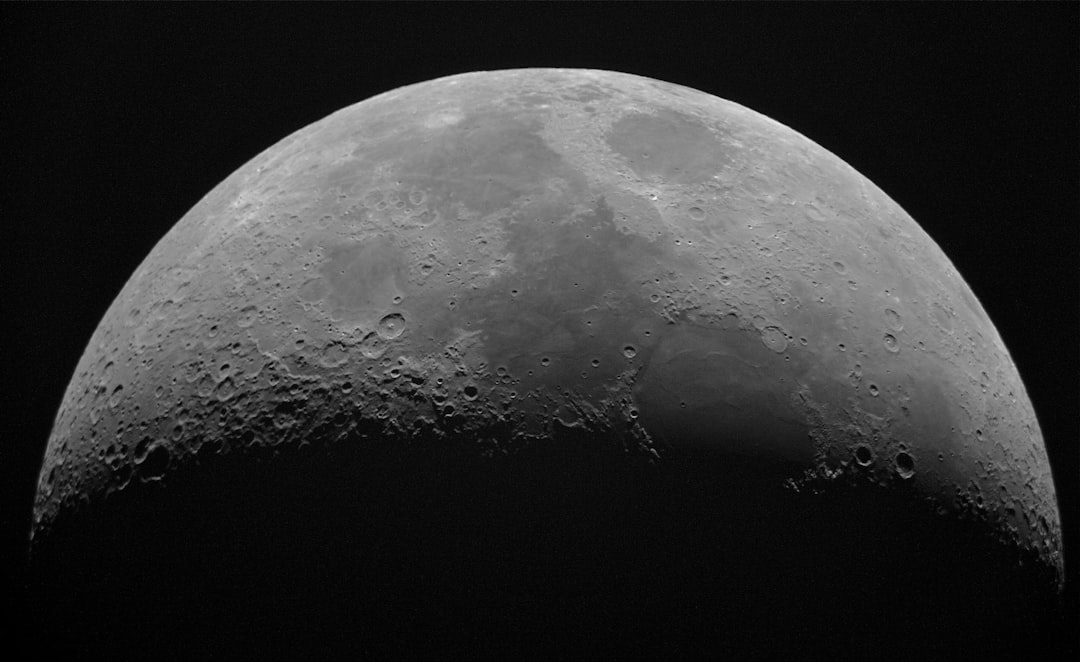
What makes Kamoʻoalewa scientifically extraordinary, however, is a hypothesis that has captivated planetary scientists since 2021: it may not be a conventional asteroid at all, but rather a fragment of the Moon. Spectroscopic observations published in the journal Nature Communications Earth and Environment revealed that Kamoʻoalewa's reflectance spectrum — the way it reflects sunlight across different wavelengths — closely matches that of lunar silicate minerals, particularly those returned by the Apollo missions. This is strikingly different from the spectra of most near-Earth asteroids, which tend to originate from the main asteroid belt between Mars and Jupiter.
- Size: Approximately 40–100 metres in diameter, roughly the scale of a large office building
- Orbital type: Quasi-satellite — shares Earth's orbital zone without being gravitationally bound to our planet
- Discovery: Identified in 2016 by the Pan-STARRS survey telescope in Hawaii
- Spectral signature: Unusually similar to lunar silicate material, hinting at a possible lunar origin
- Stability: Its quasi-satellite orbit is estimated to remain stable for several centuries
If confirmed, a lunar origin would make Kamoʻoalewa a scientific treasure of the first order — a naturally delivered sample of the Moon's subsurface, ejected by an ancient, high-energy impact and preserved in deep space for millions or even billions of years. Studying it in situ, and ultimately returning a physical sample to Earth, could offer insights into the Moon's geological history that even the Apollo samples cannot fully provide, since those came exclusively from the lunar surface rather than its deeper interior.
The Science Ahead: Sampling a World in Miniature
With the rendezvous now confirmed, Tianwen-2 enters its primary scientific phase. Over the coming months, the spacecraft's instrument suite will conduct a thorough characterisation of 2016 HO3, examining:
- Surface morphology: High-resolution imaging to map craters, boulders, and structural features across the asteroid's tiny, irregular body
- Mineral and chemical composition: Spectroscopic analysis to identify the rocks and minerals present, directly testing the lunar-origin hypothesis
- Internal structure: Radar and gravitational measurements to probe what lies beneath the surface — whether Kamoʻoalewa is a solid monolith or a loosely bound "rubble pile", as many small asteroids are believed to be
- Rotational dynamics: Precise measurements of the asteroid's spin rate and orientation, critical for planning safe sample collection
All of this science builds toward Tianwen-2's headline objective: physically collecting material from the asteroid's surface and returning it to Earth. If successful, it would make China only the third nation — after Japan with Hayabusa and Hayabusa2, and the United States with OSIRIS-REx — to retrieve pristine asteroid material from deep space. The scientific value of such a sample is immense; unlike meteorites, which are chemically altered by their fiery passage through Earth's atmosphere, a pristine sample preserves the original chemistry and isotopic signatures of the body it came from, offering a direct window into the Solar System's earliest history.
China's Growing Reach in Planetary Science
Tianwen-2's arrival at Kamoʻoalewa is the latest milestone in China's rapidly accelerating programme of deep-space exploration. Following the success of Tianwen-1 — which delivered the Zhurong rover to the surface of Mars in 2021 — and the ongoing achievements of the Chang'e lunar programme, including the world's first sample return from the lunar far side, China has firmly established itself as a leading force in planetary science. NASA and the European Space Agency are watching closely; the global scientific community increasingly views asteroid missions not merely as points of national prestige, but as collaborative endeavours that collectively advance our understanding of the Solar System's formation, its hazards to Earth, and the potential resources it may one day offer.
Whatever Tianwen-2 finds in the months ahead — whether it confirms Kamoʻoalewa as a wayward piece of our own Moon, or reveals it to be something altogether stranger — it will mark the opening of a new chapter in an increasingly dynamic field. Nations and space agencies around the world are reaching out to touch, sample, and understand the small rocky wanderers of our Solar System, and China's asteroid hunter has now officially joined their ranks.