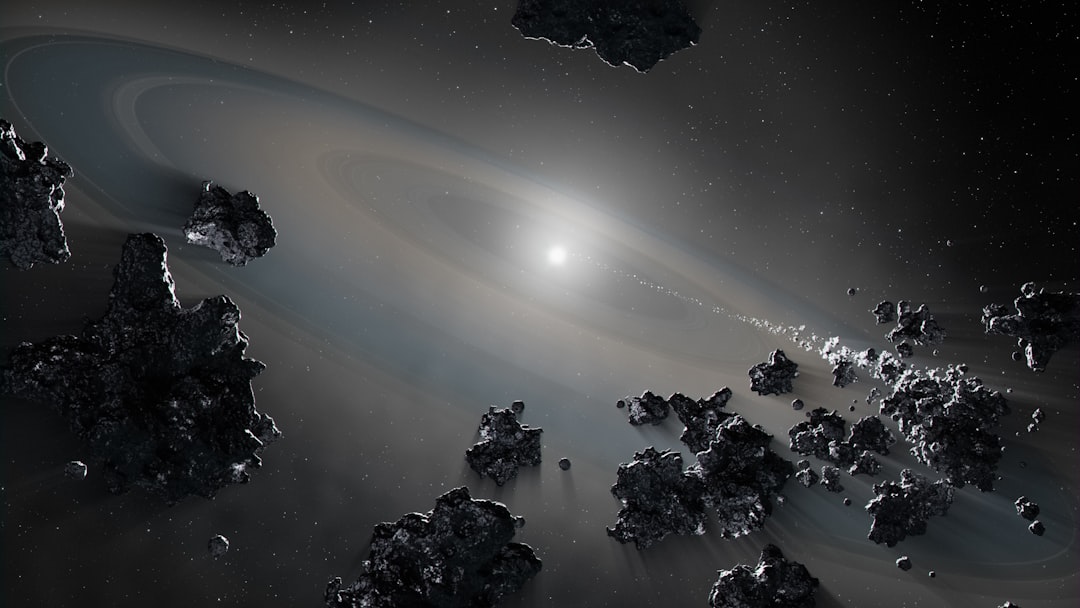
The dream of asteroid mining has captivated scientists, entrepreneurs, and space enthusiasts for over a decade, promising a future where humanity harvests precious resources from celestial bodies rather than depleting Earth's finite reserves. While initial enthusiasm has tempered in recent years as several commercial ventures collapsed under the weight of technical and financial challenges, groundbreaking research continues to illuminate the path forward. A comprehensive new study led by scientists at Spain's Institute of Space Sciences (ICE-CSIC) has now provided crucial insights into the chemical composition of carbonaceous asteroids, offering a realistic assessment of which space rocks might actually be worth mining—and which should remain untouched.
This pioneering research, set to be published in the prestigious Monthly Notices of the Royal Astronomical Society (MNRAS) on January 2nd, represents a significant milestone in transforming asteroid mining from speculative fiction into practical science. By analyzing meteorite samples that originated from C-type asteroids—the most common variety, comprising approximately 75% of all known asteroids—the international research team has created a detailed chemical inventory that could guide future mining operations. Their findings reveal both the immense potential and sobering limitations of extracting resources from these ancient remnants of our Solar System's formation.
The Evolution of Asteroid Mining Ambitions
The commercial space sector's rapid expansion during the 2010s sparked widespread excitement about space-based resource extraction. Companies like Planetary Resources and Deep Space Industries attracted significant investment with bold visions of robotic spacecraft rendezvousing with Near Earth Asteroids (NEAs), extracting valuable materials, and returning them to orbital processing facilities. These ambitious plans placed asteroid mining alongside other transformative space ventures, such as establishing permanent settlements on Mars and developing reusable launch systems.
However, the path from concept to reality proved far more challenging than early enthusiasts anticipated. The collapse of several high-profile asteroid mining ventures demonstrated that significant technological hurdles, infrastructure requirements, and economic uncertainties needed to be addressed before commercial operations could become viable. Rather than abandoning the dream entirely, the industry entered a more mature phase focused on fundamental research, technology development, and establishing the scientific foundation necessary for future success.
Organizations like NASA and JAXA have conducted crucial sample-return missions, including the highly successful Hayabusa2 and OSIRIS-REx programs, which brought pristine asteroid material back to Earth for detailed laboratory analysis. These missions have revolutionized our understanding of asteroid composition while demonstrating the technical feasibility of spacecraft operations in proximity to small celestial bodies.
Decoding the Chemistry of Carbonaceous Asteroids
The research team, led by Dr. Josep M. Trigo-Rodríguez, a theoretical physicist specializing in planetary science, brought together expertise from multiple institutions spanning three countries. Alongside PhD student Pau Grèbol-Tomàs from ICE-CSIC and the Catalonian Institute of Space Studies (IEEC), the team included Dr. Jordi Ibanez-Insa from Geosciences Barcelona, Professor Jacinto Alonso-Azcárate from Universidad de Castilla-La Mancha, and Professor Maria Gritsevich from the University of Helsinki and Russia's Institute of Physics and Technology at Ural Federal University.
Their investigation focused on carbonaceous chondrites, meteorites that represent fragments of C-type asteroids that have fallen to Earth. These precious samples provide a window into the composition of their parent bodies without requiring expensive space missions. However, studying these meteorites presents unique challenges—they account for only 5% of all meteorite falls and their fragile, crumbly nature often causes them to disintegrate upon atmospheric entry or impact, making recovery difficult.
"The scientific interest in each of these meteorites is that they sample small, undifferentiated asteroids, and provide valuable information on the chemical composition and evolutionary history of the bodies from which they originate," explained Dr. Trigo-Rodríguez. "At ICE-CSIC and IEEC, we specialize in developing experiments to better understand the properties of these asteroids and how the physical processes that occur in space affect their nature and mineralogy."
The majority of carbonaceous chondrites available for scientific study have been recovered from desert environments, particularly the Sahara Desert and the pristine ice fields of Antarctica, where their dark appearance contrasts dramatically with the surrounding terrain. The ICE-CSIC research group serves as an international repository for NASA's Antarctic meteorite collection, providing them with access to some of the most well-preserved samples available.
Advanced Analytical Techniques Reveal Chemical Secrets
To determine the precise chemical composition of different carbonaceous chondrite classes, the research team employed sophisticated analytical methods. After careful selection and initial characterization at ICE-CSIC's specialized clean room facilities, the samples underwent detailed analysis using mass spectrometry at the University of Castilla-La Mancha under Professor Alonso-Azcárate's direction. This technique allows scientists to identify and quantify chemical elements with remarkable precision, creating a comprehensive inventory of the materials present in each meteorite type.
The study examined the six most common classes of C chondrites, each representing different parent bodies with distinct formation histories and chemical characteristics. This systematic approach provided unprecedented insight into the diversity of carbonaceous asteroids and the resources they might contain. The researchers analyzed not only bulk chemical composition but also the distribution and concentration of specific minerals, including water-bearing phyllosilicates, organic compounds, and trace amounts of precious metals.
Critical Findings: Which Asteroids Are Worth Mining?
The research team's findings paint a nuanced picture of asteroid mining viability that challenges some popular assumptions while highlighting promising opportunities. Their analysis revealed several key insights that will shape future mining strategies:
- Undifferentiated asteroids show limited mining potential: The most common type of small asteroids—those that never underwent internal heating and differentiation—contain relatively dispersed concentrations of valuable materials, making extraction economically challenging with current or near-future technology.
- Olivine and spinel-rich asteroids emerge as prime targets: The study identified a specific class of asteroids containing concentrated bands of olivine and spinel minerals as particularly promising candidates for mining operations, offering higher concentrations of extractable materials.
- Water-rich asteroids offer immediate practical value: Asteroids with high concentrations of hydrated minerals present the most viable near-term mining targets, as water extraction technology is more mature than metal processing systems and the resource has immediate applications for space exploration.
- Sample verification remains essential: Before committing resources to mining operations, additional sample-return missions are needed to confirm the identity and composition of specific target asteroids, as remote sensing can only provide limited information about internal structure and exact chemical makeup.
Pau Grèbol-Tomàs, the PhD student who conducted much of the hands-on analytical work, reflected on the significance of their findings:
"Studying and selecting these types of meteorites in our clean room using other analytical techniques is fascinating, particularly because of the diversity of minerals and chemical elements they contain. However, most asteroids have relatively small abundances of precious elements, and therefore the objective of our study has been to understand to what extent their extraction would be viable."
The Technical Challenges of Space-Based Resource Extraction
Understanding asteroid composition represents only one piece of the asteroid mining puzzle. Dr. Trigo-Rodríguez emphasized that successful resource extraction will require substantial technological advances beyond our current capabilities:
"Alongside the progress represented by sample return missions, companies capable of taking decisive steps in the technological development necessary to extract and collect these materials under low-gravity conditions are truly needed. The processing of these materials and the waste generated would also have a significant impact that should be quantified and properly mitigated."
Operating in the microgravity environment of small asteroids presents unique engineering challenges. Traditional mining equipment designed for Earth's gravity would be ineffective or even counterproductive in space. Engineers must develop entirely new systems for anchoring spacecraft to asteroid surfaces, excavating material without causing the spacecraft to drift away, and processing resources in the absence of gravity-driven separation techniques.
The European Space Agency's Rosetta mission to comet 67P/Churyumov-Gerasimenko provided valuable lessons about operating near small bodies, including the unexpected challenges of landing on a surface with extremely low gravity and cohesive but fragile material properties. Future mining operations will need to build upon these hard-won insights.
Water: The Most Valuable Near-Term Resource
While popular imagination often focuses on precious metals like platinum, gold, and rare earth elements, the research team emphasizes that water may be the most immediately valuable asteroid resource. Dr. Trigo-Rodríguez explained the practical advantages of targeting water-rich carbonaceous asteroids:
"For certain water-rich carbonaceous asteroids, extracting water for reuse seems more viable, either as fuel or as a primary resource for exploring other worlds. This could also provide science with greater knowledge about certain bodies that could one day threaten our very existence. In the long term, we could even mine and shrink potentially hazardous asteroids so that they cease to be dangerous."
Water extracted from asteroids could be electrolyzed into hydrogen and oxygen, creating highly efficient rocket propellant for deep-space missions. This would enable spacecraft to refuel in orbit rather than carrying all necessary propellant from Earth's surface—a game-changing capability that would dramatically reduce launch costs and enable more ambitious exploration missions. Additionally, water provides essential life support for human crews and could support agricultural systems in space habitats.
Understanding Asteroid Diversity and Classification
The heterogeneous nature of asteroids complicates mining planning and target selection. While scientists broadly classify asteroids into three main categories—C-type (carbonaceous), M-type (metallic), and S-type (silicaceous)—this simplified scheme masks enormous diversity within each category. Asteroids are further classified by spectral characteristics, orbital parameters, and inferred composition, creating a complex taxonomy with dozens of subcategories.
Adding to this complexity, asteroids represent primordial material from the Solar System's formation approximately 4.5 billion years ago. Over this vast timescale, they have been subjected to numerous physical and chemical processes including collisions, solar heating, cosmic ray bombardment, and space weathering. These evolutionary processes have altered their surface properties and, in some cases, their internal structure, making it challenging to infer composition from remote observations alone.
The NASA Jet Propulsion Laboratory's Small-Body Database currently catalogs over one million asteroids, but detailed compositional information exists for only a tiny fraction of these objects. Expanding our knowledge through both remote sensing and sample-return missions remains a critical priority for identifying optimal mining targets.
The Broader Vision: Benefits Beyond Resource Extraction
The potential benefits of developing asteroid mining capabilities extend far beyond simply acquiring raw materials. Establishing a space-based resource extraction industry could fundamentally transform humanity's relationship with space and Earth:
- Reduced environmental impact on Earth: Relocating mining and heavy manufacturing to space would alleviate pressure on Earth's ecosystems, allowing terrestrial environments to recover while meeting humanity's material needs through off-world resources.
- Enhanced deep-space exploration: The ability to manufacture propellant, water, and construction materials in space would enable more ambitious missions to Mars, the outer Solar System, and beyond without the prohibitive costs of launching everything from Earth.
- Planetary defense applications: Developing the technology to manipulate and process asteroids could provide crucial capabilities for deflecting potentially hazardous objects that threaten Earth.
- Economic opportunities: A mature space resources industry could create entirely new economic sectors, employment opportunities, and wealth generation beyond Earth's surface.
- Scientific advancement: Mining operations would provide unprecedented access to pristine Solar System materials, advancing our understanding of planetary formation and cosmic evolution.
Current Missions and Future Prospects
Despite the cooling of initial commercial enthusiasm, substantial progress continues through both government space agencies and private ventures. China's upcoming Tianwen-2 mission plans to rendezvous with a Near Earth Asteroid and collect samples from a Main Asteroid Belt comet, adding to the growing database of asteroid composition data. NASA's OSIRIS-REx mission successfully returned samples from asteroid Bennu in September 2023, providing scientists with pristine carbonaceous material for detailed analysis.
Several companies remain actively engaged in developing the technologies necessary for space resource utilization. These efforts focus on various aspects of the mining process, from prospecting and navigation systems to extraction mechanisms and in-space processing facilities. While commercial asteroid mining operations likely remain decades away, each technological advance brings the vision closer to reality.
The research team's work emphasizes that patience and systematic development will be essential. As Grèbol-Tomàs noted, "It sounds like science fiction, but it also seemed like science fiction when the first sample return missions were being planned thirty years ago." The successful execution of those once-impossible missions demonstrates that with sustained effort, adequate funding, and technological innovation, today's ambitious goals can become tomorrow's routine operations.
The Path Forward: Research Priorities and Development Needs
Realizing the potential of asteroid mining will require coordinated efforts across multiple domains. The ICE-CSIC study highlights several critical priorities for the coming decades:
First, additional sample-return missions targeting diverse asteroid types must be conducted to verify remote sensing interpretations and expand our compositional database. Missions to M-type and S-type asteroids would complement existing data from carbonaceous bodies, providing a comprehensive understanding of resource distribution across the asteroid population.
Second, technology development must focus on the unique challenges of low-gravity operations, including anchoring systems, excavation methods that work in microgravity, and processing techniques that don't rely on gravity-driven separation. Demonstration missions testing these technologies on actual asteroids will be essential before full-scale operations can begin.
Third, economic and regulatory frameworks for space resource utilization need further development. International agreements must address questions of ownership, environmental protection in space, and equitable distribution of benefits while providing sufficient certainty for commercial investment.
Finally, infrastructure development in cislunar space—the region between Earth and the Moon—will provide the foundation for asteroid mining operations. Orbital facilities for processing materials, manufacturing components, and supporting human crews will be necessary before resources can flow from asteroids to useful applications.
Conclusion: A Long-Term Vision Taking Shape
The pioneering research from ICE-CSIC and their international collaborators represents a crucial step in transforming asteroid mining from speculative concept to practical engineering challenge. By providing detailed, scientifically rigorous assessments of which asteroids offer genuine resource potential, this work helps focus future efforts on the most promising targets while tempering unrealistic expectations about easy wealth from space.
While the timeline for operational asteroid mining remains uncertain—likely measured in decades rather than years—the fundamental scientific and technical foundation continues to strengthen. Each meteorite analysis, sample-return mission, and technology demonstration brings humanity closer to a future where space-based resources support exploration, reduce environmental impacts on Earth, and open new frontiers for human activity beyond our home planet.
As