A Relativistic Jet Could Be the 'Missing Link' for Intermediate-Mass Black Holes
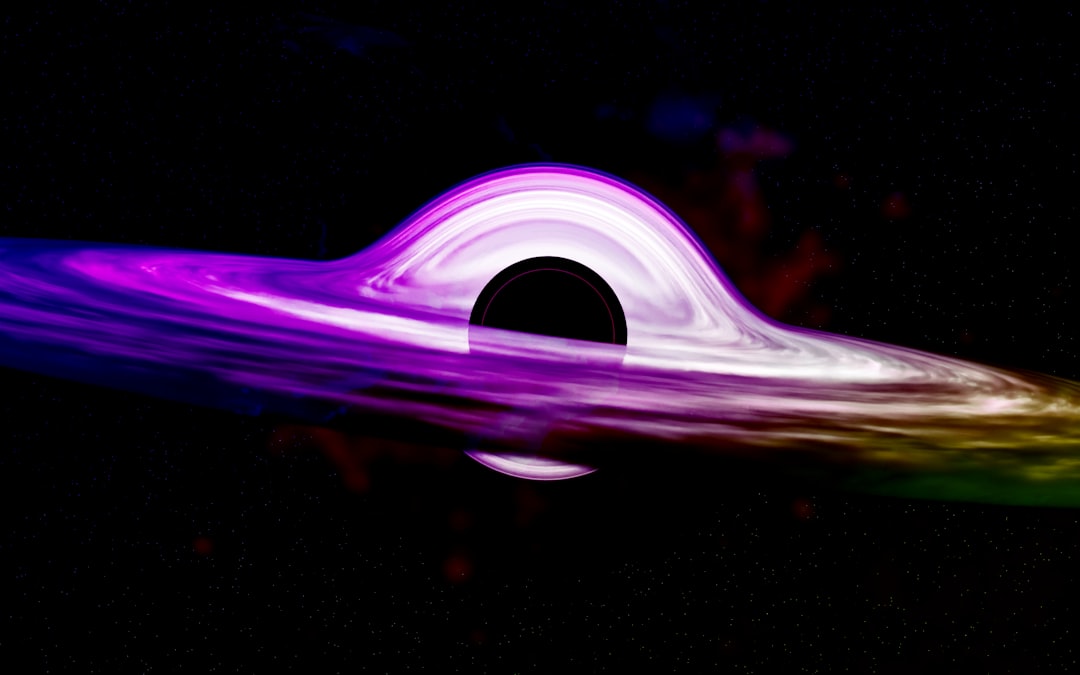
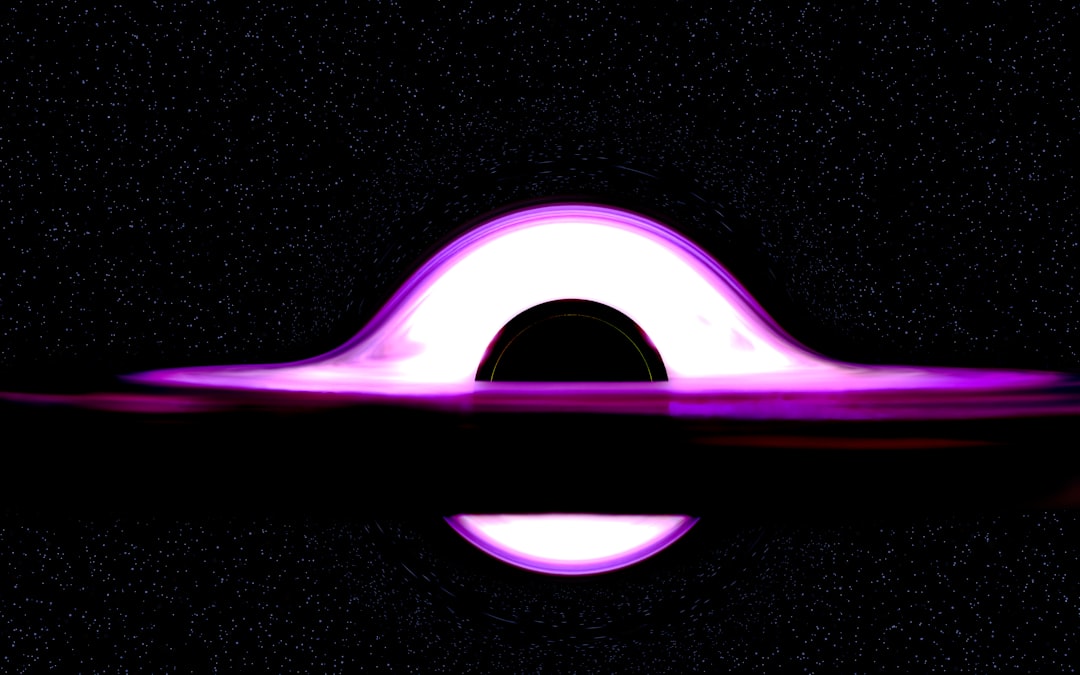
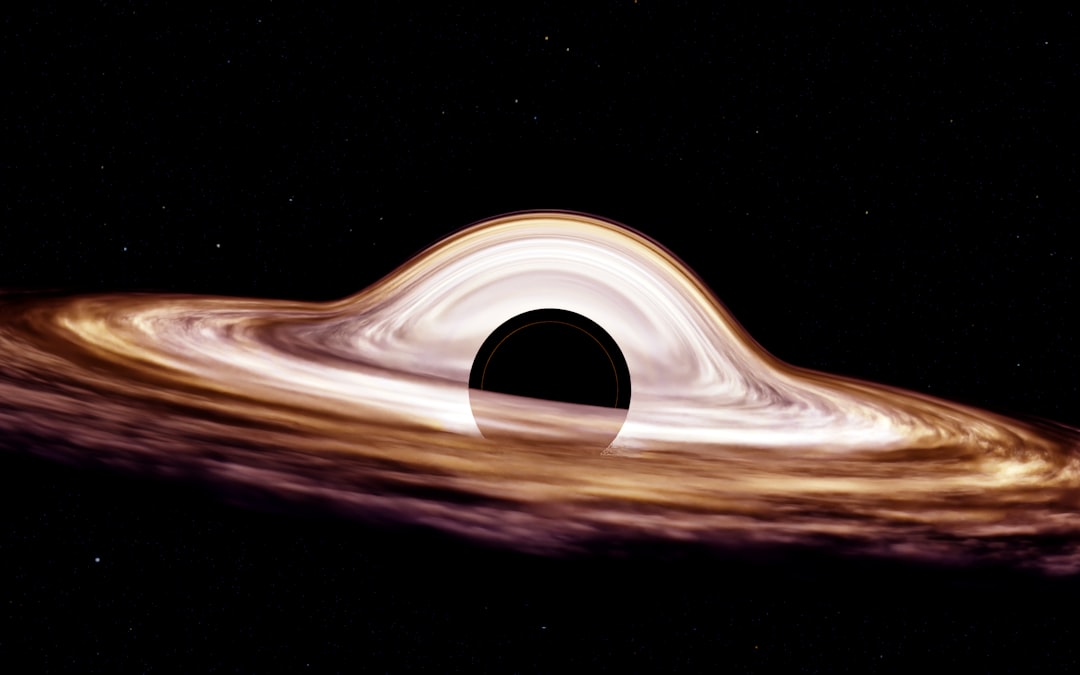
In one of the most compelling astronomical discoveries in recent memory, a team of Chinese astronomers using the National Science Foundation's Karl G. Jansky Very Large Array (NSF VLA) has detected a rare and extraordinary transient event unfolding within a dwarf galaxy located approximately 3.4 billion light-years from Earth. The event, formally catalogued as AT2019ijn, is now believed to represent a pivotal observation: an intermediate-mass black hole violently tearing apart an unfortunate star and, in doing so, launching a powerful relativistic jet — offering what scientists are calling a long-sought "missing link" in our understanding of black hole demographics. Their findings were published in the prestigious Astrophysical Journal Letters.
The Discovery: A Flash That Refused to Fade
AT2019ijn was first flagged by wide-field optical sky surveys as an unusually bright blue flash — a transient source that initially resembled other known astronomical events. It peaked in optical brightness within just a few days before beginning to fade. But unlike similar transient events, which typically dim rapidly and predictably, AT2019ijn faded far more slowly, immediately raising the curiosity of the observing team.
When astronomers turned radio telescopes toward the source and examined those observations more carefully, the picture became even more intriguing. Rather than fading away, the radio emission continued to brighten for nearly two years, ultimately reaching a luminosity far exceeding that seen in ordinary stellar explosions or supernovae. It then gradually dimmed over a period of at least four years — a multi-year radio evolution that defied straightforward explanation.
"The prolonged radio brightening of AT2019ijn, lasting nearly two years, places this event in an entirely different category from typical transient phenomena — and points unmistakably toward the involvement of an intermediate-mass black hole driving a relativistic outflow."
After careful analysis, the team concluded that what they were witnessing was a tidal disruption event (TDE) — a cataclysmic encounter in which a star strays too close to a black hole and is shredded apart by immense tidal gravitational forces. Crucially, the black hole responsible is believed to fall into the rarely observed intermediate-mass category, with a mass estimated between 100 and 100,000 times the mass of our Sun.
The Black Hole Mass Gap: A Long-Standing Astronomical Mystery
To appreciate why this discovery matters so profoundly, it is essential to understand the broader landscape of black hole populations in the universe. Astronomers have long recognized two well-established categories:
- Stellar-mass black holes — typically ranging from about 5 to 100 Solar masses, these form from the gravitational collapse of massive stars at the end of their lives and are found scattered throughout galaxies like our own Milky Way.
- Supermassive black holes (SMBHs) — ranging from 100,000 to tens of billions of Solar masses, these behemoths reside at the centers of virtually all large galaxies and exert profound influence over their host galaxy's evolution through feedback mechanisms, powerful jets, and gravitational dominance.
Between these two populations lies a vast and poorly understood territory: intermediate-mass black holes (IMBHs). Despite decades of searching, confirmed detections of IMBHs remain exceedingly rare. Their scarcity in observational catalogs is not necessarily a reflection of their true abundance in nature — rather, it highlights the extraordinary difficulty of finding them. Unlike SMBHs, they do not reside in easily identifiable galactic nuclei with obvious dynamical signatures; unlike stellar-mass black holes, they do not produce the frequent gravitational wave signals now routinely detected by LIGO and Virgo. IMBHs are, in a very real sense, hiding in plain sight.
Understanding IMBHs is critical not only for completing our census of compact objects in the universe, but also for resolving the fundamental question of how supermassive black holes form and grow. One leading theory posits that SMBHs assembled over cosmic time through the hierarchical merging of smaller black holes — including IMBHs — combined with episodes of rapid gas accretion. Without a firm observational grasp on the IMBH population, this evolutionary pathway remains incompletely understood.
A Multi-Telescope Investigation Across the Globe
The research team mounted an impressively broad observational campaign, combining data from multiple world-class facilities to build a comprehensive picture of AT2019ijn's behavior across time and wavelength. The key instruments involved included:
- The NSF's Karl G. Jansky Very Large Array (VLA) in New Mexico, USA — including data from the Very Large Array Sky Survey (VLASS), one of the most ambitious all-sky radio mapping projects ever undertaken.
- The Australian Square Kilometre Array Pathfinder (ASKAP), a cutting-edge radio telescope array in Western Australia, providing complementary southern-hemisphere coverage.
- The upgraded Giant Metrewave Radio Telescope (uGMRT) in Pune, India, which contributed vital low-frequency radio measurements essential for characterizing the spectral evolution of the source.
- Wide-field optical survey data, which provided the original detection and early-time photometric monitoring of the transient's rise and peak.
This multi-facility, multi-wavelength strategy allowed the team to track the precise evolution of AT2019ijn's signal over several years, testing a range of theoretical models for the energetics and geometry of the outflowing material produced by the tidal disruption event.
A Relativistic Jet Hiding in Plain Sight
The most striking conclusion from the team's modeling work concerns the nature of the outflow itself. Analysis of the radio data strongly indicates that the emitting material was accelerated to a significant fraction of the speed of light — behavior characteristic of a relativistic jet. Such jets are among the most energetic phenomena in the universe, produced when infalling material around a black hole is channeled into tightly collimated beams of plasma that can extend across thousands of light-years.
Critically, the geometry of the jet appears to be key to understanding the unusual observational signature of AT2019ijn. The best-fit model suggests a narrow relativistic jet oriented roughly perpendicular to our line of sight — meaning the jet was not aimed toward Earth. This geometric configuration has profound observational consequences.
When a relativistic jet points directly at the observer — a configuration known as a blazar — its emission is dramatically boosted by relativistic beaming effects and appears intensely luminous from the moment it is launched. In contrast, when such a jet is viewed from the side, the initial optical flash is relatively unremarkable. However, as the jet decelerates and sweeps up surrounding material, it produces an increasingly luminous afterglow at radio wavelengths — one that brightens over months to years before eventually fading. This is precisely the behavior observed in AT2019ijn, explaining why its radio peak arrived so much later than its optical peak.
Fast Blue Optical Transients: A New Class of Cosmic Phenomenon
The findings situate AT2019ijn within an emerging and enigmatic class of astronomical events known as fast-evolving blue optical transients (FBOTs). First recognized as a distinct class in the mid-2010s, FBOTs are characterized by:
- A rapid rise to peak brightness within approximately 10 days — far faster than typical supernovae.
- A distinctly blue color near peak luminosity, indicative of extremely high temperatures in the emitting region.
- A relatively rapid optical decline over roughly a month, followed by a prolonged low-luminosity phase.
- In some cases, unusually luminous and long-lived radio emission inconsistent with standard supernova shock models.
The physical origin of FBOTs has been debated intensely since their discovery. Leading hypotheses have included engine-driven supernovae powered by rapidly rotating neutron stars (millisecond magnetars), the accretion-induced collapse of white dwarfs, and — as AT2019ijn now compellingly suggests — tidal disruption events involving intermediate-mass black holes launching off-axis relativistic jets. The FBOT framework provides important context for AT2019ijn and suggests that other events in this class may harbor similarly exotic central engines that have gone unrecognized.
Implications for Future Surveys and Black Hole Science
Perhaps the most transformative aspect of this discovery is its methodological implication: AT2019ijn demonstrates a viable new observational pathway for identifying intermediate-mass black holes that would otherwise remain completely invisible. An IMBH that launches an off-axis relativistic jet would produce an event that initially appears unremarkable in optical surveys — easily overlooked or misclassified — but would then dramatically brighten at radio wavelengths months to years later as the jet's afterglow becomes visible.
This delayed radio brightening signature could serve as a powerful diagnostic tool in the era of next-generation sky surveys. Facilities such as the Square Kilometre Array (SKA) and its precursor arrays, alongside optical transient surveys like the Vera C. Rubin Observatory's Legacy Survey of Space and Time (LSST), will sweep the sky with unprecedented sensitivity and cadence. By systematically cross-matching optical transient catalogs with delayed radio flare detections, astronomers may finally be able to conduct a statistically meaningful census of IMBHs across a wide range of galaxy types and environments.
Moreover, a growing sample of IMBH-driven TDEs with relativistic jets would allow astronomers to address some of the most fundamental open questions in black hole astrophysics:
- Formation pathways: Do IMBHs form primarily through the runaway collapse of massive stars in dense star clusters, or through the direct collapse of gas in the early universe?
- Jet launching mechanisms: What determines whether a tidal disruption event produces a relativistic jet, and what role does black hole spin play?
- Star consumption rates: How frequently do IMBHs disrupt and consume stars, and how does this rate compare to that of SMBHs?
- The SMBH growth channel: Can the IMBH population plausibly explain the seeds from which the earliest supermassive black holes grew?
A New Window on Hidden Giants
AT2019ijn is more than a single remarkable event — it is a proof of concept. It demonstrates that some of the most extreme physical processes in the universe can be hidden in plain sight, their tell-tale signatures delayed and shifted in wavelength in ways that have historically caused them to be missed or misclassified. The convergence of high-cadence optical surveys and sensitive wide-field radio monitoring represents a powerful new tool for uncovering these hidden giants.
As new generations of sky surveys repeatedly sweep the heavens across multiple wavelengths, astronomers are optimistic that events like AT2019ijn will transition from isolated curiosities to members of a statistically rich population. Each new detection will add another data point to our understanding of intermediate-mass black holes — how they live, how they feed, and how they shape the galaxies around them. In this sense, the discovery of AT2019ijn may mark not just the identification of one elusive black hole, but the opening of an entirely new chapter in the study of these cosmic middleweights.
For further reading and primary sources, visit the National Radio Astronomy Observatory (NRAO) and the Astrophysical Journal Letters.