In the cosmic symphony of gravitational waves that ripple through spacetime, one particular signal detected last November has sent shockwaves through the astrophysics community for an entirely different reason. The Laser Interferometer Gravitational-Wave Observatory (LIGO), humanity's most sensitive ear to the universe's most violent cosmic events, captured something that defies conventional stellar physics: a gravitational wave signature from an object weighing less than our Sun. This discovery has reignited one of cosmology's most tantalizing theories—that primordial black holes from the universe's first moments might actually exist, and we may have just detected one.
Since LIGO began its revolutionary observations in 2015, it has detected dozens of black hole mergers, each involving objects formed from the catastrophic collapse of massive stars. These stellar-mass black holes typically weigh anywhere from five to several dozen times the mass of our Sun. But this particular signal broke the mold entirely, featuring at least one object with a sub-solar mass—something that shouldn't exist according to our current understanding of how stars live, die, and form black holes. The mystery deepens when we consider that no known process of stellar evolution can produce such a lightweight black hole.
Echoes From the Primordial Universe
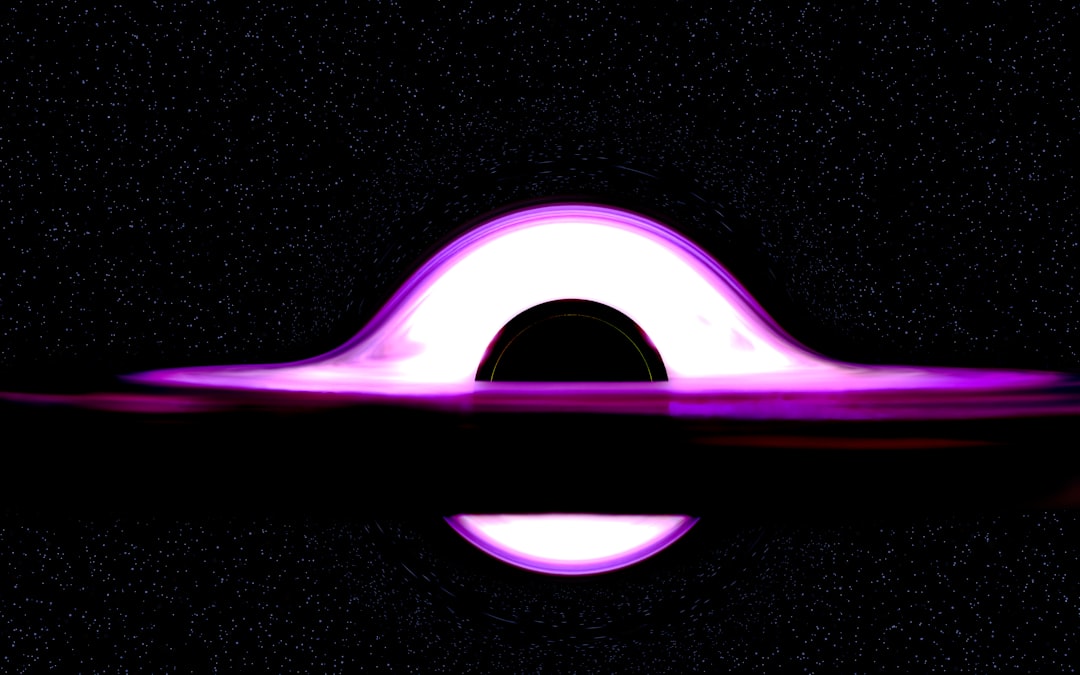
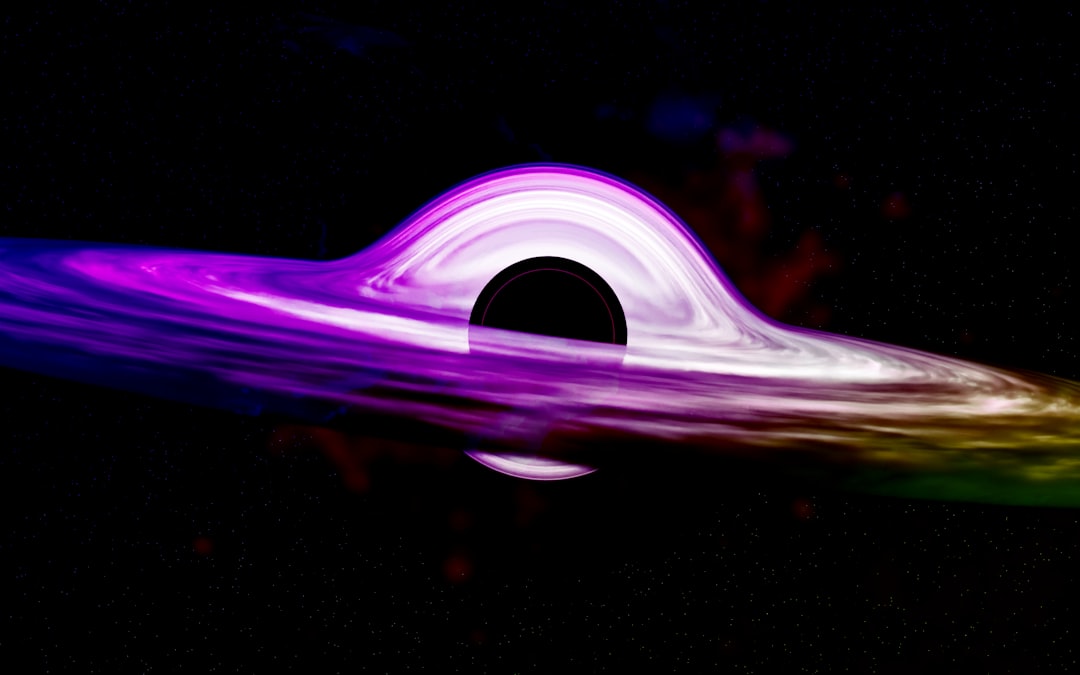
Enter Nico Cappelluti and Alberto Magaraggia, two astrophysicists at the University of Miami who believe they've solved this cosmic riddle. Their groundbreaking research, recently published in the Astrophysical Journal, presents a compelling argument that this anomalous signal represents our first detection of a primordial black hole—an exotic type of black hole that predates the first stars by hundreds of millions of years. Unlike their stellar cousins, these ancient objects weren't born from dying stars but emerged directly from the extreme density fluctuations in the fabric of spacetime itself during the universe's first fractions of a second after the Big Bang.
The theoretical foundation for primordial black holes stretches back to the 1960s, when pioneering Soviet physicists Yakov Zeldovich and Igor Novikov first proposed their existence. The legendary physicist Stephen Hawking later expanded on this concept, suggesting that in the universe's earliest moments—when all of existence was compressed into an unimaginably dense, hot state—random quantum fluctuations could have created regions dense enough to collapse directly into black holes. These primordial relics could theoretically range from the mass of an asteroid to thousands of solar masses, representing a fundamentally different class of cosmic objects than anything formed through stellar processes.
"The most plausible explanation for the LIGO signal, which lacks any conventional astrophysical explanation, is the detection of a primordial black hole," explained Nico Cappelluti from the University of Miami.
Connecting Theory to Observation
What makes Cappelluti and Magaraggia's work particularly compelling is the rigorous statistical modeling they employed to test their hypothesis. The researchers didn't simply claim the signal came from a primordial black hole—they constructed detailed theoretical frameworks to predict how many such objects should exist throughout the cosmos, how frequently they should merge with other compact objects, and crucially, how often LIGO should detect such events. The results aligned remarkably well with observations: their models predicted exactly what LIGO found—a rare, singular event that stands out from the dozens of conventional stellar-mass black hole mergers detected over the past decade.
The team's analysis incorporated sophisticated computational models of the early universe, tracking how density perturbations in the primordial plasma could have seeded black hole formation. They considered various formation scenarios, mass distributions, and evolutionary pathways that these ancient objects might have followed over the universe's 13.8-billion-year history. By comparing their theoretical predictions with LIGO's actual detection rate and the specific characteristics of the November signal, they found a statistical correlation that's difficult to dismiss as mere coincidence.
Implications for the Dark Matter Mystery
Perhaps the most profound implication of confirming primordial black holes extends far beyond this single detection. If these ancient black holes exist in sufficient numbers throughout the universe, they could potentially solve one of modern physics' greatest mysteries: the nature of dark matter. This invisible substance, which comprises approximately 85 percent of all matter in the cosmos, has eluded direct detection despite decades of increasingly sophisticated experiments. We know dark matter exists because we can observe its gravitational effects on galaxies, galaxy clusters, and the large-scale structure of the universe itself, but we have no idea what it actually is.
Primordial black holes represent one of the most elegant candidates for dark matter because they naturally explain several puzzling observations. Unlike hypothetical exotic particles such as WIMPs (Weakly Interacting Massive Particles) or axions, primordial black holes require no new physics beyond Einstein's general relativity. They interact gravitationally, just as dark matter does, but remain invisible because they emit no light. Recent studies from ESA's Gaia mission have explored how primordial black holes could affect stellar motions in our galaxy, providing additional observational constraints on their potential abundance.
The Road Ahead: Next-Generation Detection
While Cappelluti and Magaraggia's analysis is compelling, the scientific community maintains appropriate skepticism. A single anomalous detection, no matter how intriguing, doesn't constitute definitive proof. The researchers themselves acknowledge that additional detections of similar sub-solar mass events would dramatically strengthen their case. This is where the future of gravitational wave astronomy becomes particularly exciting.
The next generation of gravitational wave detectors promises unprecedented sensitivity and reach. LISA (Laser Interferometer Space Antenna), scheduled for launch by ESA and NASA in 2035, will operate in space, free from Earth's seismic noise. Its three spacecraft, separated by 2.5 million kilometers, will form a massive triangular detector capable of sensing gravitational waves from supermassive black hole mergers across cosmic time. LISA's sensitivity to lower-frequency gravitational waves means it could detect primordial black hole mergers that LIGO might miss entirely.
On Earth, the proposed Cosmic Explorer represents an ambitious leap forward in ground-based detection. With arms stretching 40 kilometers—ten times longer than LIGO's—this next-generation observatory will be approximately ten times more sensitive than current detectors. This enhanced sensitivity translates to a detection volume roughly 1,000 times larger, meaning Cosmic Explorer could observe primordial black hole mergers throughout a significant fraction of the observable universe.
Statistical Significance and Future Confirmations
The statistical framework for confirming primordial black holes requires careful consideration. In particle physics, a "discovery" typically requires five-sigma significance—a statistical threshold meaning there's less than a one-in-3.5-million chance the result occurred randomly. Gravitational wave astronomy applies similar rigor. While the November signal is intriguing, astrophysicists will need to observe several more sub-solar mass events before declaring primordial black holes definitively detected.
Researchers have outlined specific observational signatures that would strengthen the primordial black hole hypothesis:
- Mass distribution: Multiple detections showing a consistent population of sub-solar mass objects that don't fit stellar evolution models
- Merger rates: Event frequencies matching theoretical predictions for primordial black hole abundance in the universe
- Spatial distribution: Detection patterns consistent with cosmological origins rather than concentrated in star-forming regions
- Spin characteristics: Primordial black holes should have different spin properties compared to stellar-mass black holes formed from collapsing stars
- Electromagnetic counterparts: The absence of light signals accompanying mergers, as expected for isolated primordial objects far from gas and dust
Revolutionizing Our Cosmic Timeline
The potential confirmation of primordial black holes would fundamentally reshape our understanding of cosmic history. These objects would represent the universe's first gravitationally collapsed structures, predating the first stars by hundreds of millions of years. Current models suggest the first stars formed approximately 100-200 million years after the Big Bang, during an epoch astronomers call the Cosmic Dawn. Primordial black holes, by contrast, would have formed within the first fraction of a second after the universe's birth, making them witnesses to physics at energy scales we can barely imagine.
These ancient objects could have played crucial roles in cosmic evolution that we're only beginning to appreciate. Some theoretical models suggest primordial black holes might have served as seeds for supermassive black holes found at the centers of galaxies. The James Webb Space Telescope has recently discovered surprisingly massive black holes in the early universe, and primordial black holes could help explain how these cosmic giants grew so large so quickly.
Furthermore, primordial black holes might have influenced the formation of the first stars and galaxies by creating gravitational wells where matter could accumulate. Their presence could have altered the thermal history of the universe during the crucial period between the Big Bang and the formation of the first luminous objects—an era that remains poorly understood despite its fundamental importance to everything that followed.
A New Window on Fundamental Physics
Beyond their cosmological implications, primordial black holes offer a unique laboratory for testing fundamental physics. These objects encode information about the universe at energy scales far beyond what particle accelerators can achieve. The conditions during their formation involved temperatures, densities, and energies that existed only in the first moments after the Big Bang—a regime where quantum mechanics and gravity intertwined in ways we still struggle to understand theoretically.
If primordial black holes exist, they could provide observational evidence for inflation—the hypothetical period of exponential expansion that occurred in the universe's first fraction of a second. The density fluctuations that seeded primordial black hole formation would have been amplified by inflationary dynamics, potentially preserving information about this crucial but still unconfirmed epoch. Different inflationary models predict different primordial black hole mass distributions and abundances, meaning future detections could help discriminate between competing theories of the universe's earliest moments.
The November LIGO signal, whether ultimately confirmed as a primordial black hole or explained through some other exotic mechanism, reminds us that the universe still holds profound secrets. As our gravitational wave detectors grow more sensitive and our theoretical models more sophisticated, we edge closer to answering questions that have puzzled humanity since we first looked up at the night sky: What is the universe made of? How did it begin? And what hidden relics from that beginning still lurk in the cosmic darkness, waiting to reveal their secrets through the subtle warping of spacetime itself?
The coming decade promises to be transformative for gravitational wave astronomy and our understanding of the cosmos. Whether primordial black holes prove to be the answer to the dark matter mystery or simply another fascinating chapter in cosmic history, the search itself pushes the boundaries of human knowledge and technological capability. As LIGO continues its observations and next-generation detectors come online, we stand on the threshold of discoveries that could rewrite our cosmic origin story—one gravitational wave at a time.