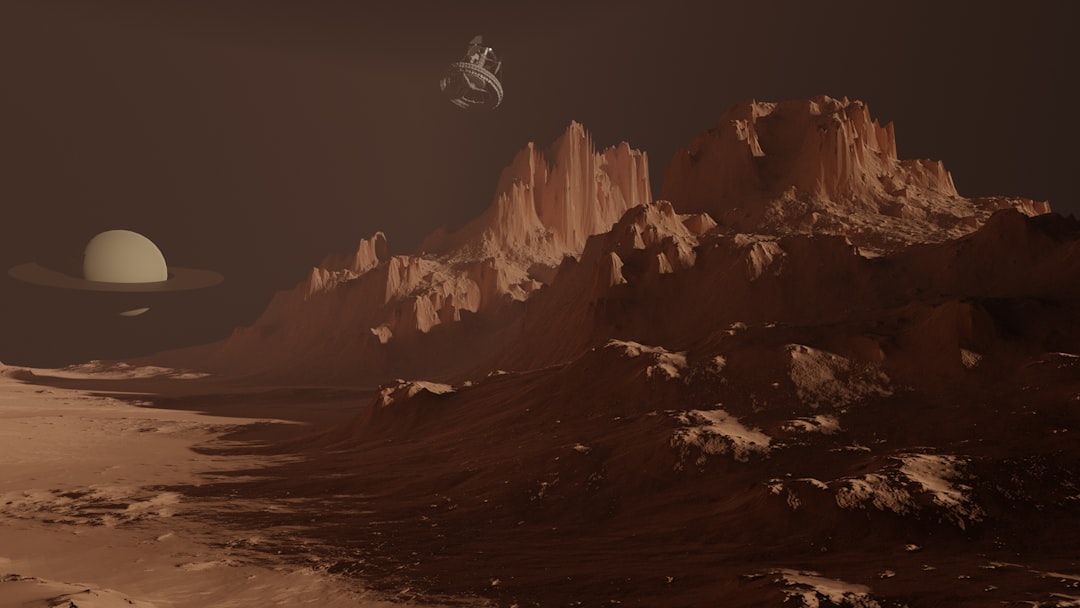
The quest to discover habitable worlds beyond our solar system has captivated astronomers and planetary scientists for decades. While the presence of liquid water and a planet's position within the habitable zone have long served as primary criteria for identifying potentially life-supporting worlds, a critical factor often overlooked is atmospheric escape—the process by which planetary atmospheres gradually bleed into space. This phenomenon could be the ultimate arbiter of whether rocky worlds orbiting the galaxy's most common stars can maintain the atmospheric conditions necessary for life to emerge and flourish.
A groundbreaking new study submitted to The Astrophysical Journal by an international collaboration of more than three dozen researchers has shed unprecedented light on how Mars-like exoplanets orbiting M-dwarf stars might lose their atmospheres at alarming rates. The research focuses on computer simulations of a hypothetical Mars-analog planet orbiting Barnard's Star, one of our nearest stellar neighbors, revealing that such worlds could be stripped of their atmospheres in timescales far shorter than previously anticipated—potentially within mere hundreds of thousands of years for thin atmospheres, or tens of millions of years for denser, Earth-like atmospheres.
These findings carry profound implications for the search for extraterrestrial life, particularly given that M-type red dwarf stars constitute approximately 75% of all stars in the Milky Way galaxy. Understanding atmospheric loss mechanisms around these ubiquitous stellar objects is essential for refining our strategies in identifying truly habitable worlds among the thousands of exoplanets discovered to date.
The Atmospheric Escape Challenge: Lessons from Mars
To appreciate the significance of this research, we must first understand the cautionary tale written in the geological history of our own planetary neighbor. Mars presents one of the solar system's most compelling mysteries: a world that appears to have once harbored vast quantities of liquid water on its surface, complete with river valleys, lake beds, and possibly even a northern ocean, yet today exists as a frozen, desiccated wasteland with an atmosphere less than 1% the density of Earth's.
Scientific evidence accumulated over decades of Mars exploration suggests that the Red Planet underwent a dramatic transformation approximately 3.5 to 4 billion years ago. The planet's magnetic field collapsed as its iron core cooled and ceased generating the protective magnetosphere that had shielded its atmosphere from the relentless bombardment of charged particles streaming from the Sun—the solar wind. Without this magnetic shield, Mars' atmosphere was gradually eroded away through various atmospheric escape mechanisms, including photochemical escape, ion pickup, and sputtering.
The MAVEN (Mars Atmosphere and Volatile Evolution) mission, which has been orbiting Mars since 2014, has provided direct measurements of atmospheric loss rates, confirming that Mars continues to lose approximately 100 grams of atmosphere to space every second. Over geological timescales, this steady hemorrhaging has transformed Mars from a potentially habitable world into the inhospitable desert we observe today.
Barnard's Star: An Ideal Laboratory for Atmospheric Studies
For their atmospheric escape simulations, the research team selected Barnard's Star as their stellar host—a choice driven by both scientific reasoning and practical considerations. Located just 6 light-years from Earth in the constellation Ophiuchus, Barnard's Star is an M-type red dwarf with approximately 14% of our Sun's mass and an estimated age between 7 and 10 billion years, making it significantly older than our 4.6-billion-year-old Sun.
This advanced age proves crucial for the study's objectives. Young M-dwarf stars are notoriously active, unleashing powerful stellar flares and intense bursts of X-ray and extreme ultraviolet (XUV) radiation that can be hundreds to thousands of times more energetic than anything our Sun produces. These violent outbursts can rapidly strip away planetary atmospheres, making it nearly impossible for life-supporting conditions to develop on nearby worlds.
However, as M-dwarfs age, their rotation slows, their magnetic activity diminishes, and they enter a more quiescent phase. Barnard's Star, having evolved through billions of years, represents this calmer, mature state—theoretically offering more favorable conditions for atmospheric retention. Yet even under these relatively benign circumstances, the research team's findings paint a sobering picture for Mars-like worlds in such systems.
Simulating an Exo-Mars: Methodology and Parameters
The international research team constructed detailed computer models of a hypothetical planet they termed "exo-Mars"—a world sharing Mars' fundamental characteristics including its mass, radius, and atmospheric composition. Like present-day Mars, this simulated planet was given a thin atmosphere dominated by carbon dioxide (CO₂), reflecting the current Martian atmospheric pressure of approximately 600 pascals, or about 0.6% of Earth's sea-level pressure.
The critical difference in their simulation was orbital positioning. While the real Mars orbits our Sun at a distance of 1.52 astronomical units (AU), the exo-Mars was placed at just 0.087 AU from Barnard's Star—roughly 17 times closer than Mars is to our Sun. This seemingly extreme proximity was carefully calculated to ensure that exo-Mars would receive approximately the same amount of stellar radiation and particle flux as Mars receives from our Sun, accounting for the much dimmer nature of the red dwarf star.
The simulations incorporated multiple atmospheric escape mechanisms, including thermal escape processes where atmospheric particles gain sufficient energy to overcome the planet's gravitational pull, as well as non-thermal processes driven by interactions with the stellar wind and high-energy radiation. The models also accounted for the specific spectral characteristics of M-dwarf stars, which emit a greater proportion of their energy in infrared wavelengths compared to Sun-like stars.
Startling Results: Rapid Atmospheric Depletion
The simulation results revealed atmospheric loss rates far more severe than many researchers had anticipated. According to the team's calculations, an exo-Mars with a present-day Martian atmosphere would be completely stripped of its thin CO₂ envelope in approximately 350,000 years—a mere blink of an eye in geological terms. This timescale is orders of magnitude shorter than the hundreds of millions to billions of years typically required for biological evolution to produce complex life forms.
"Exo-Mars loses atmosphere very rapidly, and it is difficult to imagine that the four planets would lose atmosphere significantly more slowly than exo-Mars. Primary atmospheres seem similarly unlikely, since primary atmospheres are comprised of hydrogen and helium, which are lighter than CO₂ and thus should escape more easily."
Even more concerning for habitability prospects, the researchers found that if exo-Mars possessed a denser, Earth-like atmosphere with nitrogen and oxygen at terrestrial pressures, this thicker envelope would still be removed in approximately 50 million years. While this represents a substantially longer period, it remains problematically short when considered against the timescales required for the emergence of life as we know it. On Earth, simple microbial life appeared relatively quickly—within the first billion years of the planet's history—but the evolution of photosynthetic organisms capable of producing oxygen took nearly 2 billion years, and complex multicellular life required more than 3 billion years to develop.
Implications for Barnard's Star Planetary System
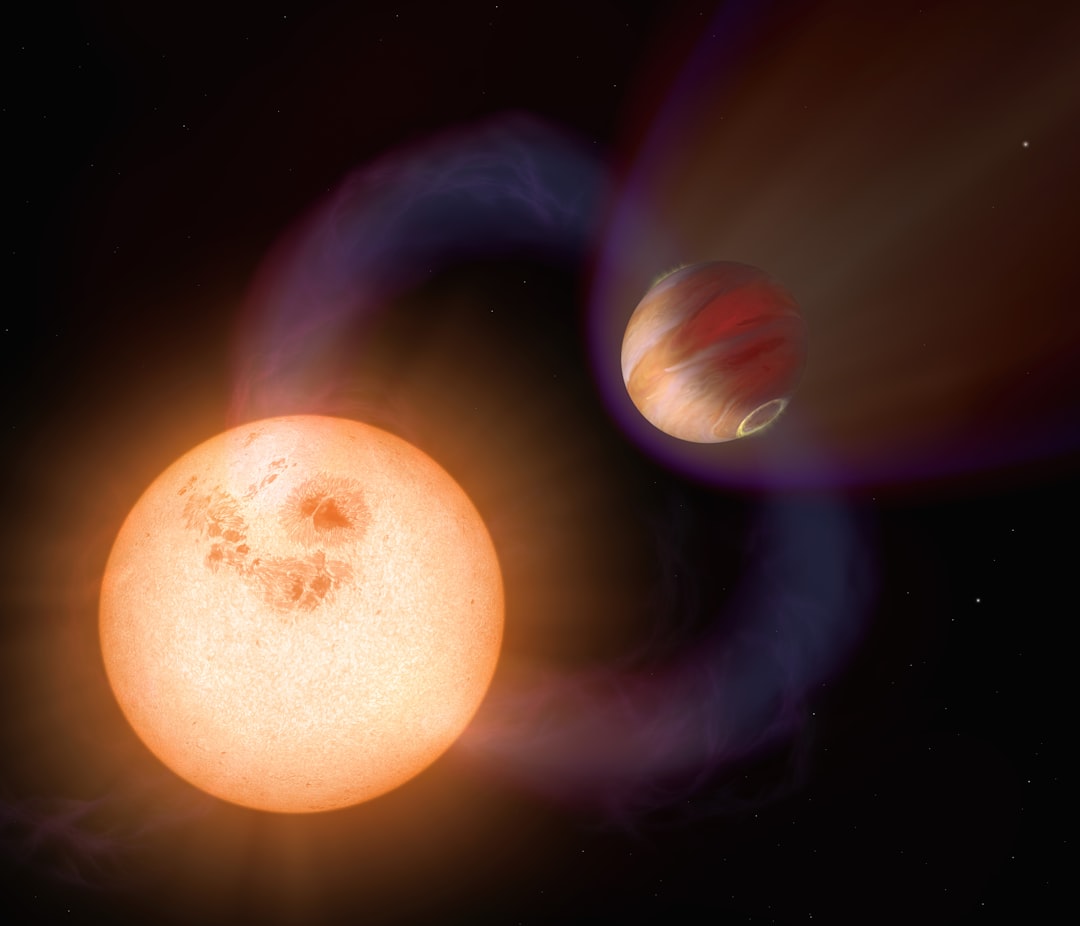
The study's findings carry particular significance given recent discoveries about Barnard's Star itself. Astronomers have identified at least four small, rocky planets orbiting this ancient red dwarf, all located inside the inner edge of the star's habitable zone. The simulated exo-Mars in this study orbits just outside this habitable zone, yet the researchers hypothesize that planets within the habitable zone would likely experience even more severe atmospheric erosion due to their closer proximity to the star and increased exposure to stellar wind and radiation.
The research team notes that these planets would face an even grimmer fate regarding atmospheric retention than their modeled exo-Mars. Any primordial atmospheres composed of light elements like hydrogen and helium—the type of atmospheres that rocky planets typically accrete during formation—would have been stripped away far earlier in the system's history when Barnard's Star was younger and orders of magnitude more active. The study estimates that during the star's youth, stellar XUV flux and wind rates were approximately 100 times larger than current levels, creating a hostile environment that would have rapidly eroded any nascent atmospheres.
Broader Context: The M-Dwarf Habitability Problem
This research contributes to an ongoing debate within the astrobiology community regarding the habitability potential of planets orbiting M-dwarf stars. Despite their prevalence—making up three-quarters of all stars in our galaxy—and their extraordinary longevity with lifetimes potentially extending trillions of years into the future, M-dwarfs present numerous challenges for habitability that extend beyond atmospheric escape.
The habitable zones around these cool, dim stars are located much closer to the stellar surface than Earth's orbit around the Sun. This proximity subjects planets to intense tidal forces that can lock them in synchronous rotation, where one hemisphere perpetually faces the star while the other remains in eternal darkness. Such extreme temperature gradients could drive powerful atmospheric circulation patterns or, in the worst case, cause atmospheric collapse as gases freeze out on the dark side.
Additionally, M-dwarfs emit a much higher proportion of their total energy output in the form of high-energy radiation—X-rays and extreme ultraviolet light—compared to Sun-like stars. This energetic radiation not only drives atmospheric escape but can also break down complex organic molecules on a planet's surface, potentially sterilizing the environment and preventing the chemical reactions necessary for life's emergence. Research by the European Space Agency has shown that some M-dwarf planets receive UV radiation doses hundreds of times higher than Earth experiences.
Pathways to Atmospheric Retention: Hope Remains
Despite these sobering findings, the picture is not entirely bleak for habitability around M-dwarf stars. Several mechanisms could potentially allow planets to maintain atmospheres over geological timescales:
- Volcanic Outgassing: Planets with active geological processes could continuously replenish atmospheric losses through volcanic eruptions and other forms of outgassing, potentially maintaining a stable atmosphere if the replenishment rate matches or exceeds the escape rate.
- Magnetic Field Protection: Planets that maintain strong intrinsic magnetic fields through active dynamos in their cores could deflect much of the incoming stellar wind, dramatically reducing atmospheric loss rates—much as Earth's magnetosphere protects our atmosphere today.
- Massive Initial Atmospheres: Some models suggest that if planets form with sufficiently massive atmospheres—perhaps through extensive comet bombardment or retention of substantial hydrogen envelopes—they might retain enough atmospheric mass to remain habitable even after billions of years of erosion.
- Water World Scenarios: Planets with vast subsurface oceans could potentially maintain surface habitability through a continuous cycle of water loss and replenishment from below, with the deep oceans serving as a reservoir that buffers against atmospheric escape.
Future Directions: Next-Generation Observations
The theoretical work presented in this study will soon face observational tests as next-generation space telescopes come online and begin characterizing exoplanet atmospheres in unprecedented detail. The James Webb Space Telescope (JWST), already operational, possesses the sensitivity to detect and analyze atmospheric compositions of rocky planets orbiting nearby M-dwarfs, potentially revealing whether these worlds have managed to retain substantial atmospheres despite the challenges identified in this research.
Upcoming missions such as the Nancy Grace Roman Space Telescope and ARIEL (Atmospheric Remote-sensing Infrared Exoplanet Large-survey) will further expand our ability to study exoplanet atmospheres across a wide range of stellar types and planetary configurations. These observations will provide crucial data to validate and refine atmospheric escape models, helping astronomers understand which factors most strongly influence atmospheric retention and habitability.
Ground-based facilities are also advancing rapidly. The Extremely Large Telescope (ELT) currently under construction in Chile will have the capability to directly image some nearby exoplanets and study their atmospheric properties with unprecedented precision. These observations will be particularly valuable for studying planets around the nearest M-dwarf stars, where atmospheric signatures will be most readily detectable.
Implications for the Search for Extraterrestrial Life
This research underscores the complexity of identifying truly habitable worlds among the thousands of known exoplanets. While the discovery of rocky planets in habitable zones around M-dwarf stars initially generated considerable excitement—given the abundance of such systems—studies like this one reveal that habitability requires much more than simply the right distance from a star and the presence of rocky composition.
The findings suggest that astrobiologists and exoplanet researchers should perhaps focus greater attention on planets orbiting K-type and G-type stars—stars more similar to our Sun—where atmospheric retention may prove less challenging. These stars, while less common and shorter-lived than M-dwarfs, may offer more stable environments for the long-term maintenance of habitable conditions.
Alternatively, this research may guide observers toward seeking specific signatures that would indicate a planet has overcome the atmospheric escape challenge—such as evidence of active volcanism, strong magnetic fields, or atmospheric compositions suggesting ongoing replenishment processes. Understanding atmospheric escape mechanisms in detail allows researchers to develop more sophisticated criteria for assessing habitability potential.
Conclusion: Refining Our Understanding of Habitability
The atmospheric escape simulations of Mars-like worlds orbiting M-dwarf stars represent a crucial step forward in our understanding of planetary habitability. By revealing that even relatively quiescent red dwarfs like Barnard's Star can strip away planetary atmospheres on timescales of hundreds of thousands to tens of millions of years, this research highlights the formidable challenges facing life's emergence on worlds orbiting the galaxy's most common stellar type.
Yet rather than diminishing the prospects for finding life beyond Earth, studies like this one refine and focus our search, helping us understand where to look and what to look for. The universe contains hundreds of billions of stars, and even if M-dwarf planets prove less hospitable than initially hoped, countless other worlds orbiting more favorable stars await discovery and characterization.
As our observational capabilities continue to advance and our theoretical models grow more sophisticated, we move closer to answering one of humanity's most profound questions: Are we alone in the universe? Research into atmospheric escape and planetary habitability, while sometimes delivering sobering results, ultimately brings us closer to identifying those rare and precious worlds where life might take hold and flourish across the cosmic expanse.