The dream of establishing a permanent human presence on the Moon hinges on one critical resource: water. While the necessity of water for human consumption is obvious, its true value extends far beyond quenching thirst. Through electrolysis, water molecules can be separated into their constituent elements—hydrogen and oxygen—providing both rocket propellant for missions deeper into space and breathable atmosphere for lunar habitats. The astronomical cost of transporting sufficient water from Earth makes in-situ resource utilization not just desirable, but essential for any sustainable lunar exploration program.
Scientists have long suspected that significant quantities of water ice exist within the permanently shadowed regions near the Moon's south pole, where temperatures plunge to some of the coldest places in our solar system—as low as -400°F (-240°C). These ancient deposits, potentially billions of years old, represent a treasure trove for future explorers. However, the challenge facing mission planners isn't whether water exists on the Moon, but rather determining its precise location, concentration, and accessibility with enough certainty to justify the enormous investment required for extraction operations.
Revolutionary Detection Technology: The Neutron Spectrometer System
NASA's answer to this challenge is the Neutron Spectrometer System (NSS), a sophisticated yet remarkably compact instrument that can detect subsurface hydrogen—and by extension, water—without disturbing a single grain of lunar regolith. This cutting-edge technology will be deployed aboard LUPEX (Lunar Polar Exploration), an ambitious international collaboration between Japan Aerospace Exploration Agency (JAXA) and the Indian Space Research Organisation (ISRO). The mission is scheduled to touch down near the lunar south pole no earlier than 2028, marking a crucial milestone in humanity's return to the Moon.
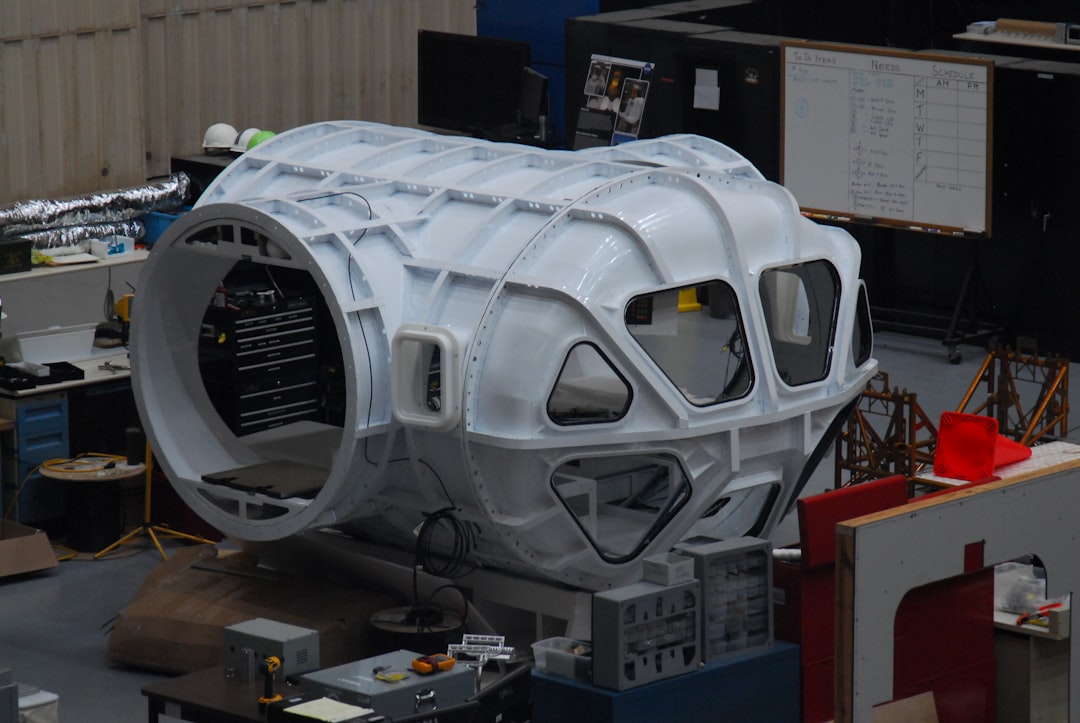
The NSS represents years of refinement in neutron spectroscopy technology, building upon decades of planetary science experience. During rigorous testing at NASA facilities, components of the system undergo extreme vibration and thermal cycling to ensure they can withstand the harsh conditions of launch, landing, and lunar surface operations. This level of preparation is critical—the instrument must function flawlessly in an environment where temperatures can swing hundreds of degrees between sunlit and shadowed areas.
The Science Behind Neutron Detection
The fundamental physics underlying the NSS is both elegant and powerful. The lunar surface experiences constant bombardment by galactic cosmic rays—high-energy particles streaming through space from distant supernovae and other energetic cosmic events. When these cosmic rays strike the Moon's surface, they trigger nuclear reactions that liberate neutrons from atoms within the lunar regolith. These neutrons then embark on a chaotic journey through the subsurface, bouncing between atoms in a process called neutron moderation.
What makes this process particularly useful for water detection is a remarkable coincidence of physics: hydrogen atoms and neutrons possess nearly identical masses. According to principles established by NASA's Lunar Reconnaissance Orbiter observations, this mass similarity makes hydrogen extraordinarily efficient at absorbing neutron energy through elastic collisions—far more so than the heavier silicon, oxygen, and iron atoms that dominate lunar soil composition.
When neutrons encounter hydrogen-rich materials, they lose energy rapidly and become "thermalized," or slowed to very low velocities. These slower neutrons are much more likely to be captured by other atomic nuclei rather than escaping back into space. Consequently, soil rich in hydrogen—and potentially water ice—creates a distinctive neutron deficit at specific energy levels. This deficit serves as an unmistakable signature of subsurface hydrogen, detectable from the surface without any drilling or excavation.
Helium-3: The Key to Neutron Detection
The heart of the NSS consists of specialized detector tubes filled with helium-3, an isotope so rare on Earth that it commands prices exceeding $2,000 per liter. This scarcity stems from helium-3's unique nuclear properties—it's a stable isotope with two protons and just one neutron, making it extraordinarily sensitive to neutron interactions. When a neutron enters a helium-3-filled tube, it triggers a nuclear reaction that produces a tritium nucleus, a proton, and a burst of kinetic energy that generates a measurable electrical pulse.
By carefully analyzing the rate and energy distribution of these pulses, scientists can construct detailed maps of hydrogen concentration extending to depths of approximately one meter (three feet) below the surface. This penetration depth is ideal for mission planning, as it encompasses the zone most accessible to robotic or human excavation equipment while avoiding the complications of deeper drilling operations.
Building a Comprehensive Lunar Water Map
"There is currently a gap in our understanding of how lunar ice is distributed at small scales. The only way to understand the 'where' and 'how much' of lunar ice is by exploring on the surface," explains Rick Elphic, NSS lead scientist at NASA's Ames Research Center.
The LUPEX mission represents just one component of NASA's broader strategy to characterize lunar water resources. The agency has developed an entire family of NSS instruments, each tailored to specific mission requirements and platforms. This multi-mission approach ensures redundancy and allows for cross-validation of measurements across different locations and timescales.
Perhaps the most ambitious of these missions is VIPER (Volatiles Investigating Polar Exploration Rover), a golf-cart-sized rover that will carry its own NSS variant to the lunar south pole. VIPER's mission profile includes direct sampling of subsurface materials using a specialized drill, allowing scientists to ground-truth the neutron spectrometer data with actual ice samples. This combination of remote sensing and direct sampling will provide unprecedented confidence in water resource assessments.
Additionally, a miniaturized NSS will accompany the MoonRanger micro-rover, developed by Carnegie Mellon University as part of NASA's Commercial Lunar Payload Services initiative. Despite its compact size—roughly equivalent to a large suitcase—MoonRanger will contribute valuable data points to the growing database of lunar water measurements.
The International Collaboration Advantage
The partnership between NASA, JAXA, and ISRO on the LUPEX mission exemplifies the growing trend toward international cooperation in space exploration. Each agency brings unique capabilities: JAXA contributes advanced rover mobility systems refined through their successful Hayabusa asteroid sample-return missions, ISRO provides launch services and mission operations expertise demonstrated by their Chandrayaan lunar program, and NASA supplies cutting-edge scientific instruments like the NSS. This synergy allows for more ambitious missions than any single agency could accomplish alone.
Strategic Implications for Lunar Exploration
The data collected by the NSS instrument suite will directly inform site selection for NASA's Artemis program, which aims to establish a sustained human presence on the Moon by the end of this decade. Identifying locations with abundant, accessible water ice could save billions of dollars in mission costs and dramatically extend the duration of human stays on the lunar surface.
Beyond immediate exploration benefits, lunar water resources could fundamentally transform humanity's relationship with space. A lunar "gas station" capable of producing propellant from indigenous resources would reduce the cost of missions to Mars and beyond by eliminating the need to carry all fuel from Earth's deep gravity well. Some estimates suggest this could reduce Mars mission costs by 30-50%, making interplanetary exploration economically feasible for a broader range of participants.
- Resource Independence: Lunar water enables self-sufficient habitats that don't rely on expensive resupply missions from Earth, reducing operational costs by orders of magnitude
- Propellant Production: Hydrogen-oxygen rocket fuel manufactured on the Moon provides a crucial stepping stone for deep space exploration missions
- Radiation Shielding: Water serves as excellent protection against cosmic radiation, allowing construction of safer habitats for long-duration stays
- Scientific Research: Lunar ice cores may preserve a record of solar system history spanning billions of years, offering insights into cometary impacts and solar evolution
- Economic Development: Establishing a water-based lunar economy could catalyze commercial space activities and create new industries
Looking Toward a Water-Rich Future
As the 2028 launch date for LUPEX approaches, the global space community watches with anticipation. The mission represents more than just another robotic explorer—it's a critical pathfinding effort that will determine whether the Moon can truly serve as humanity's first off-world home. The neutron spectrometer technology pioneered by NASA and its partners may well be remembered as the key that unlocked the Moon's hidden treasures.
The convergence of multiple NSS-equipped missions over the next five years will create an unprecedented dataset, allowing scientists to construct detailed three-dimensional maps of water distribution across the lunar south polar region. These maps will guide the placement of future landing sites, habitat locations, and resource extraction facilities with a precision impossible just a decade ago.
Recent studies published in Nature Astronomy suggest that lunar water deposits may be more extensive and accessible than previously believed, with some models indicating billions of tons of ice scattered across permanently shadowed regions. If confirmed by surface missions like LUPEX, these findings would establish the Moon not as a barren wasteland, but as a resource-rich world capable of supporting substantial human populations.
The journey from Earth to permanent lunar settlement is long and challenging, but technologies like the Neutron Spectrometer System bring that future measurably closer. By revealing the Moon's hidden water reserves, these instruments are quite literally mapping the path to humanity's multi-planetary future—one neutron at a time.