The Red Planet's ancient climate has long puzzled planetary scientists with a seemingly impossible contradiction: overwhelming geological evidence of flowing water on a world that should have been far too cold to support liquid on its surface. Now, groundbreaking research from Rice University proposes an elegant solution to this paradox—Mars may have maintained liquid water beneath seasonal ice sheets, similar to the subglacial lakes found in Earth's Antarctic regions today.
Published in the journal AGU Advances, this research by Eleanor Moreland, a graduate student at Rice University, and her colleagues presents a compelling middle ground between two competing theories about Mars' watery past. The findings suggest that rather than experiencing brief warm periods or remaining perpetually frozen, ancient Mars likely cycled through seasonal freeze-thaw patterns that protected precious water from rapid evaporation while still allowing it to exist in liquid form beneath protective ice covers.
This discovery carries profound implications not only for understanding Mars' geological history but also for assessing the planet's potential to have harbored life during its wetter epochs approximately 3.5 billion years ago.
The Faint Young Sun Paradox: Mars' Greatest Climate Mystery
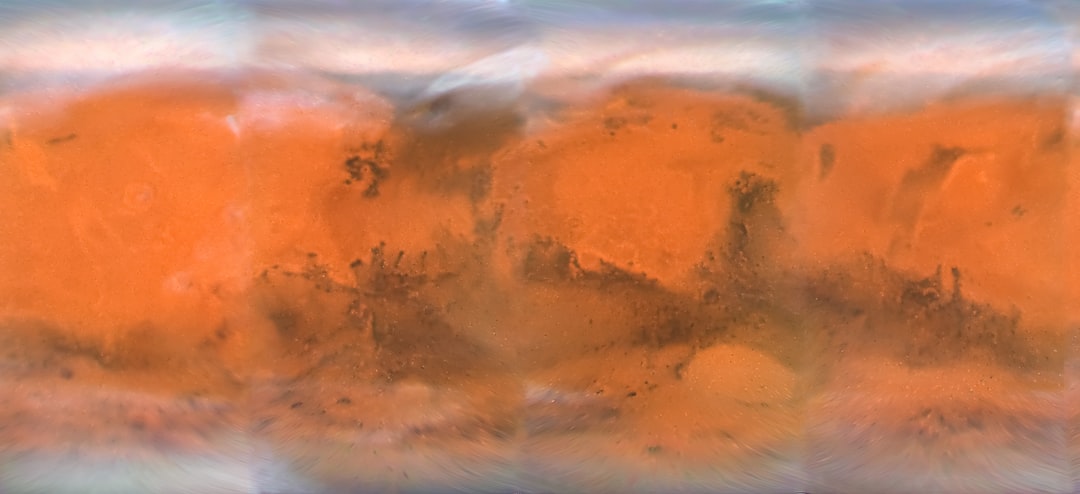
At the heart of this research lies one of planetary science's most vexing puzzles: the Faint Young Sun Paradox. Data collected by NASA's Curiosity rover in Gale Crater has provided unequivocal evidence that liquid water once pooled, flowed, and shaped the Martian landscape. Ancient river channels carved into bedrock, sedimentary deposits characteristic of standing water, and delta formations all point to an active hydrological cycle during Mars' Noachian and early Hesperian periods.
However, this geological record conflicts sharply with our understanding of solar evolution and planetary climate. Approximately 3.6 billion years ago, when Mars supposedly hosted these liquid water bodies, our Sun was operating at merely 75% of its current luminosity—a full 25% dimmer than today. Given that modern Mars remains frozen solid even under the Sun's full contemporary output, the existence of liquid water during this colder epoch seems thermodynamically impossible.
The question becomes even more perplexing when we consider Mars' thin atmosphere and lack of a substantial greenhouse effect. Unlike Earth, which maintains liquid water through atmospheric insulation, ancient Mars would have struggled to retain heat even under optimal conditions. This fundamental contradiction has driven decades of research and spawned numerous competing hypotheses.
Competing Theories: Episodic Warmth Versus Permanent Ice
Before this new research, the scientific community had largely coalesced around two principal explanations for Mars' liquid water paradox. The first theory proposed episodic warming events—brief periods when volcanic activity or massive asteroid impacts injected enough energy into the Martian atmosphere to temporarily raise temperatures above freezing. Under this scenario, water would flow freely during these warm intervals, carving channels and filling lake beds, only to freeze again once the warming influence dissipated.
The alternative hypothesis suggested that Mars remained perpetually cold, but that liquid water persisted beneath permanent ice sheets, similar to subglacial lakes found beneath Antarctica's ice today. This "cold and icy" model proposed that insulation from thick ice covers prevented water from freezing solid, while geothermal heat or pressure maintained liquid conditions at depth.
Both theories had merits and drawbacks. The episodic warming model struggled to explain how brief heating events could produce the extensive geological features observed, while the permanent ice hypothesis failed to account for certain physical signatures that should have been present if water remained constantly frozen.
LakeM2ARS: A Revolutionary Modeling Approach
To resolve this debate, Moreland and her research team developed an innovative computational tool called Lake Modeling on Mars for Atmospheric Reconstructions and Simulations (LakeM2ARS). This sophisticated software package represents a significant advancement in our ability to model ancient Martian climate conditions with unprecedented precision.
LakeM2ARS integrates multiple environmental variables to simulate how water bodies would have behaved under various climatic scenarios. The model accepts inputs including geographic location, lake dimensions, atmospheric composition, surface albedo, and seasonal solar radiation patterns. By processing these parameters through complex thermodynamic calculations, the software predicts how long liquid water could persist under different environmental conditions.
"What we found was counterintuitive," explains Moreland. "In warmer scenarios where temperatures stayed above freezing for extended periods, lakes actually dried out faster due to evaporation. But when we modeled seasonal ice cover, the ice acted as a protective barrier that dramatically reduced water loss while still permitting liquid water to exist beneath the surface."
The model's predictions revealed a surprising sweet spot in Martian climate conditions. Rather than requiring consistently warm temperatures, lakes could have persisted for hundreds to thousands of years under conditions that modern observers would consider quite cold—with average temperatures hovering between -20°C and -30°C for most of the year, punctuated by brief seasonal periods where temperatures climbed above 0°C.
The Seasonal Ice Solution: A Goldilocks Scenario
The research team's findings point to a "just right" climate scenario that elegantly resolves the contradictions inherent in previous models. Under the seasonal ice cover hypothesis, ancient Martian lakes would have developed thin ice sheets during colder periods, typically ranging from several centimeters to a few meters in thickness. These ice covers would have dramatically reduced evaporative water loss—the primary mechanism that would have depleted lakes in warmer scenarios.
During brief seasonal warm periods, possibly triggered by orbital variations or atmospheric pressure changes, portions of these ice covers would melt, allowing liquid water to exist at the surface. This cyclical pattern mirrors conditions observed in Antarctica's perennially ice-covered lakes, where liquid water persists beneath protective ice shields year-round.
Critically, this model also explains the absence of certain geological features that would be expected under permanent ice conditions. Dropstones—rocks dropped from melting icebergs—and frost wedges—polygonal patterns created by repeated freeze-thaw cycles in permanently frozen ground—are notably absent from Gale Crater's geological record. Seasonal ice coverage, being temporary and relatively thin, would not produce these distinctive markers.
Evidence from Gale Crater
The geological record preserved in Gale Crater provides crucial validation for the seasonal ice hypothesis. Curiosity's extensive exploration has revealed sedimentary structures consistent with standing water bodies that persisted for extended periods—potentially hundreds of years or longer. The fine-grained mudstones and cross-bedded sandstones observed indicate relatively calm water conditions punctuated by occasional flow events.
Importantly, the chemical composition of these sedimentary rocks suggests water chemistry compatible with seasonal ice coverage. The presence of certain phyllosilicate minerals and the absence of others indicates water conditions that were neither too warm (which would have promoted different mineral formation) nor permanently frozen (which would have prevented the observed chemical weathering patterns).
Implications for Martian Habitability and Astrobiology
The seasonal ice model carries profound implications for Mars' potential to have hosted life. Liquid water is considered an essential prerequisite for life as we know it, but the duration and stability of that water matters enormously for biological processes. Brief episodic warming events might provide insufficient time for life to establish itself, while permanently frozen conditions would severely limit biological activity.
Seasonal ice coverage, however, offers a more promising scenario for potential habitability. The extended periods of liquid water availability—potentially lasting centuries or millennia—would have provided sufficient time for prebiotic chemistry to occur and for microbial life to potentially emerge and adapt. The ice cover itself might have even provided benefits, protecting underlying water from harmful ultraviolet radiation that bombards Mars' surface due to its thin atmosphere and lack of a protective ozone layer.
This research directly informs the ongoing search for biosignatures on Mars. NASA's Perseverance rover, currently exploring Jezero Crater—another ancient lake bed—is collecting samples that may preserve evidence of past life. Understanding that these ancient lakes likely featured seasonal ice coverage helps scientists interpret the geological context of any potential biosignatures discovered.
Future Research Directions and Applications
The LakeM2ARS model represents not just a solution to a specific puzzle, but a powerful tool for future Mars research. The software can be readily adapted to model conditions in other ancient lake beds across Mars, including:
- Jezero Crater: Currently being explored by Perseverance, this ancient river delta system may have hosted similar seasonal ice-covered lakes
- Eberswalde Crater: Features one of Mars' best-preserved delta systems, making it an ideal candidate for climate modeling
- Holden Crater: Contains evidence of catastrophic flooding and subsequent standing water that could be analyzed through the LakeM2ARS framework
- Valles Marineris: This massive canyon system shows evidence of water-carved features that might benefit from seasonal ice modeling
Moreover, this research methodology has applications beyond Mars. Understanding how liquid water can persist under challenging environmental conditions informs our search for habitable environments on other worlds, including Jupiter's moon Europa and Saturn's moon Enceladus, both of which harbor subsurface oceans beneath thick ice shells.
The Broader Context of Martian Climate Evolution
This research fits into a larger narrative about Mars' dramatic climate transformation from a world that could sustain surface water to the frozen desert we observe today. The seasonal ice model suggests that Mars' transition from wet to dry wasn't instantaneous but rather occurred through a gradual process as the planet's atmosphere thinned and its ability to retain heat diminished.
Understanding this transition helps scientists reconstruct the timeline of Mars' habitability and identify which periods in the planet's history would have been most conducive to life. It also provides insights into planetary climate evolution more broadly, offering lessons about how terrestrial planets can lose their atmospheres and undergo dramatic environmental changes over geological timescales.
As we continue exploring Mars through increasingly sophisticated rovers, orbiters, and eventually human missions, the mystery of the Red Planet's watery past continues to yield new insights. The seasonal ice hypothesis represents a significant step forward in our understanding, demonstrating that sometimes the answer to seemingly impossible paradoxes lies not in extremes, but in the nuanced middle ground between them.
Future missions will undoubtedly test and refine this model, potentially discovering direct evidence of ancient ice-covered lakes preserved in the geological record. Each new discovery brings us closer to answering one of planetary science's most compelling questions: Did life ever emerge in those ancient Martian waters, protected beneath their seasonal shields of ice, during the brief window when the Red Planet was a world of lakes rather than dust?