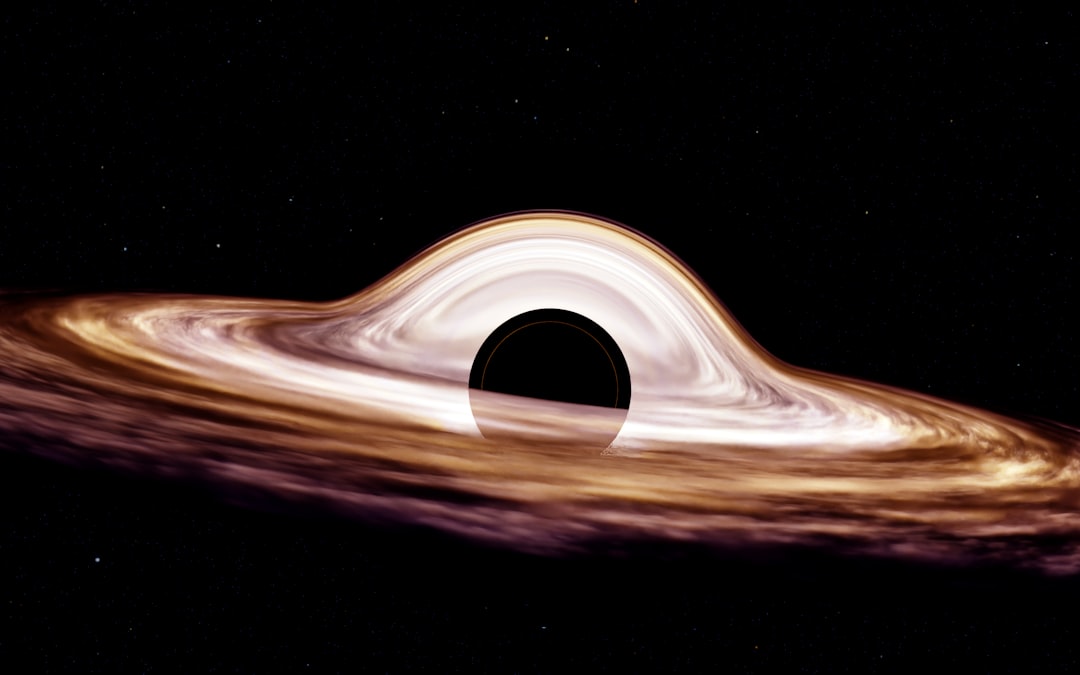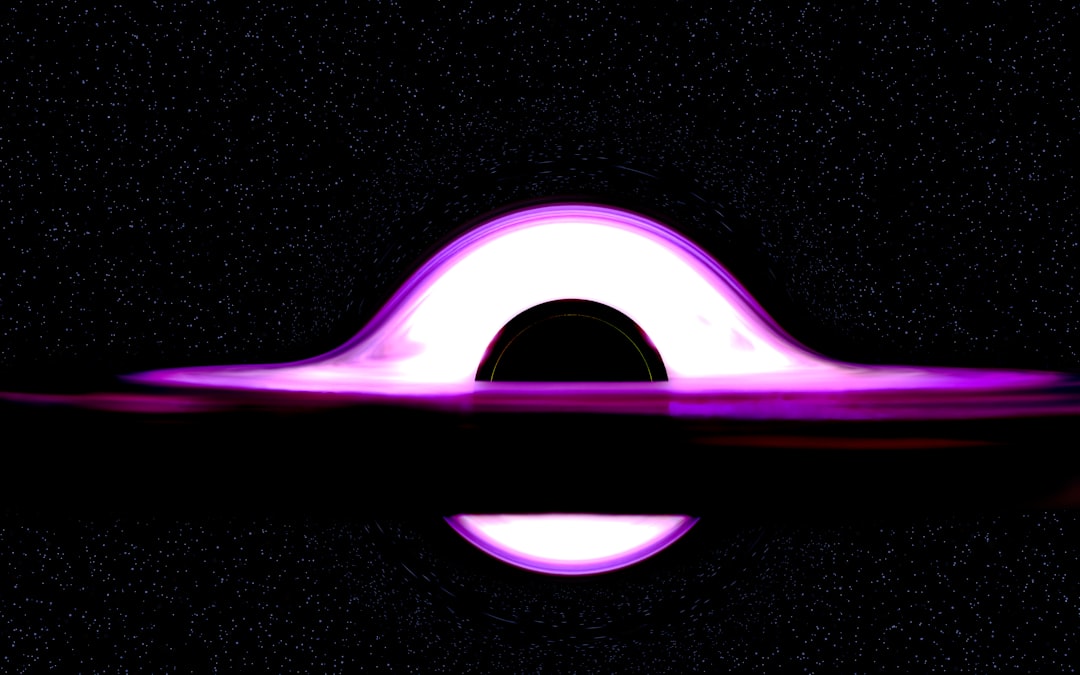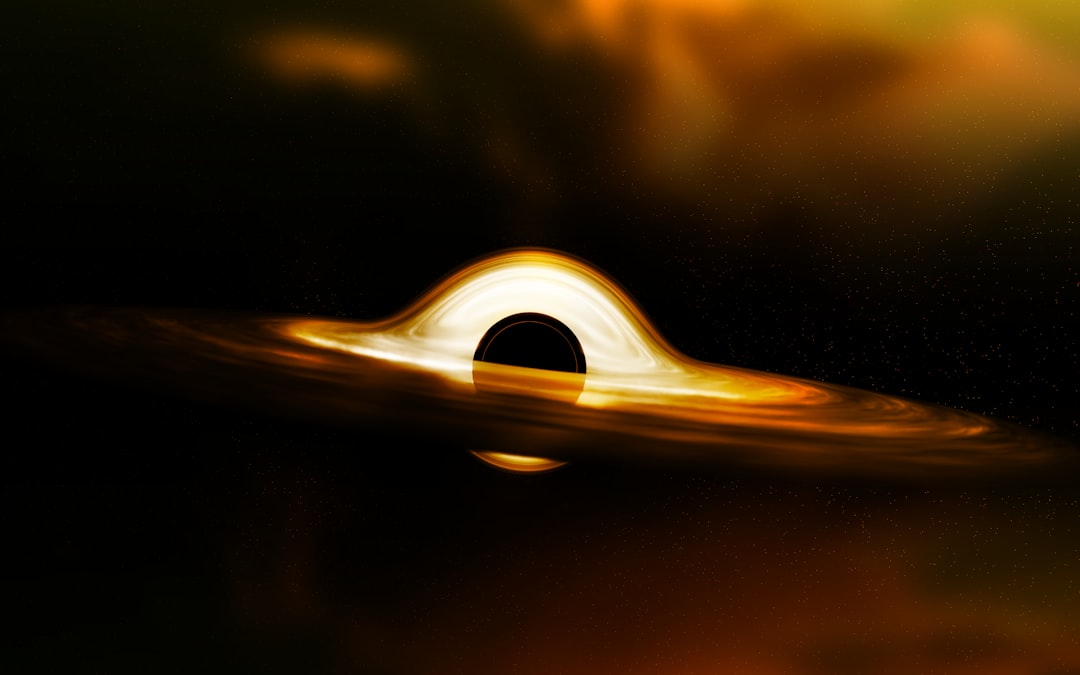
In a groundbreaking achievement for observational astronomy, an international team of researchers has successfully captured the most detailed X-ray spectrum ever recorded of a rapidly rotating supermassive black hole. The observations, conducted using the cutting-edge X-Ray Imaging and Spectroscopy Mission (XRISM), have provided unprecedented insights into the extreme physics occurring just beyond the event horizon of one of the universe's most enigmatic objects. This remarkable feat represents a quantum leap in our ability to study the fundamental properties of black holes and their profound influence on galactic evolution.
The target of this intensive study, MCG–6-30-15, is a Type 1 Seyfert galaxy situated approximately 120.7 million light-years from Earth in the constellation Telescopium. At its heart lies a supermassive black hole weighing roughly 2 million solar masses—a cosmic behemoth that has long fascinated astronomers due to its highly variable X-ray emissions and distinctive spectral features. By combining the extraordinary spectral resolution of XRISM with complementary data from ESA's XMM-Newton observatory and NASA's NuSTAR telescope, scientists have finally managed to peer into the churning maelstrom of matter spiraling toward oblivion.
Revolutionary Technology Meets Cosmic Mystery
Launched on September 7, 2023, XRISM represents a collaborative triumph between the Japanese Aerospace Exploration Agency (JAXA) and NASA. The mission's primary scientific instrument, known as Resolve, employs advanced X-ray microcalorimeter technology that operates at temperatures just a fraction of a degree above absolute zero. This extreme cooling enables the detector to measure the energy of individual X-ray photons with unprecedented precision—achieving a spectral resolution more than 30 times better than previous X-ray observatories.
The significance of this technological advancement cannot be overstated. Previous X-ray telescopes, while powerful, lacked the resolving power necessary to distinguish between the complex array of emission and absorption lines that characterize the high-energy radiation from active galactic nuclei. These spectral features, created by hot ionized gas in various states of motion and ionization, were essentially blurred together—like trying to read a book through frosted glass. XRISM's Resolve instrument has effectively removed that obscuring layer, allowing astronomers to read the cosmic story with crystal clarity.
Decoding the Warped Signature of Extreme Gravity
The research team, led by Dr. Laura Brenneman of the Harvard & Smithsonian Center for Astrophysics, focused their attention on a particular spectral feature that has tantalized astronomers for decades: the broad iron emission line. This distinctive signature, produced when X-rays from the black hole's corona illuminate the surrounding accretion disk, becomes dramatically distorted by the extreme gravitational and relativistic effects near the event horizon. The iron atoms in the disk absorb and re-emit X-rays at characteristic energies, but the intense gravity warps spacetime itself, stretching and skewing these emissions into a distinctive broad, asymmetric profile.
"Astrophysical black holes have only two properties: mass and spin. We can estimate their masses by several different means, but measuring their spins is much harder and requires collecting data from gas that is orbiting the black hole immediately outside the event horizon," explained Dr. Brenneman. "For supermassive black holes in active galactic nuclei, this is best accomplished by obtaining X-ray spectra with high signal-to-noise and spectral resolution."
The shape and extent of this iron line encode crucial information about the black hole's spin rate—one of only two fundamental properties that characterize these objects, along with mass. A rapidly spinning black hole drags spacetime around with it in a phenomenon known as frame-dragging, allowing the innermost stable circular orbit to exist much closer to the event horizon than would be possible around a non-rotating black hole. This means that matter can orbit at higher velocities and emit more energetic radiation before its final plunge into the abyss.
Separating Signal from Noise in the Cosmic Symphony
One of the most significant challenges in studying active galactic nuclei is disentangling the various sources of X-ray emission. The region surrounding a supermassive black hole is extraordinarily complex, featuring multiple components that all contribute to the observed spectrum:
- The Corona: A billion-degree plasma region extending above and below the accretion disk, responsible for producing the primary X-ray emission through inverse Compton scattering
- The Accretion Disk: A swirling disk of superheated matter spiraling inward, reflecting and reprocessing X-rays from the corona
- Outflowing Winds: Streams of ionized gas being driven away from the system by radiation pressure and magnetic forces
- Distant Gas Clouds: Material in the broader galaxy that absorbs and re-emits radiation at lower energies
Previous observations had suggested that a substantial fraction of the X-ray emissions from MCG–6-30-15 originated from material in the immediate vicinity of the black hole's event horizon. However, the limited spectral resolution of earlier instruments made it impossible to definitively separate these inner-disk emissions from contributions by more distant material. The situation was further complicated by the presence of warm absorbers—intervening clouds of partially ionized gas that imprint their own absorption features on the spectrum.
By leveraging XRISM's exceptional spectral resolution in conjunction with the broad energy coverage provided by XMM-Newton and NuSTAR, Brenneman's team successfully isolated the contribution from the innermost accretion disk. Their analysis, published in The Astrophysical Journal, revealed that this inner region produces approximately 50 times more X-ray reflection than more distant gas clouds—a finding that confirms theoretical predictions about the efficiency of X-ray reprocessing in the strong-gravity regime.
Unveiling the Black Hole's Spin and Its Cosmic Consequences
The team's analysis of the warped iron emission line has provided robust confirmation that material in MCG–6-30-15 is indeed orbiting at velocities approaching the speed of light, just outside the event horizon. This finding rules out alternative explanations involving outflowing winds and establishes that the observed spectral features are genuinely produced by the relativistic inner accretion disk. More importantly, the precise shape of the iron line profile allows astronomers to constrain the black hole's spin parameter—a dimensionless quantity that ranges from zero for a non-rotating black hole to one for a maximally spinning Kerr black hole.
The implications of accurately measuring black hole spin extend far beyond mere curiosity about these exotic objects. The spin of a supermassive black hole encodes the history of its growth over cosmic time. Black holes can increase their spin through the orderly accretion of matter from a disk, which tends to spin them up to near-maximal rotation. Conversely, mergers with other black holes—particularly those with misaligned spin axes—can actually reduce the overall spin. By measuring the spins of supermassive black holes across a range of masses and galactic environments, astronomers can test competing theories about how galaxies assemble and evolve.
The Mysterious Corona and Multi-Zone Winds
Beyond confirming the black hole's rapid rotation, the XRISM observations have provided crucial new insights into the nature of the X-ray corona—one of the most poorly understood components of active galactic nuclei. This billion-degree plasma region, which extends above and below the accretion disk, is responsible for generating the primary X-ray emission through a process called inverse Compton scattering. In this mechanism, relatively cool photons from the accretion disk collide with ultra-hot electrons in the corona, gaining energy and emerging as X-rays.
Despite decades of study, the physical structure, geometry, and heating mechanism of the corona remain subjects of intense debate. The high-resolution spectroscopy from XRISM has allowed Brenneman's team to measure the corona's temperature, optical depth, and geometry with unprecedented precision. These measurements provide critical constraints for theoretical models attempting to explain how the corona is heated and maintained in its extreme state.
Perhaps equally intriguing is the team's discovery of at least five distinct zones of outflowing wind being driven from the system by the intense radiation and magnetic fields associated with the accretion process. These winds, detected through their characteristic absorption features in the X-ray spectrum, represent material that has been accelerated to velocities of thousands of kilometers per second and ejected from the galaxy entirely. Such outflows play a crucial role in regulating black hole growth and influencing star formation throughout the host galaxy—a phenomenon known as AGN feedback.
Time-Resolved Spectroscopy Reveals Dynamic Evolution
A companion study led by Dr. Daniel R. Wilkins of Ohio State University has taken the analysis a step further by examining how the X-ray spectrum of MCG–6-30-15 varies over time. Active galactic nuclei are inherently variable objects, with their X-ray emission fluctuating on timescales ranging from hours to years. By analyzing XRISM spectra obtained at different epochs, Wilkins and his collaborators have been able to study how changes in the corona's properties propagate through the system and affect the reflected emission from the accretion disk.
This time-resolved spectroscopy technique, enabled by XRISM's combination of high spectral resolution and good photon-collecting area, opens up entirely new avenues for studying the physics of accretion. By watching how the system responds to variations in the primary X-ray emission, astronomers can effectively perform a form of "reverberation mapping" that reveals the geometry and kinematics of the innermost regions around the black hole.
Implications for Future Black Hole Studies
The success of these initial XRISM observations of MCG–6-30-15 has profound implications for the broader field of black hole astrophysics. As Dr. Brenneman emphasized, one of the mission's key objectives is to revisit sources that have been studied with lower-resolution X-ray spectrometers and verify the accuracy of previous spin measurements:
"We want to go back and look at all of the sources for which we have lower-resolution spectra and observe them with XRISM, and say, 'Okay, now that we're confident we can separate out the narrow and the broad features, how accurate were our previous spin measurements?' Understanding these winds in addition to the black hole's spin is important because they can tell us how galaxies grow and evolve, either primarily by collecting gas or by mergers with other galaxies and black holes."
This systematic re-examination of well-studied sources will help establish the reliability of spin measurements obtained with earlier instruments and potentially reveal systematic biases that may have affected previous results. More importantly, it will allow astronomers to build a statistically robust sample of black hole spin measurements spanning a wide range of black hole masses and galactic environments—essential for testing theories of black hole growth and galaxy evolution.
The Symbiotic Dance of Black Holes and Galaxies
The ultimate goal of studies like this extends beyond characterizing individual black holes to understanding the co-evolution of supermassive black holes and their host galaxies. Observations across multiple wavelengths have revealed tight correlations between black hole mass and various properties of the galactic bulge, suggesting that these two components grow in lockstep through some form of feedback mechanism. The winds and jets driven by accreting black holes inject enormous amounts of energy into their surroundings, heating gas and potentially suppressing or triggering star formation.
By precisely measuring both the spin (which encodes accretion history) and the wind properties (which quantify feedback), XRISM observations provide a holistic view of how supermassive black holes influence their cosmic neighborhoods. As Brenneman noted, this dual perspective is essential for understanding whether galaxies grow primarily through the gradual accumulation of gas or through dramatic mergers with other galaxies—a fundamental question in cosmology.
The observations of MCG–6-30-15 represent just the beginning of XRISM's scientific mission. With its unprecedented spectral capabilities, the observatory is poised to revolutionize our understanding of black holes, neutron stars, galaxy clusters, and the hot plasma that fills the space between galaxies. As astronomers continue to push the boundaries of what's possible with this remarkable instrument, we can expect many more surprises and discoveries that challenge our understanding of the universe's most extreme environments.
The future of high-resolution X-ray spectroscopy looks brighter than ever, promising to unlock secrets that have remained hidden in the cosmic shadows for far too long. Through missions like XRISM and the international collaboration they represent, humanity continues its age-old quest to comprehend the fundamental nature of space, time, and the enigmatic objects that warp them beyond recognition.