In a groundbreaking theoretical achievement that bridges quantum mechanics and general relativity, physicists have unveiled a remarkable mathematical description of how spacetime itself can undergo phase transitions—transformations similar to water freezing into ice—to produce microscopic black holes. This extraordinary research, published in Physical Review Letters, represents the first exact mathematical solution to a problem that has puzzled scientists for three decades, revealing that the fabric of our universe can crystallize into structured patterns that teeter on the edge of becoming black holes.
The collaborative effort between researchers at TU Wien in Vienna and Goethe University Frankfurt has produced what many consider one of the most elegant solutions in modern theoretical physics. By employing an ingenious mathematical technique that operates in infinitely many dimensions, the team has cracked a problem that resisted conventional four-dimensional approaches for over thirty years. Their work provides the first rigorous mathematical framework for understanding spacetime crystals—exotic structures that exist at the critical boundary between ordinary spacetime and black hole formation.
What makes this discovery particularly fascinating is its connection to everyday phenomena we all recognize. Just as water molecules transition from chaotic liquid motion to the ordered hexagonal patterns of ice crystals at precisely zero degrees Celsius, spacetime can organize itself into repeating geometric patterns under specific conditions. However, unlike the ice in your freezer, these spacetime crystals represent a delicate equilibrium state—add even the tiniest quantum of energy, and the entire structure collapses into a microscopic black hole.
The Physics of Phase Transitions: From Water to Spacetime
To appreciate the profound implications of this research, we must first understand the concept of phase transitions in physics. When water freezes, it undergoes what physicists call a first-order phase transition. The disordered molecules of liquid water, moving randomly in all directions, suddenly snap into a highly ordered crystalline lattice structure. This transition occurs at a specific critical temperature—the freezing point—where the system balances precariously between two distinct states of matter.
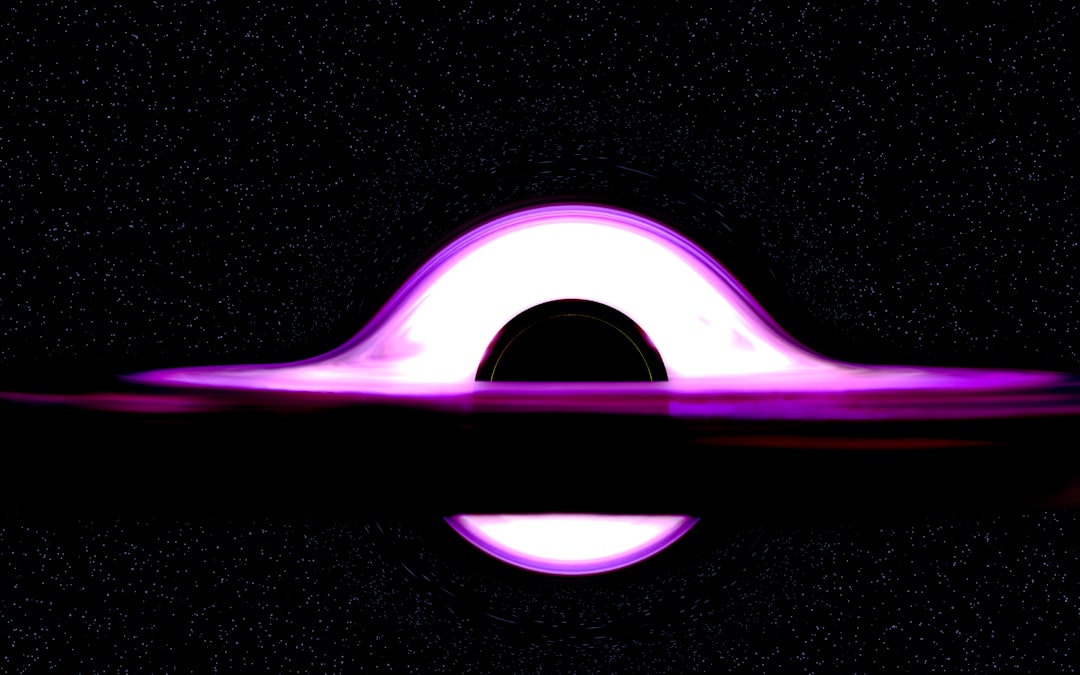
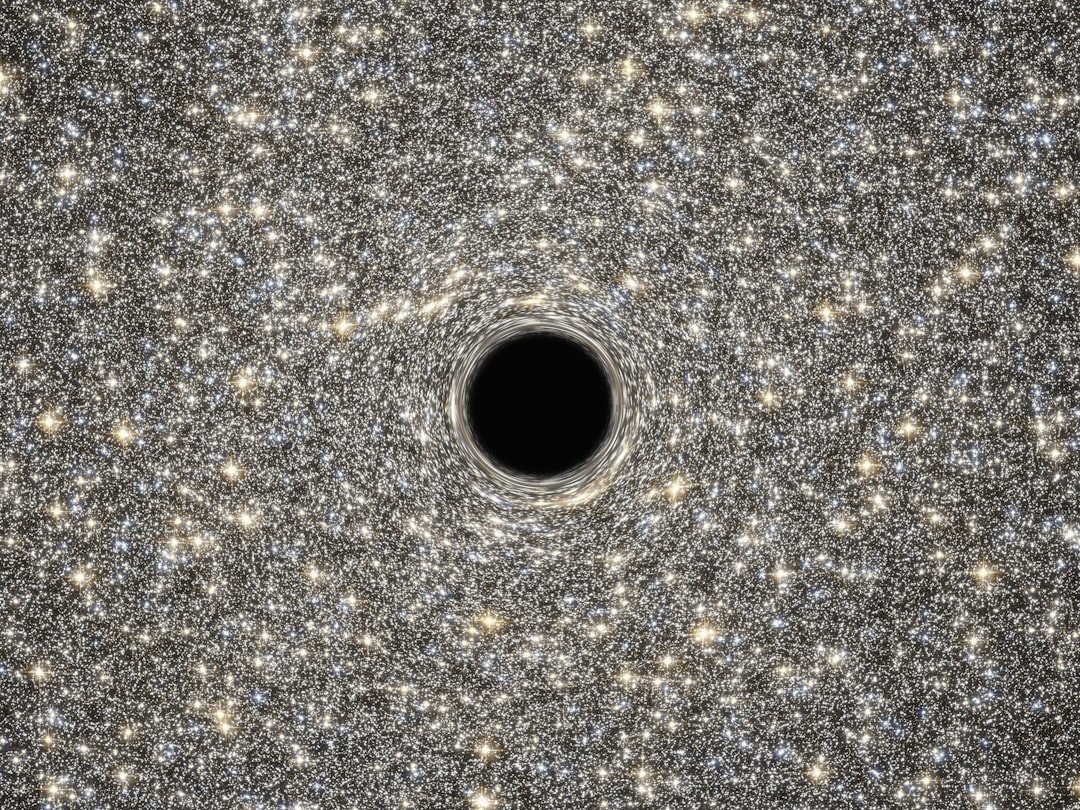
According to NASA's extensive research on black holes, traditional black hole formation follows a dramatically different path. Stellar-mass black holes form through catastrophic gravitational collapse when massive stars—typically those with at least 20 times the mass of our Sun—exhaust their nuclear fuel. The star's core implodes in a fraction of a second, compressing matter to such extreme densities that the escape velocity exceeds the speed of light, creating an event horizon from which nothing can escape.
But Einstein's field equations, the mathematical foundation of general relativity, permit another route to black hole formation entirely. These microscopic or primordial black holes need not form from stellar collapse at all. Instead, they can emerge from what physicists call critical collapse—a process that bears striking resemblance to the phase transitions we observe in everyday materials. This phenomenon was first predicted theoretically in 1993 through computer simulations conducted by physicist Matthew Choptuik, but until now, no one had derived an exact analytical solution describing these objects.
Understanding Spacetime Crystals and Critical Collapse
The concept of a spacetime crystal represents one of the most intriguing theoretical constructs in modern physics. Unlike ordinary crystals, which are periodic arrangements of atoms in three-dimensional space, spacetime crystals exhibit periodicity in both space and time. These structures exist at what physicists call a critical point—a state of perfect balance analogous to water held at exactly zero degrees Celsius.
At this critical threshold, the system exhibits remarkable properties. The spacetime geometry organizes itself into a self-similar, repeating pattern that extends across multiple scales. This scale invariance is a hallmark of critical phenomena throughout physics, from the fractal patterns of snowflakes to the distribution of galaxy clusters across the cosmos. The European Space Agency's research on black hole physics has helped establish the theoretical framework for understanding these exotic objects.
"Our technique turns out to be remarkably stable. This gives us a new method for studying black hole related phenomena that could previously not be analysed analytically," explains Florian Ecker from TU Wien, highlighting the breakthrough nature of their mathematical approach.
The critical collapse process operates on a knife's edge. In this delicate state, the spacetime crystal can evolve in one of two directions. If left completely isolated, with absolutely no energy input, the structure gradually dissolves, and spacetime returns to its ordinary, uncurved state—what physicists call flat Minkowski spacetime. However, introduce even the smallest perturbation—a single photon, a quantum fluctuation, the tiniest ripple of energy—and the entire configuration becomes unstable. The spacetime crystal collapses catastrophically, forming a microscopic black hole whose mass is determined by the magnitude of that initial perturbation.
The Mathematical Breakthrough: Solving in Infinite Dimensions
For three decades following Choptuik's initial numerical simulations, physicists struggled to find an exact mathematical description of spacetime crystals. The equations of general relativity, even in their simplest forms, present formidable challenges. In four dimensions—three of space plus one of time—the coupled nonlinear partial differential equations that govern spacetime geometry become intractably complex for critical collapse scenarios.
The Vienna-Frankfurt collaboration achieved their breakthrough by employing what might seem like a counterintuitive strategy: they solved the problem in infinitely many dimensions instead. This approach, while initially appearing to complicate matters, actually simplifies the mathematics dramatically. In the limit where the number of spatial dimensions approaches infinity, certain nonlinear terms that cause computational nightmares in four dimensions effectively vanish or become manageable.
This technique builds upon decades of work in large-N expansions and holographic duality, concepts that have revolutionized theoretical physics over the past twenty years. Research conducted at institutions like Princeton's Institute for Advanced Study has shown that infinite-dimensional limits often reveal universal features that persist even when we return to realistic dimensionalities.
Once the team obtained their exact solution in infinite dimensions, they employed sophisticated mathematical techniques to carefully extrapolate back to our four-dimensional universe. The resulting formulas provide the first analytical description of a spacetime crystal, complete with precise predictions for its geometric structure, stability properties, and the critical threshold for black hole formation.
Key Implications and Future Applications
The implications of this mathematical achievement extend far beyond abstract theoretical physics. Understanding critical collapse and spacetime crystals has profound consequences for several frontiers of modern cosmology and quantum gravity research:
- Primordial Black Holes: The early universe, particularly during the first fractions of a second after the Big Bang, may have contained regions where density fluctuations reached critical values. These spacetime crystals could have formed and collapsed into primordial black holes, which some physicists propose as candidates for dark matter—the mysterious substance that comprises 85% of the universe's matter content.
- Quantum Gravity: Spacetime crystals exist at the boundary between classical general relativity and quantum mechanics. Their mathematical description provides crucial insights into how these two fundamental theories might be reconciled in a complete theory of quantum gravity, one of physics' greatest unsolved problems.
- Gravitational Wave Signatures: If microscopic black holes form through critical collapse in astrophysical settings, they might produce distinctive gravitational wave signals detectable by instruments like LIGO and Virgo. The exact mathematical formulas from this research enable precise predictions of these signatures.
- Computational Methods: The infinite-dimensional solution technique pioneered in this work opens new avenues for tackling other previously intractable problems in general relativity, from the behavior of matter near black hole event horizons to the dynamics of cosmological inflation.
The Broader Context of Black Hole Research
This theoretical breakthrough arrives at a particularly exciting moment in black hole physics. Over the past decade, observational astronomy has transformed our understanding of these enigmatic objects. The Event Horizon Telescope collaboration produced the first direct images of black hole event horizons in 2019 and 2022, revealing the supermassive black holes at the centers of galaxies M87 and our own Milky Way. Meanwhile, gravitational wave observatories have detected dozens of black hole mergers, confirming predictions of general relativity with unprecedented precision.
Yet despite these observational triumphs, fundamental theoretical questions remain. How do black holes form in the early universe? What happens to information that falls into a black hole? Can we reconcile the smooth spacetime of general relativity with the quantum foam predicted by quantum mechanics at the smallest scales? The mathematical framework for spacetime crystals provides new tools for addressing these profound questions.
The research team's approach also demonstrates the continued vitality of analytical methods in an era increasingly dominated by computational simulations. While computer models revealed hints of spacetime crystals three decades ago, only exact mathematical solutions can provide the deep understanding and predictive power necessary for advancing fundamental physics. As research from institutions like CERN has repeatedly shown, analytical breakthroughs often unlock entirely new research directions impossible to access through numerical methods alone.
Looking Forward: The Future of Spacetime Physics
The discovery of exact solutions for spacetime crystals represents not an endpoint but a beginning. Several exciting research directions now beckon. First, physicists will work to understand whether these mathematical objects have physical counterparts in our universe. Could spacetime crystals have formed during cosmic inflation? Might they exist today in extreme astrophysical environments like the cores of neutron stars or the vicinity of supermassive black holes?
Second, the infinite-dimensional solution technique opens possibilities for solving related problems. Critical phenomena appear throughout general relativity—from the formation of naked singularities to the behavior of spacetime near the Big Bang itself. The methods developed in this research might provide exact solutions for these scenarios as well, potentially revolutionizing our understanding of gravitational physics in extreme regimes.
Third, experimental tests may eventually become possible. While directly observing a microscopic black hole formed through critical collapse remains far beyond current technology, indirect signatures might be detectable. Future gravitational wave observatories, next-generation particle colliders, or observations of the cosmic microwave background radiation might reveal evidence for spacetime crystals in the early universe.
Finally, this work exemplifies the deep mathematical unity underlying physical law. The same phase transition concepts that explain ice formation also describe the birth of black holes. The same symmetry principles that govern particle physics illuminate the structure of spacetime itself. These connections suggest that despite the apparent complexity of nature, elegant mathematical patterns and universal principles operate at the deepest levels of reality—a profound insight that continues to drive theoretical physics forward into uncharted territory.
As our observational capabilities expand and our theoretical tools grow more sophisticated, the boundary between science fiction and scientific fact continues to shift. Spacetime crystals, once purely speculative constructs, now rest on firm mathematical foundations. What other wonders await discovery in the vast landscape of theoretical physics? Only continued research will tell.