What If There's a Star Inside a Black Hole?
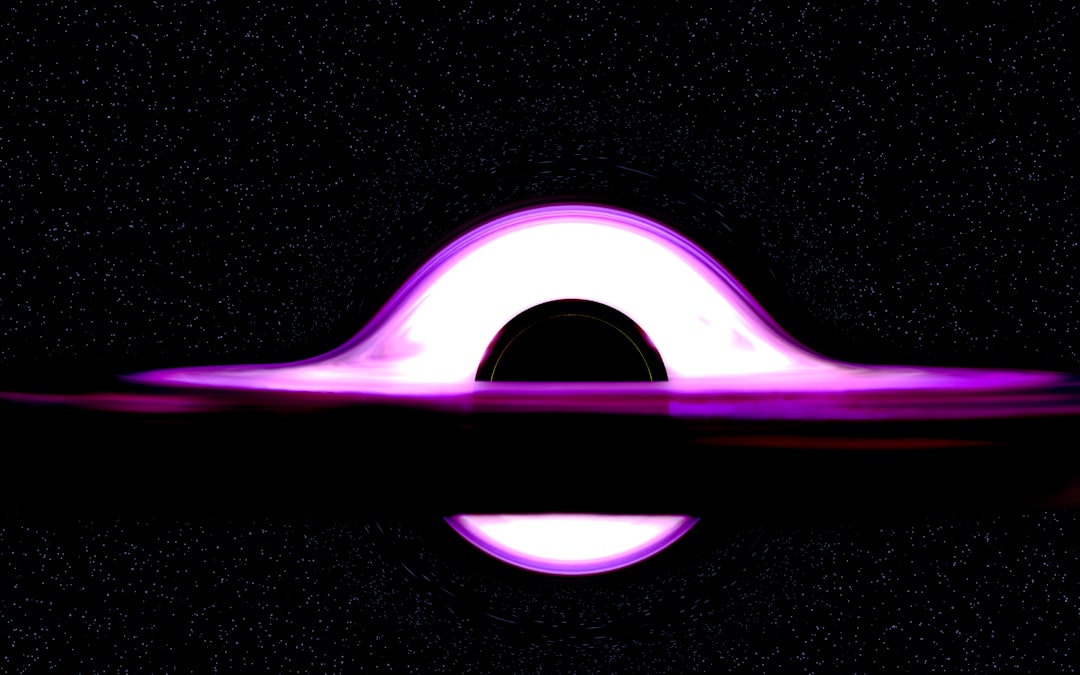
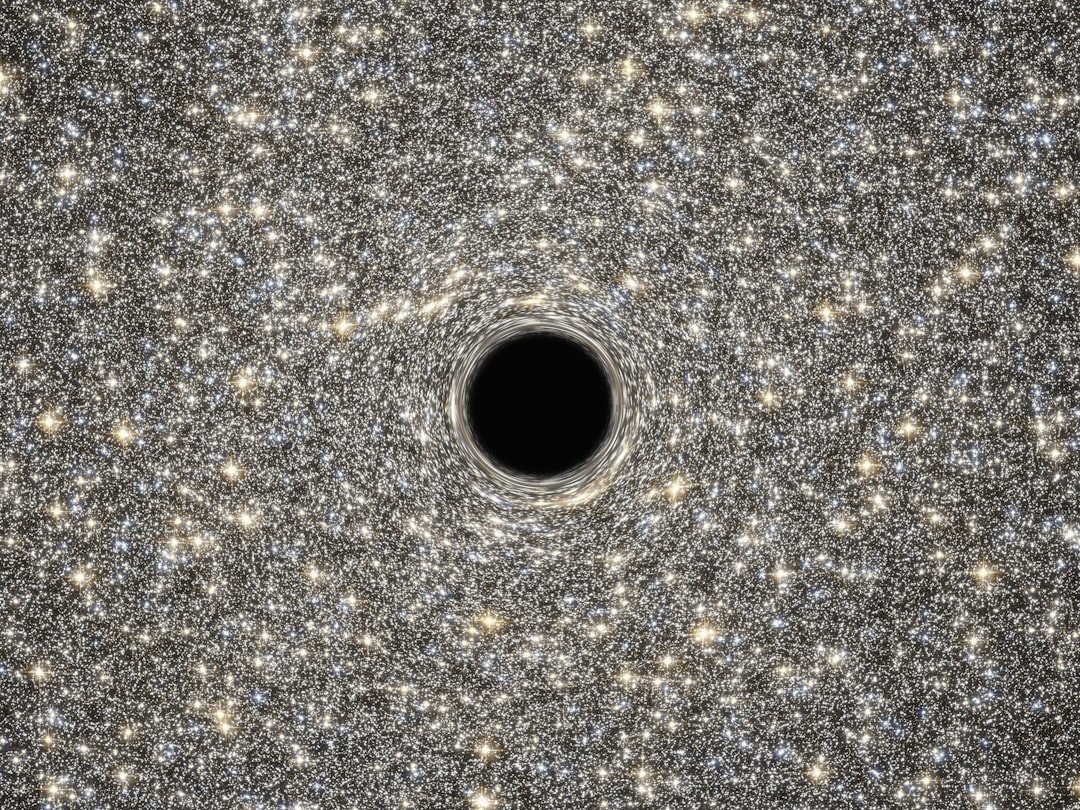
There is a question that surfaces at virtually every public astronomy talk, hovering at the intersection of curiosity and cosmic dread: What lies inside a black hole? The textbook reply is a singularity — cross the event horizon, and everything falls inexorably inward to a point of infinite density where our equations return nonsense. It isn't so much an answer as a confession that we have run out of physics. General relativity, our best description of gravity, simply breaks down. It hands us an infinity and walks away.
For decades, physicists have treated this breakdown as an uncomfortable but tolerable footnote — a problem deferred until a future theory of quantum gravity arrives to clean things up. But a new paper is proposing something far more provocative than a mathematical patch. It suggests the interior of a black hole could, under the right exotic conditions, contain something structured, stable, and physically real.
A Neutron Star Where No Star Should Be
Chen Tan and Yong-Qiang Wang from Lanzhou University have now published something that defies easy categorization. Their paper describes a gravitational configuration they call, with wonderful directness, a neutron star inside a black hole. Not a remnant, not a memory, but an intact, structured stellar object sitting serenely behind an event horizon — a place where, by conventional understanding, no stable structure should be able to persist.
To appreciate how radical this is, it helps to understand what a neutron star actually is. When a massive star exhausts its nuclear fuel and collapses, its core can be compressed to extraordinary densities. A neutron star packs roughly half a million Earth masses into a sphere approximately the width of Manhattan — around 20 kilometres across. At those densities, protons and electrons are crushed together to form neutrons, and the resulting object is essentially a single, city-sized atomic nucleus held up by neutron degeneracy pressure. In Tan and Wang's remarkable solution, one of these objects sits intact inside an event horizon, with its surface at 8.5 kilometres and the horizon beginning at just 10 kilometres out.
"The inside of a black hole need not be the end of physics. There is at least one solution in which it's a place — with something in it."
For further reading on the extreme physics of neutron stars, NASA provides an excellent overview of neutron star science and the observational missions dedicated to studying them.
The Foundation: Regular Black Holes and Dark Matter Halos
The solution builds on a concept that itself only recently entered serious theoretical discussion. Certain exotic forms of dark matter, arranged in a halo with a specific mathematical relationship between pressure and density — known as an equation of state — can produce black holes that contain no singularity at their centre. These are the so-called regular black holes, or non-singular black holes, where the curvature of spacetime remains finite and the equations of general relativity stay mathematically sensible all the way to the core.
The concept of regular black holes is not entirely new. Physicist James Bardeen proposed the first regular black hole solution as far back as 1968, though it lacked a compelling physical mechanism. Modern versions, powered by exotic matter fields or specific dark matter configurations, have revived the idea with more rigorous theoretical backing. Tan and Wang asked a pointed follow-up question: what happens if you place an ordinary neutron star at the centre of one of these dark matter halos?
To explore this, the researchers employed the Tolman–Oppenheimer–Volkoff (TOV) equations, the standard framework of stellar structure adapted for general relativity. These equations describe how pressure, density, and gravity balance inside a compact star. Applying them to a neutron star embedded within a dark matter halo, the team mapped out the range of possible outcomes.
Three Regimes — and One Stranger Than the Others
The results divide neatly into three distinct regimes depending on the density of the surrounding dark matter halo:
- Low halo density: Nothing dramatic occurs. The neutron star remains largely itself, slightly compressed by the additional gravitational influence of the surrounding dark matter cloud, but fundamentally unchanged. No horizon forms.
- High halo density: The combined gravitational pull overwhelms any stable configuration. The entire system collapses, and no equilibrium solution exists.
- Intermediate halo density: Something genuinely strange emerges in the space immediately outside the star. A shell forms — running from approximately 10 to 12 kilometres from the centre — within which the geometry of spacetime flips and takes on the character of a black hole interior. An event horizon forms, but crucially, one that closes over the star rather than being created by it. And inside this horizon, the neutron star simply carries on: regular, structured, and entirely non-singular.
This intermediate regime is the heart of the paper's contribution. The geometry of an event horizon is present, but the catastrophic physics usually associated with it — the singularity, the termination of all worldlines — is entirely absent. Spacetime curves dramatically, but it curves around something, not into nothing.
Dark Matter as the Architect
The crucial physical point is that nothing collapsed to create this configuration. The gravity responsible for forming the event horizon arises from the combined mass of the neutron star and the enveloping dark matter halo, with the dark matter contributing roughly as much mass as the star itself. This is a fundamentally different causal story than the one we tell about conventional black holes, where the horizon is a direct consequence of stellar collapse.
Dark matter remains one of the most compelling and vexing mysteries in modern astrophysics. Though it constitutes approximately 27% of the total mass-energy content of the universe, it has never been directly detected in a laboratory. Its existence is inferred through its gravitational effects on visible matter — from the rotation curves of galaxies to the gravitational lensing of distant light. The Bullet Cluster, produced by the violent collision of two galaxy clusters, provides one of the most striking visual demonstrations: the hot gas (visible matter) was slowed and separated from the dark matter component, which passed through largely unimpeded. The blue regions in X-ray and lensing maps of the Bullet Cluster represent the dark matter distribution — the very substance upon which Tan and Wang's entire solution depends, and which nobody has yet identified at the particle level.
To learn more about the ongoing search for dark matter, CERN offers a detailed primer on dark matter physics, including current experimental approaches. The ESA's Euclid space telescope is also actively mapping the large-scale distribution of dark matter across cosmic time.
Critically, the team obtained consistent results using two different equations of state for neutron star matter — two different theoretical descriptions of how matter behaves at nuclear densities. This internal consistency suggests the result is not an artefact of one particular assumption about neutron star physics, lending the solution a degree of robustness that one-off mathematical curiosities typically lack.
The Caveat That Must Be Stated Plainly
The authors are admirably candid about the limitations of their work, and those limitations deserve to be stated clearly here as well. The dark matter densities required by this configuration are far in excess of anything astronomers currently expect dark matter to reach in any realistic astrophysical environment. Even at the dense centres of galaxies, where dark matter halos are thought to be most concentrated, the required densities appear to be orders of magnitude beyond observational expectation.
This is therefore not a claim about objects lurking somewhere in the observable sky. It is more accurately described as a mathematical proof of concept — a demonstration that the equations of general relativity, combined with reasonable (if exotic) matter fields, permit a stable solution in which the interior of a black hole is genuinely a place rather than a singularity. The physics does not forbid it. The universe, as far as we currently know, simply may not arrange the necessary ingredients.
For context on how physicists approach the singularity problem more broadly, Stanford's Gravity Probe B project website provides accessible material on the nature of spacetime curvature and general relativity. The original theoretical paper by Tan and Wang can be consulted directly for full mathematical detail via the arXiv preprint server.
What This Means for Black Hole Physics
The broader significance of work like this extends well beyond the specific model. One of the most profound and unresolved tensions in theoretical physics is the clash between general relativity and quantum mechanics. General relativity predicts singularities; quantum mechanics abhors them, suggesting that some form of quantum gravity must intervene at the Planck scale to smooth out these infinities. But we have no confirmed theory of quantum gravity. In its absence, any classical (non-quantum) solution that eliminates singularities while remaining mathematically consistent is philosophically important.
It tells us that singularities are not logically necessary consequences of event horizons. They are consequences of specific matter configurations. Change the matter — even with something as speculative as a dense exotic dark matter halo — and the interior can look entirely different. That is not a trivial statement. It opens a conceptual door.
Furthermore, the question of whether compact objects with exotic interiors might be detectable remains live and scientifically active. Future gravitational wave observatories, building on the extraordinary success of LIGO and its detection of merging compact objects, may be sensitive to subtle signatures in the ringdown phase of a merger — the gravitational wave equivalent of a struck bell's fading tone — that could distinguish a true singularity-containing black hole from a more exotic compact object. Whether objects like those described by Tan and Wang would leave any such imprint remains a question for future theoretical work.
A Place, Not an End
The most enduring contribution of this paper may be purely conceptual. For a century, the interior of a black hole has functioned in physics as a kind of terminal boundary — a place where trajectories end, where physics falls silent, where the universe becomes unknowable. Tan and Wang's solution, however exotic its requirements, is a reminder that we should hold that assumption lightly.
Under the right conditions, the mathematics permits the inside of a black hole to be inhabited — by an object with a surface, a structure, and a future. The singularity problem is not yet solved. The nature of dark matter is not yet known. But the possibility space for what a black hole might contain has, with this paper, grown a little wider and a great deal more interesting.
The challenge remains what it has always been: to find, if they exist at all, the objects that match these extraordinary theoretical predictions. Somewhere in the universe, there may be a black hole that is not an ending but a container. Finding it would be among the most extraordinary discoveries in the history of science.