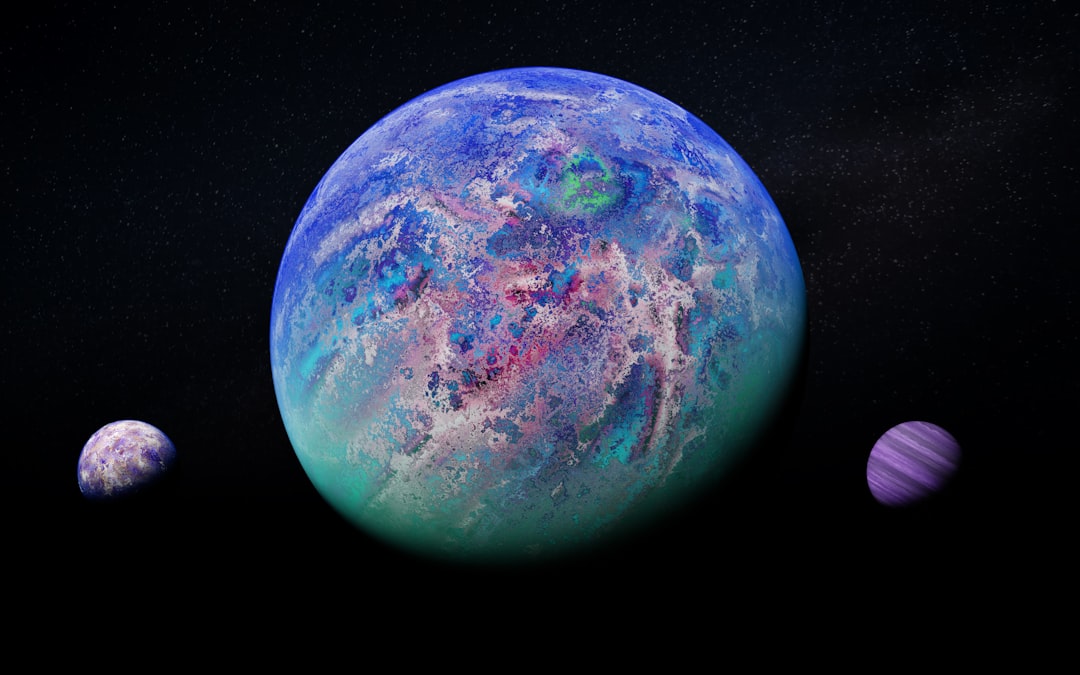
Every Snowflake Needs a Speck of Dust — and So Do Planets
In February 1969, months before Apollo 11 lifted off and humanity first set foot on another world, a blazing fireball streaked across the sky over the Mexican state of Chihuahua and scattered more than two tons of ancient rock across the northern desert. The Allende meteorite — named for the village nearest to its fall — is the largest primitive meteorite ever recovered on Earth. "Primitive," in cosmochemical terms, means essentially unaltered: a rock that has sat chemically unchanged since the Solar System was assembling itself some 4.5 billion years ago. It is, in many ways, as close to a fossil of the solar nebula as we are ever likely to recover without physically traveling there, and more than half a century after its dramatic arrival, scientists are still wringing extraordinary new discoveries from its ancient fragments.
The Allende meteorite belongs to a class known as carbonaceous chondrites — some of the most chemically pristine objects in the Solar System. These meteorites preserve a record of the conditions present in the protoplanetary disk that swirled around our nascent Sun, offering cosmochemists a window into the physical and chemical processes that governed the very birth of our planetary system. For researchers who study the origins of worlds, Allende is nothing short of irreplaceable.
The First Solids: Calcium-Aluminium-Rich Inclusions
The oldest known materials within the Allende meteorite — and indeed anywhere on Earth — are microscopic structures called calcium-aluminium-rich inclusions, or CAIs. These small, irregularly shaped white patches represent the very first solids known to have condensed out of the hot, swirling gas of the early Solar System. They are, quite literally, the first material to cease being vapour and begin being rock — predating the formation of asteroids, moons, continents, and the ground beneath your feet. Radiometric dating places their age at approximately 4.567 billion years, making them the oldest dated objects of Solar System origin.
"CAIs are the Rosetta Stone of planetary formation. They record the very first moments of solid matter condensing in our Solar System, carrying chemical fingerprints that no subsequent geological process has been able to erase."
CAIs formed in the innermost, hottest regions of the protoplanetary disk, where temperatures exceeded 1,400 degrees Celsius. These extreme conditions are precisely why the tiny structures are so scientifically puzzling — and why a new discovery concerning them has sent ripples of excitement through the cosmochemistry community.
Learn more about meteorites and their scientific significance at NASA
Stardust Older Than the Sun
Since the 1980s, researchers have known that primitive meteorites contain grains of material that are older still than the Solar System itself — genuine presolar grains. These are nanoscale minerals, including nano-diamonds, silicon carbide, and graphite, whose isotopic compositions are so dramatically unlike anything produced within our Solar System that the only credible explanation is that they formed around other stars — stars that lived and died before our Sun ever ignited. This is, without exaggeration, genuine stardust: material forged in the nuclear furnaces and explosive deaths of ancient stellar ancestors, drifting through the interstellar medium for eons before becoming incorporated into our own solar nebula.
Presolar grains carry isotopic ratios that bear the unmistakable signatures of specific stellar processes — the s-process and r-process nucleosynthesis pathways, asymptotic giant branch (AGB) star winds, and supernova explosions. They are, in essence, messengers from stars that no longer exist, carrying chemical fingerprints that no Solar System process could have produced.
For decades, however, these ancient grains had been found exclusively in the cool, carbon-rich matrix of primitive meteorites — the fine-grained, low-temperature material that fills the spaces between a meteorite's larger components. They had never been detected inside CAIs. This made a kind of intuitive sense: CAIs formed in the hottest regions of the early Solar System, where temperatures were more than sufficient to vaporise and destroy any such delicate, pre-existing grains. Their survival there seemed thermodynamically impossible.
Explore NASA's Presolar Grain Database at the Johnson Space Center
A Discovery That Rewrites the Story of Planetary Formation
Now, a team of researchers has upended that assumption in a finding with profound implications for our understanding of how planets form. Ren Marquez and François Tissot at the California Institute of Technology (Caltech), working alongside Bruce Charlier at Victoria University of Wellington, have detected presolar grains inside CAIs — and they argue these grains did far more than merely survive against the odds. Their research, published in a landmark new study, proposes that the ancient stardust served as nucleation seeds: the microscopic surfaces upon which the very first solid materials in the Solar System crystallised.
The concept of nucleation will be familiar to anyone who has watched a snowflake form, or noticed bubbles clinging to the side of a glass. In physical chemistry, nucleation is the process by which a new phase — a solid crystal, a liquid droplet — begins to form within a uniform medium. The critical insight is that nucleation is almost always easier when there is a pre-existing surface to grow upon. Homogeneous nucleation — where a solid crystallises spontaneously from a pure gas with no surface to assist it — is thermodynamically challenging and typically requires conditions far more extreme than heterogeneous nucleation, where a surface lowers the energetic barrier to crystal growth.
"Nucleation is very difficult without a surface to grow on. Without something to disrupt an otherwise uniform mix of gases, minerals should have taken a long time to condense as the Solar System cooled. The stardust solves a problem cosmochemists hadn't properly addressed." — François Tissot, Caltech
In other words: the first solid matter in the Solar System may not have bootstrapped itself into existence from pure gas. Instead, it may have crystallised upon a scaffold of ancient stardust — grains that had voyaged across interstellar space, survived the violence of solar nebula formation, and quietly seeded the condensation of an entirely new planetary system.
- CAIs are dated to approximately 4.567 billion years ago, making them the oldest known Solar System solids.
- Presolar grains within meteorites predate the Solar System itself and carry isotopic signatures of other stars.
- These grains were previously thought to be destroyed in the high-temperature environments where CAIs formed.
- The new research suggests stardust grains survived and acted as nucleation surfaces for the first Solar System minerals.
- This mechanism — heterogeneous nucleation — may help resolve longstanding puzzles about how rapidly and efficiently the earliest solids condensed.
Read ESA's overview of Solar System formation and early planetary history
The Cosmic Narrative: From Dying Star to Living World
The picture that emerges from this research is one of extraordinary cosmic continuity. Somewhere in the Milky Way, billions of years before our Sun was born, a star lived out its life and died — perhaps in the slow, luminous exhalation of an asymptotic giant branch star, or perhaps in the cataclysmic violence of a supernova. In its death, it scattered dust. Some of that dust drifted through the interstellar medium, eventually falling into the cold molecular cloud that would collapse to form our Sun and its surrounding protoplanetary disk.
Within that disk, temperatures were extreme near the center — hot enough to vaporise most material. Yet some of those ancient interstellar grains endured, perhaps sheltered by local density variations or rapid incorporation into condensing regions. And when the disk began to cool, those survivor grains became the seeds around which the Solar System's first solids crystallised — the nucleation sites for the CAIs that would eventually be preserved inside the Allende meteorite, and recovered by a team of scientists in the Mexican desert five billion years later.
It is a narrative that connects stellar evolution, interstellar chemistry, protoplanetary disk physics, and meteorite science into a single, elegant chain. Every planet, moon, and human being in the Solar System is, in some sense, a downstream consequence of a star that died before our story even began.
View the Meteoritical Bulletin entry for the Allende meteorite at the Lunar and Planetary Institute
Analytical Innovation: From Meteorites to Medicine
There is a compelling coda to this story that deserves particular attention. The analytical techniques developed by Ren Marquez to detect and characterise these vanishingly small presolar grains within CAIs — working at scales and sensitivities that push the boundaries of modern isotope ratio mass spectrometry — are not remaining confined to the laboratory of cosmochemistry. The same methodological innovations are now being applied to biological samples, including blood and tissue, with an active project underway to improve the detection and monitoring of osteoporosis.
This kind of cross-disciplinary technological transfer — where instrumentation and methods developed for the most abstract of scientific questions end up serving urgent medical needs — is one of the most quietly powerful arguments for fundamental research. The path from interstellar dust to bone density diagnostics is not an obvious one, but science rarely advances along obvious paths.
As Tissot's grandfather apparently used to say:
"We didn't discover electricity by studying the candle."
The study of the night sky has always returned unexpected dividends to life on the ground. The technologies developed for space observation have given us everything from MRI imaging to digital cameras to water purification systems. The analytical chemistry of meteorites, it now seems, may add improved osteoporosis diagnostics to that illustrious list. The stars, it turns out, have more to teach us about ourselves than we might ever have anticipated.
Follow the latest research news from the California Institute of Technology
Implications for Planet Formation Science
Beyond the immediate findings, this research opens significant new questions for the field of planetary science and cosmochemistry. If presolar grains served as nucleation seeds for the earliest CAIs, the efficiency and timescale of solid condensation in the protoplanetary disk may need to be substantially revised. Models of disk chemistry and dust coagulation — the processes by which microscopic grains grow into pebbles, pebbles into planetesimals, and planetesimals into planets — may all be affected by this new understanding of how the very first step in that chain occurred.
It also raises tantalising questions about the universality of the process. If stardust seeded planetary formation in our Solar System, the same mechanism may operate around other stars — potentially influencing the diversity of planetary systems we observe throughout the galaxy. In this sense, the humble Allende meteorite, lying in a Mexican desert for a few months in 1969 before human hands reached it, may have just informed our understanding of planet formation across the cosmos.
The Solar System's origin story, it seems, begins not with the Sun, but with the death of another star entirely — and with the dust it left behind, drifting patiently through the dark, waiting to seed a new world.