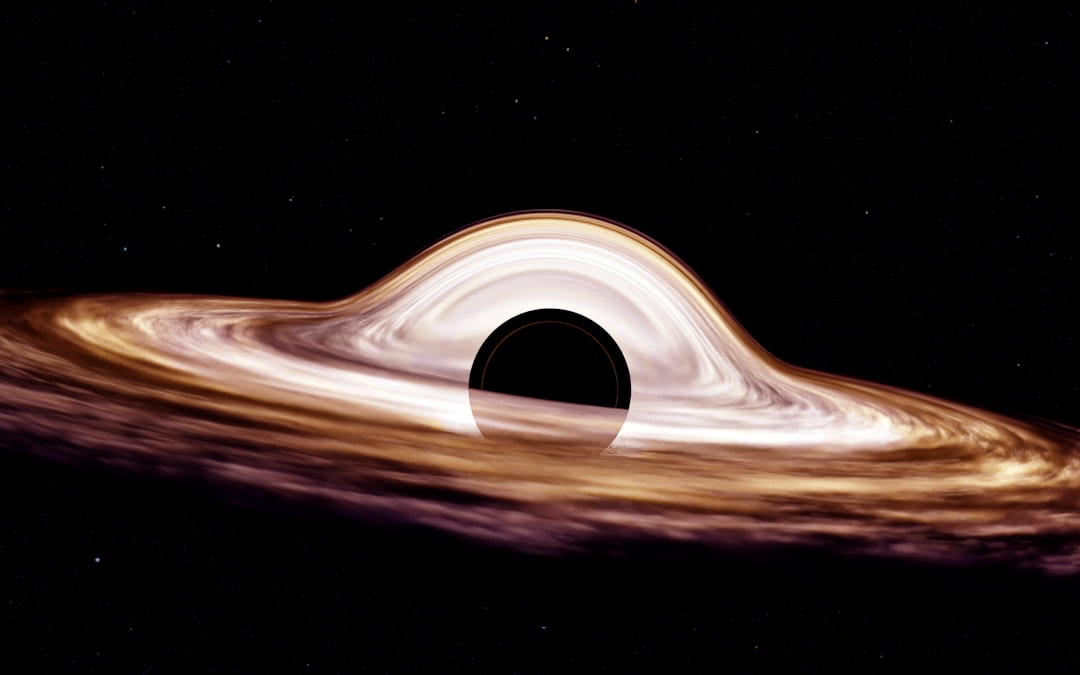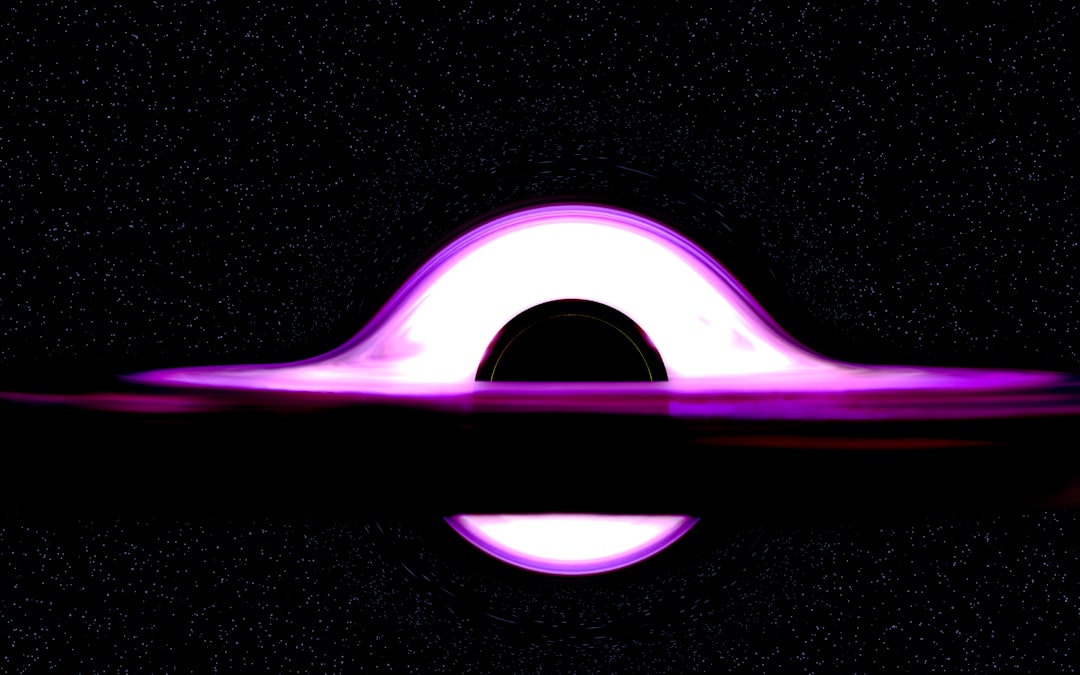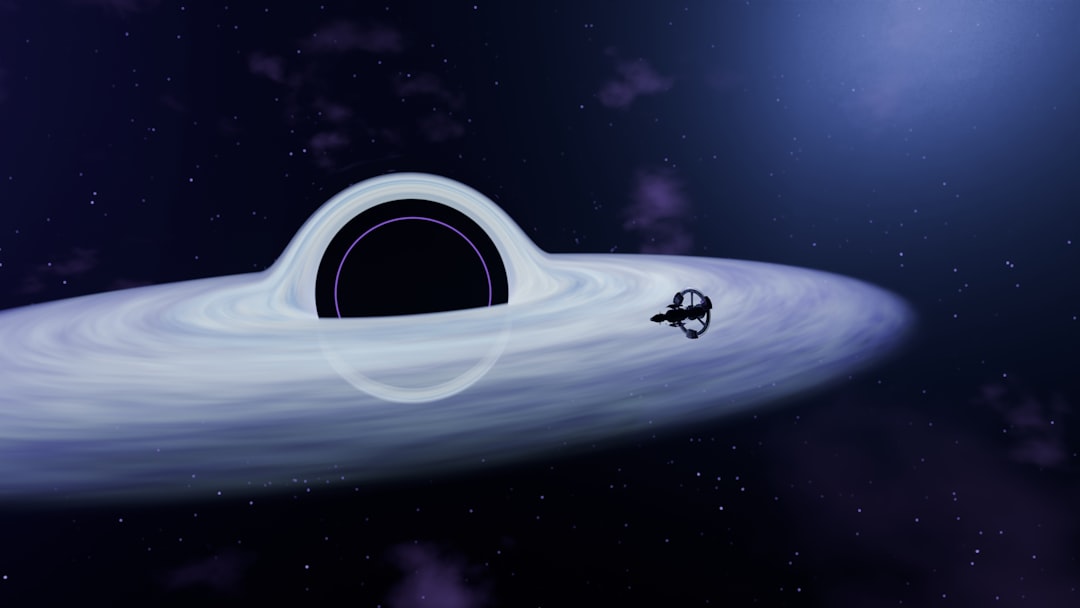
In a revelation that challenges our fundamental understanding of cosmic phenomena, black holes possess temperature—not merely the scorching plasma spiraling around them, but the gravitational singularities themselves emit thermal radiation. This counterintuitive discovery, pioneered by the legendary physicist Stephen Hawking in the 1970s, has evolved into something even more profound: black holes can undergo phase transitions, similar to water transforming into steam or ice crystallizing from liquid. Now, cutting-edge research is revealing that the mathematical framework of topology—the study of shapes and their invariant properties—holds the key to understanding these cosmic behemoths in ways previously unimaginable.
The implications extend far beyond academic curiosity. By applying topological mathematics to black hole thermodynamics, physicists are uncovering universal patterns that persist regardless of a black hole's specific characteristics. This approach, detailed in recent studies and supported by institutions like NASA's Black Hole Research Initiative, represents a paradigm shift in how we conceptualize these enigmatic objects. Rather than viewing black holes as isolated astronomical curiosities, we're beginning to understand them as thermodynamic systems governed by the same deep mathematical principles that describe phase transitions in everyday matter.
Hawking Radiation and the Thermodynamic Revolution
When Stephen Hawking first proposed that black holes emit thermal radiation in 1974, the scientific community was stunned. The concept seemed paradoxical: how could an object from which nothing escapes—not even light—radiate energy? The answer lies in quantum mechanics operating at the event horizon, the boundary beyond which escape becomes impossible. According to Hawking's theoretical framework, particle-antiparticle pairs spontaneously form near the event horizon due to quantum fluctuations. Occasionally, one particle falls into the black hole while its partner escapes, creating the appearance of radiation emanating from the black hole itself.
This Hawking radiation gives black holes a temperature inversely proportional to their mass—supermassive black holes are incredibly cold, while microscopic black holes would be blazingly hot. More importantly, if black holes have temperature, they must also possess entropy, a measure of disorder. The legendary physicist Jacob Bekenstein had already proposed that black hole entropy is proportional to the surface area of the event horizon, not its volume—a property that continues to puzzle physicists and hints at the holographic nature of reality itself.
"The discovery that black holes have thermodynamic properties comparable to ordinary matter fundamentally transformed our understanding of gravitational physics and opened the door to studying these objects through entirely new mathematical frameworks," notes research published in the journal Physical Review Letters.
Topology: The Mathematics of Unchanging Form
To understand how topology applies to black holes, we must first grasp what makes this branch of mathematics unique. Unlike traditional geometry, which concerns itself with precise measurements—angles, distances, areas—topology focuses on properties that remain unchanged under continuous deformations. Imagine a rubber sheet: you can stretch it, twist it, or compress it, but you cannot tear it or glue edges together without fundamentally altering its topological character.
The classic example illustrates this beautifully: a coffee mug and a doughnut are topologically equivalent because both possess exactly one hole. You could theoretically deform a clay doughnut into a coffee mug without tearing or creating new holes—the handle of the mug corresponds to the hole in the doughnut. Similarly, a sphere and a cube are topologically identical because neither has holes, and you could smoothly deform one into the other. This focus on invariant properties rather than specific measurements makes topology particularly powerful for identifying fundamental characteristics that persist across different physical conditions.
Modern topology employs sophisticated mathematical tools, including differential forms and topological invariants, which assign numbers to spaces that capture their essential structure. These invariants remain constant regardless of smooth transformations, making them ideal for identifying deep, universal properties of physical systems. Researchers at the Institute for Advanced Study have been pioneering applications of topology to theoretical physics for decades.
Mapping the Thermodynamic Landscape of Black Holes
The application of topology to black holes begins with constructing a thermodynamic landscape—a mathematical space where each point represents a possible state of the black hole characterized by its temperature, pressure, entropy, and volume. Within this abstract landscape, physicists search for special points called topological defects or zeros, where the mathematical description essentially breaks down. These aren't errors in the calculation; rather, they're fundamental features analogous to the eye of a hurricane, where the usual patterns of flow cannot be maintained.
Around each of these special points, researchers analyze how mathematical fields "wind" or "wrap." This winding behavior can be quantified by assigning a topological charge—an integer that captures how many times the field wraps around the defect. Think of it like counting how many times a spiral staircase completes a full rotation as you ascend: the number of complete turns is a topological property that doesn't change if you make the stairs wider or narrower.
The revolutionary insight comes from summing all these individual topological charges across the entire thermodynamic landscape. The result is a single number—a global topological invariant—that serves as a fingerprint for the black hole's thermodynamic behavior. This number reveals which phase transitions are possible, which states are stable, and how the black hole responds to changes in its environment.
Distinguishing Black Hole Species Through Topology
Different types of black holes possess distinct topological signatures. A Schwarzschild black hole—the simplest variety, characterized by mass alone with no electric charge or rotation—occupies one topological class. Add electric charge, and you obtain a Reissner-Nordström black hole, which belongs to an entirely different topological category. Introduce rotation, and you enter the realm of Kerr black holes, which possess yet another topological fingerprint.
These distinctions aren't mere mathematical abstractions. The topological class determines:
- Stability properties: Whether a black hole configuration remains stable under small perturbations or tends to evolve toward a different state
- Phase transition pathways: Which transformations between different thermodynamic phases are physically accessible and which are forbidden
- Critical behavior: How the black hole behaves near critical points where phase transitions occur, analogous to the critical point of water where liquid and gas become indistinguishable
- Hawking radiation spectrum: The detailed characteristics of the thermal radiation emitted by the black hole
Robustness and Universality: Why Topology Matters
What makes the topological approach genuinely groundbreaking is its robustness—the property that small changes in parameters don't alter the fundamental classification. You can modify a black hole's mass, spin it faster or slower, or adjust its electric charge, and as long as these changes don't cross certain critical thresholds, the topological invariant remains unchanged. This universality suggests that topology captures something profoundly fundamental about black hole physics, something that transcends the specific details of any individual black hole.
This robustness mirrors similar phenomena in condensed matter physics, where topological properties govern the behavior of exotic materials like topological insulators. In these materials, certain electronic properties remain unchanged despite impurities, defects, or temperature variations—precisely because they're protected by topology. The mathematical parallels between black holes and quantum materials, explored extensively by researchers at Perimeter Institute for Theoretical Physics, hint at deep connections between gravity and quantum mechanics.
Beyond Event Horizons: Topology of Light and Shadows
The topological framework extends beyond the black holes themselves to the observable phenomena surrounding them. Consider photon rings—the circular orbits where light can theoretically circle a black hole indefinitely before either escaping or falling in. These rings possess their own topological properties, which determine their stability and observational characteristics. The famous Event Horizon Telescope image of M87*, the first direct image of a black hole's shadow, captured features whose structure is intimately connected to these topological considerations.
Similarly, gravitational lensing—the bending of starlight passing near a black hole—exhibits topological structure. The patterns of multiple images produced when a black hole lenses a background star aren't random; they're constrained by topological rules that determine how many images can form and how they're arranged. This has practical implications for detecting black holes through their gravitational influence on background light sources.
The Quest for Quantum Gravity
Perhaps the most tantalizing prospect is that topological methods might help solve the greatest puzzle in theoretical physics: reconciling general relativity with quantum mechanics. These two pillars of modern physics describe reality with extraordinary precision in their respective domains—gravity and spacetime for relativity, the subatomic world for quantum mechanics—yet they remain fundamentally incompatible. Black holes exist precisely at the boundary where both theories are essential but neither suffices.
The thermodynamic properties of black holes, particularly the Bekenstein-Hawking entropy, provide crucial clues about quantum gravity. The fact that this entropy is proportional to area rather than volume suggests that the fundamental degrees of freedom of spacetime might be two-dimensional rather than three-dimensional—a hint toward holographic theories of gravity. Topology, by revealing universal structures that persist across different physical regimes, might help identify the mathematical framework that successfully merges these theories.
"Topological invariants provide a bridge between the classical geometry of general relativity and the quantum mechanical description of matter and energy. Understanding black holes through this lens may ultimately reveal the deep structure of spacetime itself," explains research from the Max Planck Institute for Gravitational Physics.
Future Directions and Observational Tests
While much of this work remains theoretical, observational astronomy is beginning to provide tests of these ideas. The LIGO and Virgo gravitational wave detectors have observed dozens of black hole mergers, and the detailed waveforms from these cosmic collisions encode information about the black holes' properties. As detectors become more sensitive, they may be able to distinguish between black holes of different topological classes based on subtle features in the gravitational wave signals.
Future space-based observatories, including the proposed Laser Interferometer Space Antenna (LISA), will detect gravitational waves from supermassive black hole mergers with unprecedented precision. The thermodynamic properties revealed through topological analysis predict specific signatures in these waveforms—predictions that upcoming observations will test.
Moreover, the next generation of Event Horizon Telescope observations, with improved resolution and sensitivity, will image black hole shadows in greater detail. The fine structure of these shadows, including the photon ring features, depends on the topological properties of the spacetime geometry. Comparing theoretical predictions from topological analysis with high-resolution observations will provide crucial empirical validation of these mathematical frameworks.
The convergence of topology, thermodynamics, and black hole physics represents more than an elegant mathematical exercise. It suggests that the shape of the mathematics—the deep topological structure underlying physical law—may be the key to understanding the universe's most extreme objects and, ultimately, the nature of spacetime itself. As we continue to probe these cosmic laboratories where gravity reaches its zenith, topology may guide us toward the long-sought theory of quantum gravity, revealing that the fundamental language of the cosmos is written not in equations alone, but in the invariant shapes that persist across all transformations.