In the palm of your hand, a scoop of garden soil tells a story of endless transformation—minerals crushed, melted, and reformed through billions of years of geological violence. Earth's restless tectonic engine has erased nearly all evidence of our planet's earliest chapters, grinding ancient rocks into oblivion through subduction, erosion, and volcanic rebirth. For scientists seeking to understand the conditions that existed when life first emerged approximately 3.5 billion years ago, our own planet has become an unreliable witness to its own history.
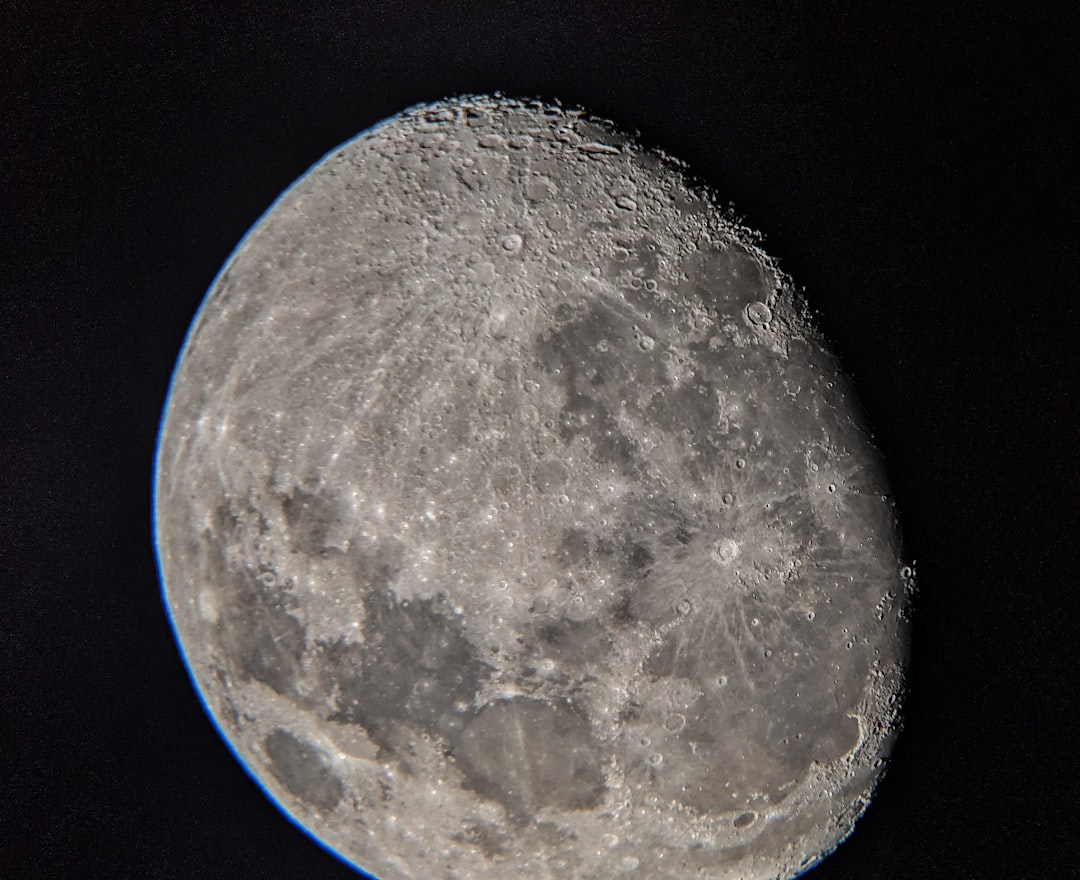
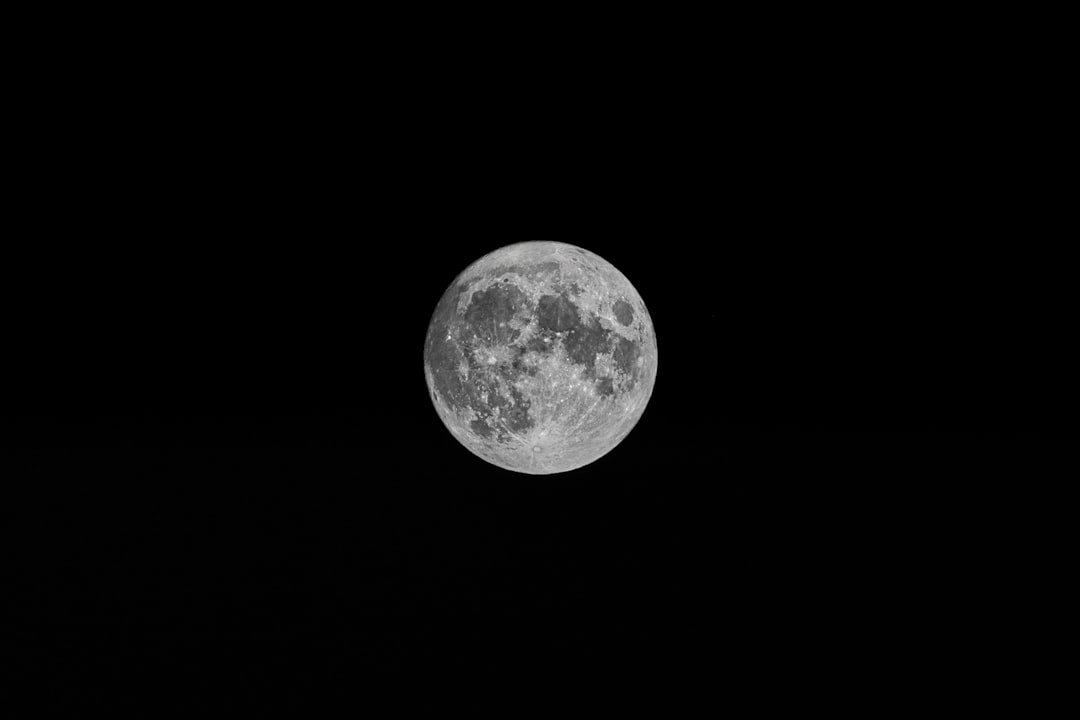
The solution to this cosmic detective story lies not on Earth, but on our nearest celestial neighbor. The Moon, sharing Earth's orbital neighborhood and bombardment history, has preserved what our planet could not. Without atmospheric weathering, flowing water, or plate tectonics to erase the geological record, lunar rocks serve as an ancient archive of the inner Solar System's violent past. This preservation has made a seemingly ordinary meteorite discovered in northwest Africa into an extraordinary scientific treasure.
A Meteorite's Journey From Moon to Earth
Catalogued as NWA 12593, this unassuming rock fragment began its existence on the lunar surface before a powerful collision ejected it into space. After drifting through the void for potentially millions of years, it eventually succumbed to Earth's gravitational pull and fell to the surface in northwest Africa, where meteorite hunters recovered it. Researchers at the University of Colorado Boulder recognized its lunar origin and subjected it to intensive analysis, uncovering a remarkable geological narrative preserved within its crystalline structure.
What makes this particular specimen exceptional is its layered history. The meteorite contains mineralogical evidence of three distinct impact events, each recorded like chapters in a stone diary. Through advanced dating techniques and microscopic analysis, scientists have decoded these ancient signatures, revealing a timeline of cosmic violence that spans billions of years and connects multiple worlds across the inner Solar System.
The Catastrophic Impact of 3.5 Billion Years Ago
The oldest and most scientifically significant impact occurred approximately 3.5 billion years ago, during a period known as the Late Heavy Bombardment—a controversial but widely discussed epoch when the inner Solar System may have experienced an intense spike in asteroid and comet impacts. The energy released by this ancient collision was so immense that it transformed the surrounding lunar surface into a molten sea of liquid rock, with temperatures soaring to levels that fundamentally altered the mineral composition of the material.
Among the most compelling evidence discovered in NWA 12593 is the presence of cubic zirconia, a mineral familiar to jewelry enthusiasts but extraordinarily rare in natural geological settings. Unlike its synthetic counterpart, naturally occurring cubic zirconia forms only under conditions of extreme heat and pressure—specifically, temperatures exceeding 2,300 degrees Celsius (4,172 degrees Fahrenheit). According to research published in AGU's Earth and Space Science, this mineral is notoriously unstable at lower temperatures and typically degrades over geological timescales, making its preservation in this meteorite a remarkable fingerprint of catastrophic impact conditions.
"Finding preserved cubic zirconia in a lunar meteorite is like discovering a photograph from Earth's earliest days. It tells us not just that a massive impact occurred, but provides quantitative data about the temperatures and conditions present during that ancient event," explains Dr. Aaron Cavosie, co-author of the study.
The Formation of Lunar Breccia
Following the initial cataclysmic impact, the molten rock eventually cooled and solidified into a coherent melt sheet. However, the Moon's violent history was far from over. A second, smaller impact event struck the same region, shattering the solidified melt sheet into countless fragments. The energy from this subsequent collision was sufficient to fuse these broken pieces back together, creating what geologists classify as a breccia—essentially a natural concrete composed of angular rock fragments welded together by impact-generated heat and pressure.
This brecciated material represents a geological palimpsest, where multiple episodes of destruction and reformation are preserved in a single rock sample. The meteorite that eventually reached Earth is itself this ancient breccia, launched into space by a third, much more recent impact event that served merely as a cosmic delivery mechanism, sending this invaluable scientific specimen on its trajectory toward our planet.
A Solar System-Wide Bombardment Event
The temporal coincidence of the 3.5-billion-year-old impact signature has profound implications that extend far beyond lunar geology. Researchers have identified contemporaneous impact evidence from the same time period on Earth and on 4 Vesta, one of the largest objects in the asteroid belt between Mars and Jupiter. This convergence of evidence from three separate bodies within a single study represents a rare and scientifically significant finding.
The synchronicity suggests a coordinated bombardment event that affected multiple worlds simultaneously. The most plausible explanation involves the catastrophic breakup of a large asteroid or a dynamical event that destabilized a population of objects in the asteroid belt, sending a cascade of debris throughout the inner Solar System. This interpretation aligns with models of early Solar System evolution that predict periods of enhanced impact activity as planetary orbits stabilized and cleared their neighborhoods of remaining primordial material.
Key Scientific Findings
- Triple Impact Record: NWA 12593 preserves evidence of three distinct impact events spanning billions of years, providing a unique multi-layered geological archive
- Extreme Temperature Evidence: The presence of naturally formed cubic zirconia indicates surface temperatures exceeded 2,300°C during the ancient impact event
- Cross-Body Correlation: The 3.5-billion-year impact signature appears on the Moon, Earth, and 4 Vesta, suggesting a Solar System-wide bombardment episode
- Temporal Precision: Advanced radiometric dating techniques have constrained the timing of the primary impact to within approximately 50 million years
- Preservation Anomaly: The survival of fragile cubic zirconia over 3.5 billion years represents an exceptional case of mineral preservation under lunar conditions
Implications for the Origin of Life on Earth
Perhaps the most tantalizing aspect of this discovery relates to its timing. The 3.5-billion-year mark represents a critical juncture in Earth's biological history—the period when the earliest evidence of life appears in the geological record. Stromatolites and microfossils from this era, found in ancient rock formations in Australia and South Africa, represent the oldest confirmed biological structures on our planet.
The relationship between this intense bombardment period and the emergence of life remains one of astrobiology's most debated questions. On one hand, massive impacts would have sterilized large portions of Earth's surface, potentially destroying any nascent biological systems. The energy released could have vaporized oceans and created global firestorms. However, NASA's analysis of Apollo samples and subsequent research suggests impacts might have simultaneously delivered essential organic compounds and created hydrothermal systems that could serve as cradles for early life.
According to recent studies published in Nature Geoscience, impact events create transient habitable environments in their aftermath. The heat and fracturing of rocks can establish subsurface hydrothermal circulation systems that persist for thousands to millions of years—precisely the type of environment where some scientists believe life may have originated.
Methodological Advances in Lunar Sample Analysis
The identification of these ancient impact signatures required cutting-edge analytical techniques. Researchers employed secondary ion mass spectrometry (SIMS) to measure isotopic ratios within individual mineral grains, allowing them to determine precise formation ages. Electron microscopy revealed the microscopic textures that distinguish impact-generated minerals from those formed through other geological processes.
The team also utilized cathodoluminescence imaging, a technique that causes certain minerals to emit light when bombarded with electrons, revealing internal structures invisible through conventional microscopy. This approach proved crucial in identifying the cubic zirconia crystals and understanding their formation context within the broader rock matrix.
Future Research Directions and Lunar Exploration
This discovery underscores the scientific value of lunar samples, both those already in terrestrial laboratories and those awaiting collection through future missions. NASA's Artemis program, which aims to return humans to the Moon by the mid-2020s, will provide opportunities to collect samples from previously unexplored regions, potentially revealing additional evidence of ancient bombardment events and early Solar System history.
The research team emphasizes that NWA 12593 likely represents just one example of many lunar meteorites containing similar records. Systematic analysis of the growing collection of lunar meteorites in museums and research institutions worldwide could reveal a more complete picture of the impact chronology and help resolve ongoing debates about the intensity and timing of bombardment events in the early Solar System.
Understanding these ancient impacts has implications beyond historical curiosity. As humanity contemplates establishing permanent lunar bases, knowledge of the Moon's impact history informs risk assessments for future settlements. While the current impact rate is much lower than during the Late Heavy Bombardment, even small meteorites can pose significant hazards to surface infrastructure and astronauts.
The story preserved in this small meteorite fragment connects deep time with the present, linking the violent birth pangs of the Solar System to the emergence of life on Earth and our future as a spacefaring species. Each mineral grain serves as a time capsule, carrying information across billions of years—information that would have been erased long ago on our geologically active planet. In looking to the Moon, we see not just our past, but gain insights essential for understanding our place in the cosmic story and planning our future among the stars.