For those fortunate enough to witness the celestial ballet of the aurora borealis, the experience transcends mere observation—it becomes an indelible memory etched into consciousness. These luminous displays begin as delicate, shimmering curtains of light draped across the polar skies, but within moments, they can transform into something far more spectacular: violent eruptions of emerald and crimson that pulse and writhe across the heavens. These dramatic intensifications, known scientifically as magnetospheric substorms, represent Earth's most powerful demonstrations of atmospheric electrical phenomena, and researchers at the University of Southampton have just discovered a crucial radio signature that predicts their arrival.
The breakthrough centers on identifying a distinctive radio emission pattern that emerges precisely when these auroral storms begin their spectacular transformation. This discovery, which synthesizes data from ground-based observatories, imaging satellites, and spacecraft-mounted radio antennae, may finally unlock the longstanding mystery of what triggers Earth's most dramatic light shows. The implications extend far beyond our planet, potentially revealing universal mechanisms that govern auroral phenomena throughout our solar system and beyond.
Decoding the Auroral Warning System: The Mystery of Luminous Beads
Before a magnetospheric substorm erupts in full fury, the aurora almost invariably displays a curious phenomenon that has intrigued observers for decades. Known as auroral beads, these structures appear as a necklace-like pattern of multiple luminous points distributed along the auroral arc, resembling pearls carefully strung on an invisible thread. This beaded configuration serves as nature's warning system—a prelude to the impending storm that will soon engulf the sky in waves of intensified light.
The formation of these beads represents more than just a visual curiosity; they're a window into the complex electromagnetic processes occurring in the magnetosphere, the protective magnetic bubble that surrounds our planet. Understanding what creates these beads and how they trigger the subsequent energy release has been a central challenge in space physics for generations. The Southampton team's research, led by Dr. Siyuan Wu, has brought scientists closer than ever to answering these fundamental questions by examining a previously overlooked radio signature associated with these structures.
The Multi-Instrument Detective Work: Piecing Together the Radio Puzzle
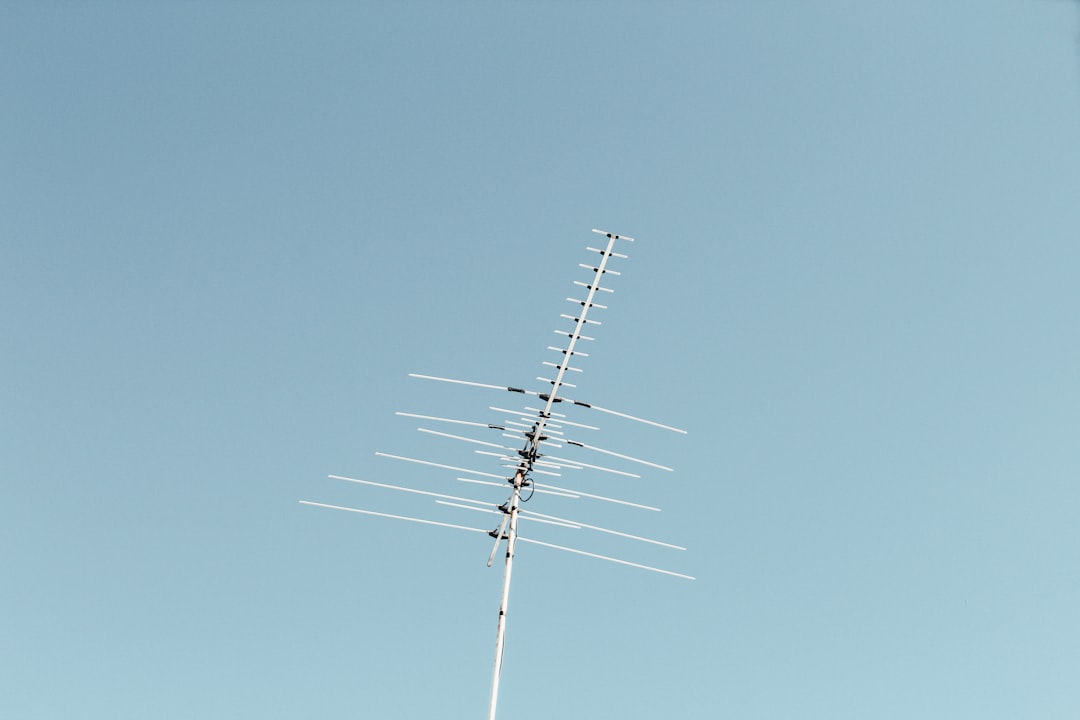
The research team employed a comprehensive multi-platform approach, integrating observations from diverse sources across the electromagnetic spectrum. Ground-based observatories in Finnish Lapland provided high-resolution optical imaging of the auroral displays, capturing the precise moment when beads form and substorms begin. Simultaneously, imaging satellites monitored the broader magnetospheric context, while specialized radio antennae aboard spacecraft—including NASA's Polar mission and Japan's Arase satellite—detected the crucial radio emissions emanating from near-Earth space.
The focus of this investigation was auroral kilometric radiation (AKR), naturally occurring radio waves generated in the magnetosphere directly above auroral regions. These emissions, which occur at frequencies ranging from approximately 50 to 500 kilohertz, provide a direct probe of the electromagnetic environment where auroral particles are accelerated toward Earth's atmosphere. By examining the fine structure within these radio emissions, researchers could identify the formation of small-scale electric potential structures aligned along magnetic field lines that connect the magnetosphere to the atmospheric regions where aurora appear.
"Auroral substorms are caused by the accumulation and then release of magnetic energy stored in Earth's magnetosphere during its interaction with the solar wind flow. However, what exactly triggers this energy to suddenly unload in spectacular fashion isn't fully understood," explains Dr. Daniel Whiter from the University of Southampton.
The Breakthrough Discovery: A Radio Signature That Reveals Hidden Physics
The Southampton team's analysis revealed a striking correlation: at the precise moment when auroral beads become visible to ground observers, a distinct burst emerges in the auroral kilometric radiation. This radio signature isn't a random fluctuation or coincidental timing—it intensifies dramatically at the onset of the substorm, providing direct evidence of a fundamental physical process at work in the magnetosphere.
Dr. Wu's detailed analysis showed that the fine structures visible in these emissions reveal the formation of small-scale electric potential structures along magnetic field lines connected to the auroral beads. The periodicity and propagation speed of these structures showed remarkable consistency across multiple independent datasets, suggesting a universal mechanism rather than localized or random phenomena. This consistency across different instruments, locations, and substorm events strengthens the case that scientists have identified a genuine predictive signal.
Understanding Magnetospheric Substorms: The Physics Behind the Light Show
To fully appreciate this discovery's significance, it's essential to understand the complex physics underlying magnetospheric substorms. Earth's magnetosphere constantly interacts with the solar wind—the stream of charged particles continuously flowing from the Sun. During this interaction, magnetic energy accumulates in the magnetotail, the elongated portion of Earth's magnetic field stretched away from the Sun by the solar wind's pressure.
This energy storage process can continue for hours, with magnetic field lines in the magnetotail becoming increasingly stretched and stressed. Eventually, the system reaches an unstable configuration, and the stored energy is suddenly released in a process called magnetic reconnection. This release accelerates particles toward Earth, where they collide with atmospheric gases and create the brilliant auroral displays. However, the specific trigger mechanism that initiates this sudden energy release has remained elusive—until now.
The newly identified radio signature suggests that the formation of small-scale electric potential structures along magnetic field lines may be the critical trigger. These structures, revealed through their characteristic radio emissions, appear to destabilize the magnetospheric configuration, initiating the cascade of events that leads to the full substorm eruption. This represents a significant advance in our understanding of space weather and the coupling between the magnetosphere and ionosphere.
Key Research Findings and Their Implications
- Predictive Radio Signal: The identification of a distinctive burst in auroral kilometric radiation that appears precisely when auroral beads form provides a potential early warning system for substorm onset, with applications for space weather forecasting and satellite operations.
- Small-Scale Electric Structures: The fine structure analysis revealed the formation of electric potential structures along magnetic field lines, suggesting these structures play a crucial role in triggering the energy release that powers substorms.
- Cross-Platform Consistency: The remarkable agreement between ground-based optical observations, satellite imaging, and spacecraft radio measurements demonstrates the robustness of the findings and rules out instrumental artifacts.
- Universal Mechanism: The physical processes identified may operate not only in Earth's magnetosphere but also in the magnetospheres of other planets, including the gas giants Jupiter and Saturn, which host their own spectacular auroral displays studied by missions like NASA's Juno spacecraft.
- Temporal Precision: The tight temporal correlation between the radio signature and visible auroral changes allows researchers to pinpoint the exact moment when the magnetosphere transitions from a stable to unstable configuration.
Beyond Earth: Implications for Planetary Magnetospheres
The Southampton team's findings have profound implications that extend far beyond our home planet. Both Jupiter and Saturn generate powerful auroral displays, driven by their own magnetospheric dynamics. Jupiter's aurora, in particular, are among the most powerful in the solar system, powered by the planet's rapid rotation and interactions with volcanic gases from its moon Io. Understanding the fundamental physics driving Earth's substorms may illuminate similar processes in these alien magnetospheres.
Recent observations from the Cassini-Huygens mission at Saturn and ongoing measurements by Juno at Jupiter have revealed complex auroral phenomena that share some characteristics with Earth's substorms. The radio signature identified in this research could provide a new diagnostic tool for understanding energy release mechanisms in these distant magnetospheres, where direct measurements are far more challenging to obtain.
Future Research Directions and Unanswered Questions
While this discovery represents a major step forward, significant questions remain. The exact mechanism by which the small-scale electric potential structures trigger the large-scale energy release is still not fully understood. Researchers need to determine whether these structures directly initiate magnetic reconnection or whether they represent a symptom of an underlying instability that drives both the structures and the subsequent substorm.
Future missions equipped with more sensitive radio instruments and coordinated multi-point measurements will be essential for answering these questions. The upcoming NASA HelioSwarm mission, designed to study turbulence and energy transfer in the solar wind and magnetosphere, may provide crucial data for testing theoretical models of substorm triggering mechanisms.
Practical Applications: From Science to Space Weather Forecasting
Beyond its scientific significance, this discovery has practical applications for space weather forecasting. Magnetospheric substorms can pose risks to satellites, power grids, and communication systems. The ability to detect the radio signature that precedes substorm onset could provide valuable minutes of warning time, allowing operators to take protective measures for vulnerable systems.
As humanity becomes increasingly dependent on space-based infrastructure—from GPS navigation to satellite communications—understanding and predicting space weather events becomes ever more critical. The radio breadcrumb trail identified by the Southampton team offers a promising new tool for operational space weather forecasting, potentially reducing the economic and operational impacts of these powerful magnetospheric storms.
This research exemplifies how patient, detailed scientific investigation can unlock nature's secrets. By combining observations from multiple platforms and examining previously overlooked radio signatures, scientists have taken a significant step toward understanding one of Earth's most spectacular natural phenomena. The next time you witness the aurora erupting into a full substorm, remember that hidden within that visual spectacle is a radio signal, broadcasting the electromagnetic story of our planet's interaction with the space environment—a cosmic conversation that scientists are only now learning to decode.