The Ingredients For Planets Turned Up Astonishingly Early
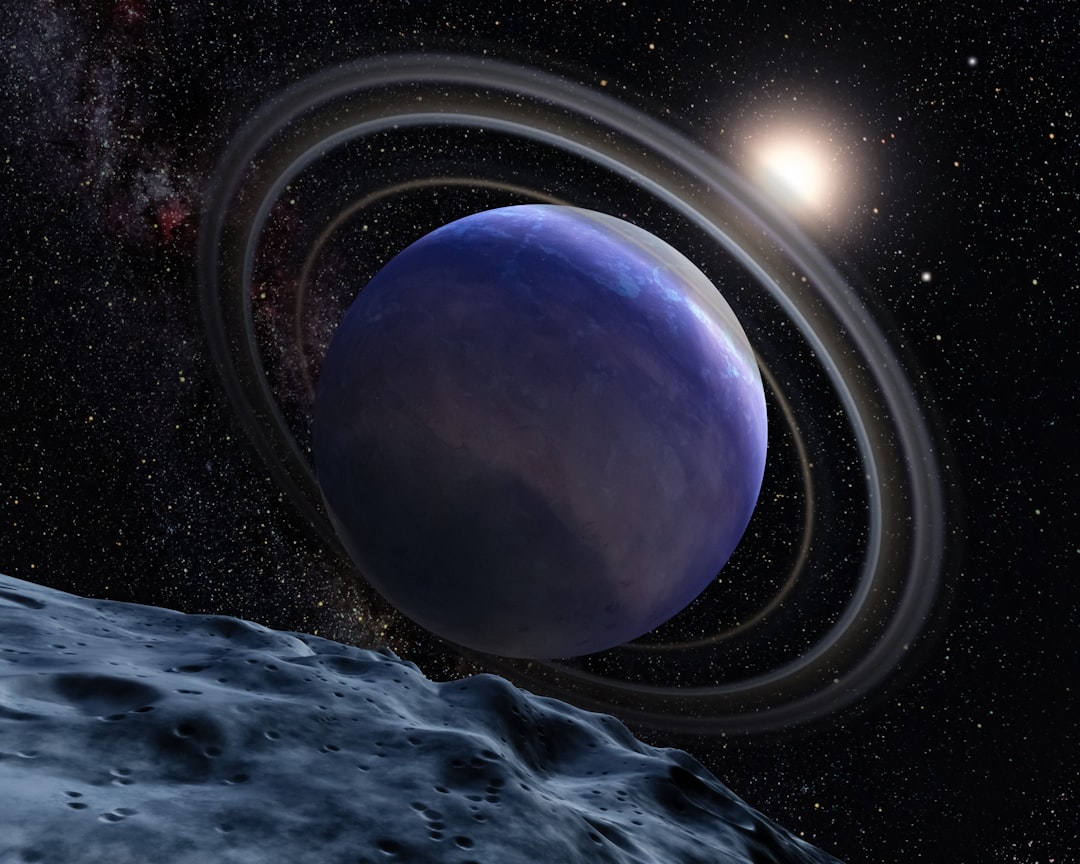
How do you build a planet before there are any galaxies to put it in? It sounds like a trick question, but a new study from the University of Portsmouth suggests the universe managed exactly that — assembling the raw materials for worlds within the first cosmic heartbeat, long before the grand structures we see today had any right to exist.
Astronomers have long assumed that planet formation was a relatively late arrival on the cosmic stage — a process that only picked up pace once the universe had settled down, churned through several generations of stars, and gradually built up a sufficient reservoir of heavy elements. This new research pushes that timeline back dramatically, to just 100 million years after the Big Bang. Given that the universe is roughly 13.8 billion years old, that is the equivalent of building the first house on a street before the town around it even exists — before the roads are laid, the foundations planned, or the neighborhood council has met for the first time.
"If the ingredients for planets were in place this early, it raises an obvious next question: could habitable worlds have formed far sooner in the universe's history than anyone dared imagine, long before there was a Milky Way to call home?"
— Dr. Daniel Whalen, University of Portsmouth
The First Stars: Cosmic Architects of Element Production
The story starts with the very first stars, known to astronomers as Population III stars. These were monstrous by any modern standard — theoretical models suggest some may have been hundreds of times more massive than our Sun, blazing at temperatures that dwarf anything in the contemporary universe. They lived extraordinarily brief lives, burning through their nuclear fuel in just a few million years, a mere blink compared to our Sun's expected 10-billion-year lifespan.
The universe these titans were born into was almost unrecognizably sparse. The cosmic dark ages — the period between the formation of the first atoms and the ignition of the first stars — had left the cosmos filled with little more than hydrogen, helium, and trace amounts of lithium. There were no metals, no carbon, no oxygen, no iron. In the parlance of astrophysics, the universe was stubbornly metal-poor, and without metals, the conventional wisdom held that planets simply could not form.
Population III stars changed everything. Some of these behemoths ended their short lives in a particular and extraordinarily violent kind of explosion called a pair instability supernova. Unlike the more familiar core-collapse supernovae that produce neutron stars or black holes, a pair instability supernova tears the entire star apart — leaving absolutely nothing behind. The mechanism is triggered when gamma rays in the stellar core spontaneously convert into electron-positron pairs, robbing the star of the radiation pressure needed to hold itself up. The resulting implosion rebounds with such ferocity that it completely obliterates the star.

The result is a staggering delivery of raw materials to the surrounding cosmos. A single pair instability supernova is capable of hurling more than 100 times the Sun's mass in heavy elements — carbon, oxygen, silicon, and iron — out into the interstellar medium. Think of it as the universe's first wholesale delivery of planetary building materials, dropped off long before anyone had drawn up the blueprints, or even decided what kind of structure they intended to build.
For a deeper understanding of how stellar evolution and supernovae shape the cosmos, NASA provides an extensive overview of stellar life cycles and their consequences for the broader universe.
Computer Simulations Reveal a Surprising Outcome
Dr. Daniel Whalen and his team at the University of Portsmouth, including PhD student Chris Jessop, ran sophisticated computer simulations tracing precisely what happened to that scattered debris in the moments and millennia after these first titanic explosions. Rather than simply dispersing uniformly into the void, the heavy elements ejected by pair instability supernovae could enrich nearby primordial clouds of gas so rapidly and so thoroughly that those clouds were pushed over a critical threshold — enough chemical complexity to cool efficiently and collapse under their own gravity.
As these enriched clouds collapsed, conservation of angular momentum caused them to flatten and spin, forming protoplanetary discs around the newly igniting stars at their centers — a process strikingly similar to the one that gave birth to our own Solar System some 4.6 billion years ago. The key insight of the research is that this process did not require billions of years of stellar recycling to achieve. One generation of massive Population III stars, dying spectacularly, was apparently enough.
- The simulations were run at a cosmological scale, tracking the evolution of gas clouds in the early universe with high precision.
- Heavy elements from pair instability supernovae were found to enrich nearby gas clouds rapidly enough to trigger disc formation.
- The resulting discs appeared structurally similar to the protoplanetary disc that surrounded our young Sun.
- The process occurred within 100 million years of the Big Bang — before the first galaxies had fully assembled.
- The findings suggest planet formation may be a near-universal outcome wherever sufficient chemical enrichment occurs, even in the very early universe.
Earth Masses of Material — and Water — in the Early Universe
In one particularly striking simulation, a disc formed around a star of approximately 70 percent the Sun's mass — a modest, potentially long-lived star by any reckoning. Inside that disc, the team identified several Earth masses' worth of solid material concentrated at roughly one astronomical unit from the central star — the same distance at which Earth orbits the Sun today. The positional coincidence is remarkable and immediately raises the question of whether the conditions for rocky, terrestrial planets could genuinely have existed this early.
The bigger surprise, however, was water. The simulated disc contained a substantial supply of water — not far short of the amount thought to have been available when our own Solar System coalesced 4.6 billion years ago. This is significant for several reasons. Water delivered via protoplanetary disc processes is considered a leading explanation for how Earth itself acquired its oceans. If water was present in comparable quantities within these primordial discs, it opens the extraordinary possibility that water-rich worlds could have begun forming within the universe's first hundred million years.
The presence of water also carries profound implications for astrobiology. As the solvent considered most essential for life as we know it, water is a prerequisite — or at least a very strong candidate for one — for the emergence of biology. Its appearance this early in cosmic history is not merely a curiosity; it is a data point that forces a fundamental reassessment of when and where life could conceivably have first arisen.
Learn more about the role of water in planetary formation and habitability from the European Space Agency's Herschel mission findings on water in protoplanetary discs.

Reframing the Cosmic Timeline of Habitability
The conventional narrative of cosmic habitability follows a reassuringly logical progression: the Big Bang produces only the lightest elements; stars forge heavier ones over billions of years; supernovae scatter those elements across galaxies; new generations of stars form with planetary systems; and eventually, on at least one such planet, life emerges. It is a story of gradual chemical enrichment, patient stellar recycling, and deep time.
This new research does not demolish that narrative, but it does compress it in ways that challenge some of its most fundamental assumptions. If pair instability supernovae from Population III stars could provide sufficient enrichment in a single generation, then the multi-billion-year preamble may not have been strictly necessary — at least not everywhere, and not always.
The implications ripple outward into some of the most profound questions in science. Could there be planets out there that are not 4 or 5 billion years old, but closer to 13 billion years old? If rocky worlds with liquid water formed within the universe's first hundred million years, any life that arose on them would have had an almost incomprehensibly long head start — over 13 billion years of potential evolution compared to life on Earth's paltry 3.8 billion.
This possibility connects directly to one formulation of the famous Fermi Paradox — the question of why, if intelligent life is common in the universe, we have not detected any evidence of it. One implicit assumption underlying many Fermi Paradox discussions is that civilizations have had roughly similar amounts of time to develop. If some planets formed and became habitable billions of years earlier than previously thought, the paradox deepens considerably.
For context on how astronomers are searching for signs of early universe structures, the James Webb Space Telescope is currently probing the epoch of reionization and the formation of the first stars and galaxies, and may in time provide observational evidence relevant to these simulations.
The Challenge of Observational Confirmation
For now, these findings remain the product of computer simulations, however sophisticated. The early universe is extraordinarily difficult to observe directly — even the most powerful telescopes in existence can only probe so far back into cosmic time with the sensitivity required to detect protoplanetary discs around individual stars. The James Webb Space Telescope has already revolutionized our understanding of the early universe, detecting galaxies far earlier than expected, but resolving individual stellar systems from an epoch 100 million years after the Big Bang remains beyond current capabilities.
Future observatories, including the proposed Extremely Large Telescope (ELT) being constructed in Chile by the European Southern Observatory, may eventually bring such observations within reach. Spectroscopic studies of extremely metal-poor stars — thought to be second-generation stars that formed from Population III supernova debris — already provide indirect support for the kinds of chemical enrichment patterns the new simulations describe.
Additionally, ongoing surveys searching for extremely metal-poor stars in the Milky Way's halo are providing chemical fingerprints of the earliest stellar generations. Each such star is, in a sense, a fossil record of the conditions that prevailed when the universe was young — and some of those conditions, it now appears, may have been more hospitable to planet formation than anyone imagined.
A Universe That Built Worlds From the Very Beginning
Perhaps the most profound takeaway from this research is philosophical as much as it is scientific. We have long thought of our universe as a place that required billions of years of patient construction before it could support anything as complex as a planet, let alone a world capable of harboring life. The new work from the University of Portsmouth suggests we may have significantly underestimated the universe's ambition.
The building blocks — the carbon, the oxygen, the iron, and remarkably, even the water — were there almost from the start. The cosmos did not wait for galaxies to assemble, or for star clusters to mature through multiple generations, before beginning the work of world-building. It started immediately, with the tools it had, in the chaotic and brilliant aftermath of its first great stellar generation.
What remains is finding out just how far that story runs. Whether somewhere among those first scattered protoplanetary discs, a rocky world coalesced around an ancient star. Whether liquid water pooled on its surface. And whether, in those waters — 13 billion years before anyone on Earth thought to ask the question — something stirred.
The original research, The Ingredients for Planets Formed Far Earlier Than Thought, represents a significant contribution to our understanding of cosmic chemical evolution. Further reading on Population III stars and the epoch of reionization is available through the HubbleSite and the NASA Universe Exploration portal.