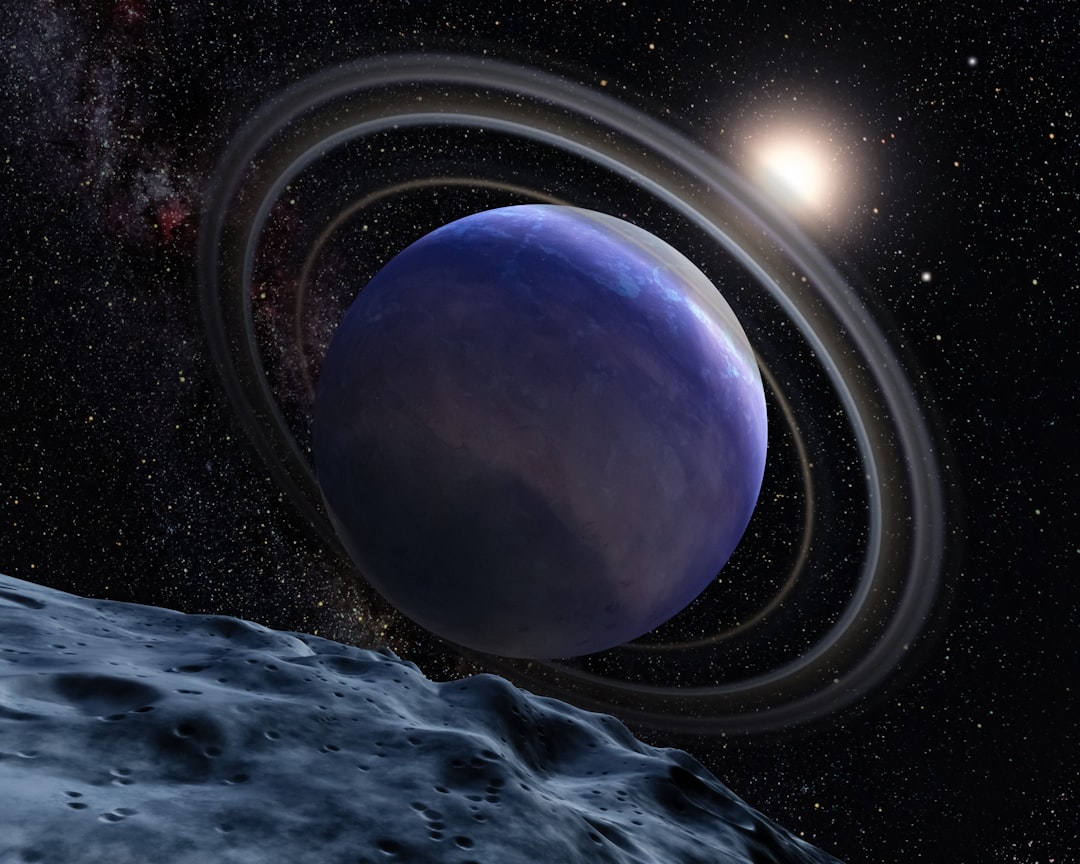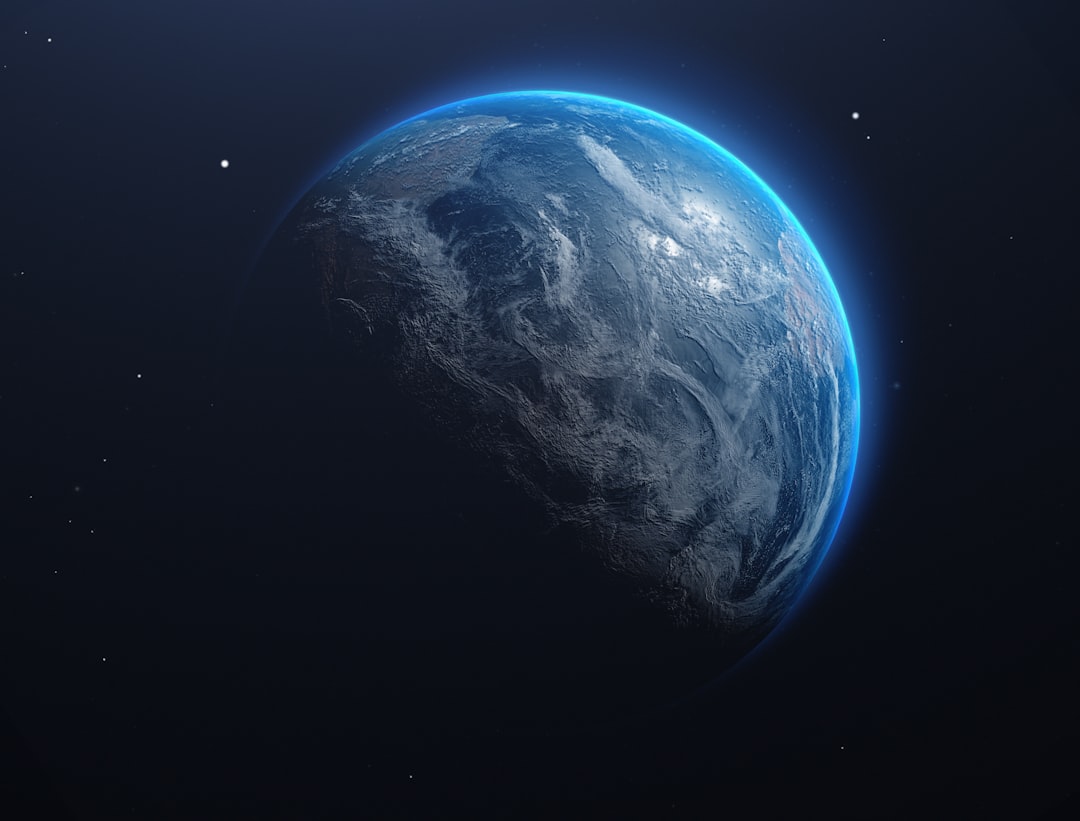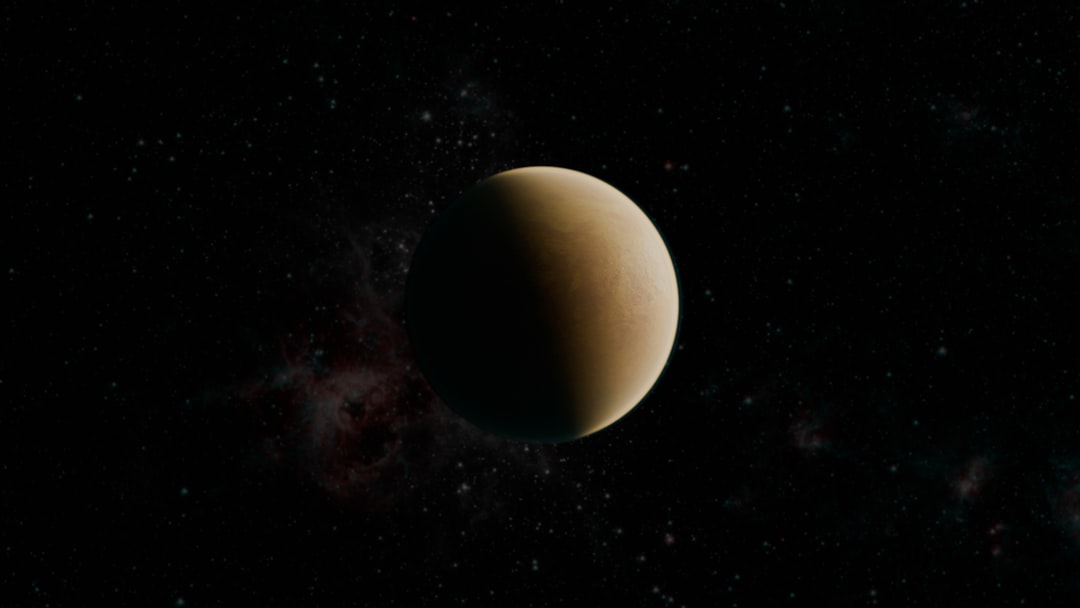
A groundbreaking study presented at the recent European Geosciences Union General Assembly in Vienna has revealed a sobering reality about the distribution of potentially habitable worlds in our galaxy: hellish, Venus-like planets may outnumber true Earth analogs by a factor of two to one. This preliminary research challenges our optimistic assumptions about the prevalence of life-friendly worlds and suggests that the universe may have a preference for creating infernal greenhouse worlds rather than temperate, ocean-bearing planets.
The findings, presented by Dr. Sean Jordan, a postdoctoral fellow in exoplanet studies at ETH Zurich in Switzerland, indicate that the formation of carbon dioxide-dominated atmospheres following a planet's magma ocean phase may be a remarkably common outcome of planetary evolution. This research has profound implications for our search for habitable worlds and our understanding of what makes Earth so special in the cosmic landscape.
The Magma Ocean Connection: How Hellish Atmospheres Form
At the heart of Jordan's research lies a fundamental question about planetary atmospheric evolution: What determines whether a newly formed rocky planet develops a temperate, water-rich atmosphere like Earth's, or a crushing, superheated carbon dioxide atmosphere like Venus's? The answer, it seems, may be written in the earliest chapters of a planet's history, during the violent magma ocean phase that follows planetary formation.
During this primordial period, a young planet's surface is completely molten, with temperatures reaching thousands of degrees. As this global ocean of liquid rock slowly cools and solidifies, it releases enormous quantities of gases that were dissolved in the magma. The composition of these outgassed volatiles—and how they interact with the planet's environment—may seal the world's fate for billions of years to come.
"Our preliminary results demonstrate that it's quite easy to construct a model scenario where a Venus-like atmosphere forms straight from the magma ocean phase of planetary evolution," explains Jordan. "It's expected that these atmospheres should be quite common."
The research team's models suggest that the pathway to creating a runaway greenhouse atmosphere is surprisingly straightforward from a geochemical perspective. Unlike the delicate balance required to maintain liquid water oceans and a stable climate over geological timescales, the formation of a thick CO₂ atmosphere appears to be a natural default outcome in many planetary formation scenarios.
The Rocky Planet Abundance Paradox
One of the most striking aspects of Jordan's presentation was his observation about the sheer abundance of rocky worlds in our galaxy. As he noted during the conference, "There are loads of rocky exoplanets since the galaxy is great at making rocks." Indeed, observations from NASA's Kepler Space Telescope and other planet-hunting missions have revealed that rocky planets are extraordinarily common, with billions potentially existing in our Milky Way galaxy alone.
However, the critical question isn't whether rocky planets exist—we know they do in vast numbers—but rather what fraction of these worlds possess the right conditions to remain habitable over billions of years. Current astronomical surveys have identified several dozen candidates that could potentially be extrasolar Venus analogs, based on their size, mass, and orbital characteristics. Yet remarkably, none have been definitively confirmed as Venus-like worlds, highlighting the challenges in characterizing exoplanetary atmospheres.
The Diversity of Extrasolar Venus Worlds
Jordan and his colleagues emphasize that even within the category of "Venus-like" planets, we should expect tremendous diversity. These worlds will vary in their:
- Geochemical composition: Different ratios of rock-forming elements and volatiles based on their formation history and location in the protoplanetary disk
- Atmospheric chemistry: Variations in trace gases, cloud composition, and photochemical processes driven by stellar radiation
- Stellar environment: Orbiting stars ranging from cool M-dwarfs to hot A-type stars, each subjecting their planets to vastly different radiation environments
- Orbital characteristics: Different distances from their host stars, orbital eccentricities, and tidal interactions that affect atmospheric dynamics
This diversity makes the study of Venus-like exoplanets both challenging and exciting. Our own Venus, orbiting just inside the Sun's habitable zone around a G-type yellow dwarf star, represents just one possible configuration among countless variations that likely exist throughout the galaxy.
The M-Dwarf Mystery: Can Rocky Planets Keep Their Atmospheres?
One of the most pressing questions facing exoplanet researchers today concerns the fate of rocky planets orbiting M-dwarf stars—the most common type of star in our galaxy. These cool, red stars are prime targets for planet searches because their small size makes it easier to detect Earth-sized worlds, and their faint luminosity places the habitable zone much closer to the star, making planets easier to observe.
However, there's a catch. M-dwarf stars, particularly young ones, are notorious for their violent behavior. They unleash powerful stellar flares and emit intense streams of high-energy radiation and charged particles that bombard any nearby planets. This raises a fundamental question: Can rocky planets in close orbits around M-dwarfs retain their atmospheres over billions of years, or are they stripped bare by their host star's fury?
"Perhaps in a few years' time we'll find out that none of these rocky exoplanets around M stars have atmospheres," Jordan cautioned. "The question is whether in a given orbital space, a planet can hold onto its atmosphere in the face of its parent star's high energy stellar radiation and particle fluxes that are continually stripping away that atmosphere."
This uncertainty is precisely why researchers cannot yet confirm whether any of the Venus-like candidates they've identified actually possess the thick, carbon dioxide-rich atmospheres that define such worlds. The atmospheric erosion problem represents one of the biggest unknowns in exoplanet science, and solving it will require detailed atmospheric characterization missions using next-generation space telescopes.
Venus: Our Criminally Underexplored Neighbor
Ironically, while astronomers search for Venus-like worlds light-years away, our own cosmic neighbor remains poorly understood. As Jordan emphasized in his presentation, "Venus has been criminally underexplored," despite being Earth's closest planetary neighbor and the most accessible Venus-like world available for detailed study.
The challenges of exploring Venus are formidable. Its surface temperature of 465°C (869°F)—hot enough to melt lead—and crushing atmospheric pressure of 92 bars (equivalent to being nearly a kilometer underwater on Earth) have destroyed every lander sent to its surface within hours. Yet the scientific payoff from Venus exploration would be immense, providing ground truth data that could revolutionize our understanding of Venus-like exoplanets.
Despite these challenges, planetary scientists have managed to piece together a remarkably detailed picture of Venus's atmosphere, including measurements of trace gases down to parts per billion concentrations. This level of detail far exceeds what we can hope to achieve for exoplanets in the near future, making Venus an invaluable reference point for interpreting observations of distant worlds.
The Venus-Exoplanet Synergy
Jordan emphasizes the powerful synergy between studying our solar system's planets and characterizing exoplanets. "Our understanding of all the planets in the solar system and all the planetary processes in general is going to help inform what we expect to happen on exoplanets," he explains. "As we discover more about exoplanets and their atmospheres, then this will contextualize everything we have here in the solar system that we can scrutinize in greater detail."
This bidirectional flow of knowledge is already bearing fruit. Observations of hot Jupiters—gas giant planets orbiting very close to their stars—have helped planetary scientists better understand atmospheric dynamics and chemistry in extreme environments. Similarly, detailed studies of Venus's greenhouse effect and atmospheric circulation patterns provide crucial insights for modeling Venus-like exoplanets.
Born This Way: Rethinking Venus's History
A common narrative in planetary science has been that Venus "went wrong" sometime in its past—that it once possessed oceans like Earth but underwent a catastrophic runaway greenhouse effect that boiled away its water and left behind the hellscape we see today. However, Jordan's research challenges this assumption.
"It's not necessarily true that Venus ever went wrong; it could simply have been born that way," Jordan argues. His modeling work suggests that it's actually much easier to construct scenarios where Venus emerged from its magma ocean phase already possessing a thick CO₂ atmosphere, rather than scenarios where it initially formed oceans that were later lost.
"It's much easier for us to build a model where we end up with Venus as it is straight out of a magma ocean phase of its early evolution and formation," says Jordan. "But it's quite difficult to construct a model where it can form and condense oceans, and then go through the runaway greenhouse boundary."
This perspective has profound implications for understanding Earth's uniqueness. If Venus-like outcomes are the default for rocky planets near the inner edge of the habitable zone, then Earth's ability to maintain liquid water oceans and a stable climate for over four billion years may represent a fortunate—and potentially rare—set of circumstances.
The Delicate Balance of Habitability
What makes a planet habitable over geological timescales? Jordan's research suggests that achieving and maintaining Earth-like conditions requires a remarkably delicate balance of factors, including:
- Appropriate volatile inventory: The right mix of water, carbon dioxide, and other atmospheric gases delivered during formation
- Effective carbon cycle: Geological processes that regulate atmospheric CO₂ levels over millions of years through weathering and plate tectonics
- Protective magnetic field: Shielding the atmosphere from erosion by stellar winds and cosmic radiation
- Orbital stability: Maintaining a consistent distance from the host star without dramatic variations that could trigger climate instabilities
- Appropriate stellar environment: A host star that provides sufficient energy for liquid water without overwhelming the planet with destructive radiation
In contrast, forming a Venus-like atmosphere may require far fewer conditions to align perfectly. "It's not like there's a preference for planets to orbit just inside the runaway greenhouse boundary compared to just outside of it," Jordan explains. Rather, the question is "how planets form atmospheres and evolve to end up with an Earth-like atmosphere that condenses water oceans and establishes a stable temperate climate over long timescales. That's quite a delicate system, and it's possible that that's quite difficult to form in comparison to a more Venus-like atmosphere."
Looking Ahead: The Next Two Decades of Venus Science
When can we expect definitive answers about the prevalence of Venus-like exoplanets? Jordan estimates it will take approximately two decades to gather sufficient data, assuming that proposed Venus exploration missions move forward and next-generation space telescopes come online as planned.
Several missions are currently in development or under consideration that could revolutionize Venus science. NASA's DAVINCI mission (Deep Atmosphere Venus Investigation of Noble gases, Chemistry, and Imaging) is scheduled to launch in the early 2030s and will conduct detailed atmospheric measurements during its descent through Venus's atmosphere. The ESA's EnVision mission will use radar to map Venus's surface in unprecedented detail and study its geological history.
On the exoplanet side, future observatories like the Habitable Worlds Observatory, currently in early planning stages at NASA, will be specifically designed to characterize the atmospheres of potentially habitable exoplanets. These facilities will be capable of detecting biosignatures and distinguishing between Earth-like and Venus-like atmospheres on distant worlds.
The Ultimate Question
Jordan frames the central question driving this research in stark terms: "Does the galaxy lend itself to making more inhospitable rocky planets that kind of straddle the inner boundary of the habitable zone than an Earth 2.0 which is clearly habitable on long timescales?"
The preliminary evidence suggests the answer may be yes—that the universe produces Venus-like worlds more readily than Earth-like ones. If confirmed, this finding would have profound implications for the Drake Equation and our estimates of the prevalence of life in the universe. It would suggest that while rocky planets are common, truly habitable worlds capable of supporting life as we know it may be far rarer than optimistic projections have suggested.
However, Jordan cautions against premature pessimism. Even if Venus-like planets outnumber Earth-like worlds, the sheer abundance of planets in our galaxy means that habitable worlds could still number in the millions or billions. The question is not whether they exist, but rather what fraction of rocky planets fall into each category—information that will be crucial for planning future searches for life beyond Earth.
Conclusion: Embracing Cosmic Diversity
As we stand on the threshold of a new era in exoplanet characterization, Jordan's research reminds us that the universe is likely far more diverse—and perhaps less immediately hospitable—than we might hope. The prevalence of Venus-like worlds challenges us to expand our understanding of planetary evolution and to appreciate the potentially rare circumstances that allowed Earth to remain habitable for billions of years.
Yet this knowledge also enriches our cosmic perspective. Every Venus-like world we discover is not a disappointment but rather a laboratory for understanding planetary physics and chemistry under extreme conditions. These hellish worlds may teach us as much about the nature of planets—and the requirements for habitability—as any Earth twin ever could.
As Jordan's work continues and new missions to Venus and beyond come online, we can look forward to finally answering one of astronomy's most fundamental questions: In the grand cosmic lottery of planetary formation, did Earth win the jackpot, or is our temperate, water-rich world more common than current evidence suggests? The answer, when it comes, will fundamentally reshape our understanding of our place in the universe.