The CosmoCube Satellite Will Listen to the Early Universe From the Far Side of the Moon
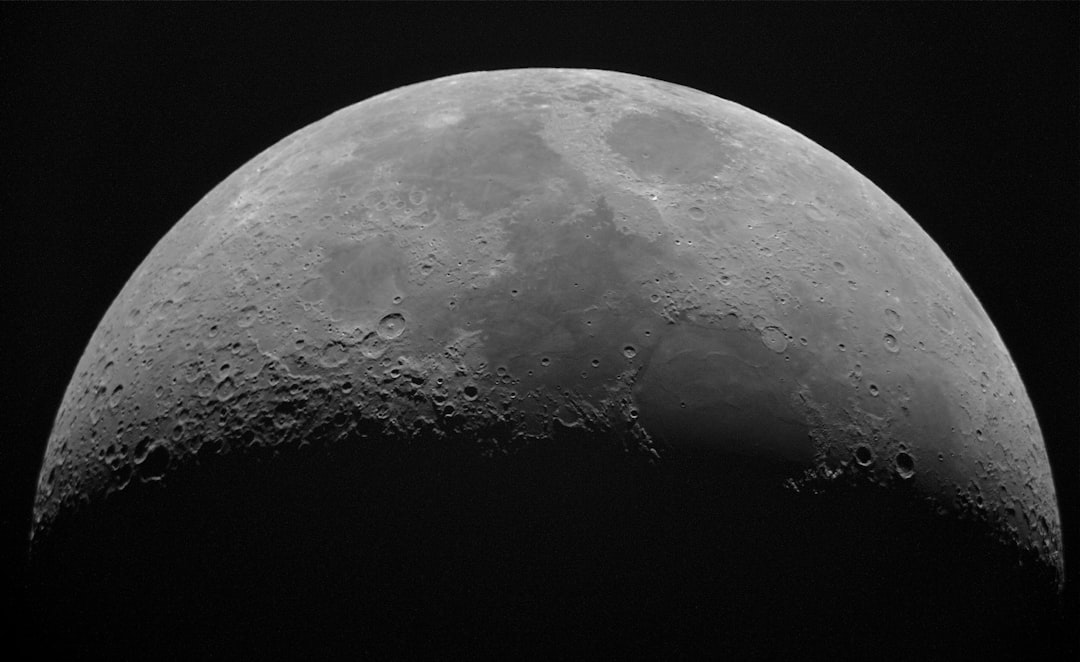
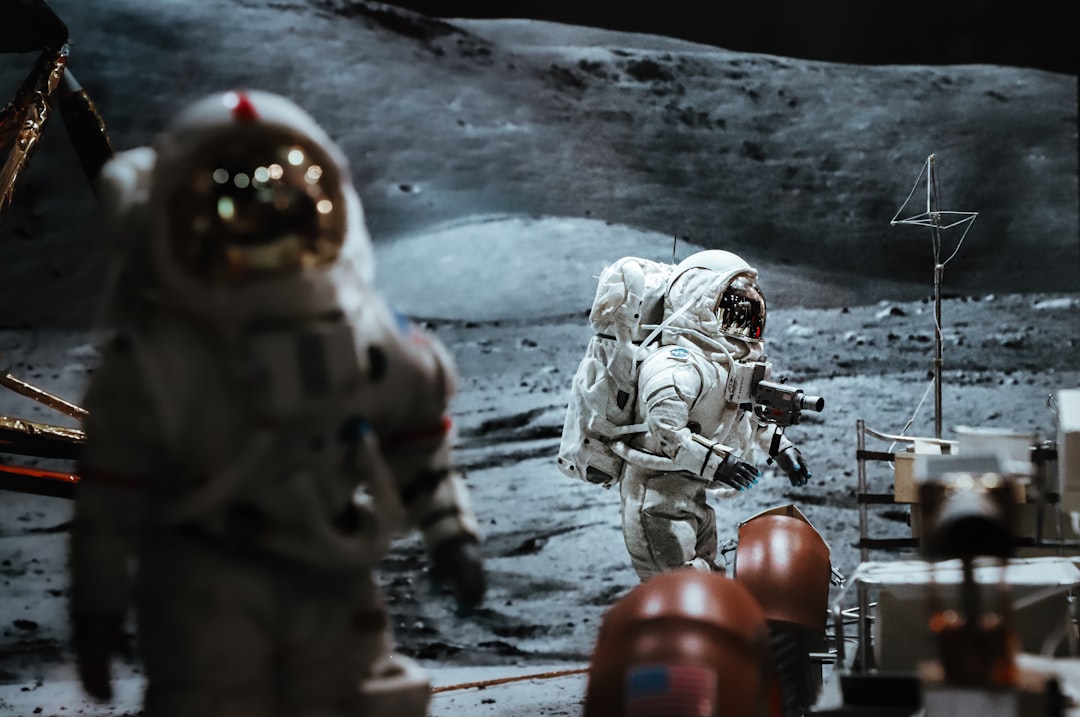
Multiple space agencies are gearing up to send an unprecedented wave of missions to the Moon in the coming decade. These missions will not only see astronauts return to the lunar surface for the first time since the close of the Apollo Era in 1972 — they will also lay the groundwork for a sustained human presence on the Moon. This includes the development of sophisticated infrastructure such as habitats, power generation systems, transportation networks, and cutting-edge research facilities. Much of the science conducted from these facilities will be truly unprecedented, as NASA, China, Russia, and other space agencies plan to establish their bases on, or in orbit around, the far side of the Moon — one of the most scientifically valuable and least explored environments in the Solar System.
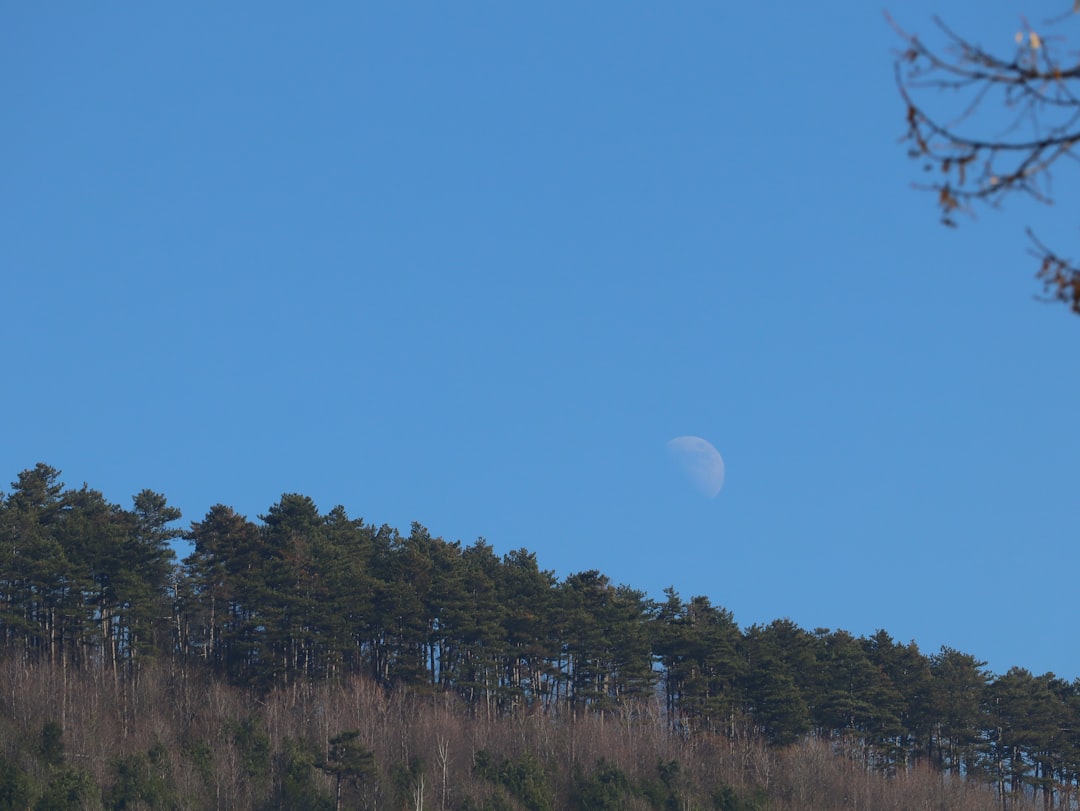
One of the most compelling reasons to operate from the lunar far side is that it is intrinsically radio-quiet. Because the Moon is tidally locked to Earth — always presenting the same face toward us — its far side is permanently shielded from the cacophony of radio frequency interference (RFI) generated by our civilization. This electromagnetic silence makes the far side an extraordinary natural laboratory for radio astronomy, offering conditions that simply cannot be replicated anywhere else in the near-Earth environment. It is precisely this unique property that has inspired the development of the new CosmoCube satellite, currently under development at the University of Cambridge. Using the Moon itself as a natural electromagnetic shield, CosmoCube will listen for the faint cosmological whispers encoded in the 21-centimeter hydrogen line — signals emitted by neutral hydrogen atoms that permeated the Universe during the vast, mysterious epoch between the Big Bang and the period astronomers call "Cosmic Dawn."
The Cosmic Dark Ages: Astronomy's Final Frontier
To appreciate the ambition of the CosmoCube mission, it is essential to understand what astronomers mean by the Cosmic Dark Ages — one of the most profound and least understood chapters in the history of the Universe. In the immediate aftermath of the Big Bang, approximately 13.8 billion years ago, the Universe was an extraordinarily hot, dense plasma of subatomic particles. As it expanded and cooled over the following 380,000 years, electrons and protons combined to form neutral hydrogen atoms for the first time — a watershed moment known as recombination. With the charged plasma neutralized, photons were finally free to travel unimpeded through space, and the Universe became transparent for the first time. The light released at this moment is what we observe today as the Cosmic Microwave Background (CMB) — the oldest light in the Universe.
But what happened next plunged the cosmos into darkness. With no stars, no galaxies, and no luminous objects of any kind, the Universe entered the Cosmic Dark Ages — a period lasting from approximately 380,000 years to around 1 billion years after the Big Bang. The only radiation permeating this dark, silent cosmos was the slowly cooling CMB and the faint 21-centimeter radio emission produced by vast clouds of neutral hydrogen gas. This hyperfine transition line, produced when the electron in a hydrogen atom flips its spin relative to the proton's spin, is among the most important signals in all of observational cosmology. It carries encoded within it critical information about the temperature, density, and distribution of the neutral hydrogen that would eventually be drawn together by gravity to form the very first stars and galaxies.
About 100 to 300 million years after the Big Bang, the first generation of stars — known as Population III stars — ignited, flooding the Universe with ultraviolet radiation and beginning the process of reionization: the gradual stripping of electrons from neutral hydrogen atoms. This transformative epoch, known as Cosmic Dawn, effectively ended the Dark Ages and made the Universe progressively more transparent to the optical and ultraviolet light that our modern telescopes detect. The transition from a cold, dark, hydrogen-filled void to a luminous cosmos teeming with stars and galaxies represents one of the most dramatic phase changes in cosmic history — and it remains one of the least understood.
- ~380,000 years after Big Bang: Recombination occurs; the CMB is released; the Cosmic Dark Ages begin.
- ~50–100 million years after Big Bang: The first gravitationally collapsed structures — dark matter halos — begin to form.
- ~100–300 million years after Big Bang: The first Population III stars ignite, beginning Cosmic Dawn.
- ~1 billion years after Big Bang: Reionization is largely complete; the Universe resembles the cosmos we recognize today.
- ~13.8 billion years after Big Bang: The present day.
With missions like the Wilkinson Microwave Anisotropy Probe (WMAP) and the ESA's Planck mission, astronomers have been able to map the CMB with extraordinary precision, revealing the tiny temperature fluctuations that served as the seeds of all cosmic structure. Thanks to the Hubble Space Telescope, the James Webb Space Telescope (JWST), and ground-based interferometry arrays, astronomers have also begun to study the earliest galaxies emerging from the Dark Ages. But the epoch between the CMB and the first visible galaxies — the heart of the Dark Ages — remains almost entirely inaccessible. This is the scientific vacuum that CosmoCube is designed to fill.
Why the Far Side of the Moon? The Radio-Quiet Imperative
Detecting 21-centimeter signals from 13.5 billion years ago is among the most technically demanding challenges in observational science. For Earth-based telescopes, the obstacles are formidable. The signal arrives at frequencies between roughly 10 and 50 MHz — frequencies that are almost entirely blocked by Earth's ionosphere, the electrically charged upper layer of our atmosphere that reflects low-frequency radio waves back into space rather than allowing them to reach the ground. Even if the ionosphere were not an issue, the sheer volume of human-generated radio frequency interference — from broadcasting towers, satellites, aircraft communications, and the ever-expanding constellation of low-Earth orbit spacecraft — renders Earth's surface effectively useless for this kind of observation.
The far side of the Moon elegantly solves both of these problems simultaneously. Positioned behind the lunar body during half of its orbital period, a satellite like CosmoCube is naturally shielded from all terrestrial RFI by approximately 3,474 kilometers of solid rock. There is no ionosphere on the Moon, and the near-perfect electromagnetic silence on the far side allows for observations at the ultra-low frequencies required to detect the redshifted 21-centimeter signal from the earliest epochs of cosmic history. As the CosmoCube team describes in a landmark paper published in Nature Astronomy, no other location accessible to near-future technology offers the combination of radio shielding, full-sky visibility, and proximity to Earth that the lunar far side provides.
"There's no other place where you can get the sort of shielding you need to detect such a faint signal, while at the same time looking at the whole of space. The far side of the Moon is really the only option: it solves multiple problems at once, opening a clear window to the very early universe. Aside from the science, what makes our mission unique is its size: we're probing the earliest, deepest parts of the dark ages that others don't reach, but with a compact, relatively low-cost platform." — Professor Eloy de Lera Acedo, University of Cambridge Cavendish Laboratory
How CosmoCube Works: Engineering the Impossible on a CubeSat Budget
The CosmoCube satellite is being designed to operate in a two-hour elliptical orbit around the Moon. During each orbital pass, the satellite will spend approximately 40 minutes in the radio-quiet zone behind the lunar far side — the only window during which scientifically useful observations can be made. During this time, the satellite will deploy a long, lightweight radio antenna exquisitely sensitive to the 21-centimeter signal and its ultra-low-frequency equivalents as seen from the present epoch. Over a primary mission lifetime of two years, CosmoCube will accumulate approximately 1,000 hours of high-quality observational data — a dataset that scientists believe will be sufficient to begin statistically detecting the faint hydrogen signal against the background of cosmic radio noise.
The data processing challenges are as formidable as the observational ones. When signals are transmitted to Earth and processed by the research team, scientists will employ advanced Bayesian statistical analysis — a powerful probabilistic framework that allows researchers to systematically separate the ultra-faint cosmological signal from sources of foreground noise, including the bright synchrotron radio emissions of the Milky Way. The team will also use sophisticated computer simulations alongside in-flight calibration measurements to precisely characterize how the antenna responds to different regions of the sky, enabling the removal of any remaining instrumental distortions. This combination of hardware innovation and computational sophistication represents the cutting edge of modern radio astronomy methodology.
At the heart of CosmoCube's instrument suite is a state-of-the-art, fully integrated miniature radiometer — a device that measures the intensity of incoming radio waves with extreme precision. This radiometer is built around RF Systems-on-Chip (RFSoCs), which combine both analog and digital signal processing capabilities on a single integrated circuit, dramatically reducing size, mass, and power consumption compared to conventional radio astronomy receivers. This miniaturization is crucial for a mission designed around the constraints of a small satellite platform.
The spacecraft platform itself, designated 'SSTL-21', is being developed by Surrey Satellite Technology Limited (SSTL), with funding provided by the UK Space Agency. The collaboration also includes research partners from Portsmouth University and STFC RAL Space, one of the UK's premier space technology and engineering facilities. The CosmoCube team has also submitted a proposal to the ESA mini-Fast missions Call for Ideas, a competitive program seeking innovative concepts for medium-size, fast-turnaround, and cost-effective missions of scientific opportunity.
The Engineering Gauntlet: Surviving the Lunar Environment
Operating a sensitive scientific instrument in lunar orbit presents a suite of extreme engineering challenges that go far beyond the difficulties of Earth-orbit spacecraft. The Moon has no atmosphere to moderate temperatures, which means the satellite will experience extreme thermal cycling — swinging between scorching heat when exposed to direct sunlight and brutal cold when in the lunar shadow, with temperature variations that can span several hundred degrees Celsius within a single orbit. Ensuring that sensitive electronic components, particularly the radiometer, can operate reliably across this thermal range requires sophisticated passive and active thermal management systems.
"CosmoCube is aiming to do some ambitious science from a very small satellite in a challenging environment, and to do that requires some clever design techniques. We've worked with the project partners to develop representative models of the satellite and its payload. These have been tested in our facilities to ensure the thermal performance allows the payload to operate and perform the required sensitive measurements under the different temperature conditions it will experience whilst in orbit around the Moon." — Dr. Will Grainger, STFC RAL Space
Beyond thermal extremes, the satellite must also contend with cosmic radiation, micrometeorite impacts, and the challenges of communicating data back to Earth during the portions of its orbit where it has a line of sight to our planet. Each of these challenges demands innovative engineering solutions, and the CosmoCube team's ongoing environmental testing program — using functioning laboratory prototypes — is designed to validate that those solutions will perform as required in the real lunar environment.
The Dark Matter Connection: Illuminating the Invisible
Beyond its primary goal of detecting the 21-centimeter signal from the Cosmic Dark Ages, CosmoCube holds the promise of shedding light on one of the most profound mysteries in modern physics: the nature and behavior of dark matter. Although dark matter makes up approximately 27% of the total mass-energy content of the Universe — compared to just 5% for ordinary baryonic matter — it has never been directly detected, and its fundamental nature remains unknown. What we do know, from gravitational observations and cosmological simulations, is that dark matter played a decisive role in the formation of the first cosmic structures. Dark matter halos, formed by the gravitational collapse of tiny density fluctuations inherited from the Big Bang, provided the gravitational scaffolding around which ordinary hydrogen gas accumulated, eventually triggering the formation of the first stars.
By mapping the distribution and evolution of neutral hydrogen during the Dark Ages, CosmoCube may be able to trace the influence of dark matter on the earliest stages of cosmic structure formation — effectively seeing the invisible scaffolding through its gravitational imprint on the visible hydrogen gas.
"This emission from hydrogen after the Big Bang, but before the first stars, will hopefully allow us to understand the role of dark matter in the early universe, how it worked to pull together hydrogen into the first stars and galaxies." — Professor Eloy de Lera Acedo, Cavendish Laboratory, University of Cambridge
A Race Against Time — and Against Noise
There is an ironic and pressing urgency to the CosmoCube mission. The very infrastructure being developed for humanity's return to the Moon — communication satellites, lunar relay networks, surface power systems, and crewed habitats — threatens to contaminate the radio-quiet environment that makes the far side so scientifically precious in the first place. As more agencies and commercial entities deploy assets in cislunar space, the window of electromagnetic silence over the lunar far side may narrow or close entirely within decades. This makes early missions like CosmoCube doubly important: they must do transformative science while there is still quiet enough to do it.
The CosmoCube team is optimistic that the satellite can be launched within the next five years, with instrument development well underway and environmental testing of hardware prototypes actively in progress. The mission represents a remarkable example of high-impact science being achieved through lean, focused engineering — a philosophy increasingly central to modern space science as agencies and research groups seek to maximize scientific return within constrained budgets.
A Profound Question, a Compact Answer
The Universe was once dark, cold, and silent — a vast expanse of hydrogen gas slowly stirred by the invisible hand of dark matter. Then, in a cosmic instant measured in hundreds of millions of years, the first stars blazed to life and changed everything. Understanding exactly how and when this transition occurred, and what physical processes drove it, is one of the deepest questions in all of science. It is a question that touches on the nature of dark matter, the physics of the first stars, the origin of the chemical elements, and ultimately the cosmic chain of events that led to the existence of galaxies, solar systems, planets, and life itself.
CosmoCube, for all its compactness, is aimed squarely at answering that question. By listening from the silence of the lunar far side to the faint radio echoes of the Universe's earliest hydrogen, this small British satellite may open one of the last great windows in observational cosmology — one that has been waiting 13.5 billion years to be looked through.
"This could be a real UK