Catching An 'Almost Total' Lunar Eclipse on August 28th
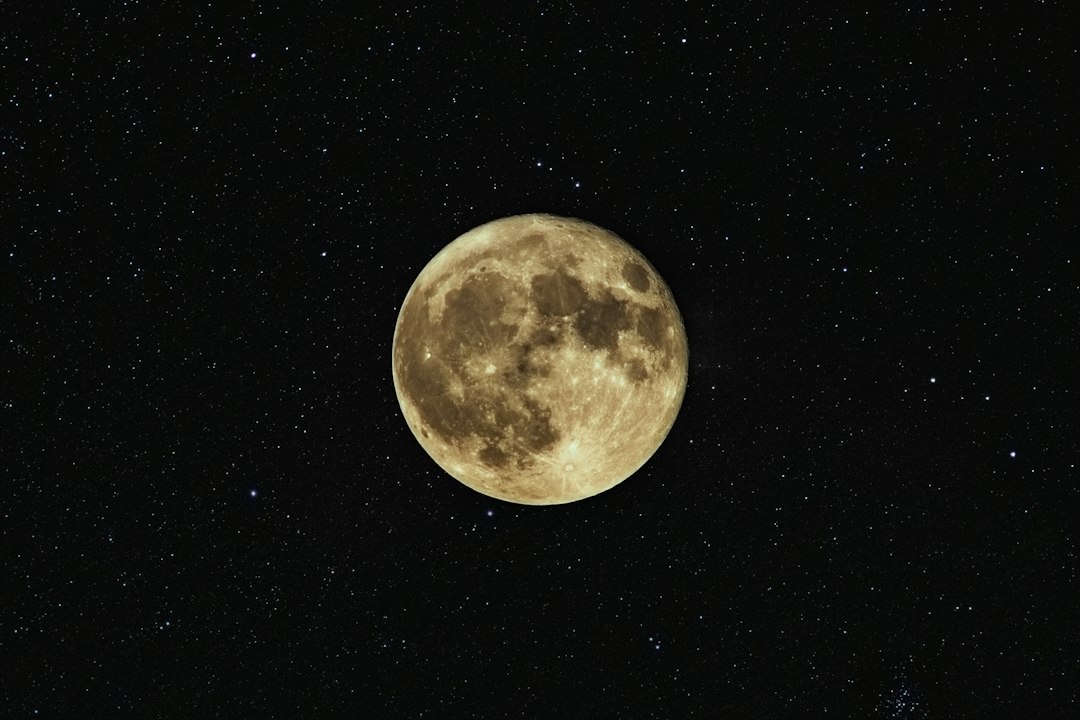
The Americas take center stage for next Thursday night's spectacular deep partial lunar eclipse — a celestial event that will plunge nearly the entire lunar disk into Earth's shadow, offering skywatchers one of the most dramatic partial eclipses visible in years. If clouds or circumstance kept you from witnessing August 12th's total solar eclipse, the universe is offering a generous consolation prize.
The Eclipse Season in Context
This event marks the last of four eclipses in 2026 — a year that has delivered two lunar and two solar eclipses in a classic pairing known as an eclipse season. The current season opened with the total solar eclipse of August 12th and closes with this near-total lunar eclipse on August 28th. Eclipse seasons recur roughly every 173 days, driven by the alignment of the lunar nodes — the two points where the Moon's orbital plane intersects the ecliptic, the apparent path of the Sun across the sky.
Eclipses occur only when the Sun, Earth, and Moon align in a near-perfect configuration known as a syzygy. Because the Moon's orbital plane is tilted approximately 5.1 degrees relative to the ecliptic, the Moon does not pass through Earth's shadow at every full moon. Only when a full moon occurs close to one of the two lunar nodes do the geometry and shadow-casting conditions align to produce an eclipse. This subtle orbital tilt is the reason eclipses are special events rather than monthly occurrences.
"An eclipse is the one time that the bone-white Moon comes alive with color — the product of every sunrise and sunset on Earth, painted across its ancient surface."
The Geometry Behind This Eclipse
On August 28th, the Moon passes its ascending node — the point where it crosses the ecliptic traveling northward — just under 10 hours before Full Moon. This timing means the Moon will pass through the northern portion of Earth's umbral shadow rather than directly through its center, falling just short of complete immersion. At maximum eclipse, the Moon will be 93% submerged in the umbra, making this one of the deepest partial lunar eclipses possible without technically qualifying as total.
The event is further shaped by the Moon's position in its elliptical orbit. The eclipse occurs just six days after the second-most distant lunar apogee of 2026, meaning the Moon is near its farthest point from Earth and therefore appears slightly smaller than average in our sky. Earth's umbral shadow, by contrast, is approximately three times the diameter of the Moon at lunar distance — yet even this expansive shadow cannot fully swallow a Moon that skims its northern edge.
For a deeper understanding of how Earth's shadow is structured — with its dark inner umbra and softer outer penumbra — NASA's Moon exploration pages offer an excellent primer on lunar eclipse geometry.
Who Can See It and When
Visibility for this eclipse strongly favors the Americas, where the entire event unfolds above the horizon across most of the continent. Observers in Europe and Africa will catch only the concluding stages as the Moon sets in the early morning hours of August 28th. Conversely, skywatchers across the central Pacific will find the eclipse already in progress as the Moon rises on the evening of August 27th.
Here is a complete timeline of key eclipse phases in Universal Time (UT) and Eastern Daylight Time (EDT):
- Penumbral eclipse begins: 1:23 UT / 9:23 PM EDT (August 27th)
- Partial eclipse begins (umbral contact): 2:34 UT / 10:34 PM EDT
- Maximum eclipse (93% immersion): 4:14 UT / 12:14 AM EDT
- Partial eclipse ends: ~5:52 UT / 1:52 AM EDT
- Penumbral eclipse ends: ~7:01 UT / 3:01 AM EDT
- Total duration (penumbral): approximately 5 hours 38 minutes
- Total duration (partial/umbral phases): approximately 3 hours 18 minutes
Detailed interactive maps and timing data for your specific location are available through Time and Date's eclipse portal and through NASA's Goddard Space Flight Center eclipse resource pages, maintained by the renowned eclipse cartographer Fred Espenak.
What to Watch For: A Visual Guide
One of the great pleasures of a lunar eclipse is its leisurely pace — unlike the frenzied minutes surrounding solar totality, a lunar eclipse unfolds over hours, rewarding patient observers with a gradually evolving show of light, shadow, and color.
The Penumbral Phase
Roughly 30 minutes into the penumbral phase, keen observers will begin to notice a subtle, tea-colored darkening creeping across the Moon's disk. The penumbra is the outer, partial shadow of Earth, where only a portion of the Sun's light is blocked. The effect is gradual and far less dramatic than the umbral phase, but it signals that something extraordinary is underway.
First Contact with the Umbra
As partial phases begin, the ragged, curved edge of Earth's inner umbral shadow bites into the lunar limb with unmistakable clarity. This is a direct visual demonstration of Earth's spherical shape — our planet casts a consistently curved shadow regardless of its orientation, a geometric proof that captivated ancient Greek astronomers including Aristotle, who cited it as evidence for a spherical Earth more than 2,300 years ago.
The Blood-Red Southern Limb
Because this eclipse reaches 93% coverage, the southern limb of the Moon — the portion most deeply immersed in the umbra — will likely display the haunting blood-red or copper hues typically associated with total lunar eclipses. This dramatic coloration is produced by Rayleigh scattering: as sunlight passes through Earth's atmosphere, shorter blue wavelengths are scattered away, and only the longer red and orange wavelengths are refracted around the planet's limb and onto the lunar surface.
In essence, an observer standing on the Moon during this eclipse would witness every sunrise and sunset on Earth simultaneously, forming a glowing ring of reddish light around our planet's silhouette. The depth and richness of this color depends heavily on the current state of Earth's atmosphere — volcanic aerosols, dust, or heavy cloud cover can dramatically deepen or mute the tones.
The Turquoise Fringe
Among the most visually striking and scientifically fascinating features to watch for is a subtle turquoise or blue fringe near the inner edge of Earth's umbral shadow. This delicate coloration, confirmed and popularized in recent eclipse photography, is produced by Earth's ozone layer, which absorbs red wavelengths at a specific atmospheric altitude, leaving a thin arc of blue-green light painting the shadow's boundary. It is a direct, real-time observation of our planet's protective ozone layer from 384,000 kilometers away.
Saros Series 138: A Long Celestial Story
This eclipse carries additional historical significance: it is the final partial eclipse of Lunar Saros Series 138, a recurring family of eclipses that has been unfolding since 1521 CE and will continue until 2982 CE. The Saros cycle is a period of approximately 18 years, 11 days, and 8 hours — after which the Sun, Earth, and Moon return to nearly the same relative geometry, producing an eclipse of similar character.
Saros Series 138 is now maturing into its total eclipse phase. September 7th, 2044 will mark the series' very first total lunar eclipse, with totality lasting a modest 34 minutes. For comparison, the shortest total lunar eclipse of the current century occurred on April 4th, 2015, with totality spanning just 4 minutes and 43 seconds — a fleeting moment of totality that challenged even seasoned observers. You can explore the full catalog of Saros series and their member eclipses through NASA's Saros Series catalog at GSFC.
An 'Almost Tetrad': Four Near-Total Eclipses in Two Years
This eclipse also completes what might be called an almost tetrad — a sequence of four deep lunar eclipses occurring over approximately two years. A true tetrad consists of four consecutive total lunar eclipses, each separated by six lunar months. The previous complete tetrad unfolded across 2014 and 2015, generating significant public attention. The current near-series includes:
- March 14th, 2025 — Total lunar eclipse
- September 8th, 2025 — Total lunar eclipse
- March 3rd, 2026 — Total lunar eclipse
- August 28th, 2026 — Deep partial lunar eclipse (93%)
While the fourth entry falls just short of totality, the overall sequence has treated the world to an extraordinary run of major lunar eclipses within a compressed timeframe — a reminder of how the geometry of the solar system can produce clusters of remarkable celestial events.
Views from Space: A New Perspective on Eclipses
While ground-based observers marvel at the eclipse from below, spacecraft offer an entirely different vantage point — and 2025 and 2026 have provided some stunning examples.
During the March 14th, 2025 total lunar eclipse, Firefly Aerospace's Blue Ghost lunar lander — then operating on the Moon's surface — captured imagery of a total solar eclipse as seen from the lunar surface. Because a lunar eclipse viewed from Earth is geometrically equivalent to a solar eclipse viewed from the Moon, Blue Ghost witnessed the Sun disappearing behind the silhouette of a backlit Earth, ringed by the thin red arc of our atmosphere. It was among the most striking perspectives on an eclipse event ever captured by a spacecraft.
Similarly, South Korea's Danuri lunar orbiter, operated by the Korea Aerospace Research Institute (KARI), captured imagery of the August 12th solar eclipse shadow sweeping across Earth's surface as seen from lunar orbit — a perspective that underscores just how small and precisely cast the Moon's shadow truly is against our planet's face.
How to Observe and Photograph the Eclipse
One of the most appealing aspects of a lunar eclipse is its complete accessibility. No special equipment is required — the naked eye reveals the broad phases beautifully, while binoculars bring out the subtle color gradations at the umbral edge. A small telescope will reveal the ragged texture of the shadow boundary in striking detail.
For smartphone astrophotographers, the technique is straightforward: stabilize your phone against the eyepiece of a telescope or on a tripod, set the camera to manual exposure if possible, and experiment with slightly underexposed settings to preserve color detail in the brighter portions of the Moon. Unlike solar photography, lunar eclipse imaging requires no special filters and is entirely safe to perform with any camera or optical instrument.
For those who cannot observe in person or face cloudy skies, the Virtual Telescope Project, run by astrophysicist Gianluca Masi, plans to broadcast the eclipse live beginning at 1:30 UT on August 28th, offering high-quality real-time views from dark-sky observing sites.
Looking Ahead: The Road to the Next Total Lunar Eclipse
With this deep partial eclipse drawing the 2026 eclipse season to a close, the next major milestone for lunar eclipse enthusiasts is the total lunar eclipse of December 31st, 2028 — a New Year's Eve spectacle that promises to be visible across a wide swath of the globe. For a full preview of upcoming lunar eclipses and global visibility maps, NASA's eclipse prediction resources provide comprehensive multi-decade forecasts.
In the meantime, August 28th's deep partial eclipse stands as a worthy and visually spectacular capstone to an exceptional eclipse season. Step outside, let your eyes adjust, and watch as Earth's shadow — cast across nearly the entirety of the Moon's face — writes one more chapter in the long, shared story of celestial mechanics that has captivated humanity since our earliest nights beneath the stars.