The celestial stage is set for an extraordinary astronomical event as two remarkable comets prepare to captivate observers during early April 2026. Astronomers and amateur sky watchers alike are directing their attention toward Comet C/2025 R3 Pan-STARRS and the enigmatic sungrazer Comet A1 MAPS, both of which will reach their closest approach to the Sun within weeks of each other. This rare cosmic coincidence presents a unique opportunity to witness two fundamentally different types of cometary bodies as they navigate the inner solar system, each facing dramatically different fates as they encounter the Sun's intense radiation.
The appearance of these two comets represents more than just a visual spectacle—it offers scientists an invaluable chance to study cometary composition, behavior under extreme solar conditions, and the mechanisms that govern survival or destruction during close solar encounters. While R3 Pan-STARRS follows a relatively safe trajectory that ensures its survival, A1 MAPS faces a perilous journey that will test the very limits of cometary endurance as it plunges through the solar corona at a distance closer than half the Earth-Moon separation.
The Remarkable Discovery of Comet A1 MAPS
Since its discovery earlier this year, Comet A1 MAPS has captured the attention of the astronomical community for several unprecedented reasons. This sungrazing comet holds the remarkable distinction of being the most distantly discovered sungrazer on record, first detected at a distance exceeding 2 Astronomical Units from the Sun—a feat that speaks to both improved detection capabilities and the comet's unusual brightness profile. The discovery was made possible through the NASA Center for Near-Earth Object Studies monitoring systems, which continuously scan the skies for potentially interesting celestial objects.
What makes this comet particularly intriguing is its membership in the Kreutz sungrazer family, a group of comets believed to have originated from the fragmentation of a single massive progenitor comet centuries or millennia ago. These comets follow nearly identical orbital paths that bring them dangerously close to the Sun. The study of sungrazing comets provides crucial insights into cometary composition and the physical processes that occur when volatile ices encounter extreme temperatures.
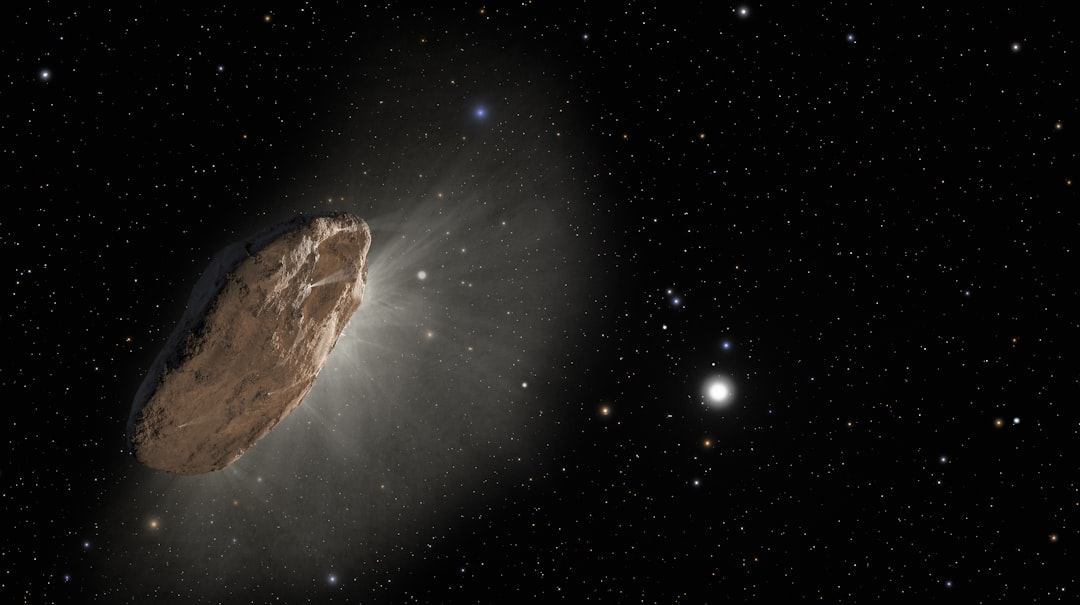
Recent observations have revealed fascinating details about the comet's physical characteristics. Measurements obtained by repurposing the James Webb Space Telescope for cometary observations—a testament to the scientific importance of this object—indicate that the nucleus measures approximately 0.4 kilometers or less in diameter. This relatively small size, when compared to historic sungrazers like the spectacular Comet Ikeya-Seki of 1965, raises serious questions about whether A1 MAPS possesses sufficient mass and structural integrity to survive its upcoming solar encounter.
Current Brightness and Observing Conditions
The behavior of Comet A1 MAPS over recent months has proven fascinating to monitor. Following its initial discovery in January, the comet exhibited an unusual brightness pattern—initially brightening as expected, then entering a period of stagnation, before resuming its brightening trend with renewed vigor. As of late March, the comet has reached approximately magnitude +6, placing it just at the threshold of naked-eye visibility under ideal dark-sky conditions, though binoculars significantly enhance the viewing experience.
Currently positioned low in the western dusk sky, the comet presents a challenging observing target, particularly given its proximity to Venus, which blazes brilliantly at magnitude -4 and can overwhelm the fainter comet in the twilight glow. Observers seeking to glimpse A1 MAPS before its perihelion passage should look approximately 15-20 degrees from Venus, using binoculars to scan the area systematically. The comet's rapid brightening—described colloquially by astronomers as brightening "with a bullet"—suggests significant outgassing as solar heating intensifies.
The Critical Perihelion Passage: Survival or Vaporization?
The moment of truth arrives on Saturday, April 4th, 2026, at 14:23 Universal Time (10:23 AM Eastern Daylight Time), when Comet A1 MAPS reaches perihelion—its closest approach to the Sun. At this critical juncture, the comet will pass a mere 101,000 miles (162,000 kilometers) from the solar surface, penetrating deep into the Sun's corona where temperatures soar to millions of degrees. To put this in perspective, this distance is less than half the 238,900-mile separation between Earth and its Moon.
The geometry of this encounter creates several extraordinary viewing opportunities for space-based observatories. According to precise orbital calculations, the comet will first pass behind the Sun as viewed from Earth between 11:50 and 13:20 UT, disappearing from direct observation. It will then emerge and actually transit across the solar disk from 13:55 to 15:20 UT—a rare event that will be captured by solar monitoring spacecraft including the Solar and Heliospheric Observatory (SOHO) and the Solar Dynamics Observatory.
"The survival of a sungrazing comet depends on a complex interplay of factors including nuclear size, structural integrity, composition, and the specific thermal stresses encountered during perihelion. With a nucleus potentially smaller than half a kilometer, A1 MAPS faces extraordinary challenges that most comets of this size simply cannot overcome."
Possible Outcomes: Four Scenarios
Astronomers have identified several potential scenarios for how events might unfold, each with profound implications for what observers might witness:
- Complete Disintegration: The most statistically likely outcome, based on historical precedent. In this scenario, the comet's nucleus fragments and vaporizes completely during perihelion passage, similar to the fate of Comet ISON in 2013. The final days before perihelion would represent humanity's last views of this ancient visitor, with observations potentially revealing the fragmentation process in real-time through SOHO's coronagraph instruments.
- Partial Survival - "Headless Comet" Formation: A more intriguing possibility involves the nucleus disintegrating but leaving behind a dispersed cloud of material that continues to produce a visible tail for days or weeks. Comet Lovejoy (C/2011 W3) demonstrated this phenomenon in 2011-2012, surviving perihelion despite predictions to the contrary and producing a spectacular tail visible to the naked eye in the southern hemisphere.
- Full Survival - Moderate Brightness: Should the nucleus prove more robust than its small size suggests, A1 MAPS could emerge intact and brighten to become a moderately conspicuous object in the evening sky. The phenomenon of forward scattering—where sunlight scattered by dust particles appears brightest when viewed at specific angles—could work in the comet's favor, as Earth's viewing geometry in early April positions us nearly edge-on to the comet's orbital plane.
- Spectacular Survival - Daylight Visibility: The least probable but most exciting scenario involves the comet not only surviving but brightening to negative magnitudes, potentially rivaling Venus in brightness. Such "daylight comets" are exceedingly rare in the modern era, but historical records document several examples. In this scenario, the comet's dust tail would precede it as it moves away from the Sun—a counterintuitive but geometrically necessary configuration that creates a striking visual effect. This outcome would provide millions of people their first opportunity to observe a bright comet without optical aid.
Comet C/2025 R3 Pan-STARRS: A Safer Solar Encounter
While A1 MAPS gambles with destruction, Comet C/2025 R3 Pan-STARRS follows a much safer trajectory that virtually guarantees its survival and provides more predictable observing opportunities. Discovered on September 8th, 2025, by the Panoramic Survey Telescope and Rapid Response System (Pan-STARRS) in Hawaii, this comet arrives on a dramatically different type of orbit—a highly elongated ellipse with an orbital period of approximately 170,000 years.
This extraordinary orbital period means that R3 Pan-STARRS last visited the inner solar system during the height of the last ice age, when Neanderthals still walked the Earth and modern humans were just beginning their global expansion. Even more remarkably, gravitational interactions with the giant planets during this apparition will likely alter the comet's trajectory sufficiently to eject it from the solar system entirely, sending it on an interstellar journey from which it will never return.
Currently glowing at approximately magnitude +6—similar to A1 MAPS—R3 Pan-STARRS presents a more accessible target for observers. Predictions suggest it may brighten to approximately magnitude +0.5 around April 26th, when it makes its closest approach to Earth. However, timing proves challenging, as this peak brightness occurs when the comet lies only 6 degrees from the Sun, making observation extremely difficult and potentially dangerous without proper equipment and precautions.
Optimal Viewing Windows for R3 Pan-STARRS
The most favorable observing period for R3 Pan-STARRS occurs during the first three weeks of April, before the comet's trajectory carries it too close to the Sun for safe viewing. During this window, the comet appears in the pre-dawn eastern sky, positioned 10-15 degrees above the horizon as twilight begins. The comet's path takes it through the distinctive asterism known as the Great Square of Pegasus, providing convenient reference stars for locating this celestial visitor.
Observers should plan their viewing sessions for approximately 60-90 minutes before local sunrise, when the sky has darkened sufficiently to reveal fainter objects but before twilight brightness overwhelms the comet's glow. Binoculars or small telescopes will significantly enhance the view, potentially revealing details of the comet's developing dust tail as solar heating drives increasing amounts of material from the nucleus.
Following its perihelion passage on April 19th, R3 Pan-STARRS transitions to the evening sky but becomes increasingly difficult to observe from northern hemisphere locations. The comet's trajectory favors southern hemisphere observers during May, as it traverses the constellations Eridanus, Orion, and Lepus while gradually fading as it recedes from both the Sun and Earth.
Scientific Significance and Space-Based Observations
Beyond their visual appeal, both comets offer exceptional scientific opportunities. The SOHO spacecraft's LASCO coronagraph instruments will capture detailed images as both comets pass through their fields of view—A1 MAPS from April 2-6 and R3 Pan-STARRS from April 23-26. These observations provide data unavailable from ground-based telescopes, including measurements of the comets' interaction with the solar wind and detailed imaging of tail structures and potential fragmentation events.
The potential viewing opportunity for the Artemis II astronauts—should their mission timeline align with the cometary apparitions—would represent a unique perspective on these objects. Observations from lunar orbit, free from atmospheric interference and with the ability to view the comets against a truly dark sky, could provide unprecedented data on cometary morphology and behavior.
The membership of A1 MAPS in the Kreutz sungrazer family carries additional scientific importance. These comets, all descendants of a single progenitor that fragmented centuries ago, provide natural laboratories for studying cometary composition and the mechanisms of tidal disruption. With an orbital period of approximately 1,800 years, A1 MAPS may represent a harbinger of additional fragments yet to be discovered, potentially arriving in the inner solar system over the coming decades.
Implications for Amateur and Professional Astronomy
The simultaneous appearance of these two comets underscores the dynamic nature of our solar system and the importance of continuous sky monitoring programs. Modern automated survey systems like Pan-STARRS, along with contributions from amateur astronomers worldwide, have revolutionized our ability to detect and track these transient visitors. Each new comet discovery adds to our understanding of the vast reservoir of icy bodies in the outer solar system and the processes that occasionally send them sunward.
For amateur astronomers, these comets present both opportunities and challenges. Successfully observing either comet requires careful planning, appropriate equipment, and favorable weather conditions. However, the potential rewards—witnessing these ancient travelers during their brief visits to the inner solar system—make the effort worthwhile. Astrophotographers have already captured stunning images of both comets, documenting their evolving appearance as they approach the Sun.
The coming weeks promise to deliver answers to the most pressing question: Will Comet A1 MAPS survive its harrowing perihelion passage, or will it join the countless sungrazers that have vaporized in the Sun's intense heat? Regardless of the outcome, both comets serve as reminders of the solar system's complexity and the ongoing processes that have shaped planetary formation and evolution over billions of years. As astronomers worldwide maintain their vigil, checking SOHO imagery and scanning the dawn and dusk skies, we await the unfolding of this celestial drama with anticipation and scientific curiosity.