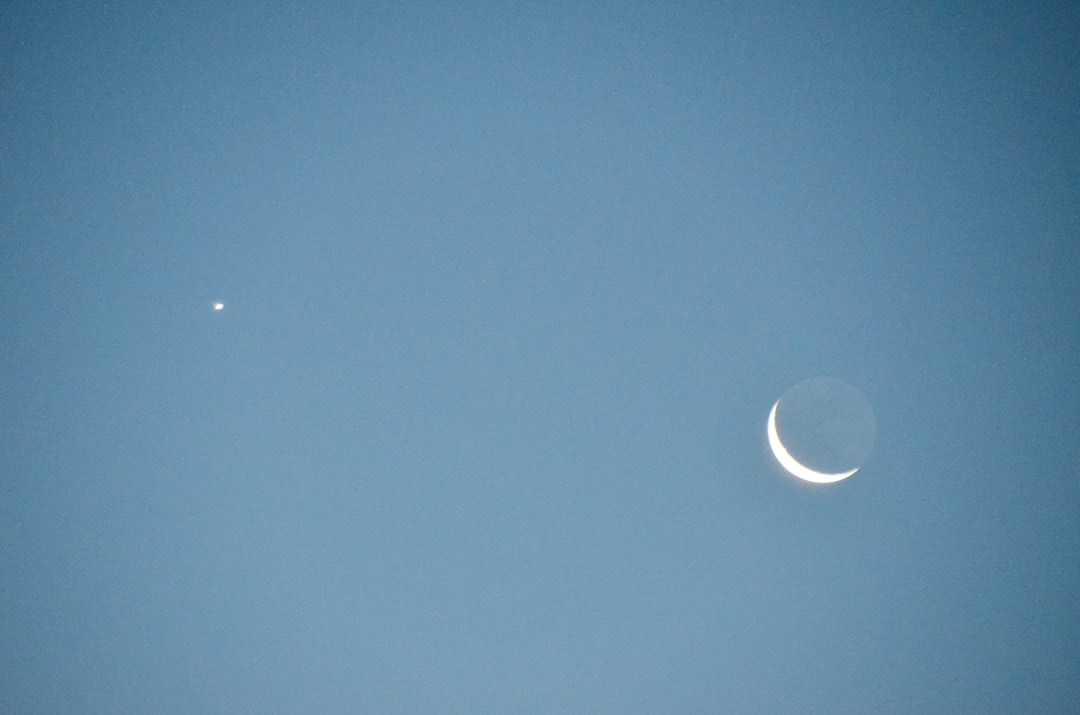
The ancient hypothesis of panspermia—the idea that life spreads throughout the cosmos via celestial messengers—has taken a fascinating new turn. Scientists are now investigating whether microbial life in Venus' atmosphere could have originated from our own planet Earth. This groundbreaking research, presented at the 2026 Lunar and Planetary Science Conference, challenges our understanding of how life might transfer between neighboring worlds in our solar system.
A collaborative team from The Johns Hopkins University Applied Physics Laboratory (JHUAPL) and Sandia National Laboratories has developed sophisticated models to explore this extraordinary possibility. Their work suggests that organic material from Earth could have survived the violent journey through space and successfully seeded Venus' cloud layers with the building blocks of life. This research arrives at a particularly opportune moment, as the scientific community continues to debate the controversial detection of potential biosignatures in Venus' atmosphere.
The implications of this research extend far beyond Venus itself. If proven correct, it would demonstrate that interplanetary panspermia operates not just as a theoretical concept, but as a real mechanism for distributing life throughout our solar system. The study employed the innovative Venus Life Equation (VLE) framework, a mathematical tool that calculates the probability of life existing in Venus' hostile yet intriguing environment.
Understanding the Venus Life Equation Framework
To quantify the likelihood of life in Venus' clouds, researchers adapted a methodology similar to the famous Drake Equation, which estimates the number of communicative civilizations in our galaxy. The Venus Life Equation, originally developed by Noam Izenberg and colleagues in 2021, breaks down the complex question of Venusian life into three fundamental components that can be analyzed independently.
The mathematical expression L = O × R × C represents a deceptively simple formula with profound implications. Here, L represents the likelihood of extant life, expressed as a probability between 0 (no possibility) and 1 (absolute certainty). The first factor, O (Origination), addresses whether life could have begun and established itself on Venus, either through indigenous development or external delivery. The second factor, R (Robustness), evaluates the potential for a biosphere to not merely exist but to withstand the dramatic environmental changes Venus has experienced over billions of years. Finally, C (Continuity) considers whether habitable conditions have persisted from the past to the present day.
This framework provides researchers with a systematic approach to tackle one of astrobiology's most challenging questions. By breaking down the problem into manageable components, scientists can focus their efforts on constraining each parameter through observation, experimentation, and modeling.
The Perilous Journey Through Space
For life to transfer from Earth to Venus via impact ejecta, organic material must first survive an extraordinarily violent sequence of events. The initial impact that launches material into space generates tremendous shock waves and extreme temperatures that would instantly vaporize most biological material. However, research on meteorites recovered on Earth—including those confirmed to have originated from Mars—demonstrates that organic compounds can indeed survive this traumatic process.
Once ejected into the void of space, these potential seeds of life face additional challenges. The vacuum of space, intense solar and cosmic radiation, and temperature extremes ranging from near absolute zero to scorching heat all threaten to destroy any organic molecules. Yet studies conducted by NASA on the International Space Station have shown that certain microorganisms can survive extended exposure to space conditions when protected within rock matrices.
Computer simulations and laboratory experiments have revealed that the interior portions of ejected rocks can maintain relatively moderate temperatures and provide shielding from radiation. This protective cocoon effect means that microorganisms embedded within meteorite material could potentially survive interplanetary voyages lasting thousands or even millions of years.
Atmospheric Entry and the Pancake Model
Upon reaching Venus, any Earth-derived organic material faces its final and perhaps most critical test: atmospheric entry. Venus possesses an extraordinarily dense atmosphere—about 90 times the pressure of Earth's at the surface—composed primarily of carbon dioxide with clouds of sulfuric acid. The research team employed the sophisticated "pancake model" to simulate how bolides (large meteorites that produce fireballs) would behave as they plunge through this thick atmospheric soup.
The pancake model describes a fascinating process of atmospheric fragmentation. As a bolide descends, it experiences increasing atmospheric pressure and friction, causing it to heat up and begin ablating—essentially burning away its outer layers. At a critical point, the structural integrity fails catastrophically, resulting in an explosive airburst that fragments the bolide into countless smaller pieces. These fragments then spread horizontally due to aerodynamic drag, creating a pancake-like distribution pattern of material.
This fragmentation process is actually beneficial for potential panspermia. The explosion disperses organic material over a wide area and creates smaller particles that can remain suspended in Venus' atmosphere rather than plummeting to the hellish surface where temperatures exceed 450°C (842°F).
Venus' Habitable Cloud Layer: An Unexpected Refuge
While Venus' surface resembles a vision of hell—with crushing pressures, lead-melting temperatures, and sulfuric acid rain—its upper atmosphere tells a remarkably different story. At altitudes between 48 and 60 kilometers above the surface, conditions become surprisingly Earth-like. Temperatures range from 0°C to 60°C (32°F to 140°F), and pressures approximate those at Earth's surface.
"The cloud layers of Venus represent one of the most intriguing potential habitats in our solar system. If life exists there, it would fundamentally reshape our understanding of where life can survive," noted researchers at the European Space Agency's Venus exploration program.
This temperate zone has captured the imagination of astrobiologists, particularly following the controversial 2020 announcement of phosphine detection in Venus' atmosphere—a potential biosignature gas. While the phosphine detection remains hotly debated, it sparked renewed interest in the possibility of aerial microbial life floating in Venus' clouds, similar to bacteria found in Earth's upper atmosphere.
The clouds themselves consist of sulfuric acid droplets, which might seem inhospitable. However, certain extremophile microorganisms on Earth thrive in highly acidic environments, suggesting that life adapted to such conditions could potentially exist in Venus' clouds.
Quantifying Earth-to-Venus Transfer Events
The research team's calculations produced remarkable estimates about the potential scale of biological transfer between Earth and Venus. Their models suggest that over the past billion years, approximately 20 billion cells could have been transferred from Earth to Venus' cloud layers. This staggering number accounts for the various filters and survival challenges that would eliminate the vast majority of ejected material.
Breaking down these numbers further, the team estimates that roughly 100 cells per Earth year might successfully disperse into Venus' habitable cloud zone. While this may seem like a small number, it's important to consider that this represents a continuous process operating over geological timescales. Even a single successful colonization event could potentially establish a sustainable microbial population if conditions permit reproduction and survival.
The researchers also examined transfer from Mars to Venus, finding that hundreds of billions of cells may have made this journey as well. This raises the intriguing possibility of a three-way exchange of biological material between Earth, Mars, and Venus during the early solar system when all three planets may have possessed more similar environments.
Key Findings and Uncertainties
- Transfer Feasibility: The models demonstrate that panspermia between Earth and Venus is physically plausible, with billions of cells potentially making the journey over geological time
- Atmospheric Dispersal: The pancake fragmentation model shows that bolides can effectively distribute organic material in Venus' habitable cloud layers rather than delivering it to the inhospitable surface
- Survival Probability: While the majority of ejected material would be destroyed, enough could survive the journey to potentially establish life if conditions in Venus' clouds are suitable
- Model Limitations: The researchers acknowledge significant uncertainties in each parameter, similar to the challenges faced by the Drake Equation in estimating extraterrestrial civilizations
- Temporal Considerations: The models suggest that viable cells could exist in Venus' clouds for at least several days per century, though establishing a permanent biosphere would require much more favorable conditions
Implications for Future Astrobiology Missions
This research carries profound implications for upcoming missions to Venus. Several space agencies, including NASA's DAVINCI and VERITAS missions, are planning detailed investigations of Venus' atmosphere and surface. If these missions detect signs of life in the clouds, scientists will face a fascinating puzzle: did life originate independently on Venus, or did it arrive from Earth?
The possibility of Earth-origin contamination adds a new dimension to the search for life beyond Earth. If Venusian life shares genetic or biochemical similarities with Earth life, it might indicate panspermia rather than independent origin. However, distinguishing between these scenarios could prove extremely challenging, as any shared ancestry would be billions of years old, allowing ample time for significant evolutionary divergence.
The research also highlights the importance of planetary protection protocols. If life can naturally transfer between planets in our solar system, we must carefully consider how our spacecraft might inadvertently transport Earth microbes to other worlds. Conversely, samples returned from Venus or Mars must be handled with extreme care to prevent potential contamination of Earth's biosphere.
The Broader Context of Interplanetary Life Transfer
This study contributes to a growing body of evidence suggesting that the solar system may function as an interconnected biological system rather than a collection of isolated worlds. Previous research has established that Martian meteorites regularly reach Earth—we've identified over 200 of them—proving that rock transfer between planets is common. If rocks can make the journey, so too can any microorganisms they contain.
The early solar system, during the period known as the Late Heavy Bombardment approximately 4 billion years ago, experienced far more frequent impacts than today. During this era, the exchange of material between planets would have been dramatically higher, potentially creating a "panspermia highway" that could have distributed life throughout the inner solar system.
Understanding these transfer mechanisms helps address one of astrobiology's fundamental questions: Is life common or rare in the universe? If life arose independently on multiple planets in our solar system, it would suggest that life emerges readily wherever conditions permit. However, if life on multiple worlds shares a common origin through panspermia, it would indicate that while life can spread effectively, its initial emergence might be a rare event.
Future Research Directions
The Venus Life Equation framework provides a roadmap for future investigations. Researchers need to refine estimates for each parameter through additional observations and experiments. Laboratory studies simulating Venus' cloud conditions could test whether Earth microorganisms can survive and reproduce in sulfuric acid droplets at Venusian temperatures and pressures.
Advanced atmospheric modeling could better predict how organic material disperses in Venus' atmosphere and how long it might remain viable in the cloud layers. Sample return missions, though technically challenging, would provide definitive answers about whether life exists in Venus' atmosphere and, if so, whether it shares a common ancestry with Earth life.
The techniques developed for this study could also be applied to other potentially habitable environments in the solar system, including the subsurface oceans of Europa and Enceladus, or the hydrocarbon lakes of Titan. Understanding how life might transfer between worlds helps us assess the likelihood of finding life elsewhere in our cosmic neighborhood and beyond.
As we stand on the threshold of a new era of Venus exploration, this research reminds us that our neighboring planet—despite its hellish reputation—may harbor one of the solar system's greatest secrets. Whether life floats in its clouds, and whether that life originated locally or arrived from Earth billions of years ago, remains one of the most tantalizing questions in planetary science.