In a dramatic demonstration of aerospace innovation and resilience, SpaceX's latest iteration of its Starship V3 rocket completed its inaugural test flight, marking a significant milestone in the company's quest to revolutionize space transportation. The 12th Starship launch overall showcased both the promise and challenges of developing the world's most powerful launch vehicle, as the massive rocket roared to life from SpaceX's Starbase facility in South Texas, delivering what CEO Elon Musk characterized as "a goal for humanity" despite encountering several unexpected anomalies during the mission.
This test flight represented far more than just another launch in SpaceX's extensive flight test program. It marked the debut of a comprehensively redesigned rocket system, incorporating fundamental changes to the Super Heavy booster, the upper stage Ship, the revolutionary Raptor V3 engines, and the ground infrastructure supporting these ambitious missions. The flight demonstrated both the remarkable progress SpaceX has made in rapid iterative development and the inherent complexities of pushing the boundaries of rocket technology.
The mission unfolded with characteristic SpaceX drama, as engineers and enthusiasts worldwide watched the 407-foot-tall behemoth attempt maneuvers never before achieved in spaceflight. While not everything proceeded according to the nominal flight plan, the test provided invaluable data that will inform future iterations of what NASA has selected as the lunar lander for the Artemis program, potentially carrying astronauts to the Moon's surface within the next few years.
Revolutionary Engineering: Inside the Starship V3 Redesign
The Starship V3 represents a quantum leap in rocket engineering, incorporating lessons learned from eleven previous test flights and pushing the boundaries of what's possible with methane-fueled propulsion systems. At the heart of this transformation lies the upgraded Raptor V3 engine, a marvel of modern aerospace engineering that has been streamlined and optimized to produce 551,000 pounds of thrust per engine—an increase of nearly 44,000 pounds over its predecessor.
This enhancement means the Super Heavy booster, equipped with 33 of these powerful engines, now generates an astounding 18 million pounds of liftoff thrust. To put this in perspective, this makes Starship more than twice as powerful as the legendary Saturn V rocket that carried Apollo astronauts to the Moon, and significantly more capable than NASA's modern Space Launch System currently under development for deep space missions.
The redesign extends far beyond raw power. Engineers implemented an integrated hot-stage ring between the booster and upper stage, a sophisticated system that allows for more efficient stage separation while maintaining structural integrity during the intense thermal and mechanical stresses of flight. This innovation is expected to dramatically improve the reusability of both stages, a critical factor in SpaceX's goal of reducing the cost of space access to unprecedented levels.
Perhaps most visibly, the Super Heavy booster now features three larger grid fins instead of the previous four smaller stabilization surfaces. These massive control surfaces, constructed from titanium and capable of withstanding extreme aerodynamic forces during atmospheric reentry, provide enhanced control authority and improved durability—essential characteristics for a vehicle designed to fly dozens or even hundreds of times.
Launch Day Drama: Overcoming Technical Challenges
The path to launch was itself a testament to SpaceX's operational agility and problem-solving capabilities. Just 24 hours before the successful flight, engineers encountered a stubborn mechanical issue when a pin on the launch pad's quick-disconnect arm refused to release properly during final preparations. Rather than accepting a lengthy delay, SpaceX's team worked through the night, implementing both software modifications and hardware repairs—including emergency welding operations at the pad—to resolve the issue in time for the next launch window.
At liftoff, all 33 Raptor V3 engines ignited in a carefully choreographed sequence, creating a thunderous roar and a brilliant column of flame visible for miles across the Texas coastline. The Super Heavy booster performed flawlessly during the initial ascent phase, successfully propelling the upper stage Ship on its trajectory over the Gulf of Mexico before executing stage separation at the predetermined altitude.
However, the mission's first significant anomaly occurred shortly after separation. The Super Heavy booster, which had performed admirably during ascent, experienced a premature engine shutdown that prevented the planned controlled descent and splashdown. Instead, the massive booster tumbled through the atmosphere in an uncontrolled but ultimately safe manner, impacting the Gulf of Mexico waters. While not the intended outcome, SpaceX had not planned to recover this particular booster, and the team gathered crucial data about the vehicle's behavior under off-nominal conditions.
"This is a flight test. We're trying to intentionally find where our limits are," explained SpaceX commentator Dan Huot during the live webcast, emphasizing the experimental nature of the mission and the company's philosophy of learning through real-world testing rather than endless ground simulations.
Orbital Operations and Groundbreaking Technology Demonstrations
As Ship continued its journey, another challenge emerged: only five of the six Raptor engines on the upper stage maintained operation during the critical orbital insertion phase. SpaceX commentator Dan Huot acknowledged the situation with characteristic understatement: "I wouldn't call it a nominal orbital insertion but... it's within bounds." This pragmatic assessment reflected the reality that test flights exist precisely to discover such issues and develop solutions for future missions.
Despite these challenges, Ship successfully executed several crucial technology demonstrations that will prove vital for future operational missions. The vehicle deployed 20 satellite simulators—dummy payloads designed to test the deployment mechanisms and procedures—along with two specially modified "Dodger Dog" satellites equipped with advanced technologies destined for the next generation of SpaceX's Starlink broadband constellation.
One of these modified satellites achieved a remarkable first: capturing high-definition video of Ship as it drifted away in the vacuum of space, then successfully transmitting that footage back to Earth through the existing Starlink network. This capability, which SpaceX engineers have been working toward for years, will enable detailed in-space inspections of the vehicle's critical heat shield during future flights—a capability that could prove essential for ensuring crew safety on eventual crewed missions.
The mission planners had hoped to demonstrate another critical capability: in-space engine relighting. This technology is essential for orbital maneuvering and will be required for missions to the Moon, Mars, and beyond. Unfortunately, conditions during this test flight did not permit the attempt, though engineers gained valuable data that will inform future relight demonstrations.
The Fiery Return: Reentry and Splashdown
Approximately one hour after launch, Ship began its harrowing descent through Earth's atmosphere over the Indian Ocean, traveling at hypersonic velocities that generated temperatures exceeding 2,500 degrees Fahrenheit on the vehicle's exterior surfaces. Onboard cameras captured stunning footage of superheated plasma enveloping the spacecraft, punctuated by occasional bursts of flame as the vehicle's heat shield endured the extreme thermal environment.
In the final moments before splashdown, Ship demonstrated its landing flip maneuver, firing two of its Raptor engines—rather than the typical three—to reorient itself from horizontal to vertical flight orientation. This backup procedure, executed flawlessly despite the reduced engine count, showcased the vehicle's ability to adapt to off-nominal situations and still achieve mission objectives.
The splashdown itself was spectacular, with Ship hitting the water and erupting in flames—a dramatic conclusion that nevertheless represented a successful test of the vehicle's structural integrity and flight control systems. At SpaceX headquarters, hundreds of employees erupted in applause and patriotic chants, celebrating the achievements of the test despite its imperfections.
"We guaranteed excitement at the beginning of the show, and I would say Starship delivered," mission commentator Jake Berkowitz remarked, capturing the spirit of controlled chaos that characterizes SpaceX's approach to development testing.
Commercial and Scientific Implications
The successful test flight carries profound implications for SpaceX's business model and the broader commercial space industry. The company is banking heavily on Starship to expand its Starlink satellite constellation, which recent financial documents reveal as the only currently profitable segment of SpaceX's diverse operations. The enhanced "Pez Dispenser" satellite deployer, now capable of releasing up to 60 Starlink V3 satellites per mission, will dramatically accelerate constellation deployment while reducing per-satellite launch costs.
Beyond telecommunications, Elon Musk has articulated an ambitious vision of deploying a million solar-powered satellites dedicated to processing data for artificial intelligence applications—a concept that would require the massive payload capacity and launch cadence that only Starship can provide. This vision, while controversial among astronomers concerned about light pollution and space debris, represents a fundamentally new approach to computing infrastructure.
For NASA and the broader scientific community, Starship's development represents a critical enabler for lunar exploration. A modified version of the vehicle has been selected to serve as the Human Landing System for the Artemis 4 mission, currently scheduled for 2028. NASA Administrator Jared Isaacman, himself a private astronaut, alluded to upcoming collaboration during the webcast: "We're looking forward to meeting up next year in Earth orbit," referencing planned Artemis 3 mission tests of the Starship lander system.
The Road Ahead: Mars and Beyond
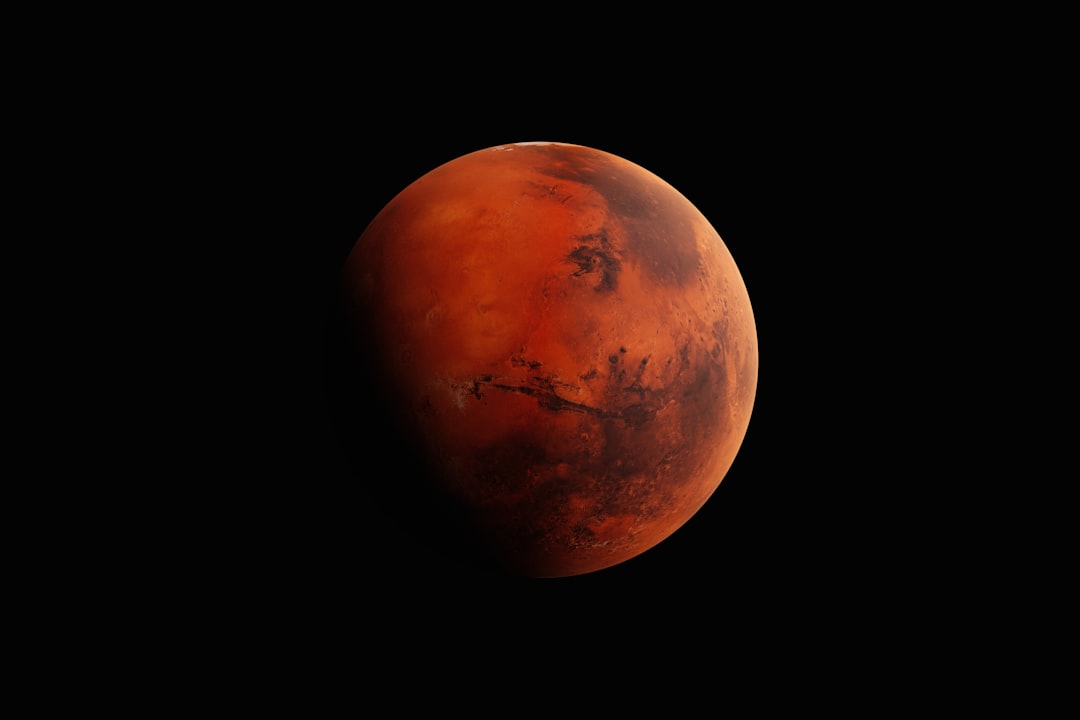
While immediate focus remains on perfecting Earth orbital operations and supporting NASA's lunar ambitions, SpaceX's ultimate goal for Starship extends far beyond our planet and its natural satellite. Elon Musk envisions creating a fleet of interplanetary spacecraft capable of transporting thousands of people to establish permanent settlements on Mars—a goal that seems less like science fiction with each successful test flight.
This vision received unexpected validation when cryptocurrency investor Chun Wang announced his intention to purchase a seat on Starship's first Mars flyby mission, whenever it occurs. "It will light the fire. It will ignite the imagination, and it will build the momentum," Wang stated, articulating the inspirational power of human spaceflight achievement.
The technical challenges remaining are formidable. SpaceX must demonstrate reliable engine performance across all flight phases, perfect the orbital refueling techniques required for deep space missions, and prove that the vehicle can be rapidly and economically refurbished between flights. Each test flight, including this latest mission with its mixture of successes and setbacks, provides invaluable data driving the iterative improvement process.
Key Achievements and Future Milestones
- Successful first flight of Starship V3: Demonstrated fundamental vehicle capabilities and validated major design changes despite encountering several anomalies requiring engineering attention
- Satellite deployment demonstration: Successfully released 22 payloads including technology demonstration satellites, proving the enhanced Pez Dispenser mechanism works as designed
- Starlink video transmission: Achieved first successful in-space video capture and downlink through the Starlink network, enabling future heat shield inspection capabilities
- Reentry and landing flip: Completed atmospheric reentry and demonstrated backup landing procedures using only two engines, showcasing vehicle redundancy and adaptability
- Rapid ground system recovery: Resolved critical pad hardware issues within 24 hours, demonstrating operational agility essential for high launch cadence
As SpaceX continues refining Starship through additional test flights, the aerospace industry watches with keen interest. This vehicle represents not merely an incremental improvement in launch capabilities, but a potential paradigm shift in humanity's relationship with space. Whether ferrying satellites to orbit, carrying astronauts to the Moon, or eventually enabling the colonization of Mars, Starship's development marks a pivotal chapter in the ongoing story of space exploration—one written through the combination of bold vision, engineering excellence, and the willingness to learn from both successes and failures along the way.