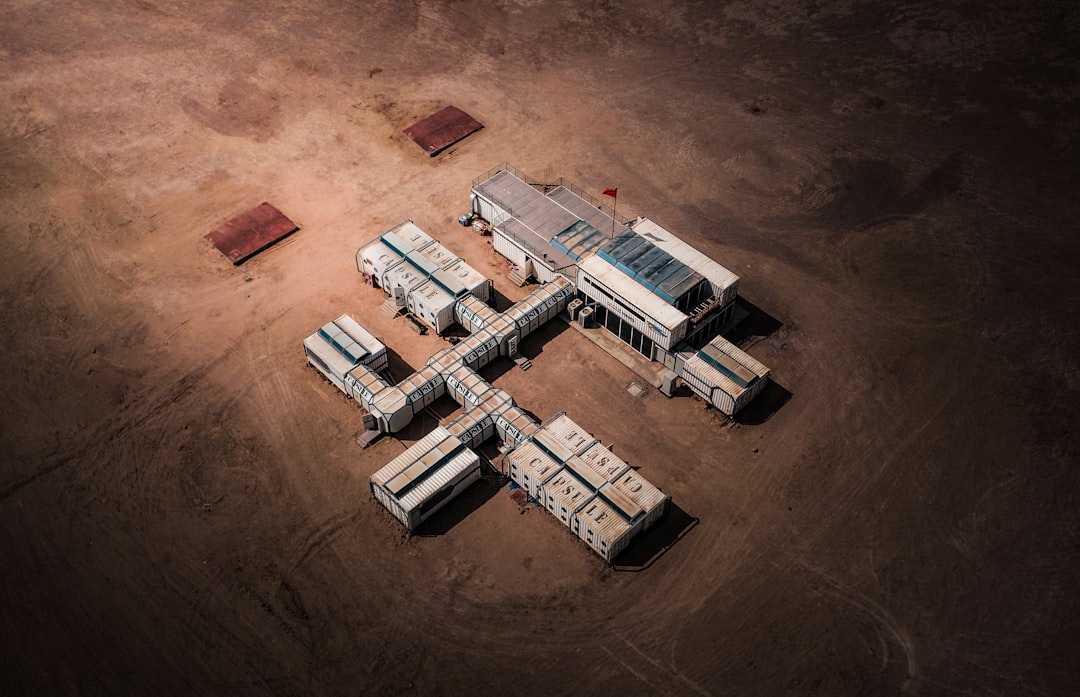
The dream of establishing self-sustaining agricultural systems on Mars has taken a significant leap forward with groundbreaking research exploring how microscopic fungal allies could transform the barren Martian landscape into productive farmland. An international collaboration between scientists from the United States and Brazil has unveiled a promising biotechnological approach that could revolutionize how future settlers grow food on the Red Planet, potentially eliminating the need for costly supply shipments from Earth.
Published in the prestigious journal Frontiers in Astronomy and Space Sciences, this comprehensive review examines how beneficial fungi—microorganisms that naturally enhance nutrient cycling in terrestrial ecosystems—could be harnessed to convert Mars' toxic, nutrient-depleted regolith into viable agricultural substrate. The research represents a crucial step toward achieving true food security for future Martian colonies, addressing one of the most fundamental challenges facing human space exploration.
The implications extend far beyond Mars. Similar techniques could enable lunar agriculture, supporting NASA's Artemis program and plans for permanent Moon bases. This research aligns perfectly with the agency's Moon to Mars Architecture, which emphasizes in situ resource utilization (ISRU) as a cornerstone of sustainable space exploration.
The Challenge of Extraterrestrial Agriculture
Growing crops on Mars presents extraordinary challenges that go far beyond simple gardening. Martian regolith—the loose, rocky material covering the planet's surface—is fundamentally different from Earth's fertile soil. It lacks the essential nutrients that terrestrial plants require, particularly nitrogen, phosphorus, and potassium, often called the "NPK trio" by agricultural scientists. These elements form the backbone of plant metabolism, enabling everything from photosynthesis to root development.
Moreover, Martian regolith contains perchlorates—toxic chemical compounds that can be harmful to both plants and humans. The material's physical structure also differs dramatically from Earth soil, lacking the organic matter, beneficial microorganisms, and water-retention capabilities that make terrestrial agriculture possible. According to research conducted at NASA's Kennedy Space Center, these challenges have made space agriculture one of the most complex problems facing mission planners.
Traditional approaches to this problem have focused on either shipping soil from Earth—an astronomically expensive proposition—or creating entirely synthetic growing media. A single kilogram of payload to Mars costs between $50,000 and $100,000 using current technology, making the transportation of sufficient soil for a sustainable colony economically prohibitive.
Fungal Biotechnology: Nature's Solution to an Alien Problem
The research team's innovative solution draws inspiration from mycorrhizal relationships that have existed on Earth for over 400 million years. These symbiotic partnerships between fungi and plants have been instrumental in enabling plant life to colonize terrestrial environments throughout Earth's history. Now, scientists propose adapting these ancient biological partnerships for humanity's next great colonization effort.
The study focuses particularly on arbuscular mycorrhizal fungi (AMF), a group of organisms that have been utilized in terrestrial agriculture since the mid-19th century. These remarkable microorganisms function as microscopic extensions of plant root systems, dramatically expanding the volume of soil that plants can access for nutrients and water. AMF can increase a plant's root surface area by up to 1,000 times, creating an underground network that efficiently mines nutrients from even the most challenging substrates.
"Including plant growth-promoting fungi into lunar or Martian regolith-based agriculture systems would present a strategic enhancement to space crop production and the establishment of human settlements beyond Earth. Fungi such as Trichoderma and the various AMF (Glomeromycota) stand out for their ability to relieve abiotic stresses, mobilize essential nutrients, and potentially improve the physicochemical structure of regolith substrates."
The researchers also examined Trichoderma species, another group of beneficial fungi known for their stress-tolerance capabilities and ability to promote plant growth under adverse conditions. These fungi produce enzymes that can break down complex minerals, releasing nutrients in forms that plants can absorb. They also produce compounds that enhance plant immunity and resilience against environmental stresses—crucial traits for the harsh Martian environment.
Overcoming Abiotic Stress in Extreme Environments
One of the study's most important contributions is its focus on abiotic stress management—the ability of organisms to survive and thrive in environments dominated by non-living challenges rather than biological threats. On Mars, plants won't face competition from weeds or attacks from insects, but they will confront extreme temperature fluctuations, intense radiation, low atmospheric pressure, and nutrient-starved growing media.
The researchers reviewed extensive terrestrial studies demonstrating how beneficial fungi help plants cope with similar stresses on Earth. In drought conditions, mycorrhizal fungi improve water uptake efficiency by up to 40%. In nutrient-poor soils, they can increase phosphorus availability by 75% or more. These capabilities suggest that fungal-enhanced agriculture could overcome many of the challenges inherent in Martian farming.
Interestingly, some fungal species have already been tested in space. Experiments aboard the International Space Station have demonstrated that certain fungi can survive and even thrive in microgravity environments, maintaining their beneficial properties despite the extreme conditions of space. These studies provide crucial proof-of-concept data suggesting that fungal biotechnology could indeed function in extraterrestrial settings.
The Science of In Situ Resource Utilization
The concept of in situ resource utilization (ISRU)—often described as "living off the land"—represents a paradigm shift in space exploration philosophy. Rather than carrying everything needed from Earth, ISRU strategies leverage local resources to meet mission requirements. For agricultural applications, this means transforming Martian regolith into productive growing substrate using locally-available or easily-transported biological agents like fungal spores.
The economic advantages are staggering. A self-sustaining Martian colony of 100 people might require several tons of fresh food annually. Shipping this from Earth would cost hundreds of millions of dollars per year. By contrast, transporting fungal spores and establishing regolith-based agriculture could reduce these costs by 90% or more after initial setup, according to economic analyses by space industry consultants.
Recent complementary research has demonstrated the viability of ISRU agriculture through different approaches. Scientists recently achieved remarkable success by combining just one gram of cyanobacteria with Martian regolith simulant to produce 27 grams of duckweed—a 27-fold increase in biomass. This experiment, while using a different biological approach, validates the fundamental concept that Martian regolith can be biologically activated to support life.
Key Advantages of Fungal-Enhanced Regolith Agriculture
- Nutrient Mobilization: Beneficial fungi can solubilize minerals locked in regolith particles, converting them into plant-available forms. This biological mining process could make previously inaccessible nutrients available to crops without chemical processing.
- Soil Structure Improvement: Fungal hyphae create networks that bind regolith particles together, improving water retention and creating air spaces necessary for root growth. This transforms loose, dusty regolith into a more soil-like medium.
- Stress Protection: Many beneficial fungi produce compounds that protect plants from oxidative stress, radiation damage, and temperature extremes—all critical factors in the Martian environment.
- Reduced Input Requirements: Mycorrhizal plants require significantly less fertilizer and water than non-mycorrhizal plants, reducing the amount of supplies that must be transported from Earth or manufactured on Mars.
- Self-Replicating System: Once established, fungal populations can reproduce and spread, creating a self-sustaining agricultural ecosystem that requires minimal maintenance or resupply.
From Laboratory to Martian Greenhouse: The Path Forward
While the research presents compelling theoretical and laboratory-based evidence, the authors acknowledge significant knowledge gaps that must be addressed before fungal-enhanced agriculture can become reality on Mars. Most critically, no studies have yet been conducted using actual Martian regolith—all experiments to date have used simulants that approximate Mars' soil chemistry but may not perfectly replicate all its properties.
Future research priorities identified by the study include testing fungal species with authentic lunar and Martian samples returned by missions like Mars Sample Return, currently in development. Scientists also need to determine optimal fungal species combinations, as different fungi may work synergistically to provide complementary benefits. The interaction between fungi, regolith, and different crop species under simulated Martian conditions requires extensive investigation.
The radiation environment on Mars presents another challenge. While some fungi are remarkably radiation-resistant—some species even thrive in the radioactive environment of Chernobyl—the long-term effects of Martian radiation levels on fungal-plant partnerships remain unknown. Research conducted by the European Space Agency on radiation biology will be crucial for addressing these questions.
Timeline and Implementation Strategy
Despite the remaining challenges, researchers express cautious optimism about the timeline for implementing fungal-enhanced Martian agriculture. Early demonstrations could potentially occur during the 2030s, coinciding with the first crewed Mars missions. These initial experiments would likely be small-scale proof-of-concept studies conducted in pressurized greenhouses with carefully controlled conditions.
The progression might follow this trajectory: First, automated missions could deliver fungal inoculants and seeds to Mars, establishing test plots before human arrival. Early crewed missions would then monitor and optimize these systems, gradually scaling up production. Within 10-15 years of the first human landing, a mature bioregenerative life support system incorporating fungal-enhanced agriculture could provide a substantial portion of settlers' nutritional needs.
Broader Implications for Space Colonization
The significance of this research extends well beyond solving the immediate problem of food production. Successful implementation of fungal biotechnology on Mars would demonstrate humanity's ability to establish truly sustainable, Earth-independent settlements in space—a crucial milestone in becoming a multi-planetary species.
The techniques developed could be adapted for other destinations, including the Moon, asteroids, or even the moons of Jupiter and Saturn where future missions might venture. Each environment would present unique challenges, but the fundamental principle of using biological systems to transform hostile regolith into productive substrate could remain applicable.
Furthermore, this research has immediate applications on Earth. The same techniques for growing crops in nutrient-poor substrates could help address agricultural challenges in degraded soils, deserts, or areas affected by climate change. Ironically, solving the problem of farming on Mars might provide solutions for feeding Earth's growing population in increasingly challenging terrestrial environments.
The integration of advanced biotechnology with traditional agricultural practices represents a convergence of ancient wisdom and cutting-edge science. Indigenous peoples have understood the importance of soil microbiomes for millennia; now we're applying that knowledge to perhaps the ultimate agricultural challenge—farming on another planet.
Conclusion: Cultivating the Future Among the Stars
As humanity stands on the threshold of becoming an interplanetary civilization, the humble fungus may prove to be one of our most valuable allies. This research demonstrates that the path to sustainable Martian colonization doesn't necessarily require massive technological breakthroughs or enormous financial investments—sometimes the best solutions come from understanding and harnessing the biological systems that have sustained life on Earth for hundreds of millions of years.
The vision of thriving crops growing in Martian soil, nourished by fungal partners working invisibly beneath the surface, may seem like science fiction today. But with continued research, careful experimentation, and the integration of multiple ISRU strategies, it could become routine reality for Mars settlers within the next few decades. The question is no longer whether we can grow food on Mars, but rather how quickly we can perfect the techniques to make it practical and sustainable.
As the researchers conclude, the incorporation of plant growth-promoting fungi into extraterrestrial agriculture systems offers a promising biotechnological tool to transform inhospitable regolith into productive farmland. This transformation—from barren alien soil to life-sustaining cropland—encapsulates humanity's greatest strength: our ability to adapt, innovate, and thrive in even the most challenging environments. The future of space exploration may well depend on these microscopic organisms working in partnership with human ingenuity to make the Red Planet green.