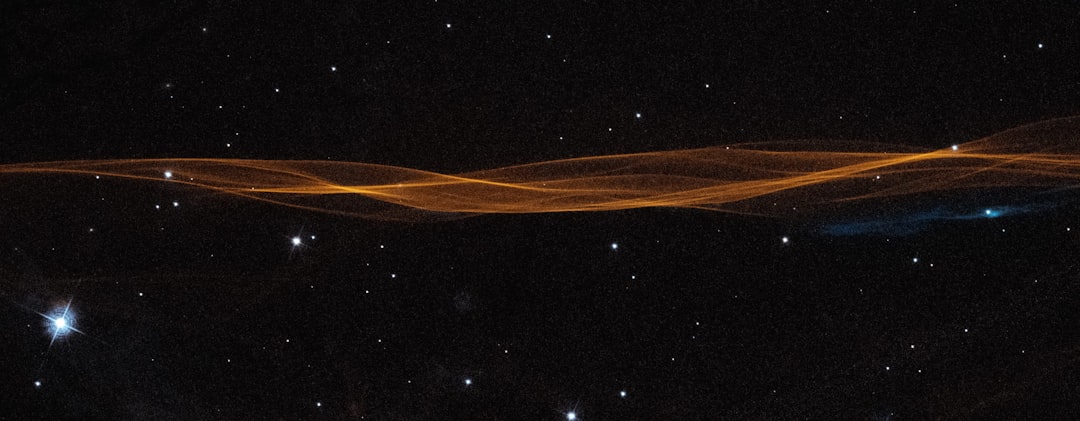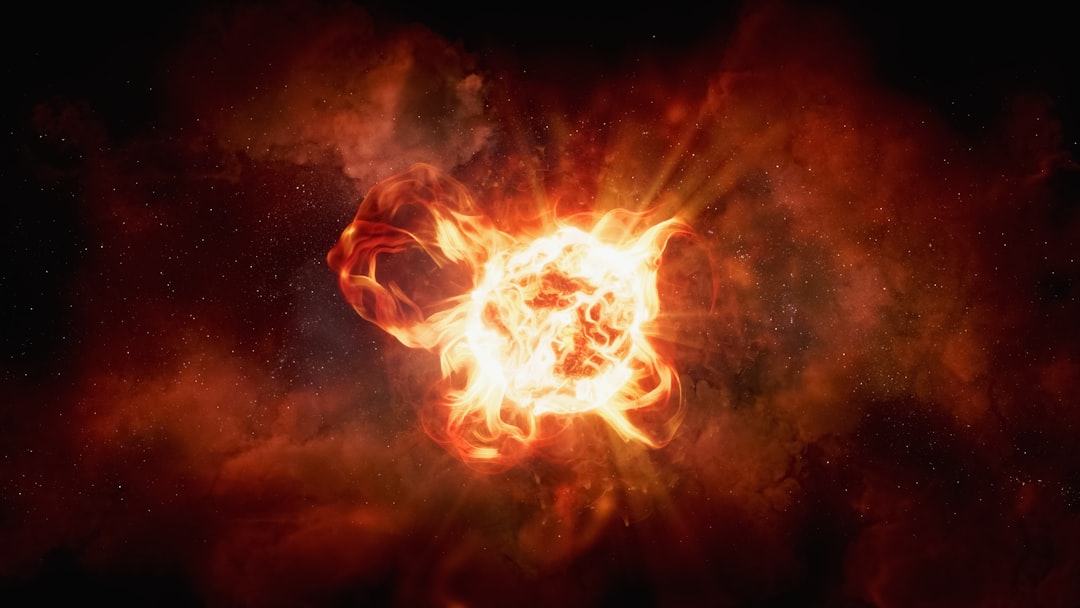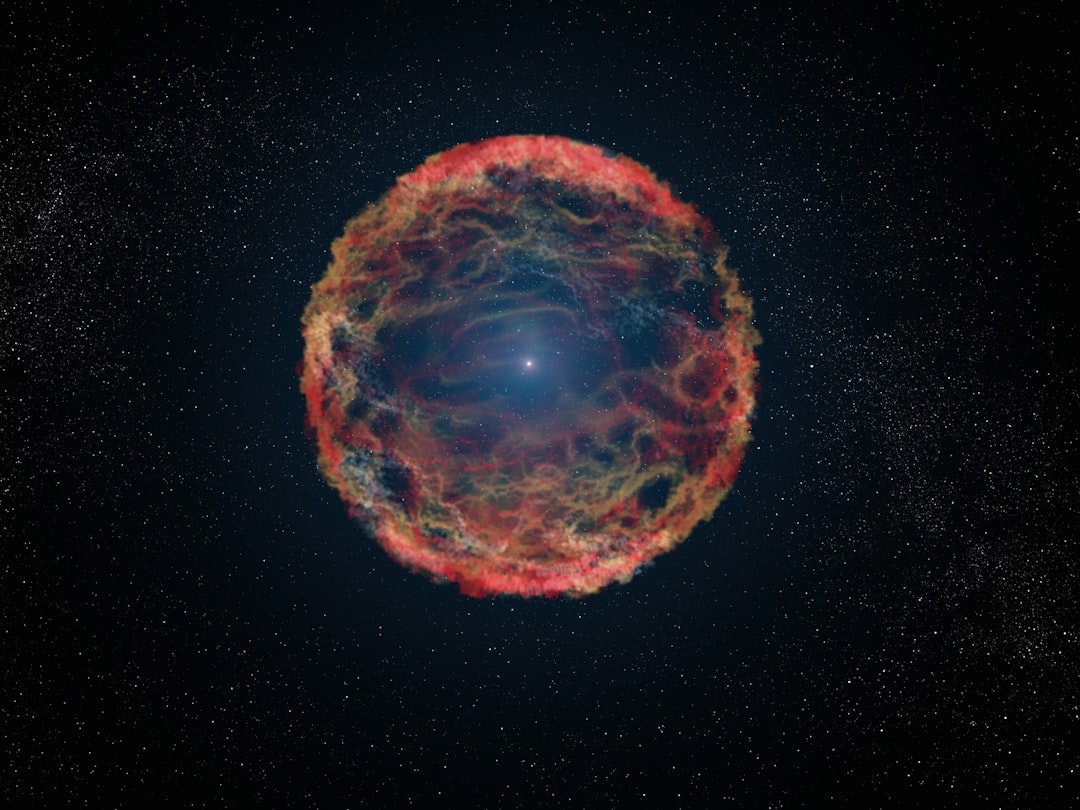
In the cosmic theater of stellar death, few events can match the spectacular brilliance of superluminous supernovae (SLSNe)—explosions so intense they can outshine an entire galaxy of stars by a factor of 100 or more. These extraordinary cosmic fireworks have puzzled astronomers for years, with competing theories attempting to explain the extreme energy output that makes them visible across vast cosmic distances. Now, groundbreaking research using NASA's Fermi Gamma-ray Space Telescope has provided compelling evidence that at least some of these stellar behemoths are powered by magnetars—the most magnetically intense objects known in the universe.
A team of international researchers led by Dr. Fabio Acero from the French National Centre for Scientific Research (CNRS) and the University of Paris-Saclay has conducted an exhaustive analysis of gamma-ray data spanning 16 years of Fermi observations. Their investigation, published in the prestigious journal Astronomy and Astrophysics, focused on six superluminous supernovae and yielded a historic first: the definitive detection of gamma-ray emissions from a superluminous supernova, specifically SN 2017egm. This discovery represents a watershed moment in high-energy astrophysics, finally providing observational evidence to distinguish between competing theoretical models that have divided the scientific community.
The implications extend far beyond a single observation. Understanding the power source behind superluminous supernovae helps astronomers piece together the life cycles of the most massive stars in the universe, the extreme physics of neutron stars, and the mechanisms that enrich the cosmos with heavy elements essential for planet formation and ultimately, life itself.
The Mystery of Cosmic Superluminosity
For decades, astronomers have grappled with a fundamental question: what mechanism could possibly generate the extraordinary luminosity observed in superluminous supernovae? Regular core-collapse supernovae—already among the most energetic events in the universe—occur when massive stars exhaust their nuclear fuel and collapse under their own gravity, triggering a catastrophic explosion. These events can briefly outshine all other stars in their host galaxy combined. Yet superluminous supernovae are 10 to 100 times brighter still, radiating energy equivalent to hundreds of billions of suns.
Two primary theoretical frameworks have emerged to explain this phenomenon. The magnetar central engine model proposes that a rapidly spinning neutron star with an extraordinarily powerful magnetic field—a magnetar—forms at the heart of the explosion. This magnetar rotates hundreds of times per second, generating an intense outflow of electrons and positrons that creates a vast cloud of energetic particles known as a magnetar wind nebula. The interactions within this nebula produce gamma rays that are subsequently absorbed and re-emitted as visible light, providing the extra energy boost that makes these supernovae so luminous.
The competing circumstellar material (CSM) interaction model takes a different approach. In this scenario, the progenitor star undergoes multiple episodes of mass loss before its final explosion, creating concentric shells of gas and dust expanding outward into space. When the supernova finally occurs, the explosive debris slams into these pre-existing shells at tremendous velocities, converting kinetic energy into light through shock heating. This model can also explain the irregular brightness variations sometimes observed in superluminous supernovae, as the ejecta encounters successive shells over time.
Gamma-Ray Signatures: The Smoking Gun
The key to differentiating between these models lies in gamma-ray observations—the highest-energy form of electromagnetic radiation. As the research team notes in their paper, "While the optical properties of SLSNe are extensively studied, their γ-ray signatures remain poorly constrained." This observational gap has prevented definitive conclusions about which mechanism dominates in superluminous supernovae.
The challenge is formidable. Gamma rays from supernovae are exceedingly rare and difficult to detect, even with sophisticated space-based observatories like Fermi. Earth's atmosphere absorbs gamma rays completely, necessitating space-based detection, and the signals are often faint and transient. As Dr. Acero explained in a NASA press release:
"For nearly 20 years, astronomers have searched Fermi data for gamma-ray signals from thousands of supernovae, and while a few intriguing hints have been reported, none were definitive until now."
The breakthrough came from careful analysis of SN 2017egm, a superluminous supernova discovered in 2017 in a galaxy approximately 420 million light-years from Earth. Initial gamma-ray hints from this event were first identified in 2024, nearly seven years after the supernova was observed in optical wavelengths. The gamma-ray emission was transient, appearing roughly two months after the explosion and persisting for several months before fading—a timeline that provides crucial clues about the underlying physics.
The Magnetar Model in Action
Magnetars represent one of nature's most extreme creations. These ultra-magnetized neutron stars possess magnetic fields up to 1,000 times stronger than typical neutron stars—already among the most magnetic objects known. To put this in perspective, a magnetar's magnetic field is so intense that it could erase the information on a credit card from halfway to the Moon, and the quantum effects near its surface would literally warp the shapes of atoms.
In the context of superluminous supernovae, the magnetar model predicts a specific sequence of events. When a massive star collapses, it may form a rapidly rotating magnetar rather than a black hole. This newborn magnetar spins at incredible rates—potentially hundreds of revolutions per second—and its rotation coupled with its intense magnetic field drives a powerful wind of relativistic particles. These particles create the magnetar wind nebula, a vast cloud of energetic matter surrounding the neutron star.
Within this nebula, complex interactions produce high-energy gamma rays. However, these gamma rays cannot immediately escape. The dense cloud of supernova debris surrounding the magnetar is initially opaque to gamma radiation. Only as this debris expands and cools—a process taking approximately two to three months—do conditions allow gamma rays to begin leaking out. This predicted timeline matches perfectly with the observations of SN 2017egm.
Dr. Acero elaborated on this mechanism: "About three months after the collapse, as the supernova debris expands and cools, the gamma rays can begin to leak out. This magnetar model best reproduces the supernova's luminosity and the arrival time of its gamma rays during the first months, but we see room for improvement at later times, when the visible light fades quite irregularly."
Comprehensive Analysis of Six Superluminous Supernovae
The research team's methodology involved a systematic examination of six superluminous supernovae captured in Fermi's 16-year data archive. These events were selected based on their exceptional brightness and favorable observational circumstances. The researchers conducted detailed analysis in the 100 MeV to 100 GeV energy range—the sweet spot for Fermi's Large Area Telescope—searching for any hint of gamma-ray emission associated with each supernova.
The results were striking in their clarity. Of the six superluminous supernovae examined, only SN 2017egm showed detectable gamma-ray emissions. The team then compared the observed optical and gamma-ray light curves against predictions from both the magnetar and CSM interaction models. The analysis revealed several key findings:
- Temporal correlation: The gamma-ray emission from SN 2017egm appeared approximately 43 days after the supernova's discovery and persisted until about 155 days post-discovery, matching magnetar model predictions with remarkable precision
- Energy output consistency: The total energy budget observed in gamma rays aligned with theoretical calculations for a young, rapidly spinning magnetar, while being difficult to explain through CSM interactions alone
- Spectral characteristics: The energy distribution of the detected gamma rays followed patterns consistent with particle acceleration in a magnetar wind nebula
- Optical irregularities: Late-time variations in the visible light curve suggested possible complications, potentially indicating either multiple CSM shell interactions or ongoing magnetar activity
The researchers concluded that "the γ-ray emission is well described by the magnetar model in order to match both the observed flux and time properties of the γ-ray signal." However, they acknowledge that the full picture may be more complex than a single model can capture.
Hybrid Models and Future Complications
While the magnetar model provides the best overall fit to the observations, the research team recognizes that nature may not adhere strictly to theoretical categories. The optical light curve of SN 2017egm exhibits late-time bumpy structures—irregular variations in brightness that don't fit neatly into the pure magnetar scenario. These features could indicate one of two possibilities:
First, a hybrid model may be at work, where both a central magnetar and circumstellar material interactions contribute to the observed luminosity. In this scenario, the magnetar provides the primary power source and explains the gamma-ray emission, while interactions with pre-existing shells of material ejected by the progenitor star create the irregular optical variations observed at later times.
Alternatively, a pure magnetar model with additional complexity might explain all observations. The researchers suggest that "both the γ-ray and optical properties are fully explained by a magnetar and an infalling accretion disk." In this interpretation, material falling back onto the magnetar from the supernova debris could create episodic bursts of energy release, accounting for the irregular optical behavior while maintaining the magnetar as the sole power source.
The Extreme Physics of Magnetars
Understanding magnetars themselves remains one of astrophysics' ongoing challenges. These objects were first detected in the late 1970s as mysterious sources of repeating gamma-ray bursts, dubbed soft gamma repeaters. The term "magnetar" was coined in a landmark 1992 paper by Duncan and Thompson, which proposed that "there is evidence that the soft gamma repeaters are young magnetars." This hypothesis was confirmed observationally in 1998, opening a new chapter in neutron star physics.
Magnetars form when the most massive stars—those with initial masses exceeding 40 solar masses—undergo core collapse. Under specific conditions involving rapid rotation and intense magnetic field amplification during the collapse process, the resulting neutron star can emerge with magnetic field strengths reaching 10^15 Gauss or higher. For comparison, Earth's magnetic field is about 0.5 Gauss, and even the strongest laboratory magnets achieve only about 100,000 Gauss.
These extreme magnetic fields have profound consequences. They store enormous amounts of energy—enough to power a superluminous supernova for months. They also make magnetars incredibly violent objects, prone to sudden outbursts and starquakes that can release more energy in a fraction of a second than the Sun emits in a year.
Next-Generation Observations and Future Prospects
The detection of gamma rays from SN 2017egm represents just the beginning of a new era in superluminous supernova research. Several upcoming facilities promise to revolutionize our understanding of these extreme events and the magnetars that may power them.
The Cherenkov Telescope Array Observatory (CTAO), currently under construction, will be the world's most sensitive ground-based gamma-ray observatory. With 64 telescopes spread across two sites in Chile and Spain, CTAO will detect gamma rays by observing the brief flashes of Cherenkov radiation they produce when striking Earth's atmosphere. The research team notes that "a CTAO detection of a SLSN would strongly favor the magnetar scenario," as the CSM interaction model predicts strong absorption of the highest-energy gamma rays.
However, CTAO's sensitivity comes with limitations. The facility will likely only detect superluminous supernovae occurring relatively nearby—within about 140 megaparsecs (roughly 450 million light-years). Given the rarity of these events, the team estimates CTAO might detect "a few per decade" at most. Nevertheless, each detection would provide invaluable data about magnetar physics and the extreme conditions in superluminous supernovae.
Perhaps even more significant is the upcoming Vera Rubin Observatory and its Legacy Survey of Space and Time (LSST). This revolutionary facility, expected to begin operations soon, will conduct an unprecedented 10-year survey of the entire visible sky. Scientists project that LSST will discover between 3 and 4 million supernovae of all types—an increase of several orders of magnitude over current catalogs. Among these will be hundreds or thousands of superluminous supernovae, providing a statistical sample large enough to determine what fraction are powered by magnetars versus other mechanisms.
Judy Racusin, deputy project scientist for the Fermi mission at NASA's Goddard Space Flight Center, emphasized the broader significance:
"The magnetar central engine mechanism discussed in this paper builds upon a lot of observational and theoretical advances in magnetars over the last 20 years. Observing gamma rays from supernovae will give us a new way to explore their inner workings."
Implications for Stellar Evolution and Cosmic Chemistry
The confirmation that magnetars can power superluminous supernovae has far-reaching implications beyond the immediate physics of these explosions. Understanding the progenitor stars that produce magnetars helps astronomers map the evolution of the most massive stars in the universe—objects that play crucial roles in galactic evolution and cosmic chemical enrichment.
Massive stars are the cosmic forges where elements heavier than helium are synthesized through nuclear fusion. When these stars explode as supernovae, they scatter these elements—including carbon, oxygen, iron, and heavier elements—throughout space. These materials eventually incorporate into new generations of stars, planets, and potentially life itself. Superluminous supernovae, being among the most energetic stellar explosions, may play an outsized role in this process, particularly in the early universe when the first generations of massive stars formed.
The presence of a magnetar also affects the chemical composition and physical properties of the supernova remnant. The intense radiation and particle winds from the magnetar can alter the ionization state of surrounding material, influence the formation of dust grains, and affect how the remnant evolves over thousands of years. These factors, in turn, impact the magnetar's visibility across different wavelengths and its ultimate fate—whether it will slow down to become a typical neutron star or potentially collapse into a black hole.
Conclusion: A New Window on Cosmic Extremes
The detection of gamma rays from SN 2017egm marks a historic milestone in high-energy astrophysics, providing the first definitive observational evidence linking superluminous supernovae to magnetar central engines. This discovery validates decades of theoretical work and opens new avenues for understanding the most extreme stellar explosions in the universe.
Yet significant questions remain. Why do only some massive star collapses produce magnetars while others form conventional neutron stars or black holes? What determines the initial spin rate and magnetic field strength of newborn magnetars? How common are hybrid scenarios where both magnetar power and circumstellar interactions contribute to superluminous supernova luminosity? Can we predict which superluminous supernovae will produce detectable gamma rays?
The coming decade promises answers to many of these questions. As the Vera Rubin Observatory floods the field with new discoveries,