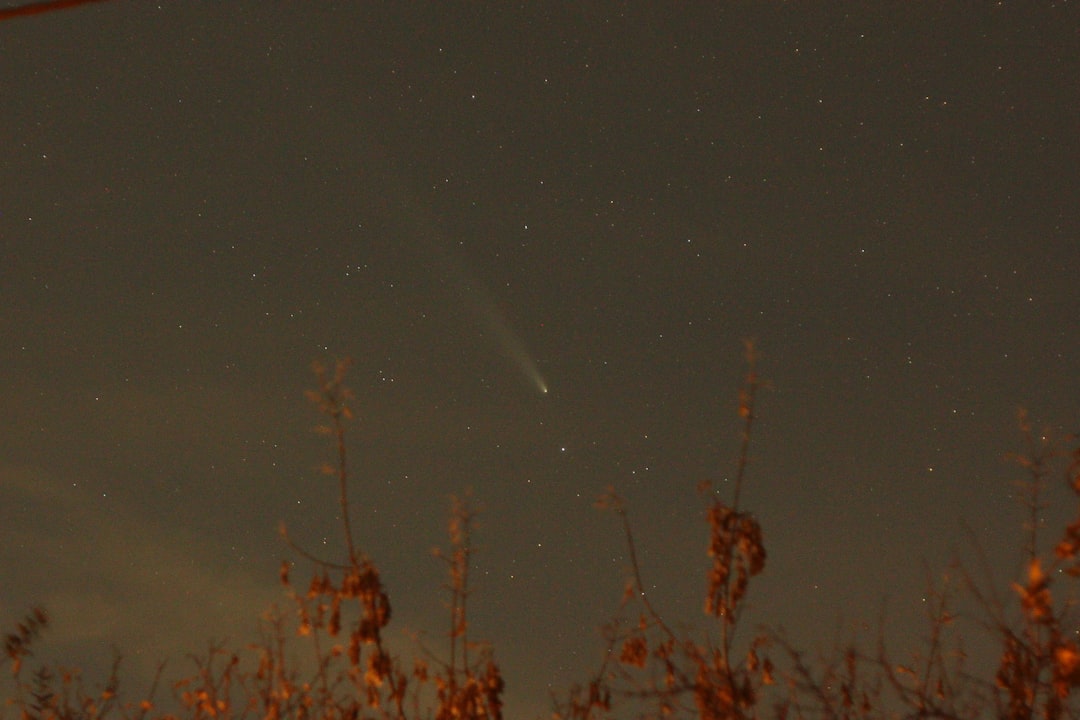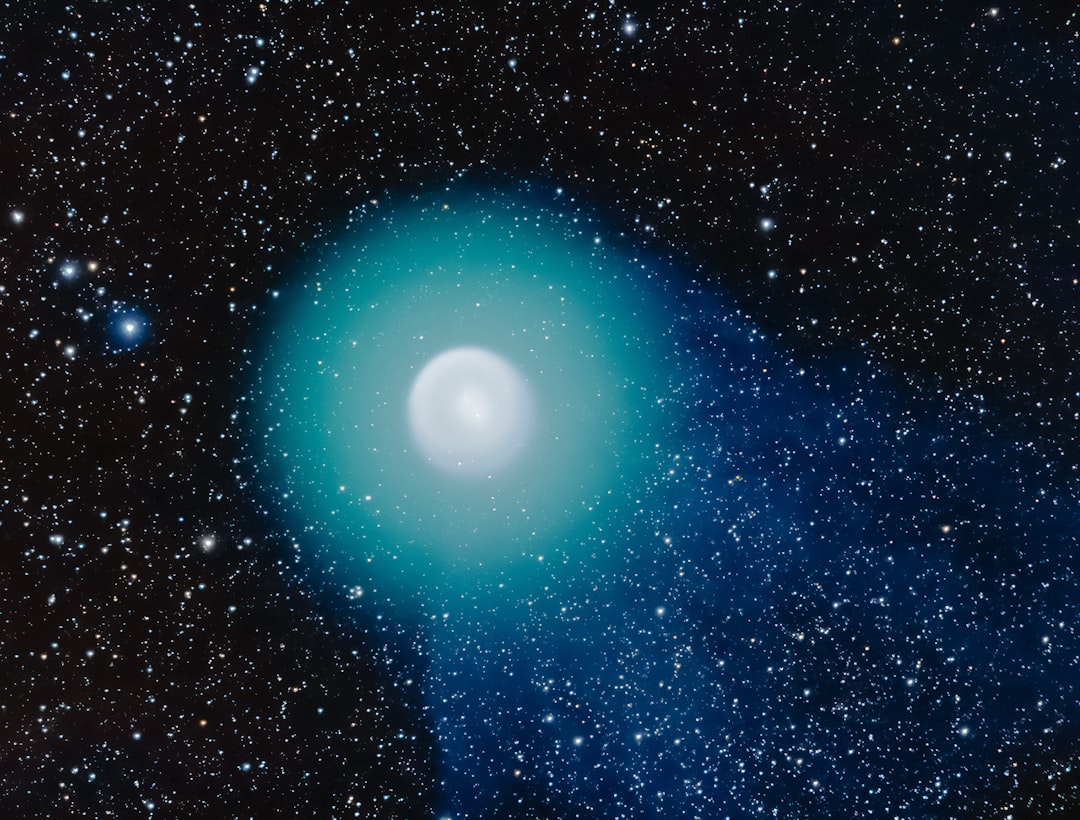
In the realm of astronomical discovery, some of the most profound observations emerge not from years of meticulous planning, but from fortunate timing and scientific serendipity. The Hubble Space Telescope recently captured one of these rare cosmic events: the dramatic fragmentation of Comet C/2025 K1 (ATLAS) as it disintegrated following its close passage near the Sun. This unexpected observation has provided scientists with an extraordinary window into the pristine interior of a primordial visitor from the outer reaches of our Solar System, offering insights that researchers have sought for decades.
The remarkable discovery came about through a twist of fate. A team of comet researchers, led by Professor Dennis Bodewits from Auburn University's Department of Physics, had secured precious observing time on the Hubble to study an entirely different comet. However, technical constraints prevented them from observing their original target, forcing them to quickly identify an alternative subject. They selected Comet K1, and through extraordinary luck, captured the comet's breakup in real-time—a phenomenon that occurs on timescales of mere days and is notoriously difficult to predict or observe.
This fortuitous observation, detailed in the prestigious journal Icarus, represents more than just a lucky break. It provides scientists with time-resolved data on comet fragmentation that has rarely been obtained before, offering crucial insights into the internal structure, composition, and behavior of these ancient celestial wanderers from the Oort Cloud.
A Pristine Messenger from the Solar System's Birth
Comet C/2025 K1 (ATLAS) belongs to a special category of celestial objects known as non-periodic comets—cosmic visitors that journey directly from the Oort Cloud, a vast spherical shell of billions of icy bodies located in the outermost reaches of our Solar System, extending from approximately 2,000 to 100,000 astronomical units from the Sun. These objects are essentially frozen time capsules, preserving material from the Solar System's formation approximately 4.6 billion years ago.
However, studying these pristine remnants presents a significant scientific challenge. When comets venture into the inner Solar System, their surfaces undergo dramatic transformations. Solar radiation heats and alters their outer layers, while cosmic rays—high-energy particles from distant stellar explosions—bombard and chemically modify their surfaces over millions of years. This creates what scientists call the "surface alteration problem": distinguishing between the comet's original, pristine composition and properties that have been modified by its long journey through space.
As co-author Professor John Noonan explained in a press release, the significance of catching this fragmentation event cannot be overstated. The research team at NASA's Hubble Space Telescope has long sought such observations, as they provide unprecedented access to a comet's unaltered interior material—something that would otherwise remain hidden beneath modified surface layers.
The Anatomy of a Cosmic Breakup
The dramatic events leading to Comet K1's fragmentation began with its perihelion passage—its closest approach to the Sun—which occurred on October 8, 2025, at a distance of just 0.33 astronomical units (approximately 31 million miles). To put this in perspective, this is closer to the Sun than Mercury's orbit, subjecting the comet to intense thermal stress and radiation.
Daily monitoring by the Las Cumbres Observatory Outbursting Objects Key Project, a coordinated network of telescopes dedicated to tracking sudden activity changes in small Solar System bodies, detected a major surge in the comet's activity between November 2 and 4. This increase was accompanied by rapid, dramatic changes in the comet's coma morphology—the cloud of gas and dust surrounding the nucleus.
"While I was taking an initial look at the data, I saw that there were four comets in those images when we only proposed to look at one. So we knew this was something really, really special," said Professor John Noonan, describing the moment he realized they had captured something extraordinary.
The Hubble Space Telescope's STIS (Space Telescope Imaging Spectrograph) captured high-resolution images on November 8-10, just days after the fragmentation event. These observations resolved five distinct fragments, providing scientists with an exceptionally early view of a comet nucleus in the process of active disruption. Prior to breaking apart, Comet K1 measured approximately 8 kilometers across—slightly larger than average for long-period comets, though considerably smaller than famous examples like Halley's Comet (11 km) or Comet Hale-Bopp (60 km).
Decoding the Fragmentation Timeline
One of the most intriguing aspects of the Hubble observations was the ability to construct a detailed temporal sequence of the breakup. The space telescope's orbital vantage point provided clarity that ground-based observations simply cannot match. While Earth-based telescopes saw only indistinct blobs, Hubble's sharp vision allowed researchers to trace fine structural details and piece together exactly what happened during those critical days.
The sequential images revealed a puzzling phenomenon: there was a notable delay between fragmentation and bright outbursts. This observation contradicts the simple expectation that freshly exposed ice would immediately brighten as it begins to sublimate (transform directly from solid to gas). Instead, the fragments showed a lag period of approximately 1-3 days before displaying enhanced brightness and dust activity.
Scientists propose two primary explanations for this delay. The first hypothesis suggests that a reflective dust layer must form on the newly exposed surfaces before significant brightening occurs. This would require time for sublimating gases to drag dust particles from the interior and deposit them on the fresh surfaces, where they can efficiently reflect sunlight.
The alternative explanation involves thermal penetration. Heat from the Sun may require time to penetrate into the comet fragments, gradually building pressure as subsurface ices warm and begin to vaporize. Eventually, this pressure reaches a critical threshold, triggering the explosive ejection of expanding dust shells that create the observed brightening.
The Physics of Comet Destruction
Understanding why comets fragment is crucial for comprehending the evolution and ultimate fate of these objects. Research published by Icarus, the International Journal of Solar System Studies, indicates that fragmentation represents a common evolutionary endpoint for long-period comets. The process is typically driven by several interrelated factors:
- Progressive mass loss: Each passage near the Sun causes comets to lose material through sublimation, gradually weakening their structural integrity over multiple orbits
- Thermal stress: Extreme temperature gradients between the sunlit and shadowed sides create mechanical stresses that can exceed the comet's tensile strength
- Rotational spin-up: Asymmetric outgassing—where jets of gas and dust erupt more strongly from some areas than others—acts like tiny rocket engines, gradually increasing the comet's rotation rate until centrifugal forces overcome gravitational binding
- Mechanical failure: The observations of Comet K1 suggest a "nucleus-wide mechanical failure," indicating that the entire structure became compromised simultaneously rather than fragmenting gradually
A Chemical Anomaly: Implications for Comet Origins
Beyond the spectacular fragmentation event itself, Comet K1 has revealed a chemical composition that sets it apart from most other observed comets. Pre-perihelion spectroscopic analysis detected an extreme depletion in carbon-bearing species, yielding one of the lowest CN/OH (cyanogen to hydroxyl) ratios ever measured in a comet. This unusual chemistry places K1 in rare company with only a handful of other chemically anomalous comets.
This chemical peculiarity raises fascinating questions about the comet's origins. Some researchers have speculated that comets with such unusual compositions might be interstellar interlopers—objects that formed around other stars and were later captured by our Sun's gravity. While this remains speculative, the possibility underscores how much we still have to learn about the diversity of objects in our cosmic neighborhood. The discovery of confirmed interstellar objects like 'Oumuamua and Comet 2I/Borisov has demonstrated that such visitors do occasionally pass through our Solar System.
The fragmentation of Comet K1 has provided a unique opportunity to probe its heterogeneous interior composition. The observations suggest that water ice, carbon dioxide, and other volatile compounds are not uniformly mixed throughout the nucleus. Instead, they exist in distinct patches or layers, indicating that different regions of the comet formed under varying conditions in the early Solar System. This patchiness means that different components sublimate at different times and rates, creating the complex outgassing patterns observed.
The Critical Window: Rapid Response Science
One of the most significant scientific insights from this observation concerns the brief but crucial period immediately following fragmentation. The research team identified a 1-3 day window between breakup and the onset of significant dust activity. During this interval, the gases escaping from the comet's interior may closely reflect the bulk nucleus composition, before being contaminated or obscured by dust.
"Never before has Hubble caught a fragmenting comet this close to when it actually fell apart. Most of the time, it's a few weeks to a month later. And in this case, we were able to see it just days after. This is telling us something very important about the physics of what's happening at the comet's surface," Professor Noonan emphasized.
This discovery has profound implications for rapid-response observing strategies. When future comet fragmentation events are detected, astronomers now know they have a narrow window of just a few days to obtain spectroscopic measurements that can reveal the true, unaltered composition of the comet's interior. This knowledge will inform observing proposals for facilities like the James Webb Space Telescope and other advanced instruments.
Building on a Legacy of Comet Science
The study of comet composition has been a cornerstone of Solar System science for decades. NASA's Stardust mission, which returned samples from Comet Wild 2 in 2006, provided the first direct analysis of cometary material in terrestrial laboratories. Those samples revealed unexpected complexity, including minerals that formed at high temperatures near the young Sun, demonstrating that material was mixed throughout the early Solar System more thoroughly than previously believed.
The Hubble observations of Comet K1 complement such sample-return missions by providing context for how comets behave and evolve. While we cannot yet bring samples from every interesting comet to Earth, telescopic observations allow us to study many objects and understand the diversity of the comet population. The European Space Agency's Rosetta mission to Comet 67P/Churyumov-Gerasimenko further demonstrated the value of detailed, long-term comet observations, revealing daily and seasonal variations in activity.
Future Directions and Ongoing Analysis
While the initial imaging observations have provided remarkable insights, the scientific investigation of Comet K1 is far from complete. The research team is currently conducting detailed analysis using Hubble's Cosmic Origins Spectrograph (COS), which will provide precise measurements of the gases released during fragmentation. These spectroscopic data will reveal the abundances of various volatile compounds, including water, carbon monoxide, carbon dioxide, ammonia, and methane.
Understanding the relative abundances of these molecules provides crucial constraints on the temperature and conditions under which the comet formed. Different volatile species condense at different temperatures, so their ratios serve as a kind of thermometer recording conditions in the outer Solar System billions of years ago. This information helps planetary scientists refine models of how our Solar System's architecture evolved and how material was distributed during the planet-formation epoch.
The serendipitous nature of this discovery also highlights the importance of flexible observing strategies and rapid target-of-opportunity programs. As Professor Bodewits noted, "The irony is now we're just studying a regular comet and it crumbles in front of our eyes." This unexpected turn of events underscores the value of maintaining adaptable observing programs that can quickly respond to transient astronomical phenomena.
Broader Implications for Planetary Science
The fragmentation and study of Comet K1 contributes to several broader questions in planetary science. Understanding how comets break apart helps scientists model the delivery of water and organic compounds to the early Earth—a process that may have been crucial for the emergence of life on our planet. Comets are thought to have contributed significantly to Earth's oceans and may have delivered complex organic molecules that served as precursors to biological chemistry.
Additionally, observations like these inform our understanding of potentially hazardous objects. While comets pose less of an impact threat than asteroids due to their typically more distant orbits, understanding their structural properties and fragmentation behavior is important for comprehensive planetary defense strategies. Knowing how these objects respond to thermal stress and how quickly they can break apart helps scientists assess risks and plan potential mitigation strategies.
The research also demonstrates the continuing scientific value of the Hubble Space Telescope, now in its fourth decade of operation. Despite the arrival of newer facilities like the James Webb Space Telescope, Hubble's unique capabilities—particularly its sharp visible-light imaging and UV spectroscopy—remain essential for certain types of observations. The telescope's ability to rapidly respond to targets of opportunity, as demonstrated by the Comet K1 observations, ensures its continued relevance to cutting-edge astronomical research.
As astronomers continue to monitor the dispersing fragments of Comet K1 and analyze the wealth of data collected by Hubble and ground-based observatories, this fortunate observation will undoubtedly yield additional insights into the nature of these ancient visitors from the outer Solar System. The event serves as a reminder that in science, being prepared to seize unexpected opportunities can be just as important as careful planning—and sometimes, you just get lucky.