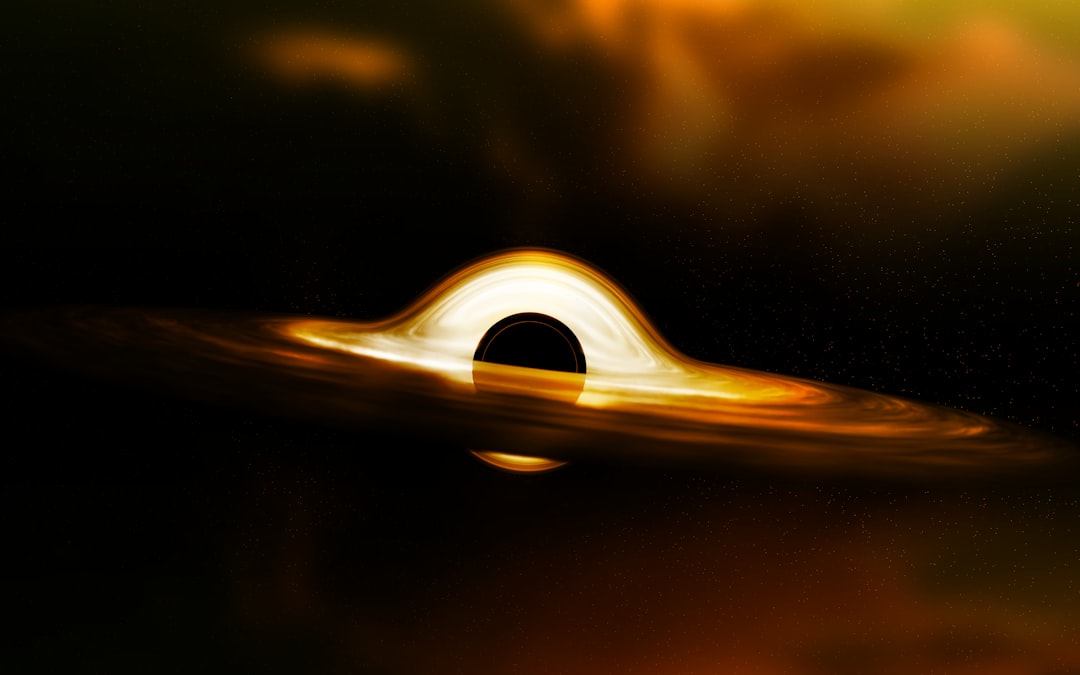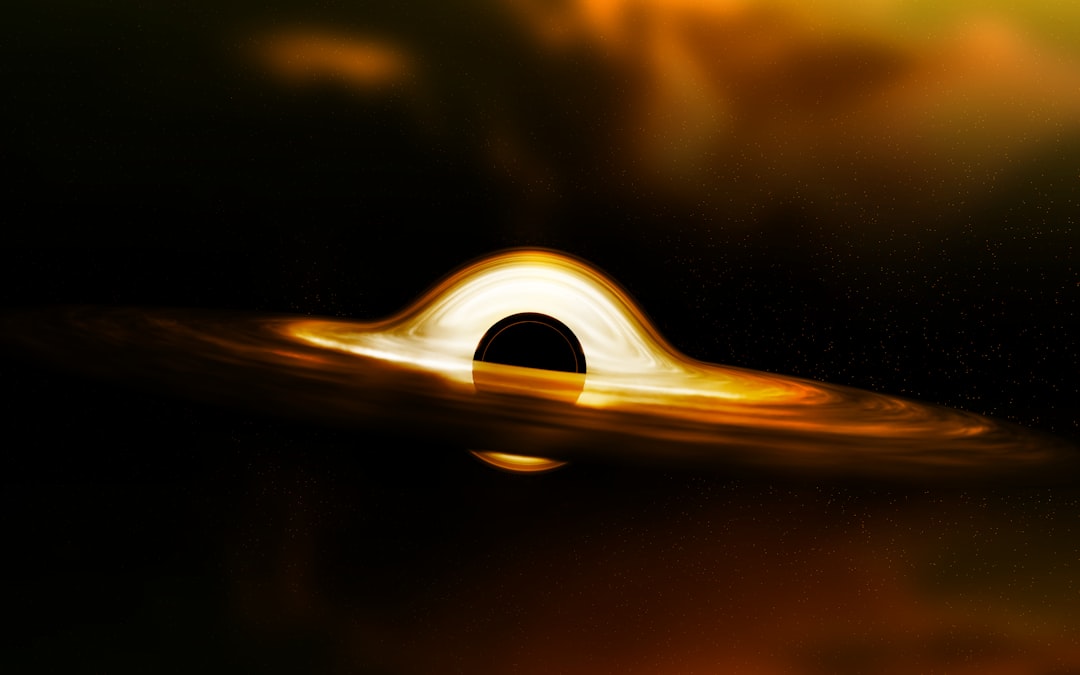
When the Event Horizon Telescope (EHT) collaboration unveiled the first-ever photograph of a black hole in 2019, it marked a watershed moment in astronomical history. The iconic image of M87*, a supermassive black hole residing 55 million light-years from Earth, presented humanity with visual proof of these cosmic enigmas that had existed only in mathematical equations and theoretical physics for over a century. The glowing orange ring—superheated matter orbiting at the edge of oblivion—captivated the global imagination and validated decades of predictions from Einstein's general relativity.
Yet as revolutionary as these images were, they represented merely the opening chapter of black hole observation. The 2019 image of M87* and the subsequent 2022 capture of Sagittarius A* (Sgr A*), the supermassive black hole anchoring our own Milky Way galaxy, were essentially frozen snapshots—two-dimensional glimpses of phenomena unfolding across four dimensions of spacetime. These static portraits couldn't reveal the turbulent dance of plasma spiraling inward, the intricate architecture of magnetic field lines threading through the accretion disk, or the dramatic warping of spacetime itself under the most extreme gravitational conditions in the universe.
Now, an ambitious £4 million international research initiative promises to transform our understanding of these cosmic behemoths by creating the first-ever three-dimensional movies of black holes. This groundbreaking project will reveal black holes not as they appear in a single moment, but as dynamic, evolving systems where matter, energy, and spacetime interact in ways that challenge the boundaries of known physics.
Beyond Static Images: The Quest for Dynamic Black Hole Visualization
The new research collaboration, dubbed TomoGrav (Tomographic Gravitational Imaging), brings together two pioneering scientists at the forefront of astronomical imaging. Dr. Kazunori Akiyama from MIT's Haystack Observatory, who served as co-lead for the imaging team that produced the historic first black hole photographs, is partnering with Professor Yves Wiaux from Heriot-Watt University in Edinburgh. Together, they're developing what they call "dynamic gravitational tomography"—a revolutionary technique that will transform fragmentary radio telescope data into comprehensive, time-resolved three-dimensional reconstructions of black hole environments.
The challenge is formidable. The Event Horizon Telescope operates as a very long baseline interferometry (VLBI) array, synchronizing radio observatories scattered across the globe from Hawaii to Antarctica, from Chile to Spain. This planetary-scale instrument achieves angular resolution sharp enough to theoretically read a newspaper in New York from a café in Paris. However, the Earth-sized telescope has significant gaps—the spaces between individual observatories leave most of the virtual telescope's "mirror" empty, creating what astronomers call incomplete sampling of the data.
Converting these incomplete radio wave measurements into coherent images requires extraordinarily sophisticated computational algorithms and imaging techniques. Dr. Akiyama developed one of the key algorithms that made the original M87* image possible, while Professor Wiaux has pioneered artificial intelligence and machine learning methods that can reconstruct detailed images from sparse, fragmentary data—techniques now being adopted across multiple scientific disciplines from medical imaging to materials science.
Unveiling the Hidden Dynamics of Cosmic Engines
The TomoGrav project aims to answer fundamental questions that have puzzled astrophysicists for decades. Black holes don't simply swallow matter—they're among the universe's most efficient engines for converting mass into energy. As material spirals inward through the accretion disk, it heats to billions of degrees, radiating across the electromagnetic spectrum. But paradoxically, not all this matter crosses the event horizon. Some is ejected outward in relativistic jets—narrow beams of plasma and radiation that can extend for hundreds of thousands of light-years, traveling at velocities approaching the speed of light.
"We can observe these magnificent jets stretching across cosmic distances, but we've never been able to see where they originate or understand the precise mechanism that launches them," explains Dr. Akiyama. "Three-dimensional, time-resolved imaging will finally allow us to watch this process unfold in real-time."
The rotation of black holes plays a crucial role in this process. A spinning black hole drags spacetime itself around with it—an effect called frame-dragging predicted by general relativity. This rotation can extract enormous amounts of energy from infalling matter through the Blandford-Znajek mechanism, where magnetic field lines threading the event horizon act like transmission lines, channeling rotational energy outward into the jets. The TomoGrav project will map these magnetic field structures in three dimensions across time, revealing how they form, evolve, and ultimately power the jets that influence galaxy evolution across cosmic history.
Revolutionary Imaging Techniques: From Snapshots to Cinema
Creating three-dimensional movies from radio telescope data requires overcoming multiple technical challenges. Traditional imaging techniques treat each observation as independent, producing individual snapshots. The TomoGrav approach instead treats the entire dataset—observations taken over hours or days—as a single, coherent four-dimensional problem spanning three spatial dimensions plus time.
Professor Wiaux's expertise in compressed sensing and machine learning proves essential here. These mathematical techniques exploit the fact that natural phenomena often have underlying structure and patterns. Rather than treating each pixel independently, the algorithms learn to recognize physically plausible patterns in how plasma flows and magnetic fields evolve. This allows reconstruction of detailed three-dimensional structures even from incomplete data.
The team is developing several innovative approaches:
- Temporal coherence modeling: Algorithms that recognize physical constraints on how quickly conditions can change around a black hole, using these constraints to improve reconstruction accuracy
- Multi-wavelength integration: Combining radio observations with X-ray and optical data to create more complete pictures of black hole environments
- Polarization mapping: Analyzing the polarization of radio waves to reveal magnetic field orientations and strengths in three dimensions
- Deep learning networks: Training artificial intelligence systems on simulated black hole data to recognize genuine physical structures versus imaging artifacts
Testing Einstein in the Ultimate Laboratory
Beyond revealing black hole dynamics, the TomoGrav project promises to deliver the most rigorous tests yet of Einstein's general relativity under extreme conditions. While general relativity has passed every test in the relatively weak gravitational fields of our solar system, black holes present environments where gravity becomes so intense that spacetime curvature reaches its theoretical limits. Any deviation from Einstein's predictions could signal new physics beyond general relativity.
The research team is coordinating with the proposed Black Hole Explorer (BHEX) space mission, which would place radio telescopes in orbit to achieve even higher resolution than the ground-based EHT. BHEX aims to precisely map photon rings—nested rings of light created when photons orbit a black hole multiple times before escaping. These photon rings encode information about the black hole's mass, spin, and the structure of spacetime in its immediate vicinity.
By combining three-dimensional tomographic reconstructions with photon ring measurements, scientists can test whether spacetime truly behaves as general relativity predicts near the event horizon. Any discrepancies could provide evidence for quantum gravitational effects or alternative theories of gravity that modify Einstein's equations at extreme scales.
Implications for Understanding Cosmic Evolution
The impact of this research extends far beyond black hole physics. Supermassive black holes residing at the centers of galaxies play a pivotal role in galactic evolution. The energy released by matter falling into these black holes and the mechanical power of their jets can heat surrounding gas, suppressing star formation or, conversely, trigger new waves of stellar birth by compressing interstellar clouds. This feedback process helps regulate galaxy growth and influences the large-scale structure of the universe.
Understanding how black holes launch and maintain their jets, how they channel energy into their surroundings, and how these processes vary over time will help astronomers construct more accurate models of galaxy formation and evolution across cosmic history. Observations from facilities like the James Webb Space Telescope are revealing supermassive black holes in the early universe, less than a billion years after the Big Bang. Three-dimensional black hole movies will help explain how these cosmic giants grew so rapidly and influenced the first generations of galaxies.
The Path Forward: Next-Generation Observations
The TomoGrav project represents just the beginning of a new era in black hole astronomy. The Event Horizon Telescope continues to expand, with new observatories joining the global network and improvements in instrumentation increasing sensitivity and coverage. Future enhancements include:
- Next-generation EHT (ngEHT): Plans to add dozens of new radio telescopes to the array, dramatically improving image quality and enabling routine three-dimensional imaging
- Space-based VLBI: Proposals like BHEX would extend baselines beyond Earth's diameter, achieving resolution capable of imaging smaller black holes and revealing finer details around supermassive ones
- Multi-messenger astronomy: Coordinating radio observations with gravitational wave detectors and neutrino telescopes to capture black hole mergers and other transient events
- Real-time monitoring: Developing capabilities to track rapid changes in black hole environments, potentially capturing dramatic events like tidal disruption of stars
As Dr. Akiyama and Professor Wiaux's team develops and refines their tomographic techniques over the coming years, the scientific community anticipates a transformation in our understanding comparable to the leap from early blurry astronomical photographs to today's high-resolution space telescope images. The first three-dimensional movies of black holes will reveal these cosmic enigmas as they truly are—not static objects frozen in spacetime, but dynamic, evolving systems where the universe's most fundamental forces play out in spectacular fashion.
From validating Einstein's century-old predictions to uncovering new physics at the edge of the known universe, from understanding how galaxies evolve to witnessing the raw power of nature's most extreme gravitational engines, the TomoGrav project promises to write the next chapter in humanity's quest to comprehend the cosmos. The static images that captivated billions in 2019 and 2022 will soon give way to moving pictures that reveal black holes in all their four-dimensional glory—a fitting testament to human ingenuity and our enduring drive to explore the universe's deepest mysteries.