For over half a century, humanity has gazed upon the Moon with a mixture of familiarity and mystery. While we've planted flags on its surface, collected rocks from its regolions, and mapped its craters with extraordinary precision, a fundamental question remains surprisingly unanswered: what exactly is the lunar surface made of across its entire expanse? This knowledge gap isn't due to lack of effort, but rather the immense challenge of comprehensively analyzing a world spanning nearly 38 million square kilometers from just a handful of landing sites.
The Apollo missions, despite their historic achievements, only scratched the surface—literally. Six landing sites, clustered relatively close together in lunar terms, provided invaluable chemical snapshots but left vast swathes of the Moon completely uncharacterized. Scientists at the NASA Apollo program brought back 382 kilograms of lunar material, yet this represents an infinitesimally small fraction of our celestial neighbor's diverse geology. The situation is analogous to attempting to understand Earth's entire geological composition by examining soil samples from a single neighborhood.
Now, researchers at Tokyo Metropolitan University have developed an innovative solution that could finally complete this cosmic puzzle: a sophisticated yet compact X-ray fluorescence telescope system capable of mapping the Moon's elemental composition from orbit. Their breakthrough approach, which leverages natural solar activity as an illumination source, promises to deliver the first truly comprehensive geochemical atlas of the lunar surface within just one to two years of operation.
The X-ray Fluorescence Revolution in Planetary Science
The principle behind this mapping technique is elegantly straightforward, yet remarkably powerful. When solar X-rays bombard the lunar surface—particularly during solar flares—they energize atoms within the rocks and regolith. These excited atoms respond by emitting their own characteristic X-rays in a process called X-ray fluorescence spectroscopy. Each chemical element produces a unique spectral signature, as distinctive and identifiable as a human fingerprint or a barcode.
This phenomenon isn't new to science. ESA's SMART-1 mission and India's Chandrayaan-1 spacecraft both carried X-ray spectrometers that attempted similar measurements. However, these earlier efforts faced significant limitations. The instruments struggled with weak signal detection in poorly illuminated regions, particularly near the lunar poles where some of the most scientifically intriguing geology resides. Additionally, the harsh radiation environment of space gradually degraded detector performance over time, limiting mission effectiveness and leaving substantial gaps in coverage.
The polar regions present a particularly vexing challenge. These areas, which remain in shadow for extended periods, receive minimal solar X-ray illumination under normal conditions. Yet they're also regions of intense scientific interest, potentially harboring water ice deposits in permanently shadowed craters and preserving ancient geological records undisturbed by the intense solar radiation that affects equatorial regions.
Engineering Innovation: Compact Design Meets Scientific Ambition
The Tokyo Metropolitan University team's breakthrough lies not just in improved detector technology, but in a fundamentally different mission architecture. Their proposed compact X-ray telescope weighs less than ten kilograms—a fraction of the mass of previous instruments. This lightweight design makes it feasible to deploy multiple telescopes on a single satellite platform, dramatically improving coverage and reducing mission duration.
According to their detailed simulations, a single telescope could achieve complete elemental mapping of five key elements—oxygen, iron, magnesium, aluminum, and silicon—across the entire lunar surface in approximately two years. The strategy relies on capturing X-ray fluorescence signals during roughly 300 solar flares annually. Solar flares, while unpredictable in their precise timing, occur with sufficient frequency to ensure adequate data collection over this timeframe.
"By scaling up to a five-by-five array of twenty-five telescopes on a single satellite platform, we can reduce the mission timeline to just one year while achieving a spatial resolution of 30 by 30 kilometers per grid square. This represents an unprecedented combination of speed, coverage, and detail in planetary geochemistry."
The mission concept demonstrates remarkable efficiency. Rather than requiring constant observations, the system capitalizes on natural solar variability. During periods of heightened solar activity, the Moon essentially becomes illuminated in X-rays, allowing the detectors to capture fluorescence signals from elements across the surface. This approach eliminates the need for onboard X-ray sources, which would add significant mass, complexity, and power requirements to the spacecraft.
Why These Five Elements Matter: Decoding Lunar History
The choice of target elements—oxygen, iron, magnesium, aluminum, and silicon—isn't arbitrary. These five components represent the fundamental building blocks of lunar geology and hold keys to understanding the Moon's formation and evolution. Together, they account for more than 90% of the lunar crust's composition and serve as tracers for different geological processes.
Oxygen is the most abundant element in lunar rocks, comprising roughly 45% of the crust by mass. Its distribution pattern reveals information about oxidation states and the presence of different mineral phases. Silicon and aluminum together indicate the presence of feldspars and other silicate minerals that dominate the lunar highlands, regions representing the Moon's ancient, primitive crust.
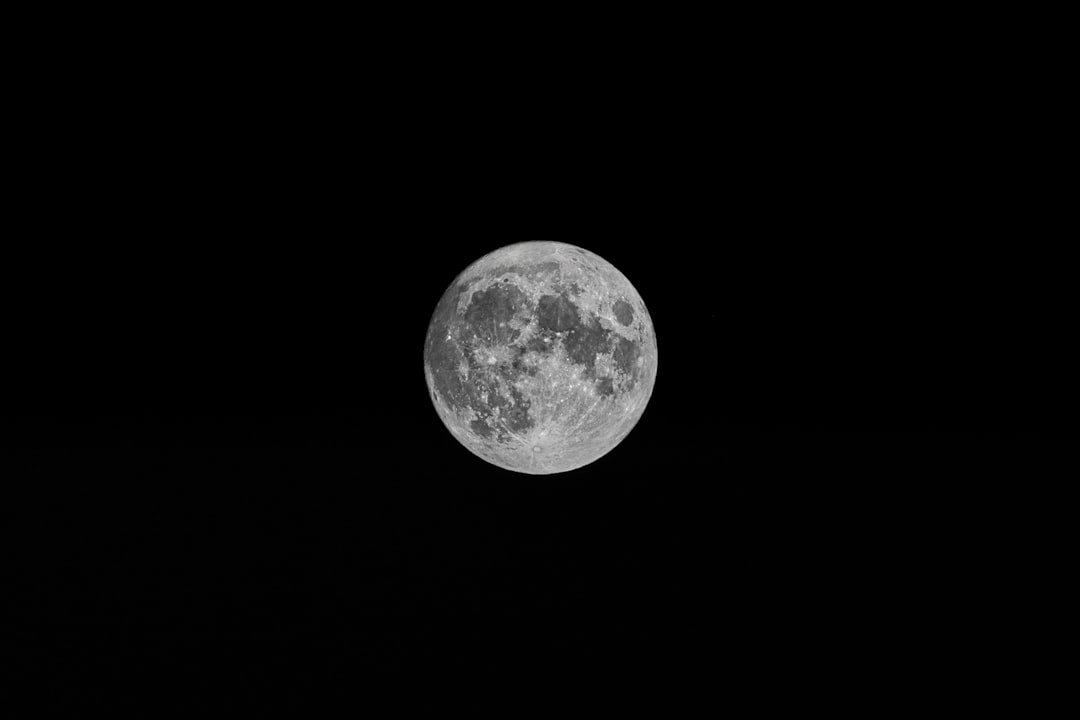
Iron and magnesium concentrations point to basaltic rocks formed from ancient volcanic activity. The dark lunar maria—those vast plains visible to the naked eye from Earth—consist primarily of iron- and magnesium-rich basalts that erupted billions of years ago. Mapping their precise distribution and composition helps scientists at institutions like the Lunar and Planetary Institute reconstruct the Moon's volcanic history and understand how its interior evolved and cooled over time.
Reading the Record of Cosmic Bombardment
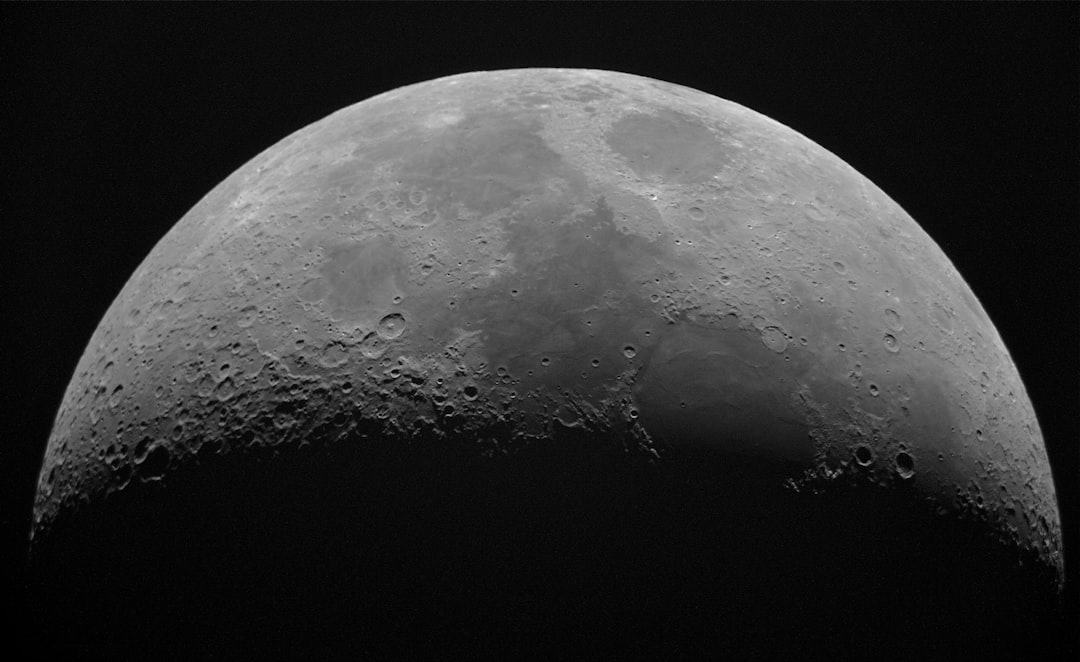
Beyond revealing the Moon's internal evolution, a complete elemental map would document the effects of four billion years of meteorite impacts. Each collision excavates material from depth, redistributes elements across the surface, and creates local compositional anomalies. Large impact basins like Imbrium and Orientale punched through the crust, exposing deeper layers and mixing materials in complex ways.
The South Pole-Aitken Basin, the Moon's largest and oldest impact structure, potentially excavated material from the lunar mantle itself. A detailed compositional map could confirm whether mantle rocks are indeed exposed there, providing a window into the Moon's deep interior without requiring drilling or sample return missions. Research from NASA's Lunar Reconnaissance Orbiter has provided topographic context for these features, but chemical composition remains largely unknown.
Implications Beyond Lunar Science
The significance of this mapping effort extends far beyond simply filling gaps in our knowledge of the Moon. A comprehensive geochemical atlas would serve multiple critical purposes for future lunar exploration and scientific research:
- Resource prospecting: Identifying concentrations of useful materials like oxygen (for life support and propellant production), metals for construction, and rare elements for advanced technologies
- Landing site selection: Enabling informed decisions about where to send future robotic and human missions based on scientific interest and resource availability
- Comparative planetology: Providing a reference dataset for understanding other airless bodies in the solar system, from Mercury to asteroids
- Formation theory validation: Testing and refining models of how the Moon formed, likely from debris created by a Mars-sized impactor colliding with early Earth
- Lunar chronology: Establishing better timelines for when different geological units formed and how the Moon's volcanic activity evolved over billions of years
The Path Forward: From Simulation to Reality
While the Tokyo Metropolitan University team's simulations demonstrate the feasibility of their approach, translating this concept into an operational mission requires substantial additional development. The detector technology must withstand not only the radiation environment of space but also the extreme temperature variations experienced in lunar orbit, ranging from intense solar heating to frigid darkness.
Mission planners must also address data transmission challenges. A constellation of twenty-five telescopes continuously collecting spectroscopic data would generate substantial information volumes requiring robust onboard processing and efficient downlink strategies. The orbital configuration must ensure comprehensive coverage while managing power, thermal, and communication constraints.
Nevertheless, the compact design and relatively modest mission requirements make this concept attractive for implementation. Space agencies worldwide, including JAXA (Japan Aerospace Exploration Agency), are increasingly interested in lunar science missions that can deliver high-value results with constrained budgets. The proposed X-ray mapping mission fits this profile perfectly.
A New Lens on an Ancient World
As humanity prepares to return to the Moon through programs like NASA's Artemis and international partnerships, comprehensive knowledge of lunar surface composition becomes increasingly valuable. The Moon isn't just a destination for symbolic footprints—it's a potential resource base, a scientific laboratory, and a stepping stone for deeper space exploration.
The Tokyo Metropolitan University team's innovative X-ray telescope array offers a practical pathway to finally complete the geochemical map that has eluded scientists since the Apollo era. By leveraging natural solar activity and compact, efficient detector technology, this approach could deliver within two years what decades of previous efforts have been unable to achieve: a complete, high-resolution picture of what our nearest celestial neighbor is truly made of.
In doing so, it would transform the Moon from a partially understood companion into a fully characterized world, its chemical secrets finally revealed through the invisible light of X-rays. This comprehensive understanding would not only answer fundamental questions about lunar origins and evolution but also enable the next generation of exploration, whether by robots or humans, to proceed with unprecedented knowledge and confidence.