In a spectacular display of celestial fireworks, Comet 220P/McNaught has undergone a dramatic and unexpected outburst, catapulting this previously obscure periodic comet into the spotlight of amateur and professional astronomers worldwide. What began as a faint, unremarkable object has suddenly transformed into a binocular-visible phenomenon gracing the pre-dawn skies of early June 2025, offering observers a rare opportunity to witness one of nature's most unpredictable cosmic events.
This remarkable brightening event, first detected on June 1st through observations from the Zwicky Transient Facility, represents an extraordinary 8,000-fold increase in luminosity—jumping from a barely detectable +17th magnitude to a respectable +8th magnitude in a matter of hours. Such dramatic outbursts are exceedingly rare in the astronomical community, making this event particularly significant for understanding the volatile nature of cometary nuclei and the complex physical processes occurring within these ancient icy wanderers.
As 220P/McNaught races toward its perihelion passage on June 14th, 2025, astronomers and sky enthusiasts have a limited window to observe this transient spectacle. The comet's current position in the constellation Pisces, combined with its proximity to Saturn, creates a compelling visual tableau in the eastern pre-dawn sky—though observers must contend with the challenging timing near the summer solstice.
Discovery History and Orbital Characteristics
The comet's journey to prominence began on the night of May 20th, 2004, when Robert McNaught, one of the most prolific comet hunters in modern astronomy, identified this faint smudge during routine observations at Siding Spring Observatory in Australia. As the first of 18 comets bearing McNaught's name, 220P holds a special place in the catalog of periodic comets, though until now it had remained relatively obscure among the thousands of known cometary bodies.
220P/McNaught follows a 5.5-year elliptical orbit around the Sun, with its perihelion (closest approach) occurring at 1.6 Astronomical Units—just beyond the orbit of Mars. This orbital configuration places it firmly in the category of Jupiter-family comets, celestial bodies whose orbits have been gravitationally sculpted by close encounters with the gas giant planet. The comet's current trajectory suggests it was likely captured into its present orbit through a series of gravitational interactions with Jupiter, now locked in a 2:1 orbital resonance with the massive planet.
Understanding the orbital dynamics of comets like 220P provides crucial insights into the evolution of our solar system. These icy remnants from the early solar system serve as time capsules, preserving pristine material from the primordial disk that formed the planets 4.6 billion years ago. When captured by Jupiter's gravitational influence, these objects transition from the distant reaches of the solar system into more accessible orbits, offering scientists valuable opportunities for detailed study.
Anatomy of a Cometary Outburst
The sudden brightening of Comet 220P represents one of the most dramatic phenomena in cometary science—a spontaneous outburst that can increase a comet's brightness by factors of hundreds or even thousands within hours or days. Observer Mike Kelley first noticed the dramatic change while analyzing images from the Zwicky Transient Facility, reporting an initial brightening of approximately 7 magnitudes—a 600-fold increase in luminosity. Subsequent observations revealed the outburst had actually peaked at an even more impressive 8 magnitudes, representing that remarkable 8,000-times increase in brightness.
"Cometary outbursts are windows into the internal structure and composition of these primitive bodies. Each outburst event tells us something new about the physical processes occurring within the nucleus, from subsurface ice sublimation to structural collapses that expose fresh volatile material to sunlight," explains Dr. Michael A'Hearn, renowned cometary scientist at the University of Maryland.
The European Space Agency's Rosetta mission provided unprecedented close-up observations of cometary outbursts during its historic rendezvous with Comet 67P/Churyumov-Gerasimenko from 2014 to 2016. High-resolution images captured by Rosetta's cameras revealed the dramatic nature of these events, showing jets of gas and dust erupting from discrete locations on the comet's surface with explosive force. These observations demonstrated that outbursts can result from several mechanisms, including:
- Subsurface volatile sublimation: Pockets of highly volatile ices (such as carbon monoxide or carbon dioxide) buried beneath the surface can suddenly vaporize when heated, creating pressure that breaches the overlying layers and releases material explosively
- Cliff collapses and landslides: Structural weaknesses in the cometary nucleus can lead to sudden collapses that expose fresh ice to direct sunlight, triggering rapid sublimation
- Thermal stress fracturing: Rapid temperature changes as a comet rotates can create thermal stresses that fracture the surface, releasing trapped gases and dust
- Crystallization events: Amorphous ice transitioning to crystalline form releases energy that can trigger outbursts
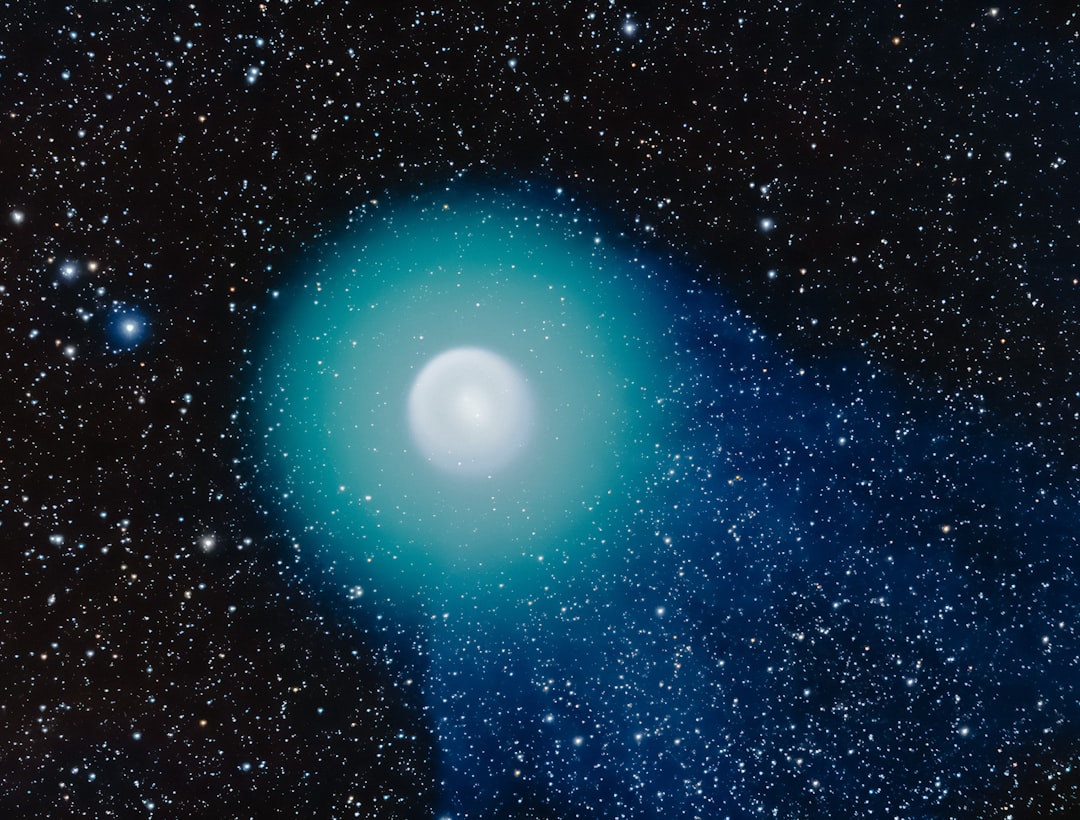
The magnitude of 220P's outburst places it among the most significant such events observed in recent decades, exceeded only by the legendary outburst of Comet 17P/Holmes in October 2007. That spectacular event saw Holmes brighten from 17th magnitude to a naked-eye visible 2.8 magnitude overnight, becoming temporarily the largest object in the solar system by apparent diameter as its expanding coma grew larger than the Sun.
Observing Comet 220P: A Practical Guide
For astronomers eager to catch this transient phenomenon, 220P/McNaught presents both opportunities and challenges. The comet's current position offers excellent angular separation from the Sun—approximately 65 degrees in early June—placing it well within observable range for northern hemisphere observers. However, the timing presents significant obstacles, particularly for observers at higher northern latitudes approaching the June solstice.
The optimal viewing window occurs in the pre-dawn hours, roughly two hours before local sunrise. During this period, the comet rises sufficiently above the eastern horizon (ideally reaching at least 10-15 degrees altitude) while the sky remains dark enough for observation. For observers at mid-northern latitudes (around 35-40 degrees north), this translates to wake-up times between 3:30 and 4:30 AM local time—a commitment that tests the dedication of even the most enthusiastic comet watchers.
Currently located in the constellation Pisces, the comet's celestial path takes it on a fascinating journey through the dawn sky. On June 9th, it crosses the ecliptic plane heading southward, and by June 16th—just two days after perihelion—it passes within 2 degrees of Saturn, creating a photogenic pairing of the ringed planet and the outbursting comet. The waning crescent Moon, at 32% illumination, sweeps past the comet-Saturn duo on the morning of June 10th, passing just over a degree north of the pair.
Equipment and Techniques for Successful Observation
Given its current brightness around +8th to +9th magnitude, Comet 220P remains accessible to a wide range of optical instruments. Observers using 7x50 or 10x50 binoculars should be able to detect the comet as a fuzzy, non-stellar object, particularly from dark-sky locations away from urban light pollution. Small telescopes in the 4-6 inch aperture range will reveal more detail, potentially showing the developing coma and any tail structure that may emerge as the comet approaches perihelion.
Modern smart telescopes and electronically-assisted astronomy (EAA) systems have democratized comet observation, making it possible for observers to capture detailed images with minimal setup time. These systems, which combine small telescopes with sensitive cameras and real-time image stacking, can reveal cometary features invisible to traditional visual observation. Many smart telescopes now include extensive databases of celestial objects, making target acquisition as simple as selecting the comet from a menu.
For astrophotographers seeking to document this event, exposures of 30-60 seconds at ISO 1600-3200 with telephoto lenses (200-400mm focal length) should capture the comet's coma and any developing tail structure. Tracking the comet's motion against the background stars requires either a motorized equatorial mount or post-processing alignment techniques to stack multiple exposures on the comet's nucleus.
Historical Context: Comparing Notable Cometary Outbursts
The 9-magnitude increase in brightness exhibited by 220P/McNaught represents one of the most dramatic outbursts observed in the 21st century, rivaling the 2013 eruption of Comet 289P/Blanpain. That event saw Blanpain suddenly brighten from invisibility to 10th magnitude, though it remained a challenging target for most amateur observers. The current outburst of 220P surpasses Blanpain's display in both magnitude change and peak brightness, making it more accessible to the observing community.
The gold standard for cometary outbursts remains the extraordinary behavior of Comet 17P/Holmes in October 2007. Within a 24-hour period, Holmes exploded from 17th magnitude to 2.8 magnitude—a change of 14 magnitudes representing a nearly 400,000-fold increase in brightness. The comet became easily visible to the naked eye as a distinctive yellow "star" in the constellation Perseus, and its expanding coma eventually grew to exceed the apparent diameter of the Sun as seen from Earth.
Other notable outbursts in cometary history include the 1995 brightening of Comet Hale-Bopp while still beyond Jupiter's orbit, and the multiple outbursts observed in Comet 29P/Schwassmann-Wachmann 1, which undergoes frequent eruptions due to its nearly circular orbit in the outer solar system. Each of these events provides valuable data for understanding the physical processes governing cometary activity and the structural properties of cometary nuclei.
Scientific Significance and Future Implications
Beyond their visual spectacle, cometary outbursts like that of 220P/McNaught offer scientists invaluable opportunities to study the internal composition and structure of these primitive solar system bodies. Spectroscopic observations during outburst events can reveal the composition of subsurface materials suddenly exposed to sunlight, providing insights into the comet's formation conditions and thermal history.
The unpredictable nature of cometary behavior serves as a reminder that despite centuries of astronomical observation and increasingly sophisticated theoretical models, comets continue to surprise us. This unpredictability stems from the complex interplay of factors affecting cometary activity: the heterogeneous composition of the nucleus, its rotation state, the distribution of volatile ices, and the structural integrity of the material comprising the nucleus.
Future observations of 220P through its perihelion passage and beyond will help determine whether this outburst represents a singular event or the beginning of enhanced activity that might persist for weeks or months. Professional observatories equipped with spectroscopic capabilities will analyze the composition of ejected material, while amateur observers worldwide contribute valuable photometric data documenting the comet's brightness evolution.
The NASA Planetary Defense Coordination Office and international partners maintain continuous surveillance of the near-Earth object population, and outbursting comets provide natural experiments for understanding how these bodies respond to solar heating—knowledge that could prove crucial for future spacecraft missions or planetary defense scenarios.
The Broader Context: Comets in Modern Astronomy
Comets occupy a unique niche in solar system science, serving as pristine samples of the material from which the planets formed. Unlike asteroids, which have been heated and processed by various mechanisms, comets preserve volatile compounds and organic molecules in a relatively unaltered state. The study of cometary composition through spectroscopy, sample return missions, and close-up spacecraft observations has revolutionized our understanding of the early solar system's chemistry.
Recent missions have dramatically expanded our knowledge of cometary science. The Rosetta mission's detailed study of 67P/Churyumov-Gerasimenko revealed a surprisingly complex and heterogeneous nucleus, while NASA's Stardust mission successfully returned samples from Comet Wild 2, providing the first laboratory analysis of cometary material. These missions demonstrated that comets are far more diverse and complex than previously imagined, with each comet potentially representing a unique sample of solar system formation conditions.
The discovery of interstellar comets like 2I/Borisov in 2019 has opened an entirely new dimension to cometary science, offering glimpses of planetary system formation around other stars. Future surveys, including the upcoming Vera C. Rubin Observatory's Legacy Survey of Space and Time, will detect thousands of new comets and monitor known objects for outburst activity, potentially revealing more surprises like 220P's current display.
Conclusion: A Fleeting Cosmic Opportunity
The dramatic outburst of Comet 220P/McNaught exemplifies the element of unpredictability that makes cometary astronomy so compelling. In an era of precision cosmology and exquisitely detailed astronomical models, comets remind us that nature still holds surprises, and that patient observation can be rewarded with spectacular and unexpected phenomena.
For observers willing to brave the early morning hours, the coming weeks offer a rare opportunity to witness a significant cometary event. Whether the outburst maintains its current intensity, fades gradually, or triggers additional eruptions remains to be seen—but that uncertainty is part of what makes this event so fascinating. As 220P approaches perihelion this weekend and begins its journey back to the outer solar system, it carries with it new insights into the nature of these ancient icy wanderers.
The comet's performance serves as a reminder to keep watching the skies, as the next great cometary display could emerge from obscurity at any moment. In a universe governed by physical laws and predictable celestial mechanics, comets inject an element of delightful chaos—and 220P/McNaught is currently providing exactly that kind of cosmic entertainment.