In a groundbreaking discovery that brings us closer to understanding the cosmic origins of life, astronomers have detected erythrulose—a complex four-carbon sugar molecule—floating in the vast expanse between stars. This remarkable finding, detailed in a recent pre-print paper on arXiv, represents the first time such a sophisticated sugar has been identified in the interstellar medium (ISM), adding another crucial piece to the puzzle of how life's molecular building blocks formed in the cosmos before arriving on Earth.
The discovery is particularly significant because it challenges our understanding of how complex organic molecules assemble in the harsh environment of space. Unlike simpler molecules previously found drifting between the stars, this four-carbon sugar provides a direct chemical pathway to compounds that may have preceded DNA and RNA in the earliest forms of life. The implications extend far beyond mere molecular detection—this finding suggests that the universe itself may be a vast chemical factory, constantly producing the ingredients necessary for life to emerge.
Over recent decades, the seemingly empty void between stars has revealed itself to be anything but barren. Scientists have uncovered an astonishing array of complex organic molecules in interstellar space, from amino acid precursors to the fundamental components of cellular membranes. Each discovery has progressively painted a picture of space as a rich chemical laboratory where the foundations of biology are forged in the cold darkness, waiting to be delivered to nascent worlds via comets and meteorites.
Unveiling Erythrulose in the Cosmic Void
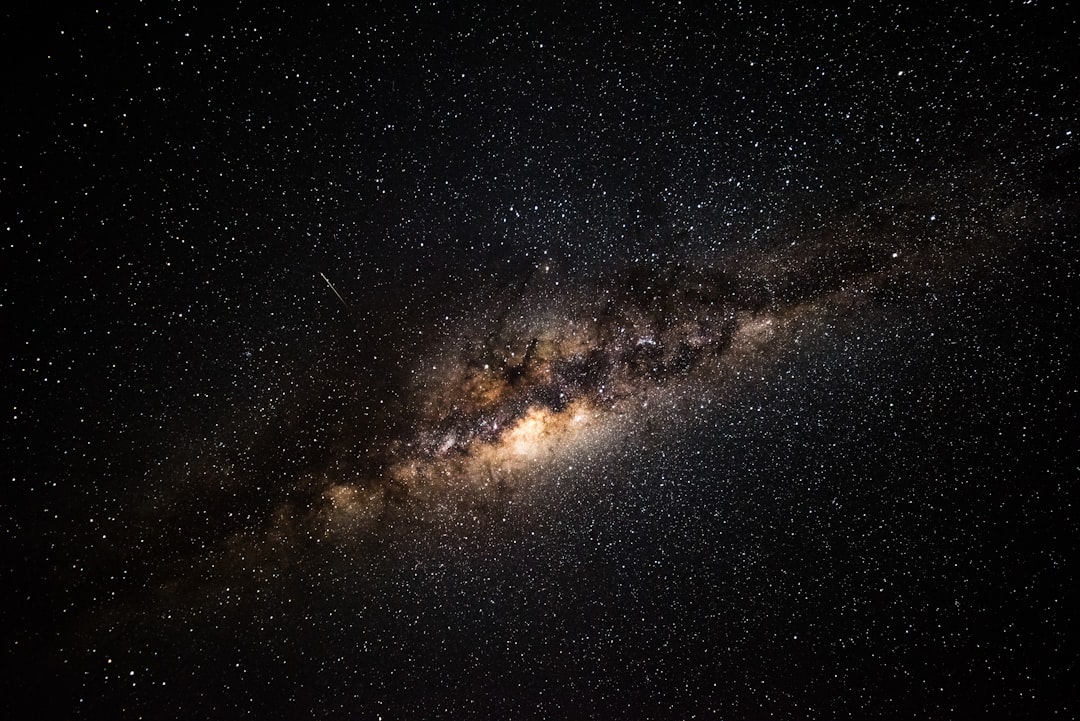
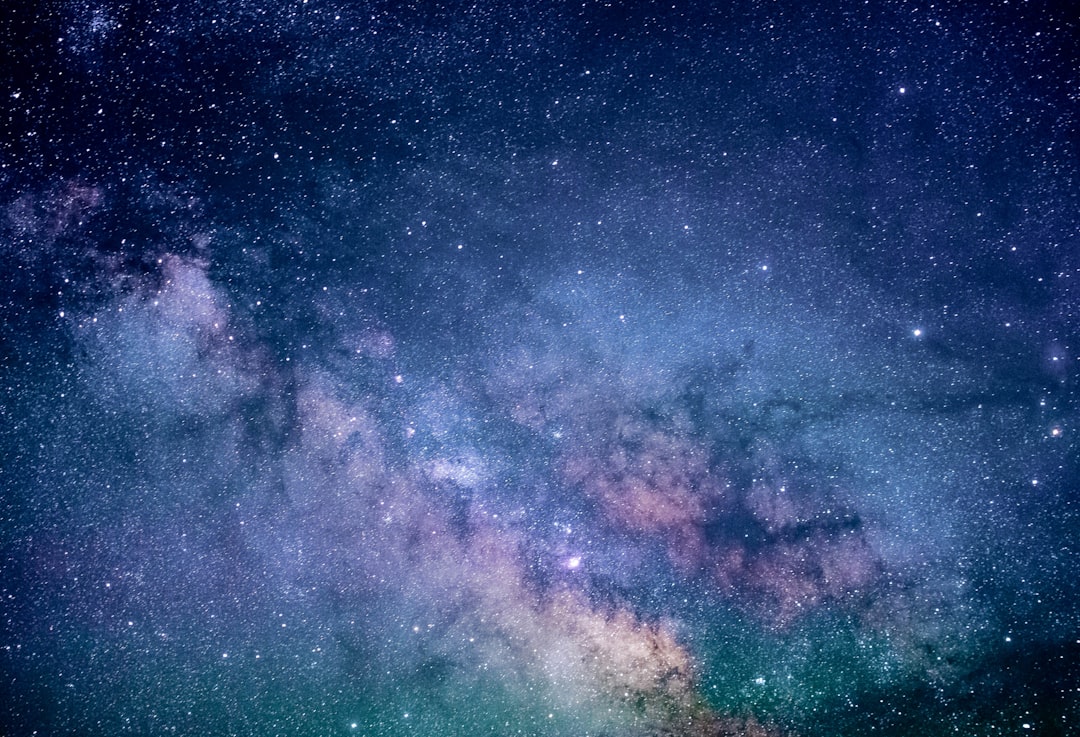
The research team focused their attention on G+0.693-0.027, a molecular cloud renowned among astronomers for its exceptionally rich chemical composition. Located near the galactic center, this dense cloud of gas and dust has become a prime hunting ground for astrochemists seeking to understand the diversity of molecules that form in space. The cloud's designation, while challenging for journalists to report, follows the standard astronomical naming convention based on galactic coordinates.
To detect the elusive sugar molecule, researchers employed two of Europe's most powerful radio telescopes: the 40-meter Yebes telescope in Spain and the 30-meter IRAM telescope in the French Alps. These instruments are specifically designed to detect the faint radio emissions that molecules produce when they rotate and vibrate in space. According to radio astronomy principles, each molecule produces a unique spectral signature—essentially a molecular fingerprint that allows scientists to identify specific compounds across vast cosmic distances.
The detection process required painstaking analysis of thousands of spectral lines in the cloud's radio emissions. The team had to distinguish erythrulose's specific signature from the cacophony of signals produced by dozens of other molecules present in the cloud. Their statistical analysis revealed a confidence level of 99.8%—meaning there's only a 0.2% chance that the observed spectral patterns could have occurred randomly. This level of certainty meets the rigorous standards required for astronomical discoveries.
The Missing Three-Carbon Mystery
Perhaps the most intriguing aspect of this discovery wasn't what the researchers found, but what they didn't find. Traditional chemical intuition would suggest that four-carbon molecules should form by adding carbon atoms sequentially to smaller molecules. Yet the team found no detectable three-carbon sugars in the molecular cloud—compounds like glyceraldehyde that would seem to be natural stepping stones to erythrulose.
Even more puzzling, the erythrulose concentration was at least eight times higher than any three-carbon sugar analogs. This observation fundamentally challenged existing models of how complex sugars assemble in space. If erythrulose wasn't building up one carbon at a time from smaller sugars, then how was this four-carbon molecule forming in such abundance?
"The absence of three-carbon sugars despite abundant four-carbon erythrulose tells us that interstellar chemistry doesn't always follow the pathways we might expect from terrestrial chemistry. The conditions in space—extreme cold, intense radiation, and reactions on dust grain surfaces—create unique synthetic routes that bypass conventional chemical logic."
Decoding the Formation Pathway
To solve this molecular mystery, the research team turned to sophisticated computational methods. They employed quantum chemical models combined with Kinetic Monte Carlo (KMC) simulations—powerful tools that allow scientists to model chemical reactions at the molecular level and predict how molecules will behave under specific conditions over time. These simulations, which require substantial computing power available at facilities like NASA's advanced computing centers, can recreate the extreme conditions found in interstellar space.
The simulations revealed a surprising formation mechanism. Rather than building up sequentially, erythrulose forms through a direct combination reaction between two-carbon molecular fragments. Specifically, molecules like glycolaldehyde and ethylene glycol—both of which have been previously detected in interstellar space—combine on the surfaces of microscopic dust grains that pervade molecular clouds.
These dust grains, typically less than a micrometer in size, serve as cosmic catalysts. Their icy surfaces provide a platform where molecules can meet, stick, and react. The grains are constantly bombarded by cosmic rays—high-energy particles that streak through space at nearly the speed of light—and energetic atomic hydrogen. This bombardment creates highly reactive molecular fragments called radicals, which drive the chemical reactions that assemble erythrulose directly from two-carbon building blocks, completely bypassing the need for three-carbon intermediates.
The Role of Interstellar Dust Chemistry
The surface chemistry occurring on these dust grains represents one of the most fascinating aspects of interstellar medium research. At temperatures hovering around -260°C (just 10-20 degrees above absolute zero), molecules that would normally bounce off each other in warmer environments can stick to grain surfaces long enough to react. The ice coating on these grains—primarily water ice with traces of methanol, ammonia, and carbon dioxide—provides a matrix where complex chemistry unfolds over millions of years.
Implications for Life's Genetic Precursors
The discovery of erythrulose in space carries profound implications for understanding how life originated on Earth. Modern biology relies on DNA and RNA to store and transmit genetic information, both of which use a backbone constructed from ribose—a five-carbon sugar. However, ribose presents a significant puzzle for origin-of-life researchers: it's notoriously difficult to synthesize under the chemical conditions thought to exist on early Earth.
This challenge has led astrobiologists to propose that before DNA and RNA, life may have used a simpler genetic system. One leading candidate is Threose Nucleic Acid (TNA), a hypothetical genetic polymer that uses threose—a four-carbon sugar—as its backbone instead of ribose. TNA can form base pairs and potentially store genetic information, but with a simpler molecular structure that might have been easier to assemble in primitive conditions.
Here's where erythrulose becomes crucial: in the presence of liquid water, ketose sugars like erythrulose can readily transform into aldose sugars like threose through a well-understood chemical process called isomerization. This means that erythrulose delivered to early Earth by meteorites and comets could have provided a direct source of threose, potentially enabling the first genetic polymers to form before the evolution of more complex RNA and DNA systems.
Cosmic Delivery to Early Earth
The connection between interstellar molecules and Earth's early chemistry isn't merely theoretical. Evidence from NASA's OSIRIS-REx mission, which recently returned samples from asteroid Bennu, has confirmed that complex sugars and other organic molecules are abundant in primitive solar system materials. These findings validate decades of meteorite studies showing that space rocks routinely deliver sophisticated organic compounds to planetary surfaces.
During Earth's Late Heavy Bombardment—a period roughly 4.1 to 3.8 billion years ago when our planet endured intense meteor and comet impacts—vast quantities of organic molecules were deposited on the surface. By the time Earth's oceans cooled sufficiently to support complex chemistry, a rich inventory of sugars, amino acids, and other prebiotic compounds would have been available to participate in the chemical reactions that eventually led to life.
Key Findings and Future Directions
- First Detection: Erythrulose represents the first four-carbon sugar ever detected in interstellar space, expanding our catalog of complex organic molecules found between the stars
- Formation Mechanism: The molecule forms through direct combination of two-carbon fragments on dust grain surfaces, bypassing traditional sequential carbon addition pathways
- Abundance Pattern: The absence of three-carbon sugars despite abundant four-carbon erythrulose reveals unexpected chemical selectivity in interstellar synthesis
- Genetic Implications: Erythrulose can convert to threose in water, providing a potential source for TNA—a hypothesized genetic precursor to RNA and DNA
- Delivery Mechanism: Meteorite and comet impacts during Earth's early history provided a proven pathway for delivering these molecules to our planet's surface
Challenges and Ongoing Research
Despite the significance of this discovery, the research team noted several uncertainties that require further investigation. The observed abundance of erythrulose was substantially lower than predicted by their computational models, suggesting that either the formation mechanisms are more complex than currently understood, or that destruction processes in the cloud are more efficient than anticipated. This discrepancy highlights the ongoing challenge of accurately modeling the intricate chemistry occurring in interstellar environments.
Additionally, researchers are eager to search for erythrulose in other molecular clouds to determine whether this discovery represents a common feature of interstellar chemistry or a unique characteristic of G+0.693-0.027. Future observations with next-generation facilities like the Atacama Large Millimeter/submillimeter Array (ALMA) will provide higher sensitivity and resolution, potentially revealing even more complex sugar molecules lurking in the space between stars.
A Growing Cosmic Recipe for Life
This discovery adds another ingredient to the growing cosmic recipe for life that astronomers and astrobiologists are piecing together. From the detection of amino acids in meteorites to the identification of phosphorus compounds in star-forming regions, each finding reinforces the idea that the molecular building blocks of biology are neither rare nor Earth-specific. Instead, they appear to be natural products of cosmic chemistry, forming wherever the right conditions exist.
The presence of erythrulose in interstellar space demonstrates that the universe actively synthesizes molecules of remarkable complexity and biological relevance. Combined with our understanding of how these molecules are delivered to planetary surfaces, the discovery strengthens the case that life's emergence may be a natural consequence of cosmic chemical evolution—given the right planetary environment and sufficient time.
As research continues and our detection capabilities improve, we can expect to find even more complex molecules floating in the darkness between stars. Each discovery brings us closer to understanding not just how life began on Earth, but how common the chemical preconditions for life might be throughout the galaxy. The four-carbon sugar erythrulose, synthesized in the cold depths of space and potentially delivered to countless worlds, may represent just one example of the universe's remarkable capacity to create the chemistry of life.