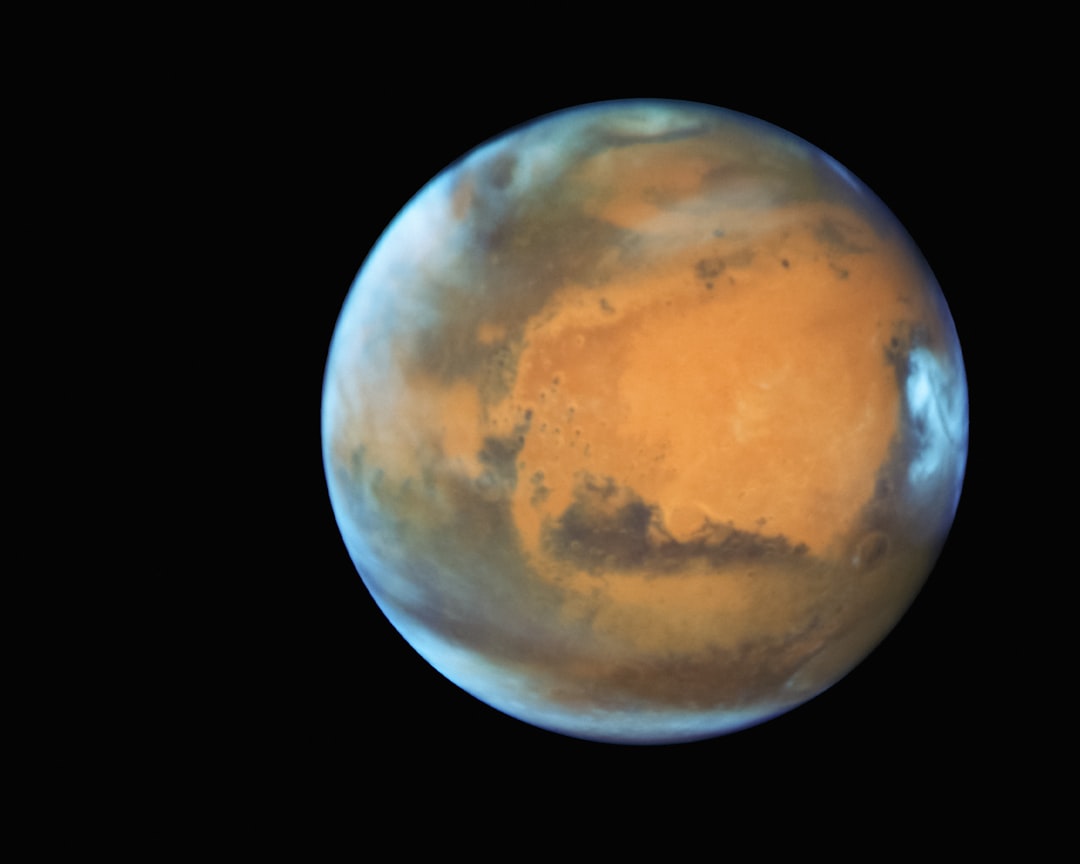
In the perpetual quest to unlock the secrets of our solar system's innermost world, a groundbreaking mission concept is emerging that could revolutionize how we explore Mercury. A team of planetary scientists from Brown University has unveiled an innovative approach to studying the Sun's closest planetary neighbor—one that relies entirely on the power of sunlight itself rather than conventional rocket fuel. This Discovery-class mission concept, dubbed Mercury Scout, represents a paradigm shift in planetary exploration by harnessing solar sail propulsion to navigate the challenging gravitational environment near our star.
The proposal, recently presented at the 57th Lunar and Planetary Science Conference, addresses one of spaceflight's most vexing challenges: reaching and orbiting Mercury without expending massive quantities of propellant. As spacecraft venture closer to the Sun, they accelerate dramatically under the star's immense gravitational influence, making orbital insertion around Mercury extraordinarily difficult and fuel-intensive. Traditional missions have required complex gravitational assist maneuvers and substantial propellant reserves. Mercury Scout's innovative design could eliminate these constraints entirely, potentially reducing mission costs by hundreds of millions of dollars while simultaneously enabling extended scientific observations of this enigmatic world.
The Challenge of Reaching Mercury: Why the Closest Planet Remains the Most Elusive
Despite being Earth's closest planetary neighbor after Venus, Mercury remains one of the least explored bodies in our solar system. Only two spacecraft have ever visited this scorched world: NASA's MESSENGER mission, which orbited Mercury from 2011 to 2015, and the European Space Agency's BepiColombo, currently en route and expected to arrive in 2025. The primary obstacle lies in the physics of orbital mechanics near the Sun.
As a spacecraft approaches Mercury, it plunges deeper into the Sun's gravitational well, accelerating to velocities exceeding 50 kilometers per second. To achieve orbit around Mercury requires not just reaching the planet, but dramatically slowing down—a process that traditionally demands enormous amounts of rocket propellant. MESSENGER, for instance, required six years of travel time and multiple gravity assists from Earth, Venus, and Mercury itself before finally entering orbit. The mission carried over 600 kilograms of propellant, representing nearly half its total launch mass, just to accomplish the necessary velocity changes.
Solar Sail Technology: Harnessing Starlight for Interplanetary Travel
The Mercury Scout concept circumvents these propulsion challenges through solar sail technology—a method of spacecraft propulsion that uses the physical pressure of sunlight to generate thrust. While photons carry no mass, they do possess momentum, and when billions of photons reflect off a large, highly reflective sail, they impart a tiny but continuous push to the spacecraft. Near Mercury, where solar radiation intensity is approximately 11 times greater than at Earth's distance, this effect becomes significantly more powerful.
Solar sails offer several compelling advantages for a Mercury mission. First and foremost, they require no propellant, dramatically reducing spacecraft mass and launch costs. The propellant-free architecture also enables mission extensions limited only by spacecraft component longevity rather than fuel depletion. Additionally, by adjusting the sail's orientation relative to the Sun, mission controllers can modulate both the magnitude and direction of thrust, providing precise trajectory control throughout the mission.
The technology has already been validated in space, though on a limited scale. Japan's IKAROS (Interplanetary Kite-craft Accelerated by Radiation Of the Sun) successfully demonstrated solar sail propulsion during its 2010 Venus flyby mission. More recently, The Planetary Society's LightSail-2 mission proved that solar sails could actively change a spacecraft's orbit, successfully raising its altitude in Earth orbit in 2019. NASA's Advanced Composite Solar Sail System (ACS3), launched in April 2024, is currently testing next-generation composite boom materials designed to support larger, more robust sails for future deep-space missions.
Mission Architecture and Scientific Instrumentation
Mercury Scout's design philosophy emphasizes focused scientific objectives achievable with streamlined instrumentation. Rather than carrying a comprehensive suite of instruments like MESSENGER's seven scientific payloads, Mercury Scout would concentrate on a single, highly capable instrument: a narrow-angle camera (NAC) capable of capturing surface images at resolutions up to 1 meter per pixel—a twentyfold improvement over MESSENGER's best resolution of 20 meters per pixel.
This imaging capability would rival that of NASA's Lunar Reconnaissance Orbiter, which has revolutionized our understanding of the Moon through its high-resolution surface imaging. Applied to Mercury, such detailed observations could reveal geological features and processes never before observed, from small-scale tectonic structures to evidence of recent volcanic activity or surface modification.
"This rescoped Mercury Scout concept demonstrates that a simplified, NAC-only payload combined with solar-sail propulsion can enable a focused, high-impact investigation of Mercury's surface evolution through long-duration, high-resolution imaging," the research team stated in their conference presentation.
Orbital Strategy and Thermal Management
Operating in Mercury's extreme thermal environment presents extraordinary engineering challenges. Surface temperatures on the Sun-facing side can exceed 430°C (800°F), while nightside temperatures plunge to -180°C (-290°F). Solar radiation intensity at Mercury's distance averages 9,000 watts per square meter—nearly ten times the intensity experienced by Earth-orbiting satellites.
To manage these thermal extremes, Mercury Scout would employ a highly elliptical orbit ranging from approximately 200 kilometers at closest approach to 10,000 kilometers at apoapsis. This orbital geometry provides two critical advantages: during periapsis passages, the spacecraft can capture high-resolution imagery of the surface, while the extended time spent at higher altitudes allows thermal systems to radiate accumulated heat back into space. This approach mirrors strategies successfully employed by MESSENGER and will be used by BepiColombo's Mercury Planetary Orbiter.
Scientific Objectives: Unraveling Mercury's Geological Evolution
Mercury Scout's scientific mission centers on three primary objectives that would significantly advance our understanding of the planet's geological history and ongoing surface processes:
- Crustal Evolution and History: Mercury possesses an unusually thin crust, estimated at only 26 kilometers thick—significantly thinner than Earth's 30-50 kilometer continental crust or the Moon's 50-kilometer crust. High-resolution imaging would reveal the detailed structure of ancient impact basins, volcanic plains, and tectonic features that record the planet's thermal and geological evolution over 4.5 billion years.
- Recent Geological Activity: MESSENGER discovered evidence suggesting Mercury may have experienced volcanic activity within the past billion years—geologically recent on planetary timescales. Mercury Scout's meter-scale resolution could identify small volcanic vents, fresh lava flows, or other indicators of recent or potentially ongoing geological processes, fundamentally revising our understanding of the planet's thermal state.
- Comparative Planetology: By obtaining comprehensive, high-resolution coverage of Mercury's surface, Mercury Scout would enable detailed comparisons with MESSENGER data, BepiColombo observations, and surface features on other terrestrial bodies. These comparisons illuminate how planetary size, composition, and solar proximity influence geological evolution across the inner solar system.
Technical Challenges and Path Forward
While the Mercury Scout concept offers compelling advantages, the research team acknowledges several significant technical challenges that require resolution before the mission could proceed to development. Pointing stability represents perhaps the most critical challenge—maintaining the precise spacecraft orientation necessary for meter-scale imaging while simultaneously controlling the solar sail's attitude for propulsion. The spacecraft must balance competing requirements: orienting the sail optimally for thrust while keeping the camera pointed accurately at surface targets.
Thermal survivability extends beyond simple temperature management to include protecting sensitive electronics and optical systems from both extreme heat and the intense solar radiation environment. The attitude control system must function reliably despite the constant torque exerted by solar radiation pressure on the asymmetric spacecraft-sail configuration. Additionally, communications with Earth across Mercury's orbital distance of 0.39 to 0.47 astronomical units require robust antenna systems and data management strategies.
The research team proposes incorporating a flat antenna design similar to those successfully employed by MESSENGER and JAXA's Akatsuki Venus orbiter. This configuration provides adequate gain for data transmission while minimizing spacecraft complexity and mass—critical considerations for a solar-sail-propelled mission where every kilogram matters.
Implications for Future Planetary Exploration
Mercury Scout represents more than just a mission concept for exploring one planet; it embodies a potential paradigm shift in how we approach planetary exploration throughout the inner solar system. If successful, propellant-free architectures could enable entirely new classes of missions previously considered impractical or prohibitively expensive. Extended-duration orbital missions, multiple-target tours, and even permanent orbital observatories become feasible when fuel limitations no longer constrain mission lifetimes.
The Discovery-class mission framework, with its sub-$1 billion cost cap, encourages innovative approaches that maximize scientific return while minimizing expense. Mercury Scout exemplifies this philosophy by focusing on a single, high-impact scientific objective achievable with streamlined instrumentation and innovative propulsion. This approach contrasts with larger Flagship missions like the Europa Clipper, which carry comprehensive instrument suites but require multi-billion-dollar budgets.
As solar sail technology matures through missions like ACS3 and potential future demonstrations, the engineering challenges identified by the Mercury Scout study will likely find solutions. Advanced materials, improved attitude control algorithms, and enhanced thermal management systems developed for near-Sun operations would benefit not only Mercury exploration but also missions to study the Sun itself, such as future solar probe concepts venturing even closer to our star than the current Parker Solar Probe.
The Road Ahead: From Concept to Reality
While Mercury Scout remains a mission concept rather than an approved project, its presentation at a major planetary science conference represents an important step in the mission development process. Such concepts often undergo years of refinement, technological maturation, and competitive evaluation before receiving funding approval. The mission would likely compete in future Discovery Program solicitations, where it would be evaluated against other proposed missions based on scientific merit, technical readiness, cost realism, and programmatic risk.
The success of BepiColombo, expected to begin its primary science mission in 2026, will provide crucial context for Mercury Scout's scientific objectives. BepiColombo's observations will undoubtedly raise new questions about Mercury's geology, composition, and evolution—questions that a high-resolution imaging mission like Mercury Scout would be ideally suited to address. The complementary nature of these missions highlights how planetary exploration advances through successive waves of increasingly sophisticated observations.
As the Mercury Scout team continues refining their concept, addressing technical challenges, and building support within the planetary science community, they are contributing to a broader vision of sustainable, cost-effective planetary exploration. Whether Mercury Scout itself ultimately flies or inspires future mission designs, it demonstrates that innovative thinking about propulsion, instrumentation, and mission architecture can open new pathways to exploring even the most challenging destinations in our solar system.
The quest to understand Mercury—its formation, evolution, and place in the broader context of terrestrial planet development—continues to drive planetary scientists and engineers to develop ever more creative solutions to the challenges of deep-space exploration. Mercury Scout represents the latest chapter in this ongoing story, one that may ultimately help us answer fundamental questions about how rocky planets form, evolve, and maintain geological activity across billions of years of solar system history.