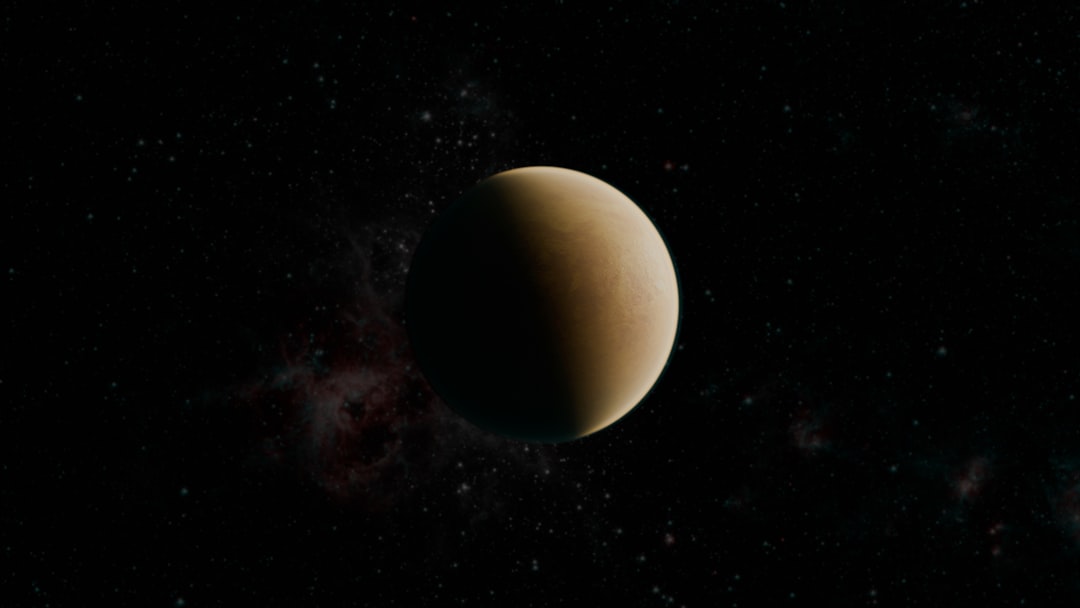
In the relentless pursuit of understanding our planetary neighbors, scientists are setting their sights on one of the most inhospitable environments in our solar system: the surface of Venus. A groundbreaking mission concept called KYTHERA, developed by researchers at Delft University of Technology in the Netherlands, promises to revolutionize our exploration of Earth's so-called "twin planet" by achieving what has eluded space agencies for decades—a long-duration surface mission lasting up to 200 Earth days.
This ambitious proposal, recently unveiled at the 57th Lunar and Planetary Science Conference, represents a quantum leap forward from current Venusian surface exploration capabilities. To put this achievement in perspective, the current record for surface survival on Venus stands at merely 127 minutes, set by the Soviet Venera 13 lander in 1982. The KYTHERA mission concept aims to extend this duration by a factor of more than 2,000, opening unprecedented opportunities for scientific discovery on a world that remains one of the least understood planets in our solar system.
Venus presents explorers with conditions that can only be described as hellish. The planet's surface experiences average temperatures of 464 degrees Celsius (867 degrees Fahrenheit)—hot enough to melt lead—combined with atmospheric pressures approximately 92 times greater than Earth's, equivalent to the crushing forces encountered nearly one kilometer beneath Earth's oceans. These extreme conditions have historically limited surface missions to brief, heroic attempts that provide only tantalizing glimpses of the Venusian landscape before succumbing to the planet's hostile environment.
Understanding Venus: Earth's Twisted Twin
While Venus and Earth share remarkably similar sizes and masses, leading to Venus being dubbed "Earth's twin," the comparison ends there. According to data from NASA's Venus exploration program, the planet underwent a catastrophic runaway greenhouse effect that transformed it from a potentially habitable world into the inferno we observe today. The planet's thick atmosphere, composed primarily of carbon dioxide with clouds of sulfuric acid, creates a pressure cooker effect that traps heat with devastating efficiency.
Understanding how Venus evolved into such a drastically different world from Earth remains one of planetary science's most pressing questions. The answer could provide crucial insights into planetary habitability, climate change, and the factors that determine whether a planet can support life. This makes long-duration surface missions like KYTHERA not just scientifically interesting, but fundamentally important to our understanding of planetary evolution and the potential for life elsewhere in the universe.
Revolutionary Mission Design and Engineering Solutions
The KYTHERA mission concept tackles Venus's extreme environment through innovative engineering solutions that build upon decades of planetary exploration experience. The research team's design philosophy partially draws inspiration from the successful Soviet Venera lander program of the 1970s and 1980s, while incorporating modern materials science and advanced cooling technologies unavailable to previous generations of engineers.
Thermal Management and Power Systems
At the heart of KYTHERA's survival strategy lies an advanced thermal management system utilizing specialized cooling generators designed to maintain operational temperatures for sensitive instruments and electronics. Unlike previous missions that relied on passive insulation with limited lifespans, KYTHERA's active cooling approach represents a paradigm shift in how we approach extreme environment exploration.
For power generation, the mission will employ radioisotope thermoelectric generators (RTGs), the same proven technology that has enabled some of humanity's most ambitious space missions. These systems have powered iconic missions including the Voyager 1 and 2 spacecraft, which continue operating more than four decades after launch, as well as the Cassini-Huygens mission to Saturn, New Horizons' journey to Pluto, and the Mars rovers Curiosity and Perseverance. RTGs provide reliable, long-duration power without dependence on solar panels, which would be useless beneath Venus's opaque cloud layers.
Strategic Landing Site Selection
The KYTHERA team has identified two primary candidate landing sites, each chosen for distinct scientific and engineering reasons. Lakshmi Planum, a high-altitude plateau in Venus's northern hemisphere, offers relatively reduced pressure and temperature conditions compared to lower elevations, potentially extending the mission's operational lifetime. This region represents a more forgiving environment that could serve as a proving ground for long-duration surface operations.
The second candidate, Lada Terra, presents a more scientifically compelling but challenging target. This region shows evidence of potentially active volcanism and ongoing seismic activity, making it a prime location for understanding Venus's current geological processes. Research published by the European Space Agency's Venus Express mission has suggested that Venus may be more geologically active than previously thought, making real-time surface monitoring of these regions particularly valuable.
"Many of these objectives cannot be achieved by orbiter missions alone, underscoring the critical role of a long-duration lander in advancing understanding of Venus's geology, atmosphere, and evolution. The results highlight the need for additional studies on the performance and feasibility of instrumentation and materials under Venus' harsh surface environment."
Comprehensive Scientific Objectives and Instrumentation
KYTHERA's scientific payload has been carefully designed to maximize scientific return across multiple disciplines during its proposed 200-day surface mission. This duration is particularly significant as it represents more than 80 percent of a single Venusian day, which lasts 243 Earth days—longer than Venus's 225-day orbital period around the Sun.
Atmospheric Analysis During Descent
The mission's scientific operations will begin even before touchdown, with instruments collecting crucial atmospheric data during the descent phase. This approach mirrors the methodology of NASA's upcoming DAVINCI mission, which will probe Venus's atmosphere in unprecedented detail. KYTHERA's descent phase measurements will provide valuable ground-truth data to complement orbital observations, helping scientists understand atmospheric composition, temperature profiles, and chemical gradients from the upper atmosphere down to the surface.
Long-Duration Surface Science
Once on the surface, KYTHERA will conduct continuous environmental monitoring and geological analysis using an advanced suite of instruments, including:
- Spectroscopic instruments: Modified versions of equipment planned for the DAVINCI mission, adapted for the extreme surface conditions, will analyze rock and soil composition, searching for evidence of past water, volcanic activity, and potentially even biosignatures from Venus's potentially habitable past
- Seismometers: Sensitive instruments will detect and characterize venusquakes, providing the first long-term seismic monitoring of another planet and revealing details about Venus's internal structure and geological activity
- Environmental sensors: Continuous monitoring of temperature, pressure, wind conditions, and atmospheric composition will provide unprecedented data on Venus's surface environment and weather patterns
- Imaging systems: Advanced cameras capable of withstanding extreme conditions will document the landing site and any observable changes over the mission's 200-day duration
Historical Context: Building on Decades of Venusian Exploration
The KYTHERA mission concept stands on the shoulders of pioneering efforts from the early space age. Between 1970 and 1985, humanity achieved ten successful landings on Venus's surface—nine by the Soviet Union and one by the United States. These missions provided our only direct observations of the Venusian surface, returning the first images and measurements from this alien world.
The Soviet Venera program's crowning achievement, Venera 13, survived for 127 minutes in March 1982, returning the first color images of Venus's surface and conducting soil analysis. Several other missions, including Venera 9, 10, 11, 12, and 14, as well as the American Pioneer Venus Multiprobe, achieved surface operations lasting up to an hour. These brief windows provided tantalizing glimpses of a world covered in volcanic plains and basaltic rocks, but left countless questions unanswered.
The four-decade gap since the last successful surface landing underscores both the difficulty of Venusian exploration and the transformative potential of KYTHERA's proposed 200-day mission. Modern materials science, advanced electronics, and innovative thermal management technologies now make possible what was unimaginable during the Venera era.
The New Era of Venus Exploration
KYTHERA's development comes at a time of renewed international interest in Venus exploration. Multiple missions are currently in development or planning stages, including initiatives from NASA, the European Space Agency (ESA), the Indian Space Research Organisation (ISRO), the UAE Space Agency, and even the private company Rocket Lab. However, these missions primarily consist of flybys, orbiters, and atmospheric probes—none are designed for extended surface operations.
This makes KYTHERA's proposed surface mission particularly valuable, as it would fill a critical gap in our exploration strategy. While orbital missions excel at global mapping and atmospheric studies, only surface missions can provide the detailed geological, seismological, and environmental data necessary to truly understand Venus's evolution and current state.
Mission Timeline and Development Path
The KYTHERA research team proposes a launch window between 2035 and 2037, providing approximately a decade for detailed design, testing, and development. This timeline aligns well with other planned Venus missions, potentially allowing KYTHERA to build upon discoveries made by orbital and atmospheric missions launching in the late 2020s and early 2030s.
A crucial component of mission preparation involves the newly established Delft High-Pressure/Temperature Laboratory for Planetary Materials, where researchers will test instruments and materials under simulated Venusian surface conditions. This facility represents a critical infrastructure investment that will benefit not only KYTHERA but future Venus exploration efforts worldwide.
Broader Implications for Planetary Science
The successful implementation of KYTHERA would represent more than just a technological achievement—it would fundamentally transform our understanding of terrestrial planet evolution. By providing continuous, long-duration observations of Venus's surface environment, the mission could help answer fundamental questions about:
- Volcanic activity: Is Venus currently volcanically active, and if so, at what scale? Long-term seismic monitoring could definitively answer this question
- Atmospheric-surface interactions: How do Venus's extreme surface conditions influence atmospheric chemistry and dynamics? Continuous measurements would reveal these complex interactions
- Planetary evolution: What processes transformed Venus from a potentially Earth-like world into its current state? Surface geology and composition data could provide crucial clues
- Habitability limits: Understanding Venus's extreme environment helps define the boundaries of planetary habitability, informing the search for life on exoplanets
Future Prospects and Technological Legacy
Beyond its immediate scientific objectives, KYTHERA would establish crucial technological capabilities for exploring extreme environments throughout the solar system. The thermal management, power systems, and ruggedized instrumentation developed for this mission could enable future exploration of other challenging destinations, from the deep atmospheres of gas giants to the surfaces of hot exoplanets detected by missions like the James Webb Space Telescope.
The mission also represents an important step toward potential sample return missions from Venus—a long-term goal that would require even more advanced landing and ascent capabilities. By demonstrating 200-day surface operations, KYTHERA would prove that extended surface missions are feasible, paving the way for increasingly ambitious exploration of our mysterious neighbor.
As humanity stands on the threshold of a new era of Venus exploration, the KYTHERA mission concept offers a compelling vision of what's possible when innovative engineering meets ambitious scientific goals. Whether this specific mission concept moves forward or inspires similar efforts, it represents the kind of bold thinking necessary to unlock the secrets of one of our solar system's most enigmatic worlds. The coming years and decades will reveal whether KYTHERA or missions like it can finally provide the long-duration surface observations needed to understand Venus's past, present, and potential future—and in doing so, deepen our understanding of planetary evolution throughout the universe.