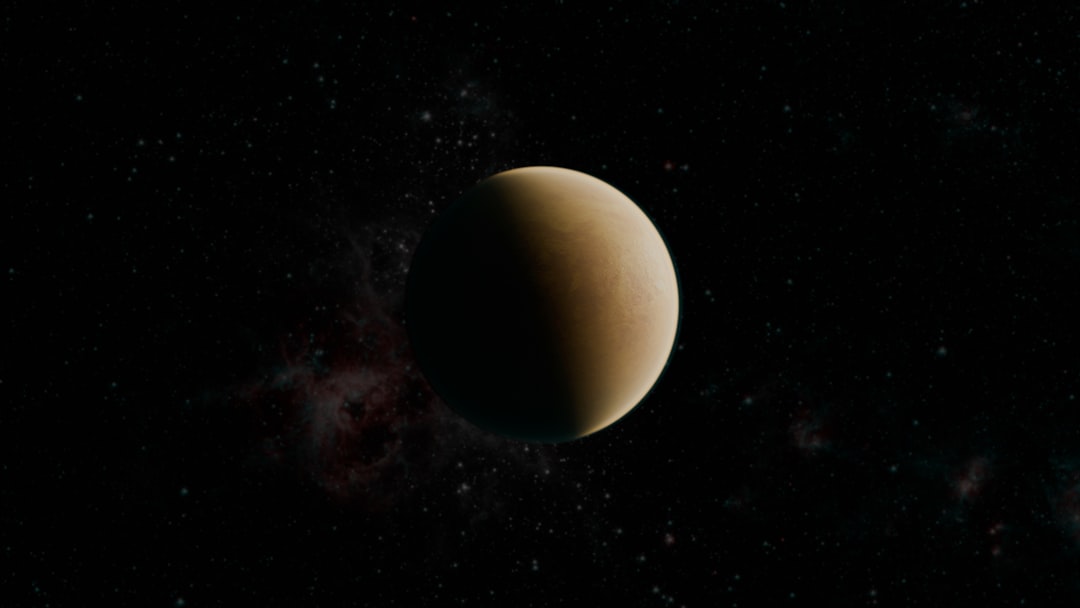
Planetary scientists are unlocking the secrets of Venus through an extraordinary feature of its tortured landscape: coronae, massive circular structures that could hold the key to understanding why Earth's twin planet evolved so differently from our own world. These enigmatic formations, ranging from 60 kilometers to over 2,000 kilometers in diameter, represent one of the most distinctive and puzzling geological features in our solar system, offering crucial insights into the internal dynamics of rocky planets.
Dr. Anna Gulcher, a distinguished earth and planetary scientist at Germany's University of Freiburg, has pioneered groundbreaking research utilizing decades-old data from NASA's Magellan spacecraft to construct innovative three-dimensional models of Venus' largest coronae. This comprehensive analysis, presented at the European Geosciences Union's 2026 General Assembly in Vienna, represents perhaps the most detailed examination yet of these mysterious structures and their implications for understanding planetary evolution.
The research team's updated database now catalogs 741 coronae scattered across Venus' surface, each telling a unique story about the planet's geodynamic history. By combining radar topography data, gravitational field measurements, and sophisticated computer simulations, Gulcher and her colleagues have identified evidence for active mantle processes beneath dozens of these structures—suggesting that Venus may be far more geologically active than previously believed.
Decoding Venus' Circular Mysteries: What Are Coronae?
Imagine standing on Venus' hellish surface, where temperatures reach 460 degrees Celsius and atmospheric pressure crushes at 92 times that of Earth. Looking across the landscape, you would observe enormous circular patterns etched into the planet's crust—concentric rings of fractures, ridges, and valleys that dwarf even Earth's largest volcanic features. These are the coronae, and they represent something fundamentally different from anything found on our own planet.
"They are huge circles of fracture systems that we think are basically the surface expression of a plume of hot material moving upwards from the interior of the planet," Gulcher explained during her presentation at the Vienna conference. "Understanding these structures is critical not only for deciphering Venus' geodynamic regime, but also for assessing whether similar processes may have operated on the early Earth."
The Magellan spacecraft's radar sensors, which ceased functioning in 1994 after mapping over 98% of Venus' surface, captured detailed images of these structures through the planet's thick sulfuric acid cloud cover. Unlike optical cameras, radar can penetrate Venus' opaque atmosphere, revealing surface features with remarkable clarity. The spacecraft's synthetic aperture radar system achieved resolutions of approximately 100 meters, allowing scientists to study geological features in unprecedented detail.
What makes coronae particularly intriguing is their extraordinary diversity. According to Gulcher's research, published in the Journal of Geophysical Research: Planets, these formations display remarkable variations in size, morphology, topography, gravity signatures, and tectonic settings. This diversity suggests that coronae do not represent a single formation mechanism, but instead reflect a spectrum of dynamic processes occurring within Venus' interior.
The Mantle Plume Hypothesis: Hot Material Rising from the Deep
The prevailing scientific theory suggests that coronae form when plumes of superheated mantle material rise toward the surface, similar to the process that creates volcanic hotspots on Earth like Hawaii or Iceland. However, the Venusian process appears to operate differently due to the planet's unique geological conditions.
"We think they are formed by something circular in shape from the interior," Gulcher noted. "A magma plume, for instance, that is hotter than the surrounding material can cause a lot of uplift of the crust, which creates these rings." As these plumes ascend through Venus' mantle, they push upward on the overlying crust, creating domed uplifts. The resulting stresses cause the surface to fracture in concentric patterns, producing the characteristic circular appearance of coronae.
The research team's geodynamic simulations combined with gravity and topographic data have identified possible warm mantle upwellings beneath 52 coronae, providing what Gulcher describes as "perhaps the strongest evidence that different plume-related tectonic processes occur there." This work represents a significant advancement in our understanding of Venus' internal dynamics, suggesting that the planet's mantle convection system may be more complex and active than previously thought.
Mantle Convection: The Engine Beneath the Surface
To understand coronae formation, one must first grasp the concept of mantle convection—the fundamental process that drives geological activity on all rocky planets. The mantle, that vast layer of hot, semi-solid rock between a planet's core and crust, behaves like an extremely viscous fluid over geological timescales. Heat from the planet's interior causes this material to circulate in massive convection cells, with hot material rising and cooler material sinking in a continuous cycle that can span hundreds of millions of years.
"Mantle convection is the movement of the mantle of any planet, where it can spread outwards and drive plates to move laterally," Gulcher explained. "It's the cycle of upward and downward movement of the mantle over very long time scales." On Earth, this process powers plate tectonics, the grand system of moving crustal plates that shapes our planet's surface and regulates its climate over billions of years.
The Plate Tectonics Paradox: Why Venus Took a Different Path
One of the most profound questions in planetary science concerns why Earth developed full-scale plate tectonics while Venus apparently did not. This difference has had catastrophic consequences for Venus' habitability, transforming it from a potentially Earth-like world into the hellish greenhouse planet we observe today.
Plate tectonics on Earth performs several critical functions that maintain our planet's habitability. The system continuously recycles crustal material, efficiently removes heat from the interior, and—perhaps most importantly—regulates atmospheric carbon dioxide through a process known as the carbonate-silicate cycle. When carbon dioxide dissolves in rainwater, it forms weak carbonic acid that weathers rocks. Rivers carry the dissolved minerals to the oceans, where they eventually form carbonate rocks. These rocks are subducted back into the mantle at plate boundaries, completing the cycle.
"On Earth, carbon is recycled back into the mantle very efficiently," Gulcher noted. "Plate tectonics have been stable here on Earth for at least 3 billion years. This global destruction of material and formation of material allowed our planet to lose a lot of heat and also to recycle material back into the mantle. This continuous cycle allowed our planet to have stable surface conditions over billions of years."
The Water Connection: Earth's Secret Ingredient
The key difference between Earth and Venus may lie in something deceptively simple: water. Earth's large surface oceans created hydrous minerals—rocks that incorporate water molecules into their crystal structures. These water-rich rocks are significantly weaker and more pliable than their dry counterparts, making them far more susceptible to deformation and fracture.
According to current theories, it is these weakened, water-rich rocks that enable the formation of plate boundaries—the zones where Earth's lithospheric plates meet and interact. Without substantial water oceans, Venus likely never developed the conditions necessary for its rigid lithosphere to break into separate, mobile plates. Instead, the planet's crust may have remained as a single, stagnant lid covering the entire globe.
"In contrast, without oceans, Venus likely only had very limited carbon recycling via tectonic and resurfacing processes," Gulcher observed. This lack of efficient carbon recycling may have allowed carbon dioxide to accumulate in Venus' atmosphere, ultimately triggering the runaway greenhouse effect that raised surface temperatures to their current, lead-melting levels.
Artemis Chasma: The Crown Jewel of Venusian Coronae
Among the 741 cataloged coronae, one stands out as truly exceptional: Artemis Chasma, the largest corona identified anywhere on Venus' surface. This colossal structure spans approximately 2,100 kilometers in diameter—large enough to encompass most of the United States from the Front Range of the Rocky Mountains near Denver to the West Coast. The Magellan spacecraft captured spectacular radar images of Artemis, revealing its near-circular trough and complex internal structure in remarkable detail.
Located at 30 degrees south latitude and 135 degrees east longitude, Artemis Chasma represents an extreme example of the corona formation process. Its immense size suggests that an exceptionally large and powerful mantle plume must have risen beneath this region, generating sufficient force to uplift and fracture the overlying crust across an area of millions of square kilometers. The structure's well-preserved circular morphology indicates that it may be relatively young in geological terms, possibly forming within the last few hundred million years.
Studying features like Artemis provides crucial insights into the scale and intensity of mantle convection processes on Venus. The existence of such massive coronae suggests that Venus' interior remains hot and dynamic, capable of generating powerful upwellings that can dramatically reshape the planet's surface.
Hidden Activity: What Current Data May Be Missing
One of the most significant findings from Gulcher's research concerns the limitations of current observational capabilities. The work demonstrates that existing gravity data may miss many active tectonic signals, implying that geological activity on Venus could be far more widespread than currently detectable with available instruments.
This revelation has profound implications for our understanding of Venus' present-day geological state. For decades, scientists have debated whether Venus remains volcanically and tectonically active, or whether the planet's surface activity ceased long ago. While some researchers have reported possible evidence for recent volcanic eruptions based on changes in atmospheric sulfur dioxide levels and surface brightness, definitive proof has remained elusive.
Gulcher's findings suggest that the resolution and sensitivity of Magellan-era instruments, while revolutionary for their time, may be insufficient to detect subtle signs of ongoing geological processes. Many coronae that appear inactive based on available data might actually be associated with active mantle upwellings that simply don't produce strong enough signals for detection with current technology.
Future Missions: A New Era of Venus Exploration
The limitations of existing data make the upcoming generation of Venus missions all the more critical. Two particularly important missions are currently in development: NASA's VERITAS (Venus Emissivity, Radio Science, InSAR, Topography, and Spectroscopy) and ESA's EnVision.
As Gulcher and her colleagues noted in their 2025 JGR Planets paper, these future missions "will significantly enhance our ability to analyze coronae with unprecedented detail in surface and subsurface structure, and increased topographic and gravity resolution." VERITAS will carry a sophisticated synthetic aperture radar system capable of producing images with resolutions ten times better than Magellan, along with instruments to map Venus' gravity field with unprecedented precision. EnVision will complement these observations with subsurface radar sounding capabilities that can peer beneath the planet's surface to depths of several hundred meters.
Key Questions for Future Research
- Active volcanism detection: Can we identify definitively active volcanic or tectonic processes occurring on Venus today, and if so, what is the current rate of geological activity?
- Mantle plume dynamics: How do mantle plumes beneath coronae differ in size, temperature, and composition, and what does this tell us about Venus' thermal evolution?
- Water history: Did Venus ever possess substantial surface water oceans, and if so, when and how were they lost? This question is fundamental to understanding the planet's divergent evolutionary path.
- Resurfacing mechanisms: What processes have shaped Venus' relatively young surface (estimated at 300-600 million years old), and do they continue today?
- Comparative planetology: Can studying Venus' corona-dominated tectonics help us understand early Earth's geology before plate tectonics fully developed?
The Haunting Similarity: Earth's Twin That Took a Dark Turn
Perhaps the most unsettling aspect of Venus research is how tantalizingly similar—yet fundamentally different—our neighboring planet appears. This paradox weighs heavily on researchers like Gulcher, who grapple with the implications of Venus' transformation from a potentially habitable world to an inferno.
"We see structures on Venus that are so earthlike yet also show a few very important differences," Gulcher reflected. "With the available data, we don't fully understand how it can look so similar but be so different."
This similarity extends beyond coronae to many aspects of Venus' geology. The planet possesses volcanic features, tectonic structures, and impact craters that would look familiar to any geologist studying Earth. Venus and Earth share nearly identical sizes, masses, and bulk compositions. They formed in the same region of the early solar system from similar materials. Yet their evolutionary paths diverged dramatically, producing two worlds that could hardly be more different in terms of surface conditions and habitability.
Understanding this divergence is not merely an academic exercise. As astronomers discover thousands of exoplanets orbiting distant stars, many of them rocky worlds similar in size to Earth and Venus, the question of what determines a planet's habitability becomes increasingly urgent. Are Earth-like conditions the norm, with Venus representing an unfortunate exception? Or is Venus' fate more common, with Earth being the lucky anomaly?
Implications for Planetary Habitability and the Search for Life
The study of Venusian coronae and the planet's geological history carries profound implications for our understanding of planetary habitability throughout the universe. Earth's plate tectonics, enabled by surface water oceans, has maintained stable climate conditions for billions of years—long enough for complex life to evolve. This raises a critical question: Is plate tectonics, or some similar long-term climate regulation mechanism, necessary for a planet to remain habitable over the timescales required for life to develop?
If the answer is yes, then the presence or absence of water oceans during a planet's early history may be one of the most important factors determining its ultimate fate. Planets that lose their water early—whether through atmospheric escape, sequestration in the interior, or other processes—may be doomed to Venus-like conditions, regardless of their initial promise. This would significantly narrow the range of potentially habitable worlds in the universe.
Conversely, if Venus-style corona tectonics or other alternative mechanisms can provide sufficient heat loss and chemical cycling to maintain habitability, then the range of potentially life-bearing worlds might be much broader than currently assumed. Some researchers have even speculated that Venus might have remained habitable for up to two billion years after its formation, despite lacking plate tectonics—potentially long enough for life to have emerged before the planet's climate catastrophe.
Conclusion: Unlocking Planetary Evolution Through Venusian Geology
The comprehensive study of Venus' coronae represents far more than an academic catalog of geological features. These enigmatic circular structures serve as windows into the fundamental processes that shape rocky planets, offering crucial insights into mantle dynamics, volcanic activity, and the factors that determine whether a world becomes a paradise or a hell.
Dr. Gulcher's research, combining decades-old Magellan data with cutting-edge geodynamic modeling, has revealed that Venus may be far more active and complex than previously believed. The identification of possible active mantle plumes beneath dozens of coronae suggests that Venus' interior remains vigorously convecting, driving ongoing geological processes that continue to reshape the planet's surface.
As we await the arrival of VERITAS, EnVision, and