Mars' Molten Heart is Long Gone, but Some Magma Chambers May Persist
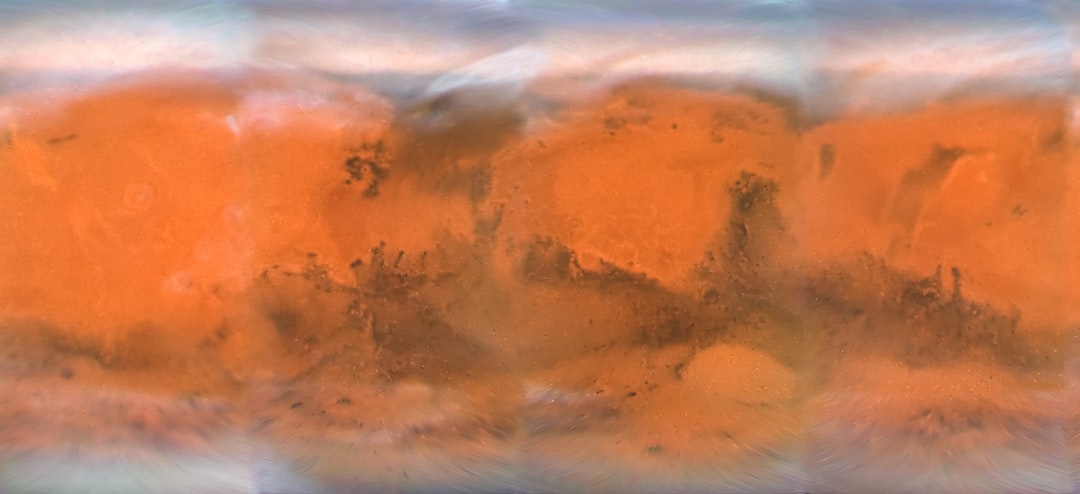
Few worlds in our solar system captivate planetary scientists quite like Mars. In many ways, the Red Planet reads as a cautionary tale — a world that once bore a striking resemblance to our own, only to be stripped of its warmth, its oceans, and its life-sustaining potential over billions of years. Understanding what happened to Mars, and crucially, what may still be happening beneath its rust-colored surface, is one of the most compelling questions in modern planetary science.
Billions of years ago, Mars was a dramatically different world. Evidence preserved in its ancient geology suggests it was warm, wet, and potentially habitable — a place where liquid water flowed across the surface, rivers carved valleys, and lakes may have persisted for millions of years. That hospitable era ended when the planet's interior gradually cooled, causing its geodynamo — the churning, convecting liquid metal core that generates a planetary magnetic field — to fail. Without a protective magnetosphere, the full erosive force of the solar wind bore down relentlessly on the Martian atmosphere, stripping it away over geological timescales and leaving behind the thin, cold, radiation-bathed world we observe today.
The loss of atmosphere was not the only consequence of Mars cooling. The planet also possessed a powerful and prolonged volcanic history. The colossal shield volcanoes of the Tharsis Montes region — a row of three enormous volcanic mountains — stand as enduring monuments to this fiery past. Olympus Mons, towering 22 kilometers above the surrounding plains, holds the distinction of being the tallest mountain and largest volcano in the entire solar system. For decades, the prevailing scientific view held that Mars had largely left its volcanic past behind as an inevitable consequence of planetary cooling and the thickening of its lithosphere, the rigid outer shell that eventually suppresses volcanic activity.
Stirrings Beneath a "Dormant" World
Yet a growing body of evidence is beginning to challenge the assumption that Mars is entirely geologically inert. Data from two landmark missions — NASA's InSight lander and the ESA/Roscosmos ExoMars Trace Gas Orbiter (TGO) — have been quietly accumulating clues that Mars may retain more internal vitality than scientists previously suspected.
- The InSight lander, which operated on Mars from 2018 until late 2022, detected more than 1,300 marsquakes, revealing that the planet is seismically active. While many detections were attributed to meteorite impacts and tectonic settling, some events hinted at deeper, more dynamic processes.
- InSight's seismic data also provided the first direct measurements of Mars' internal structure, confirming a liquid iron core and offering new constraints on the thickness and composition of the crust and mantle.
- The ExoMars Trace Gas Orbiter has been systematically mapping the composition of the Martian atmosphere since 2018, detecting trace gases at parts-per-billion levels with extraordinary precision.
- Among its detections, the TGO identified hydrochloric acid (HCl) — a chemically reactive gas whose presence on Mars raised immediate and tantalizing questions about its source.
Hydrochloric acid is a highly corrosive compound with multiple natural sources on Earth, including volcanic emissions, salt chemistry, and atmospheric reactions. On Mars, the initial detections of HCl were attributed to aerosol-atmospheric interactions driven by seasonal warming near perihelion — the point in Mars' elliptical orbit when it is closest to the Sun and receives its greatest solar input. This explanation, while reasonable, was recently upended by a new discovery that could rewrite our understanding of Martian geology.
The New Research: HCl Where It Shouldn't Be
A landmark new study published in Science Advances presents compelling evidence that not all of the Trace Gas Orbiter's HCl detections can be explained by seasonal solar warming. The paper, titled "Enigmatic HCl detections as a potential signature of igneous activity on Mars," is led by Alexander Trokhimovskiy from the Space Research Institute at the Russian Academy of Sciences, and represents a collaboration between planetary scientists from multiple countries.
The key finding is both simple and profound: HCl has been detected during the cold aphelion season — when Mars is farthest from the Sun and temperatures are at their lowest — localized specifically over the Alba Mons volcanic region. This is precisely when and where seasonal atmospheric chemistry models predict HCl should not be present.
"While sulfur dioxide, so far undetected, could testify to ongoing eruptive activity, evidence of active magma chambers may be better identified by seepage of halogen gases, such as hydrogen chloride (HCl). Here, we report HCl detections during the cold aphelion season that are isolated in the Alba Mons region." — Trokhimovskiy et al., Science Advances
The spatial and temporal isolation of these detections is striking. During the warmer perihelion season, HCl detections are widespread across the planet — consistent with a global atmospheric process. The aphelion detections, by contrast, are strongly localized both in space and time, clustering over a specific geological feature. This contrast is difficult to explain without invoking a localized, persistent source.
Alba Mons: The Sleeping Giant
Alba Mons is one of the most remarkable and underappreciated volcanic structures in the solar system. While Olympus Mons commands more attention for its sheer height, Alba Mons holds a different record: it is the largest volcano by surface area on Mars — and indeed on any known planetary body. Its volcanic flows extend more than 1,300 kilometers from its central summit, spreading across an enormous swath of the northern Tharsis region. Despite sharing the same volcanic province as the famous Tharsis Montes trio and Olympus Mons, Alba Mons is a distinct structure with its own unique geological character.
One of Alba Mons' most geologically significant features is its extensive fracture system. The region is crisscrossed by graben — long, linear depressions formed when blocks of crust subside between parallel faults — and other tectonic structures that reflect a complex history of volcanic inflation, subsidence, and stress. These fractures create natural pathways through which subsurface gases could potentially migrate upward toward the surface. The geological context of Alba Mons, therefore, makes it an inherently compelling location to search for signs of ongoing subsurface activity.
"Strongly localized in space and time, aphelion HCl detections, amidst an otherwise absence of HCl at that season on Mars, exhibit marked contrast with prolonged and widespread detections at perihelion." — Trokhimovskiy et al., Science Advances
Fresh Fissures: Potential Smoking Guns
The atmospheric chemistry data alone would be intriguing, but the research team did not stop there. Using high-resolution imaging from the TGO's CASSIS camera and NASA's Mars Reconnaissance Orbiter HiRISE instrument — the most powerful camera ever sent to another planet — the researchers identified a network of fresh, narrow fissures, some less than one meter wide, in the Alba Mons region. These structures had not been identified in previous systematic geological mapping efforts.
- The fissures are interpreted as potential HCl pathways — conduits through which gases from magmatic bodies at depth could seep toward the surface.
- Their apparent freshness suggests they are geologically recent features, not ancient relics of a volcanic past.
- Their location directly beneath the aphelion HCl detections strengthens the case for a physical connection between the two observations.
- Geological models presented in the study demonstrate plausible mechanisms by which HCl could migrate from magma chambers through these fissures and into the lower Martian atmosphere.
"Detections of HCl at low altitudes, unexplained by observed atmospheric state and models, together with the geological context of the region, hint at an igneous origin of this gas." — Trokhimovskiy et al., Science Advances
The team calculated the gas seepage rate required to produce the observed HCl abundance in the aphelion detections, taking into account the expected atmospheric lifetime of HCl in Martian conditions. Critically, their analysis rules out atmospheric-aerosol interactions as the source of the aphelion HCl. But in a surprising twist, the same analysis also indicates that aerosol-atmospheric interactions cannot fully explain the perihelion detections either — suggesting that an igneous contribution may be woven into the entire Martian HCl cycle, regardless of season.
Implications for a Complex Martian Chlorine Cycle
Planetary atmospheres and geochemical cycles are rarely simple, and Mars is no exception. The researchers situate their findings within a broader model of the Martian chlorine cycle, which involves not just atmospheric sources and sinks but also the exchange of chlorine-bearing compounds between the atmosphere and the surface. Mars' regolith is known to be rich in perchlorates and chloride salts, and these surface reservoirs play an important role in the planet's chemistry.
The introduction of a volcanic HCl source fundamentally changes how scientists must model this cycle. Rather than treating chlorine as a purely surface-derived or atmospherically recycled species, the new data suggest that localized igneous sources may act as continuous primary contributors of chlorine to the Martian system — feeding a reservoir that is subsequently redistributed between atmospheric and surface compartments through complex chemical and physical processes.
"Introducing a volcanic source of HCl, we can propose that a fraction of the perihelion HCl observed in the Martian atmosphere is ultimately of igneous origin. Localized igneous sources may therefore act as continuous primary contributors of chlorine, which is subsequently redistributed between atmospheric and surface reservoirs." — Trokhimovskiy et al., Science Advances
This reframing has significant implications for astrobiology as well. Active subsurface magma chambers represent not only a geological curiosity but also a potential energy source. On Earth, chemolithotrophic microorganisms thrive in volcanic environments, deriving energy from the chemical reactions between magmatic gases and surrounding rock. If Mars hosts active magma chambers, those environments could theoretically represent refugia for life — isolated pockets of warmth and chemical energy in an otherwise frozen, irradiated world.
What Would Confirm Ongoing Volcanism?
The researchers are careful to frame their conclusions appropriately — these findings are strongly suggestive rather than definitively confirmatory. The gold standard for demonstrating active Martian volcanism would be direct detection of a fresh lava flow, a volcanic eruption plume, or the unambiguous identification of sulfur dioxide (SO₂) in the Martian atmosphere, a canonical volcanic gas that the TGO has so far not detected at significant levels. Nevertheless, the cumulative weight of evidence is shifting the scientific conversation.
Future missions will be crucial in resolving these questions. NASA's Mars Sample Return mission, currently under development in collaboration with ESA, aims to retrieve samples collected by the Perseverance rover — including materials that may preserve geochemical records of recent volcanic activity. Next-generation orbiters with more sensitive spectrometers could potentially detect SO₂ or other volcanic gases at trace levels. And future seismic networks on the Martian surface could better distinguish tectonically and volcanically induced marsquakes from those caused by impact events.
- Detection of sulfur dioxide (SO₂) at meaningful atmospheric concentrations would be a near-definitive indicator of active eruption.
- Continued monitoring of HCl over Alba Mons across multiple Martian years could reveal whether the signal is consistent and persistent, as expected from a stable magmatic source.
- High-resolution thermal imaging could potentially detect subtle heat anomalies above active magma chambers or fissures.
- Future seismic stations in the Tharsis region could directly probe the subsurface structure beneath Alba Mons.
A World Still Alive
The conventional portrait of Mars as a geologically dead planet — its interior cold, its volcanoes extinct, its story essentially over — has never been fully satisfying to planetary scientists who understand how complex and long-lived geological systems can be. Earth's own mantle contains regions of varying temperature and composition that sustain localized volcanism billions of years into the planet's history. There is no fundamental reason why Mars, though smaller and faster-cooling, should be entirely without internal heat.
The new study by Trokhimovskiy and colleagues adds a significant and carefully documented data point to the growing case that Mars retains pockets of igneous activity in its interior. The enigmatic HCl detections over Alba Mons, combined with the discovery of fresh surface fissures and supported by detailed geochemical modeling, build a compelling circumstantial case that the Red Planet's geological story is not yet finished.
"Our results are best explained by ongoing igneous processes in the Martian interior." — Trokhimovskiy et al., Science Advances
Mars may never again be the warm, wet world it once was. Its global magnetic field is gone, its oceans long since lost to space. But beneath the cold silence of its ancient surface, the planet may still harbor magma chambers quietly breathing — slow pulses of geological life in a world the universe once came very close to making habitable. That possibility alone is enough to ensure that Mars will continue to fascinate and surprise us for generations to come.